
Legend has it that while hunting in the Sahaya mountains, Sala heard the cries of a saint shouting “Poy Sala”—meaning “Strike, Sala”—as a tiger approached during his religious rites at the temple of Goddess Vasantika in Angadi (now known as Sosevuru). Responding to the call, Sala killed the tiger, an act that was memorialized and later evolved into the name “Poysala,” which eventually became “Hoysala.” This event inspired the creation of the Hoysala emblem. Sala is recognized as the first historical figure or progenitor of the Hoysala family. For over three centuries, the Hoysalas, of Yadava descent, ruled a significant portion of southern Karnataka.
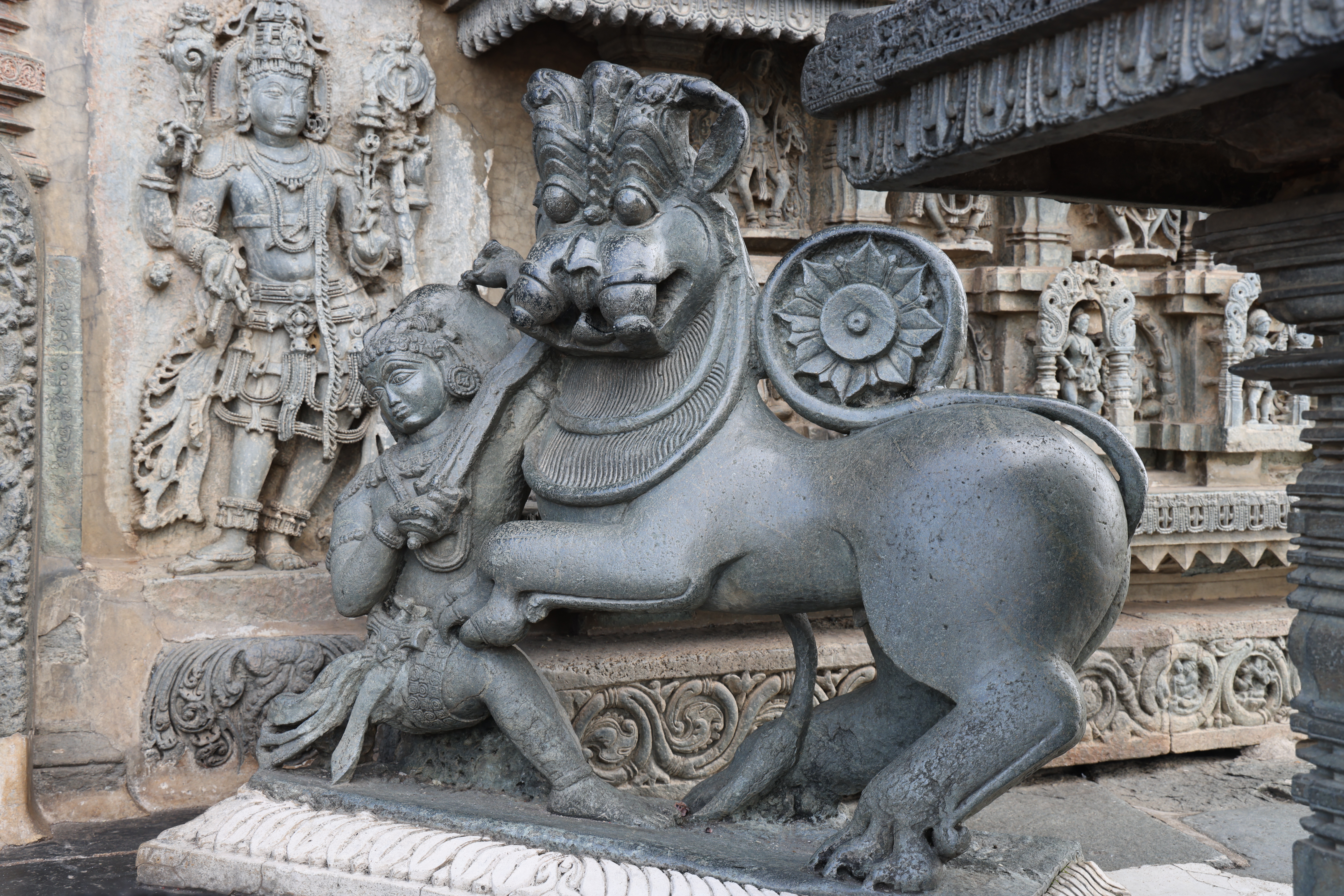
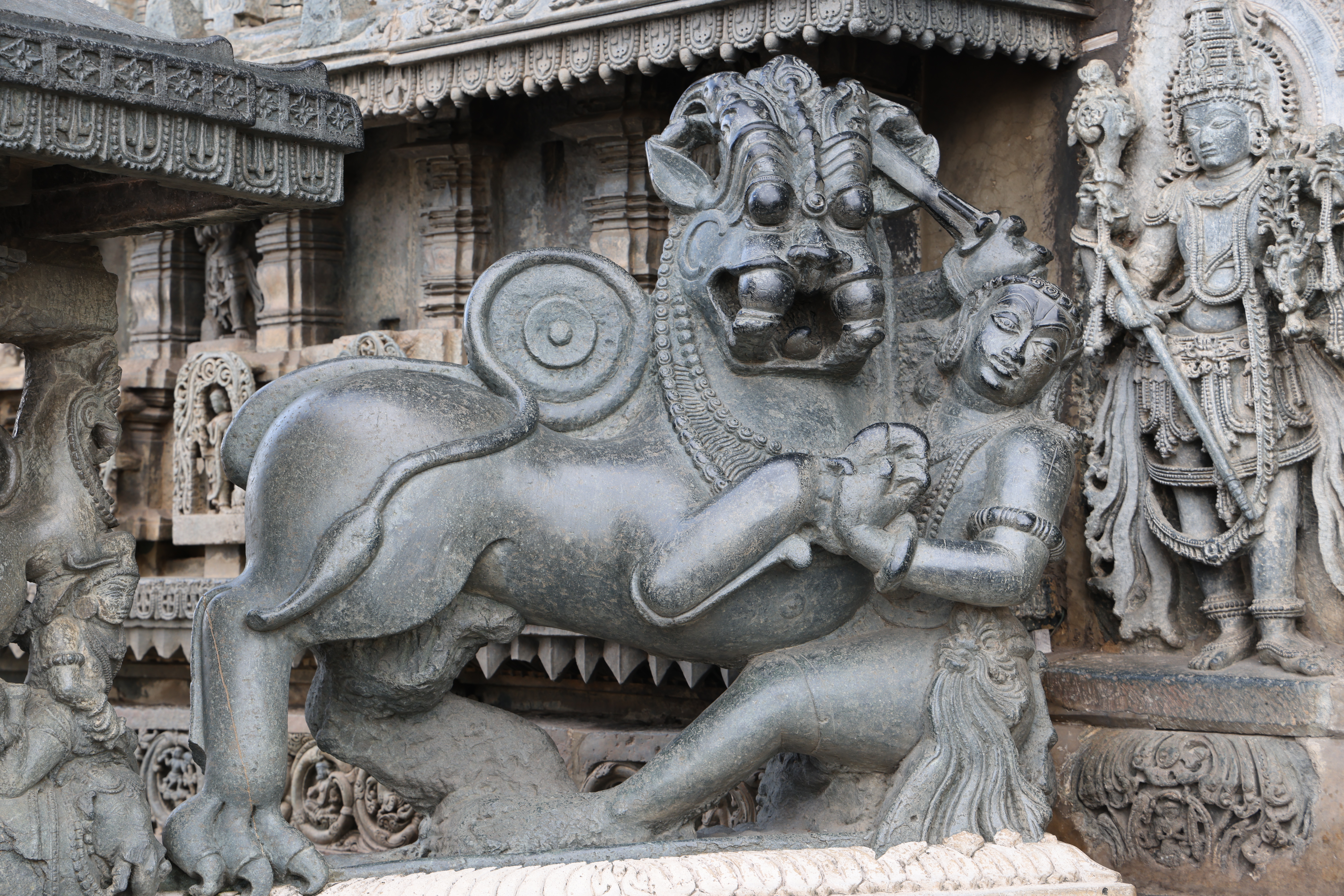
Architectural Charcateristics:
The Nolamba (late 8th–11th century) and Western Ganga (350 CE–1000 CE) dynasties, predecessors of the Hoysalas in Southern Karnataka, constructed Hindu and Jain temples inspired by Tamil heritage. In contrast, the Hoysala rulers were influenced by Western Chalukyan architecture, employing their craftsmen as well. Hoysala temples are richly adorned with figure sculptures, facilitated by the use of soapstone, which allows fine detailing, clarity, and durability. The Hoysala style blends southern Dravida and northern Nagara elements, known as the Vesara style. Further details on architectural characteristics of Hoysala temples can be checked out here. This post is the second part of the series dedicated to this unique symphony of human ingenuity. You can check out rest of the series here.
Chennakesava temple, Belur
Belur, a quiet town in Karnataka’s Hassan district, would likely have remained obscure if not for the remarkable Chennakeshava temple. Once known as Velapura, an early Hoysala Empire capital, this soapstone temple is a sculptural marvel commissioned by Hoysala ruler Vishnuvardhana to commemorate his victory over the Chola Viceroy of Talakad.
Originally named Bittideva, Vishnuvardhana is believed to have embraced Vaishnavism under the influence of Ramanujacharya, transitioning from Jainism. This religious shift, coupled with the Bhakti movement and royal patronage, sparked a widespread temple-building campaign across the empire. The Hoysala rulers emphasized the oneness of God and practiced religious tolerance, a principle upheld by the commoners. The founding family of the Hoysala dynasty embodied a blend of religious beliefs: King Vishnuvardhana was a Vaishnavite, his elder brother Ballala I was a Shaivite, and his queen Shantala was a Jain. These broad-minded patrons supported all sects equally, with Vishnuvardhana even incorporating Shaivite sculptures into Vaishnavite temples. This inclusive approach earned Belur the nickname ‘Dakshin Varanasi‘ or ‘Benaras of the South’ in inscriptions.
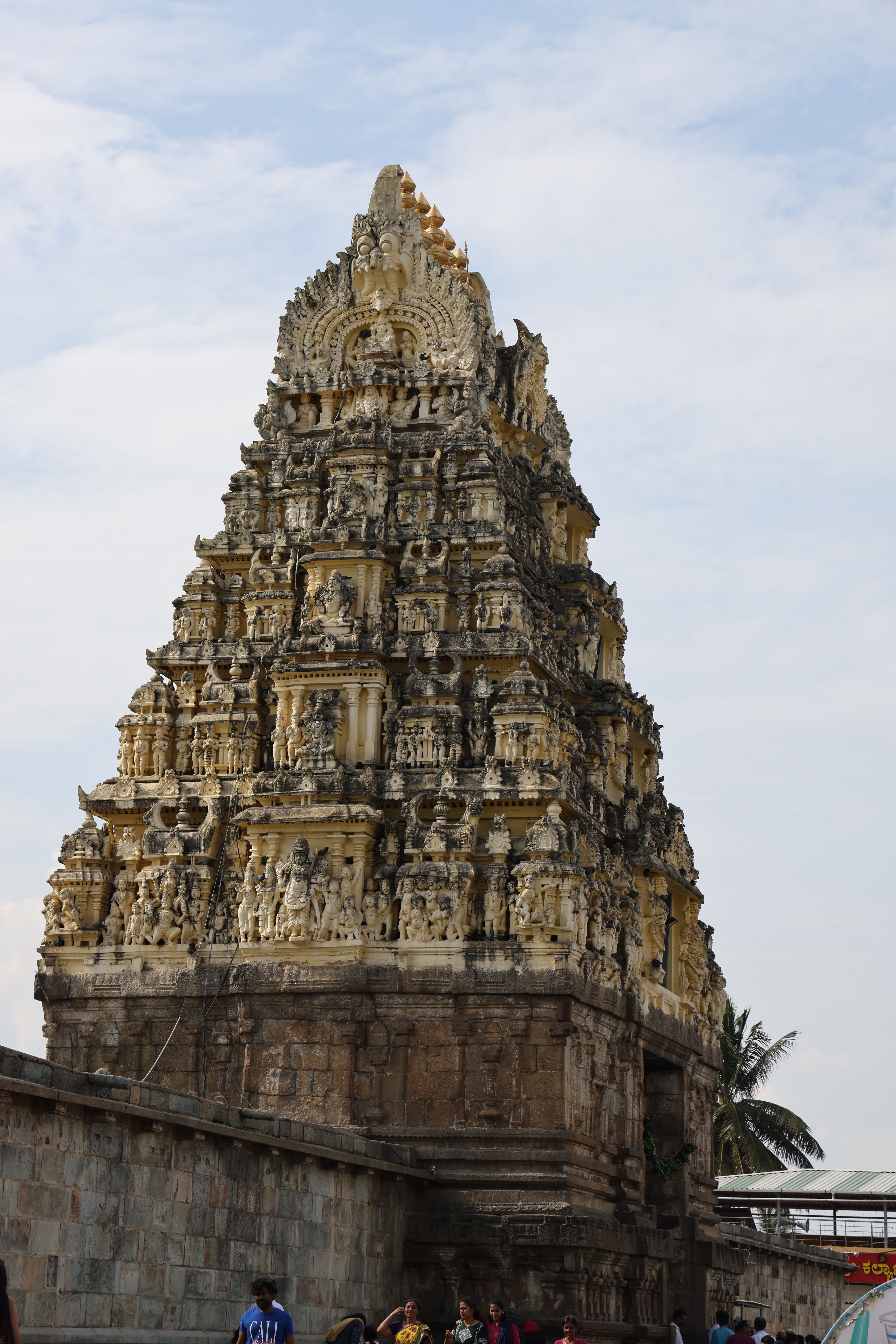
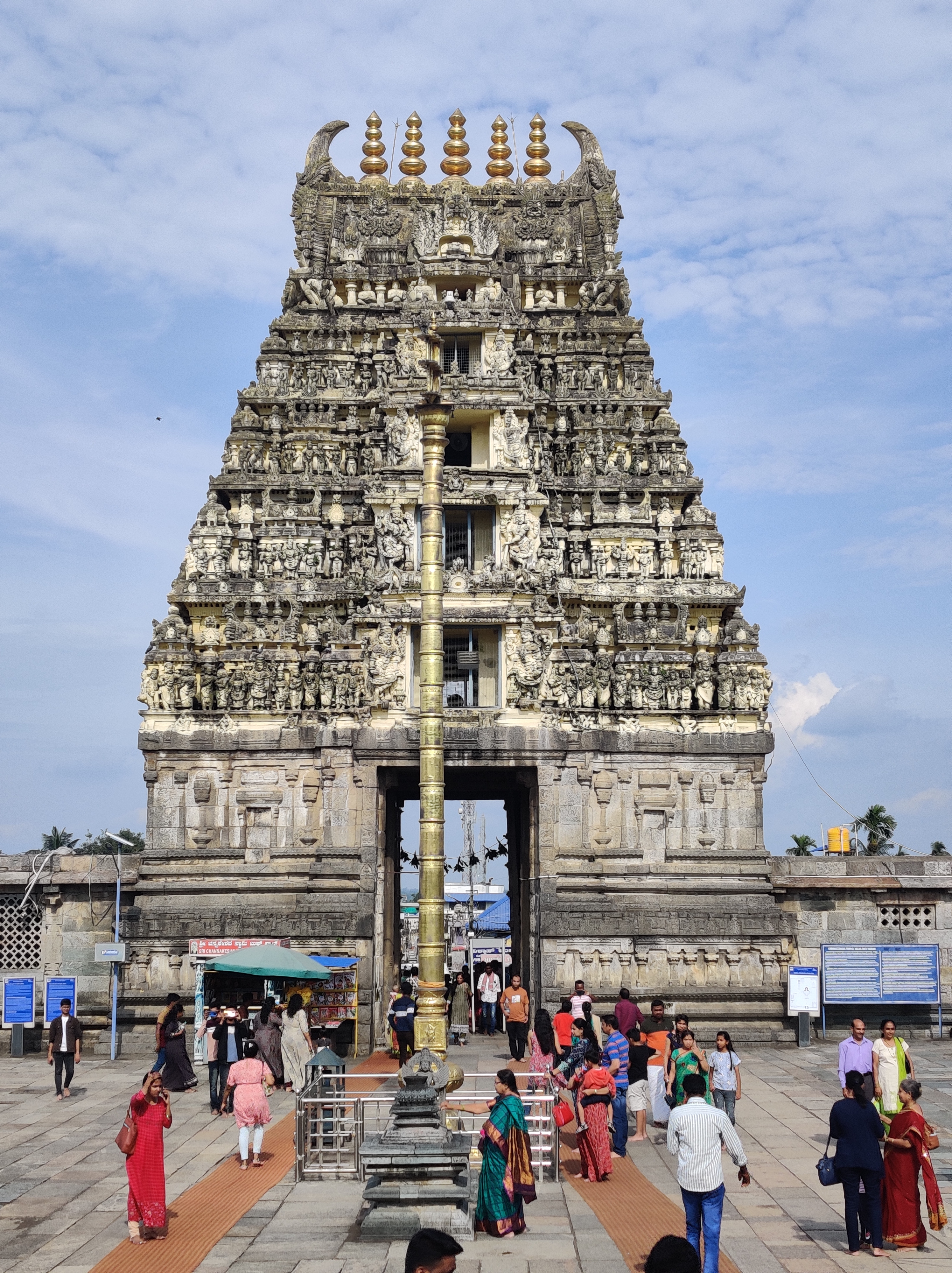
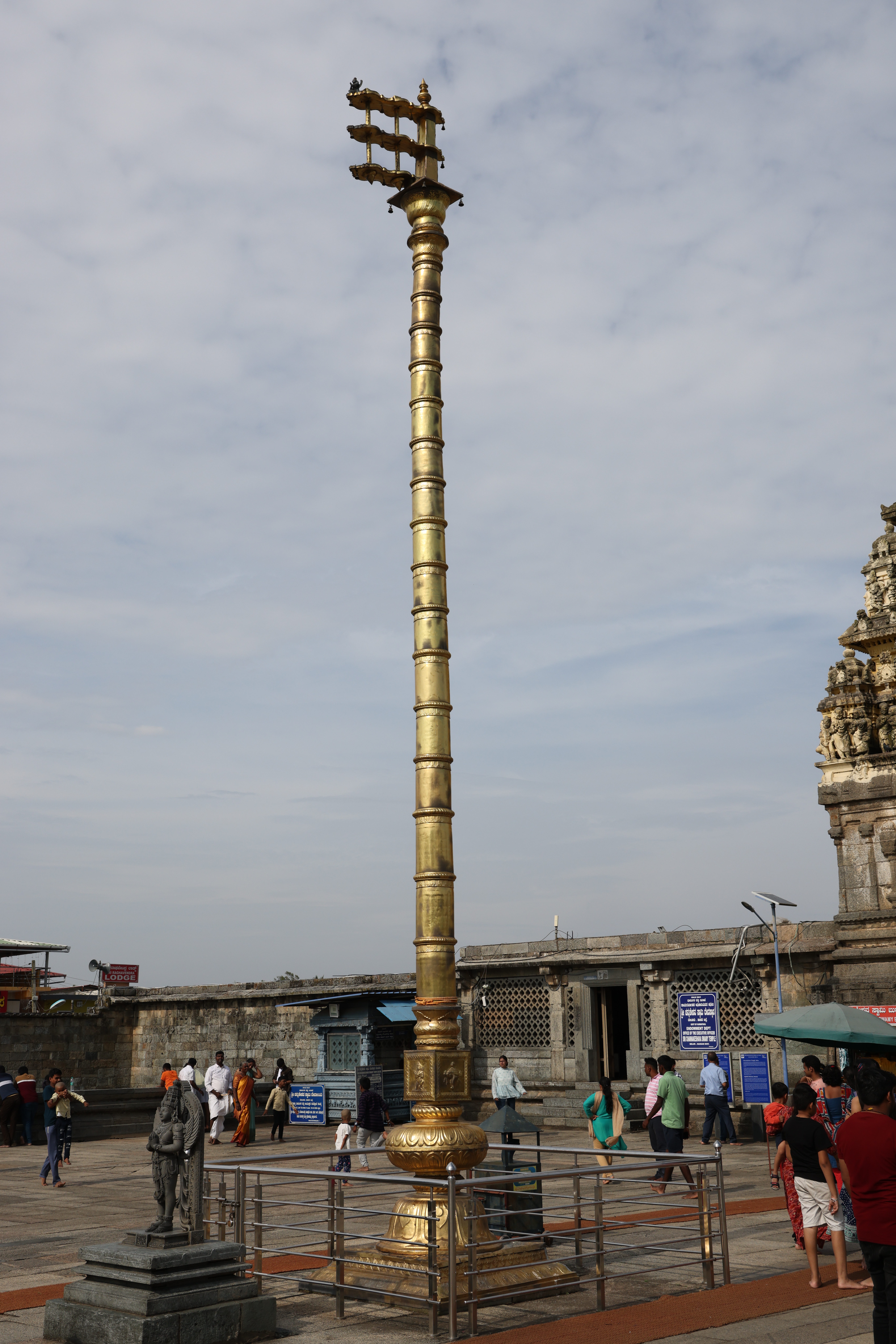
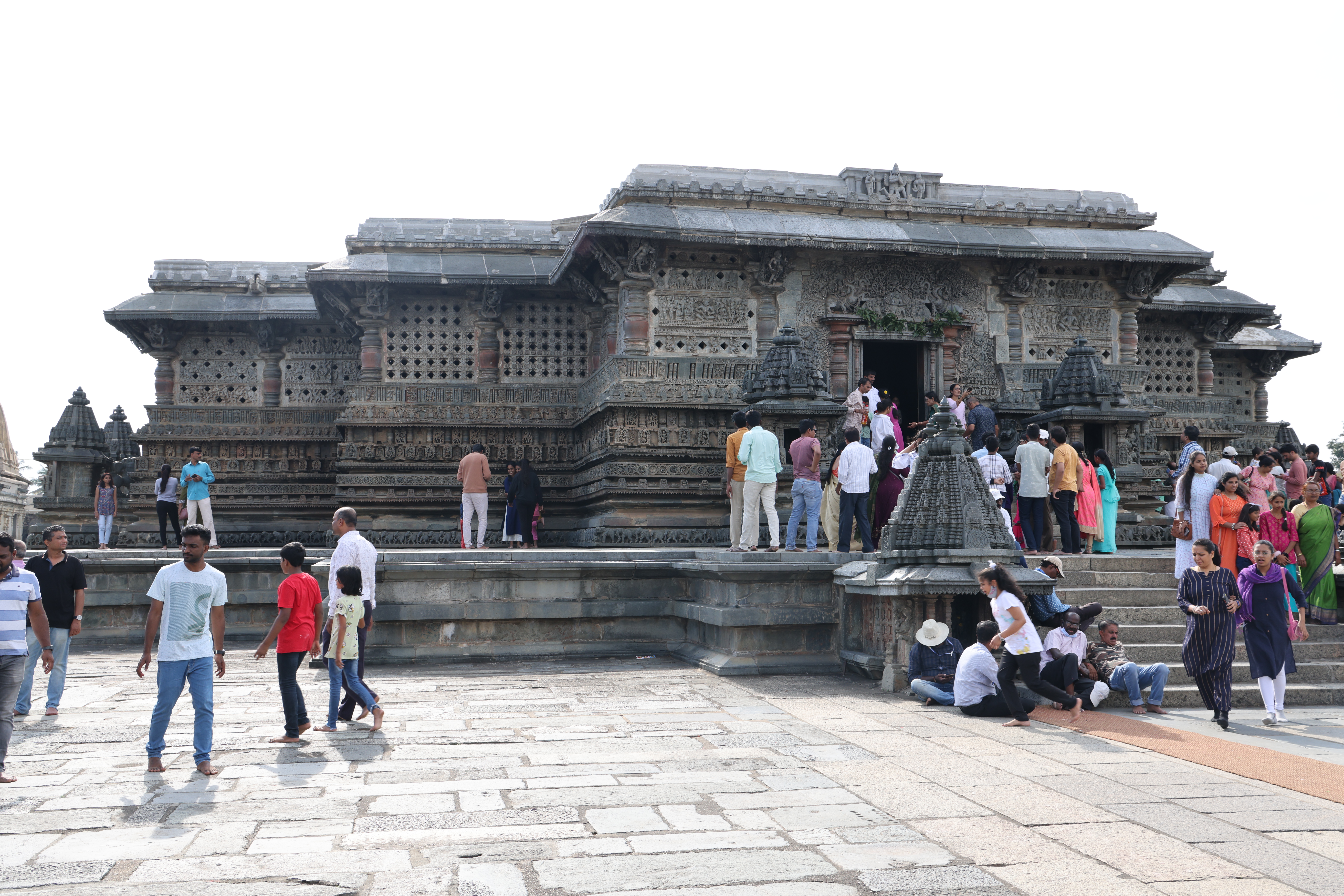
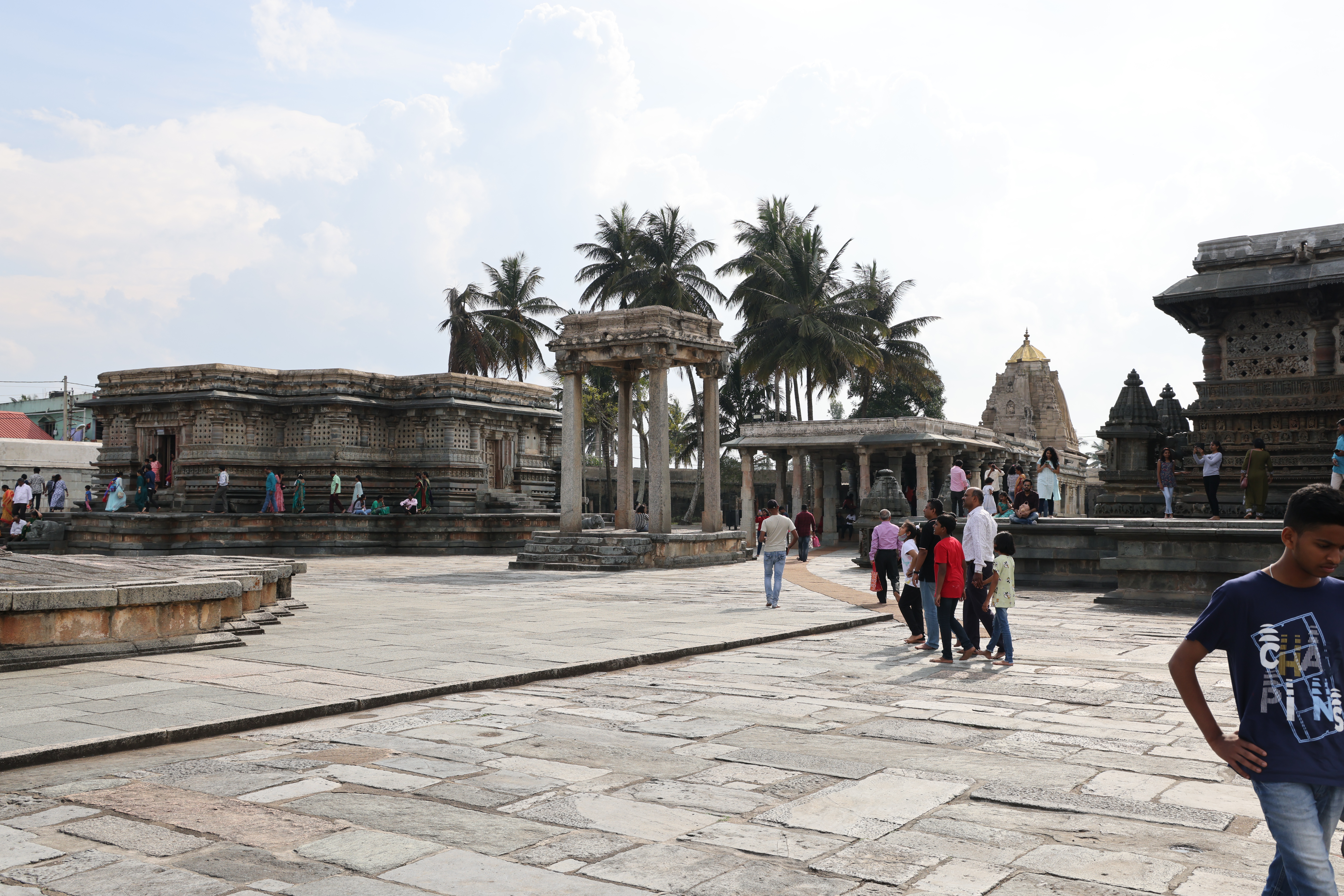
The main Kesava temple, measuring 178 ft by 156 ft, features a typical star-shaped floor plan on a raised platform. It includes a star-shaped garbhagriha (sanctum), a sukhasana (vestibule), and a navaranga pavilion (large hall with polished pillars). Below is a breakdown of each section and its architectural uniqueness.
- Exterior walls of Chennakesava temple
- Bracket Figures of Chennakesava temple
- Entrance doorways
- Interiors of Chennakesava temple – sanctum, vestibule and navranga
- Belur and London
Exteriors of Chennakesava
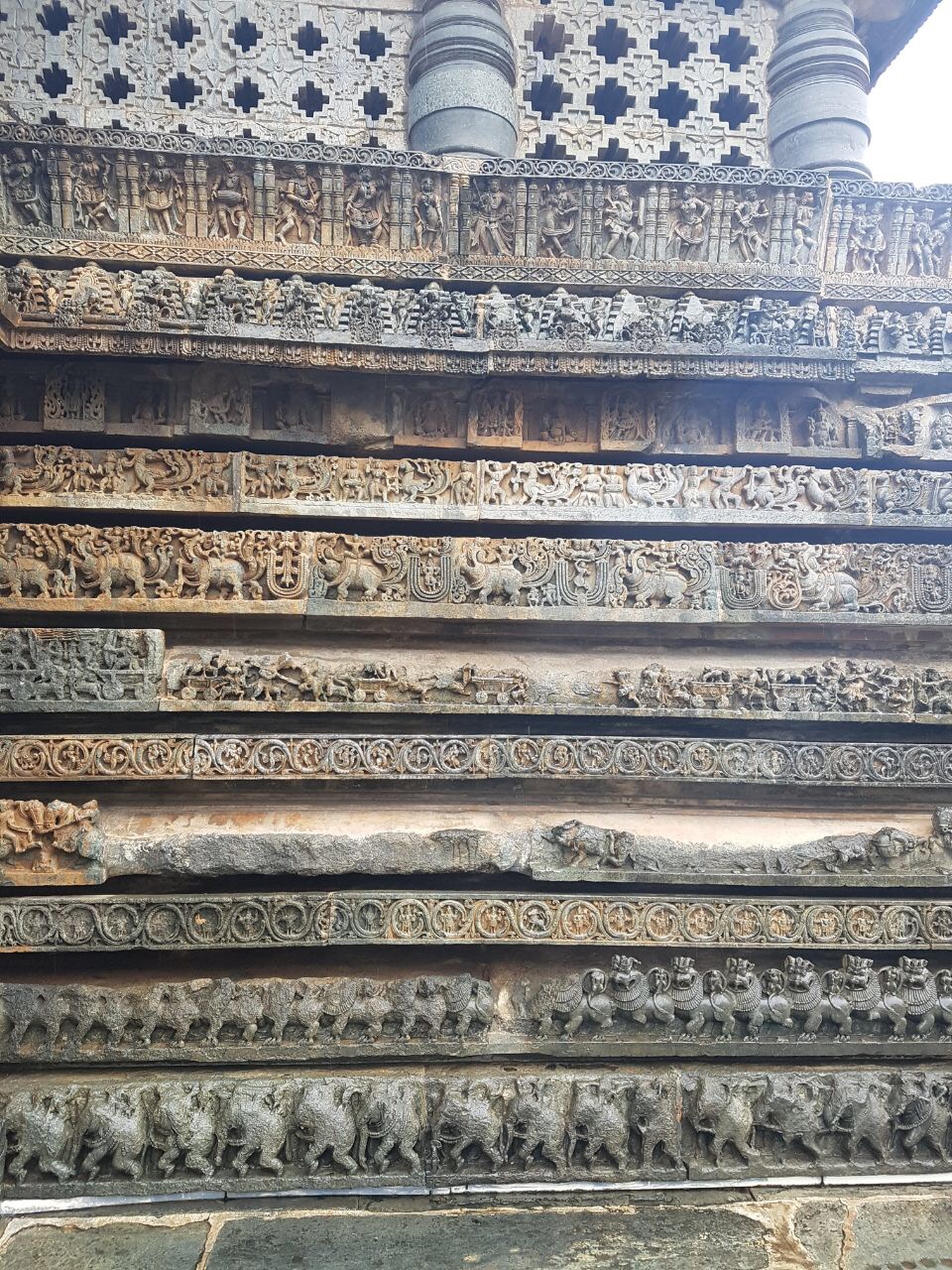
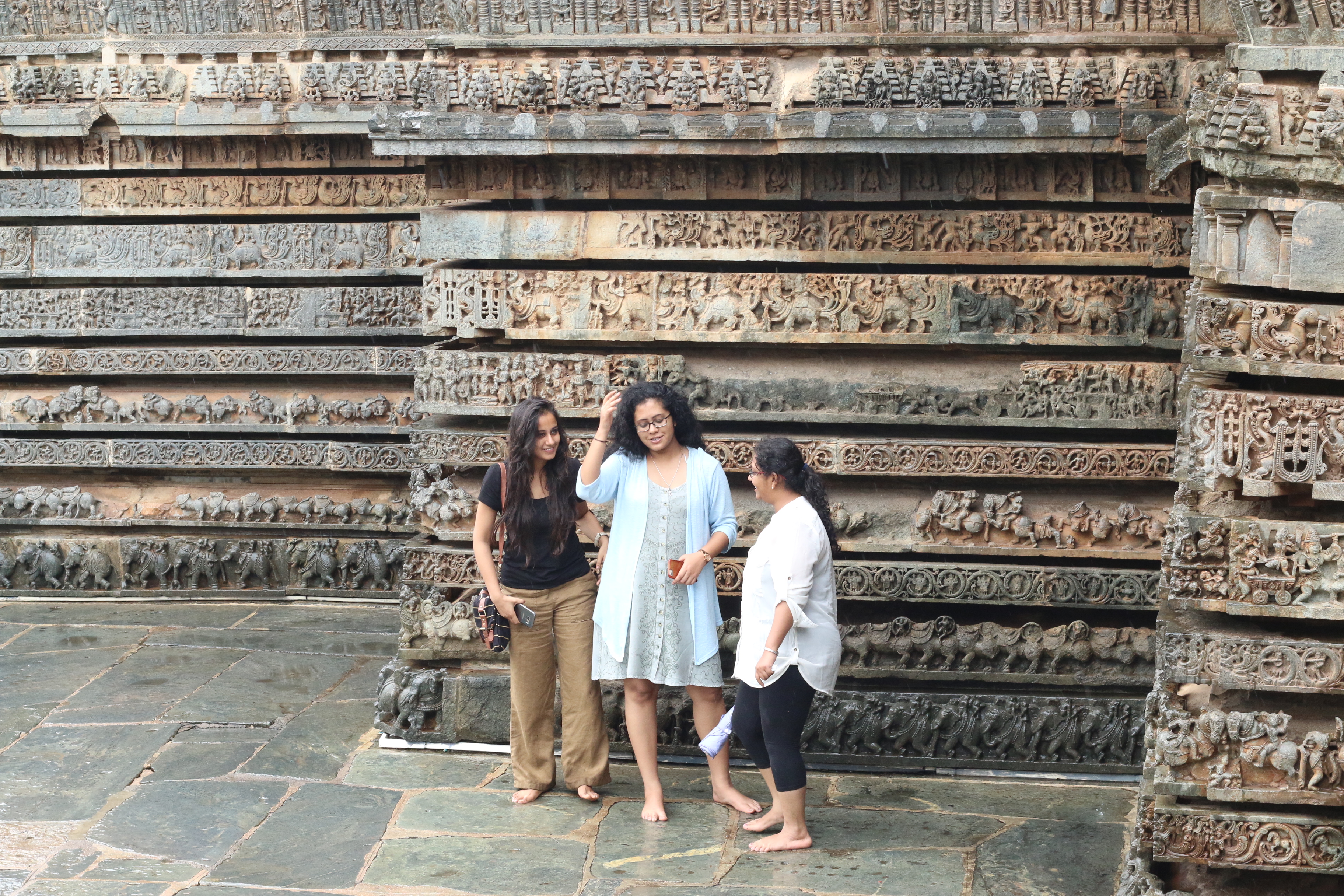
The temple’s exterior showcases remarkable 12th-century artistry of the Hoysala empire. Adorned with a jagati, or a railed parapet, each layer bears intricate symbolism: elephants signify strength, lions represent courage, and rows of horses symbolize speed. Adorning the upper levels are small female figurines nestled in ornate niches, adding to its grandeur.
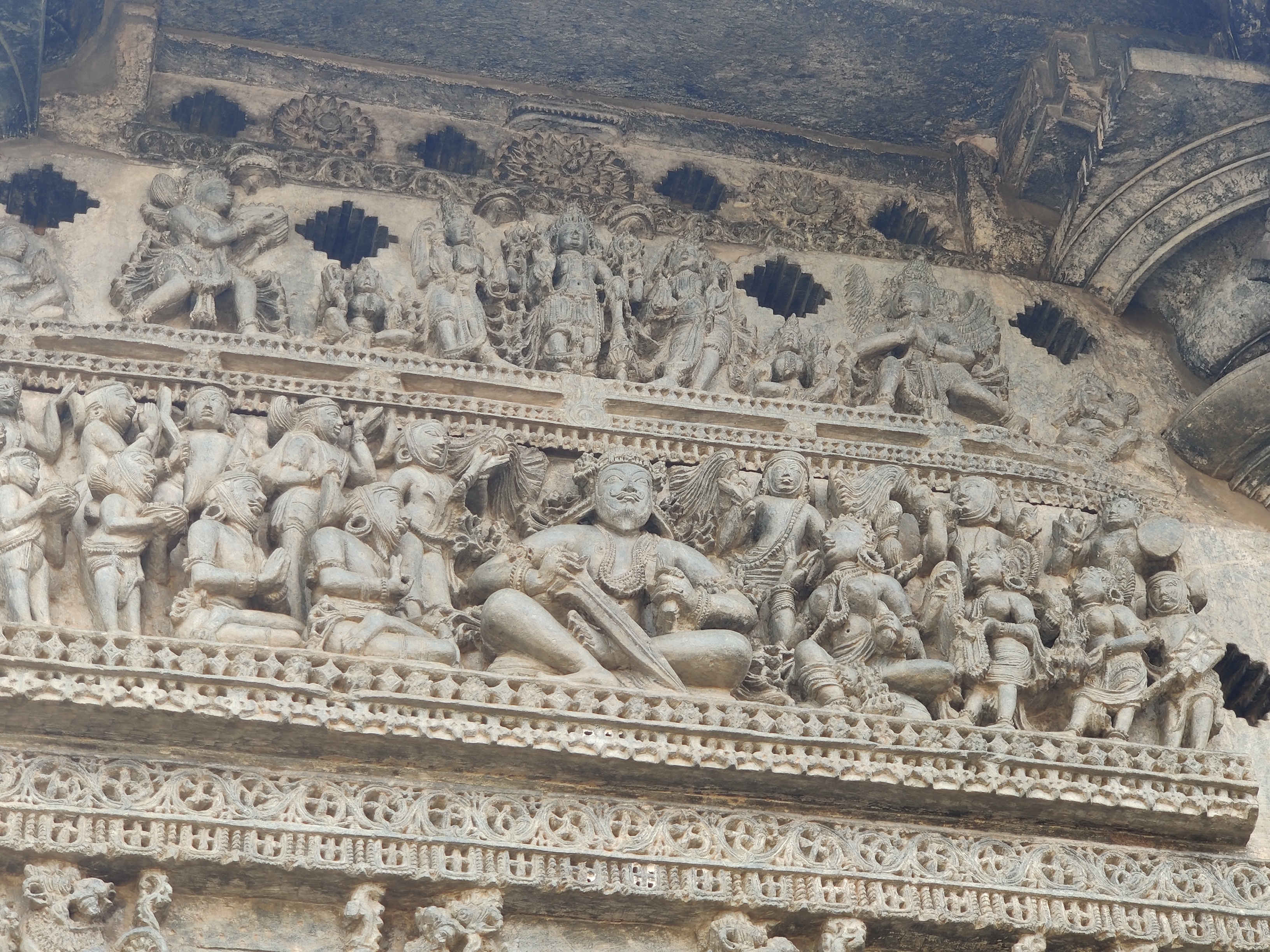
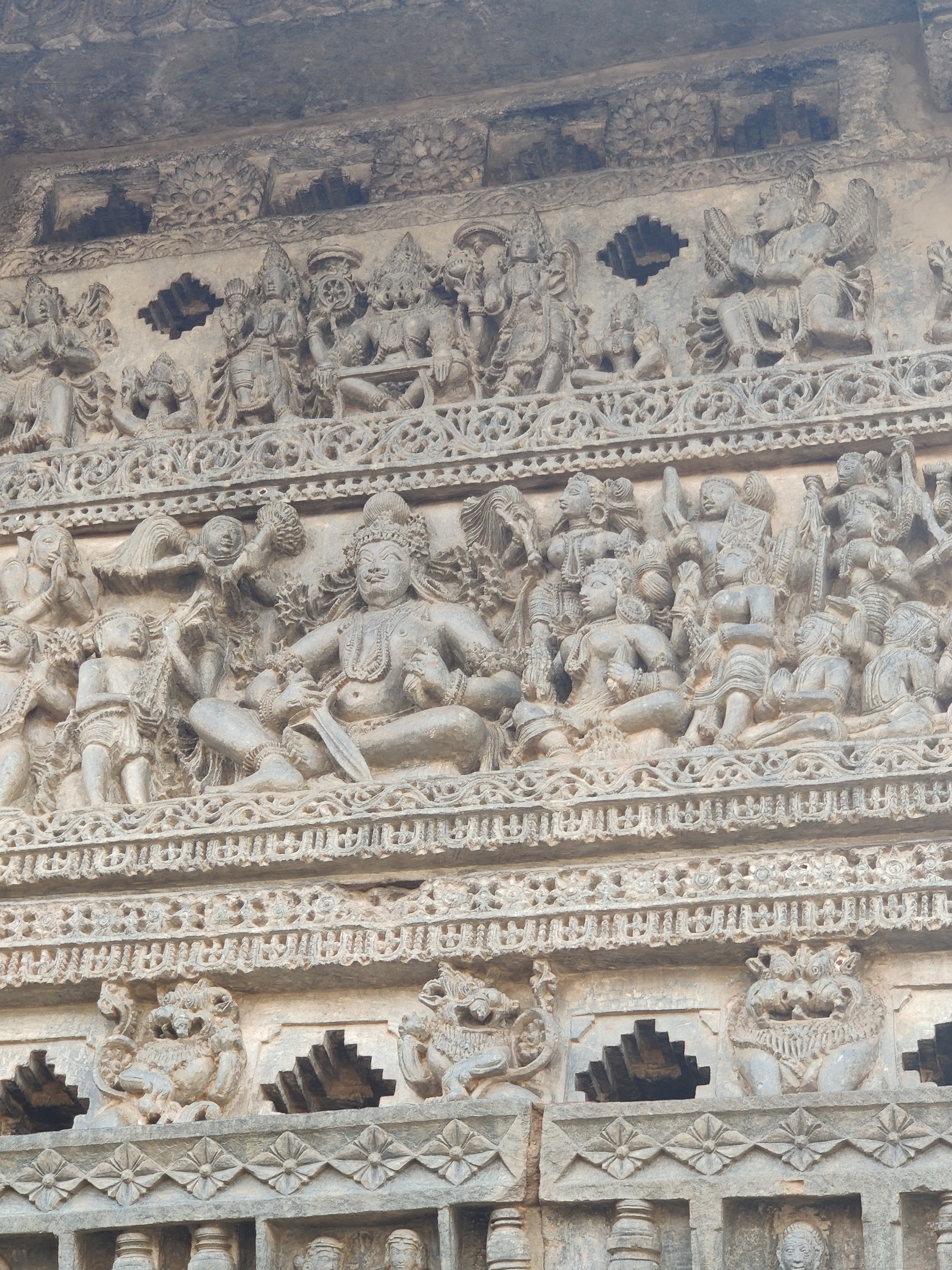
The east gate proudly showcases Hoysala motifs, with emblems flanking the door and a vivid depiction of King Vishnuvardhana’s court. The king, wielding a sword and holding a flower, sits alongside Queen Santaladevi and attendants, while gurus and disciples are also portrayed. Intricate ornamentation distinguishes between the royal courtiers and disciples. Above this scene, a panel depicts Kesava with Garuda and chuari-bearers.
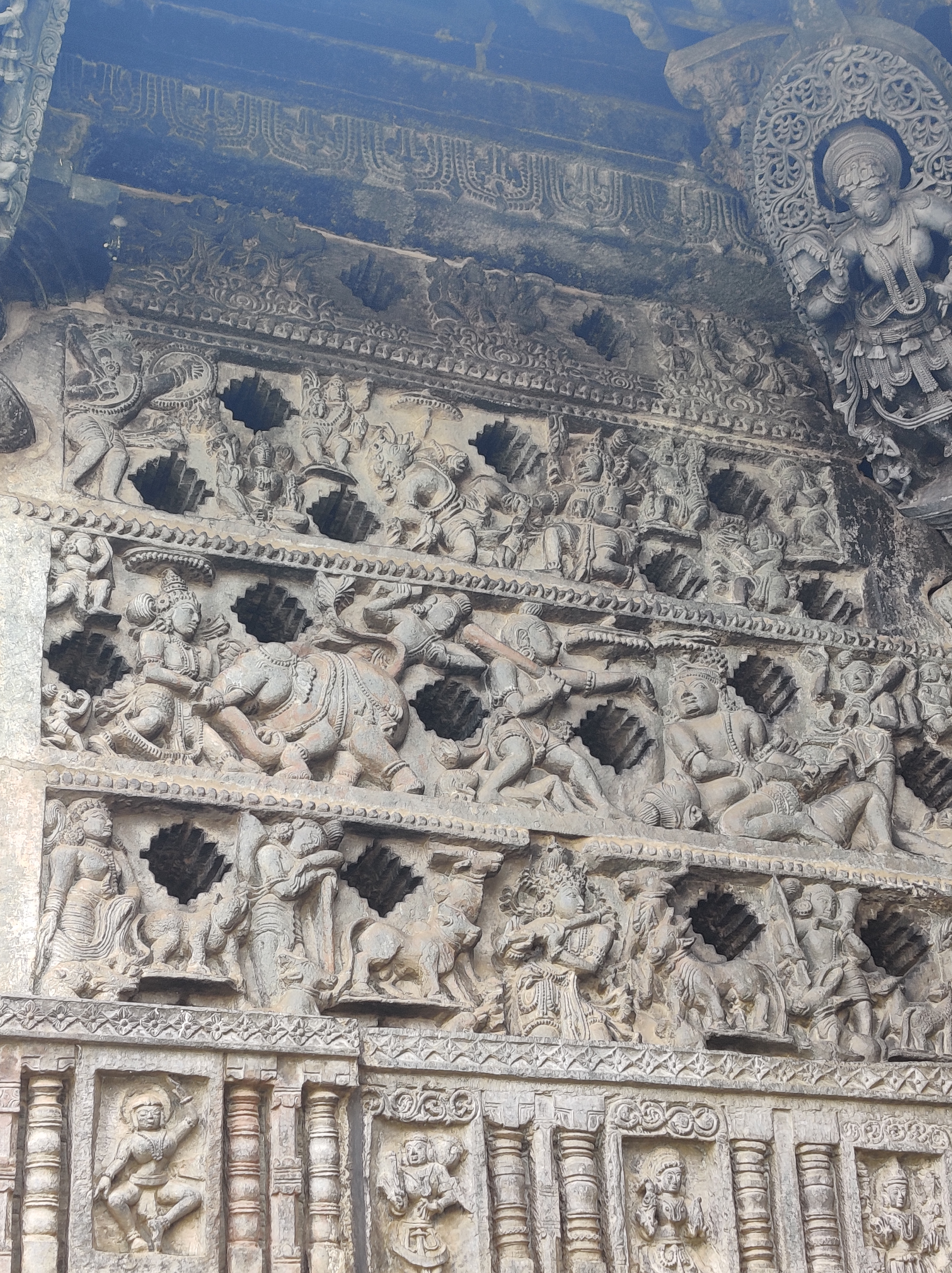
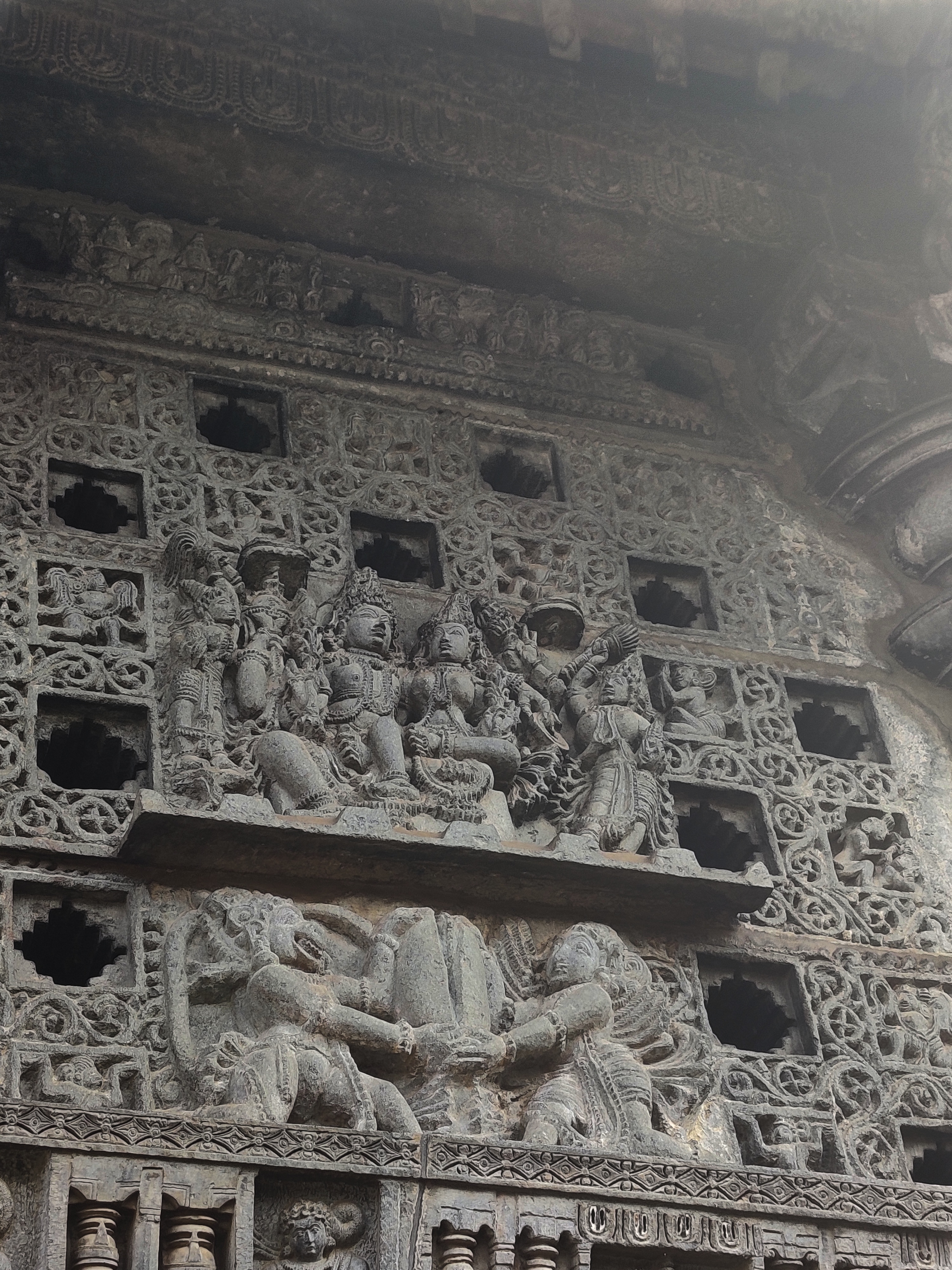


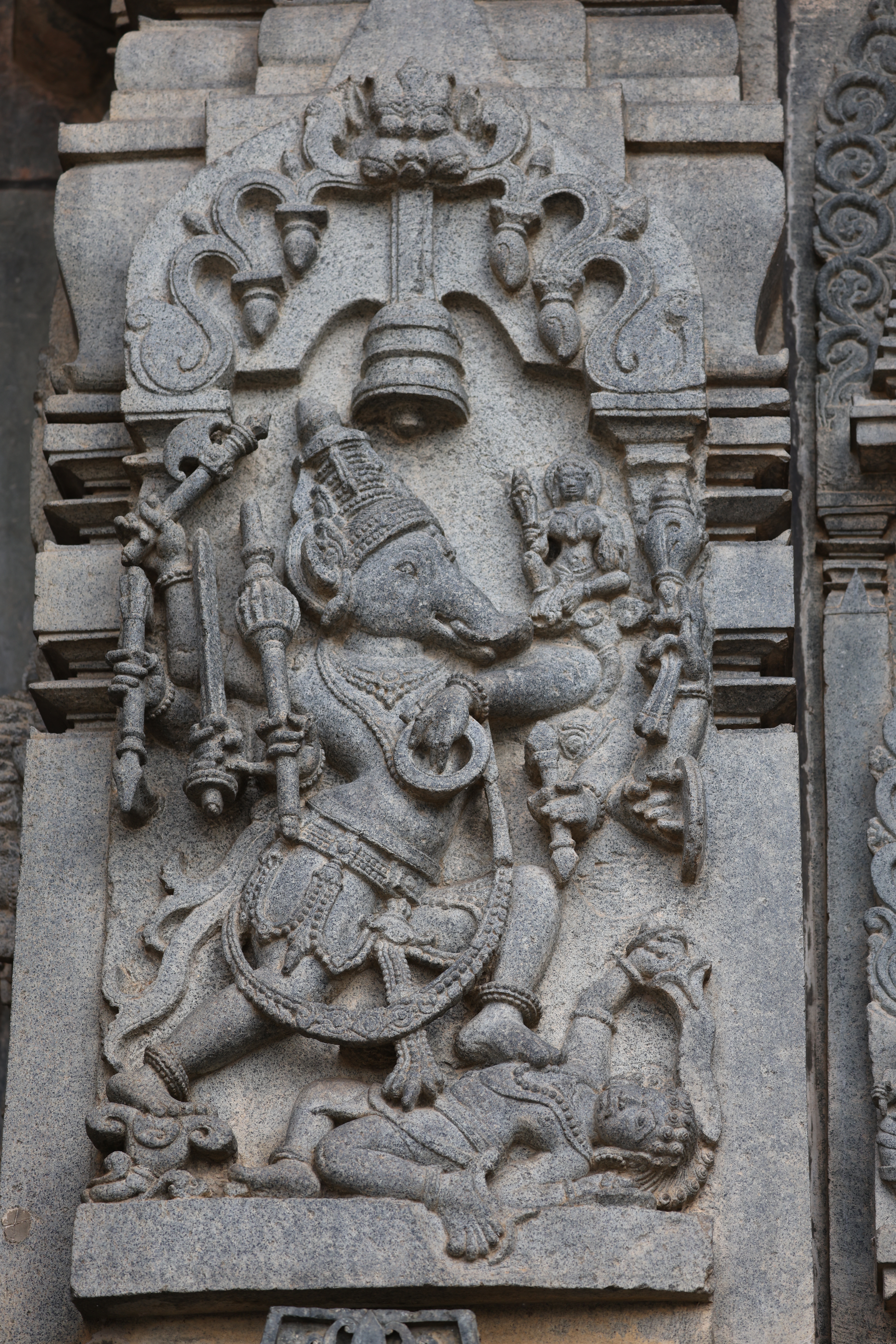
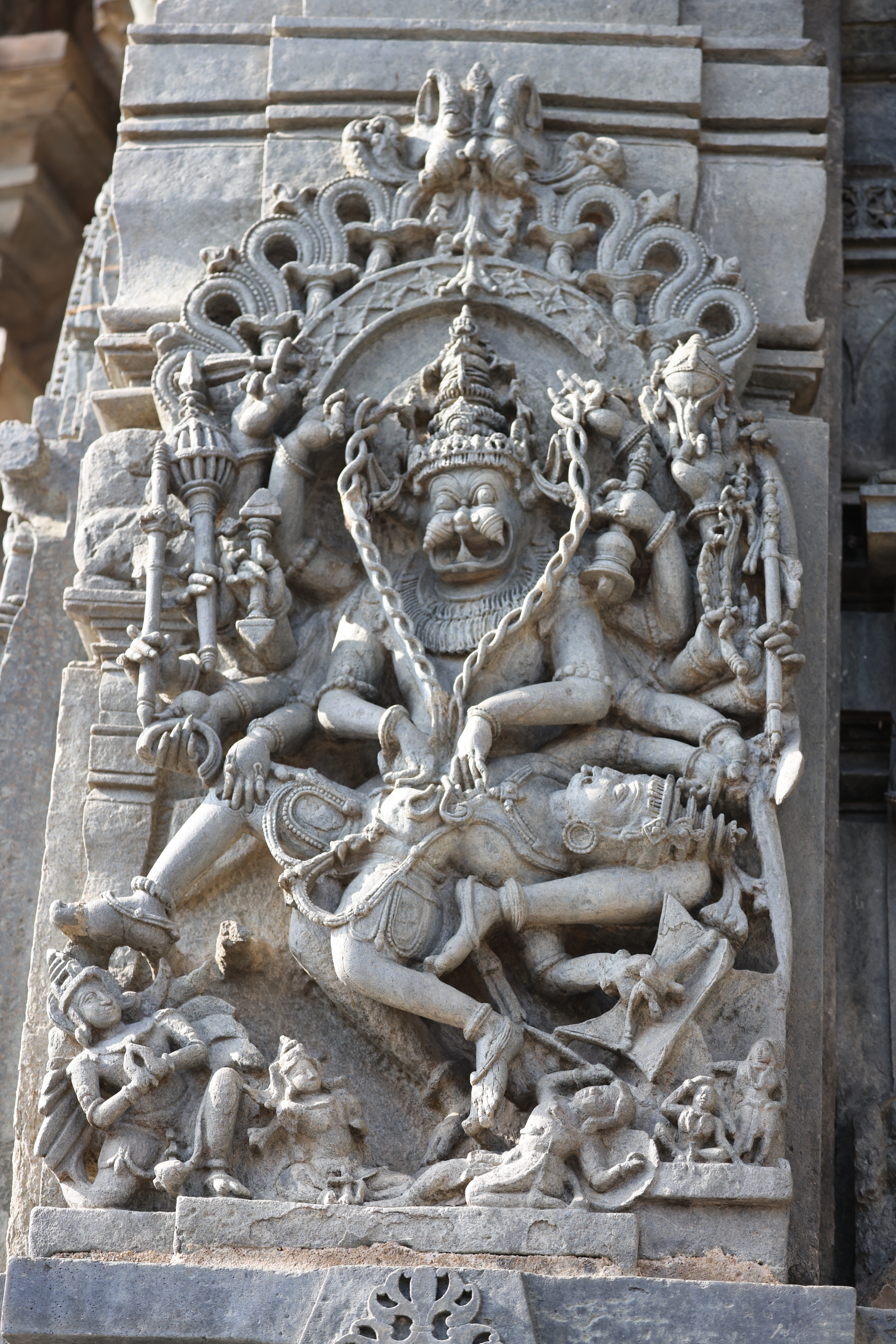
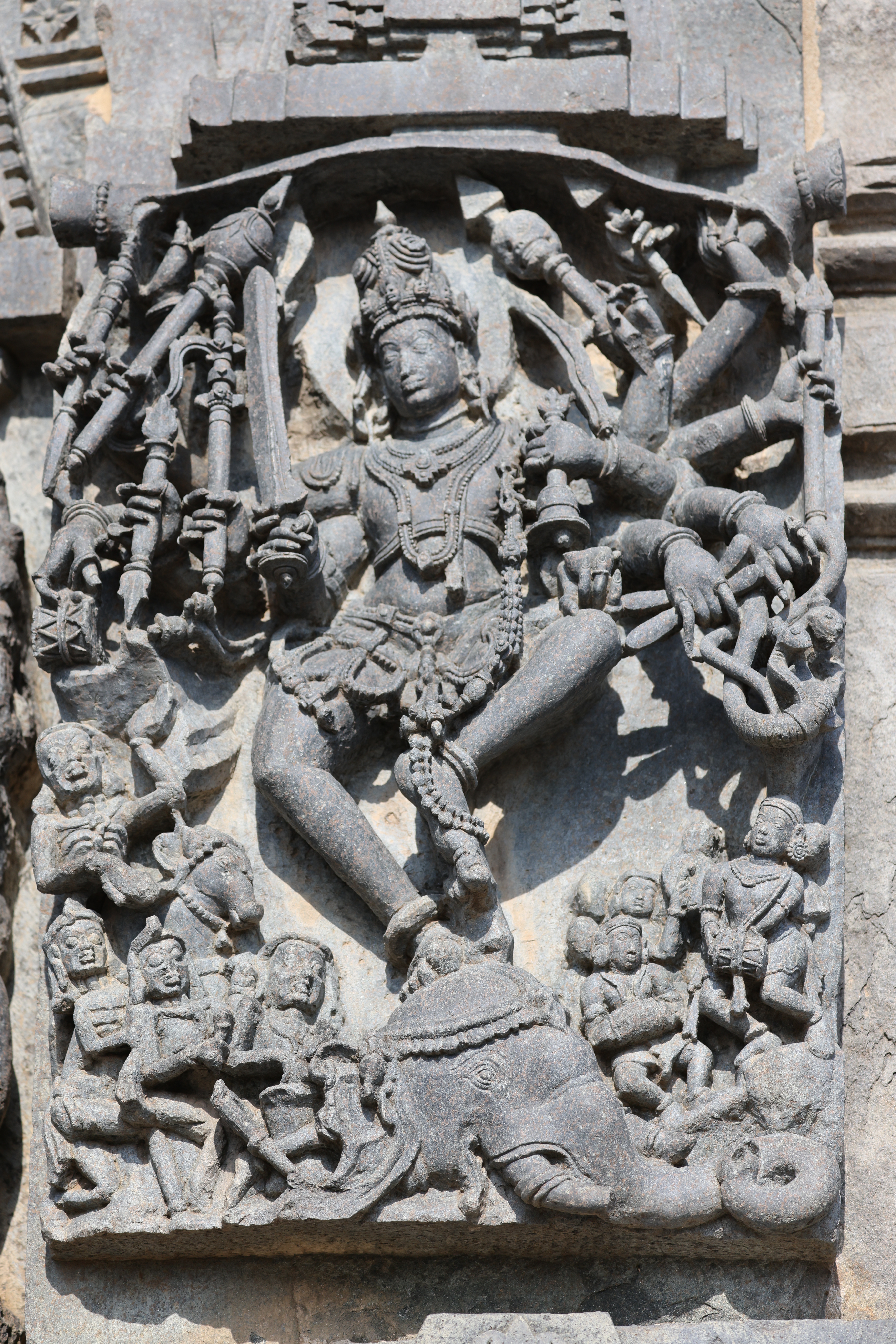
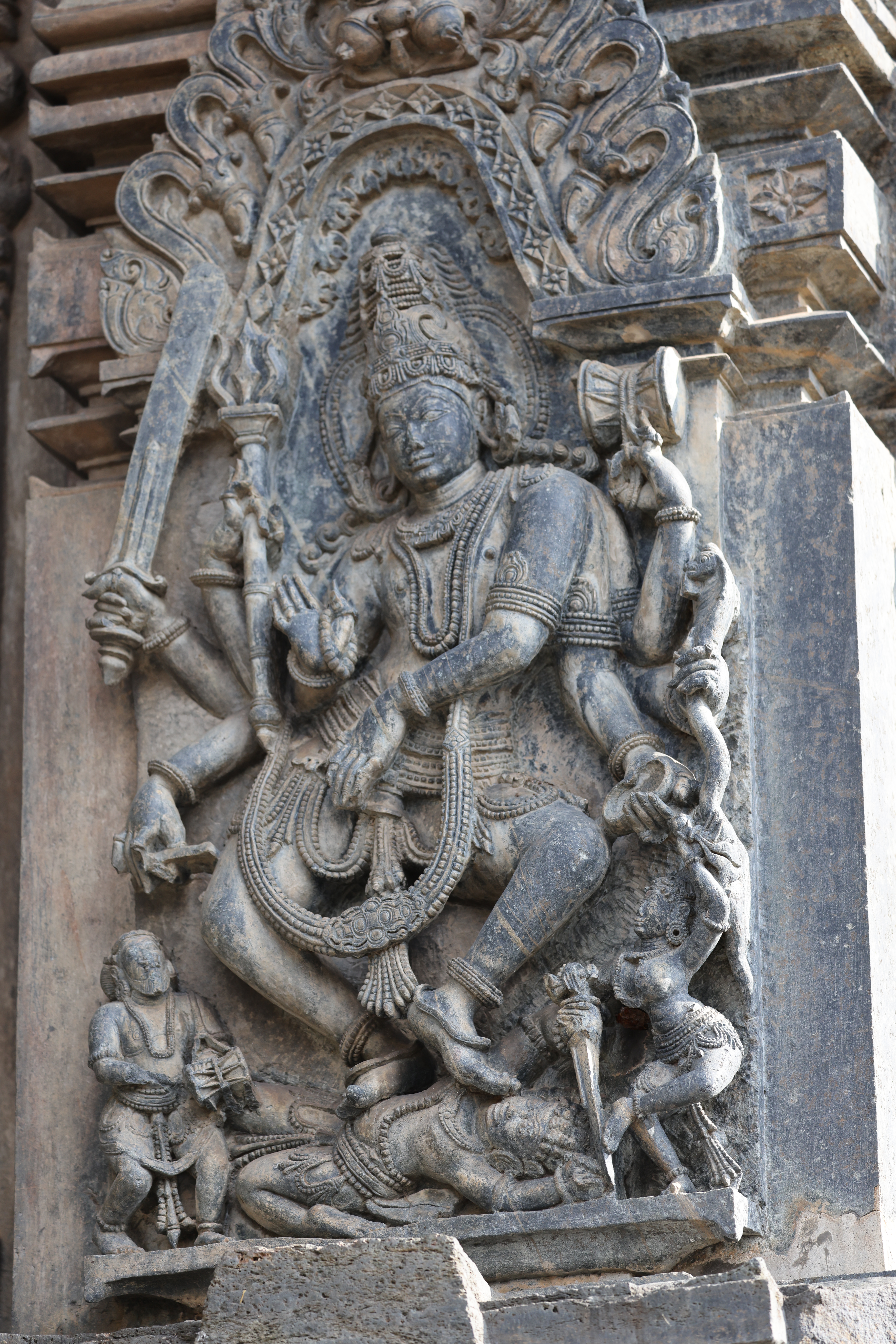
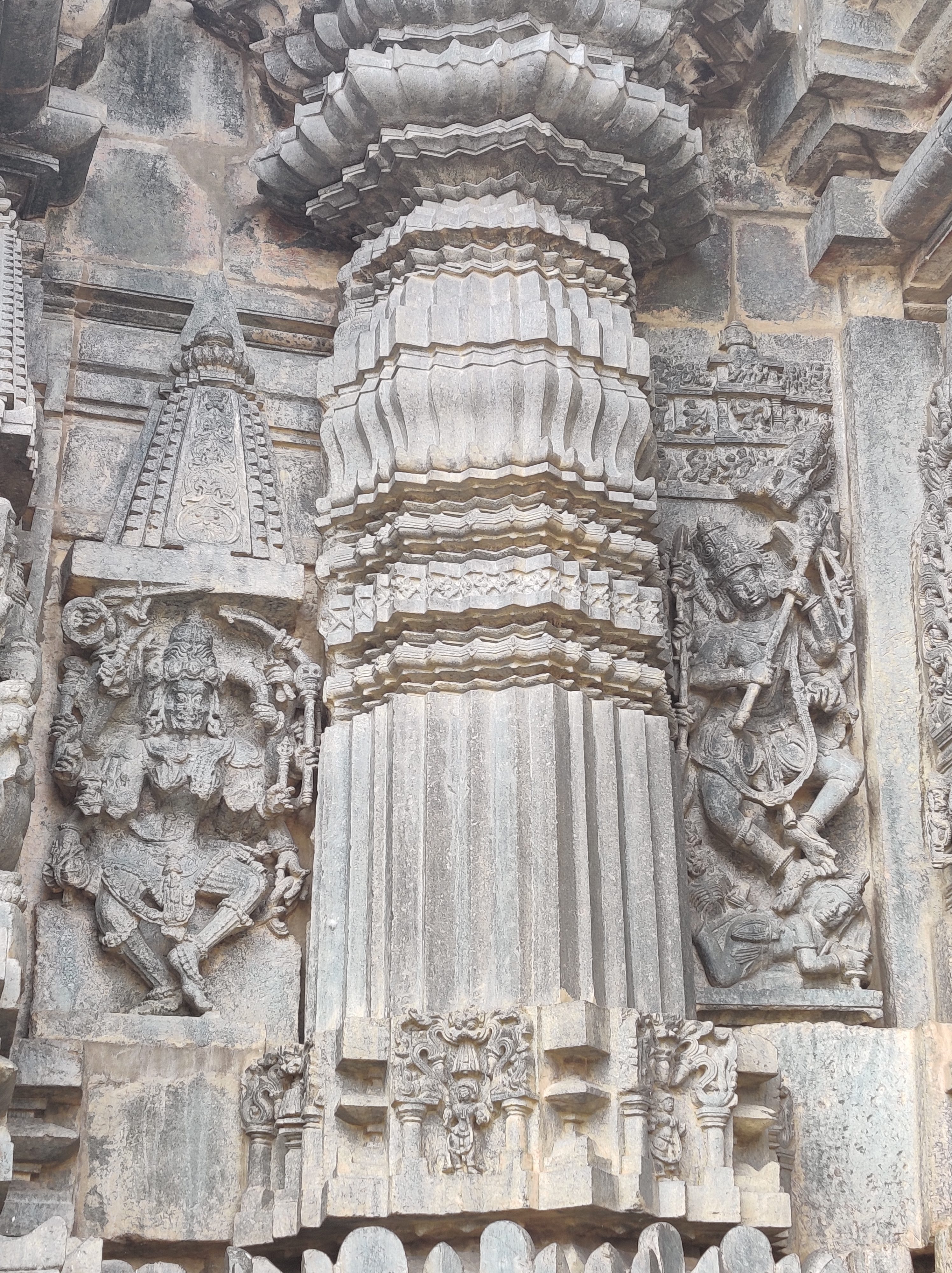
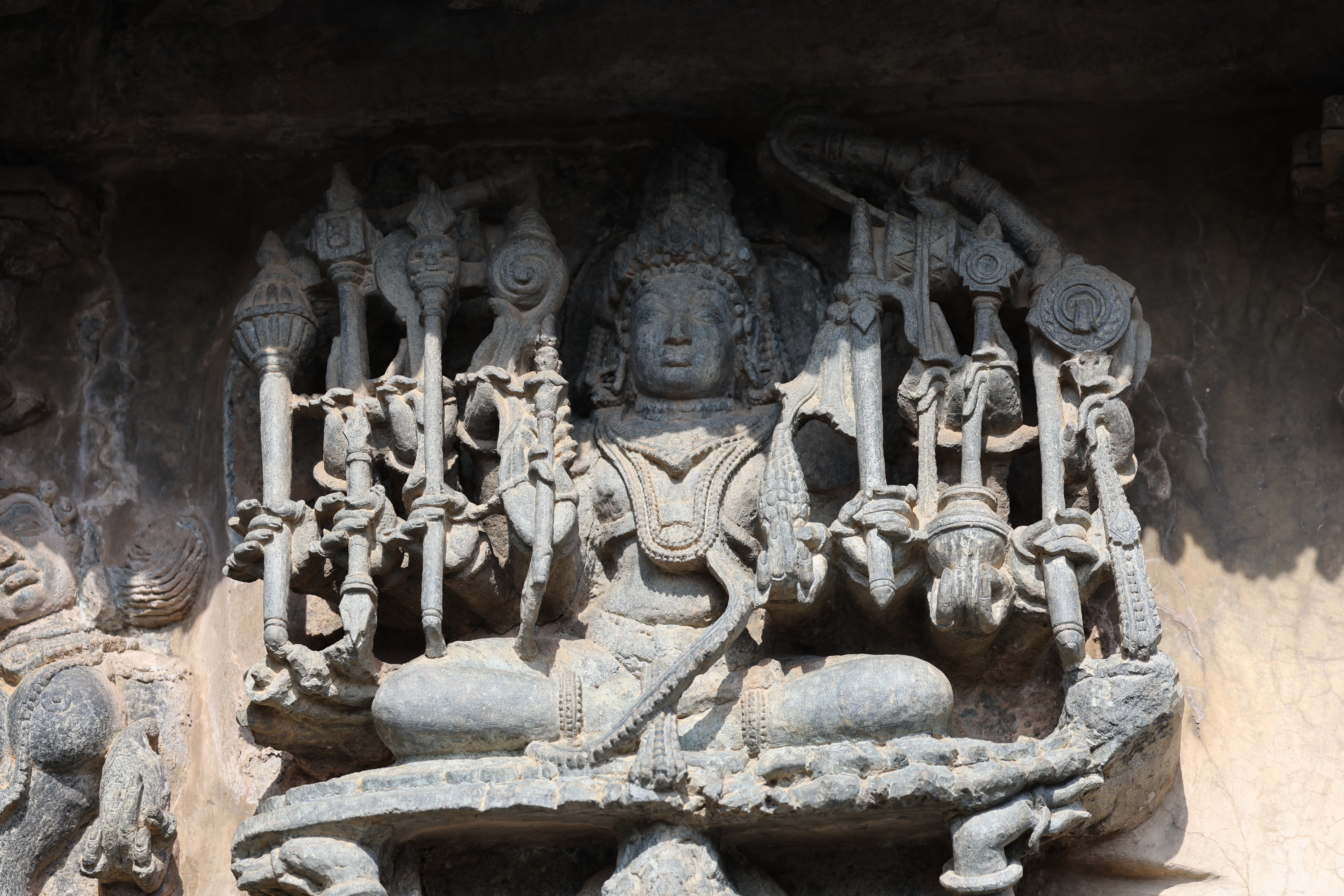
The exterior walls also bear eighty large images of Gods and Goddesses. Unlike the walls of Kesava temple at Somnathapura or Hoysaleshwar temple at Halibeedu, these are more spaced out. And considering the obvious grandeur of these specimens, I think it was a right call by the artists!
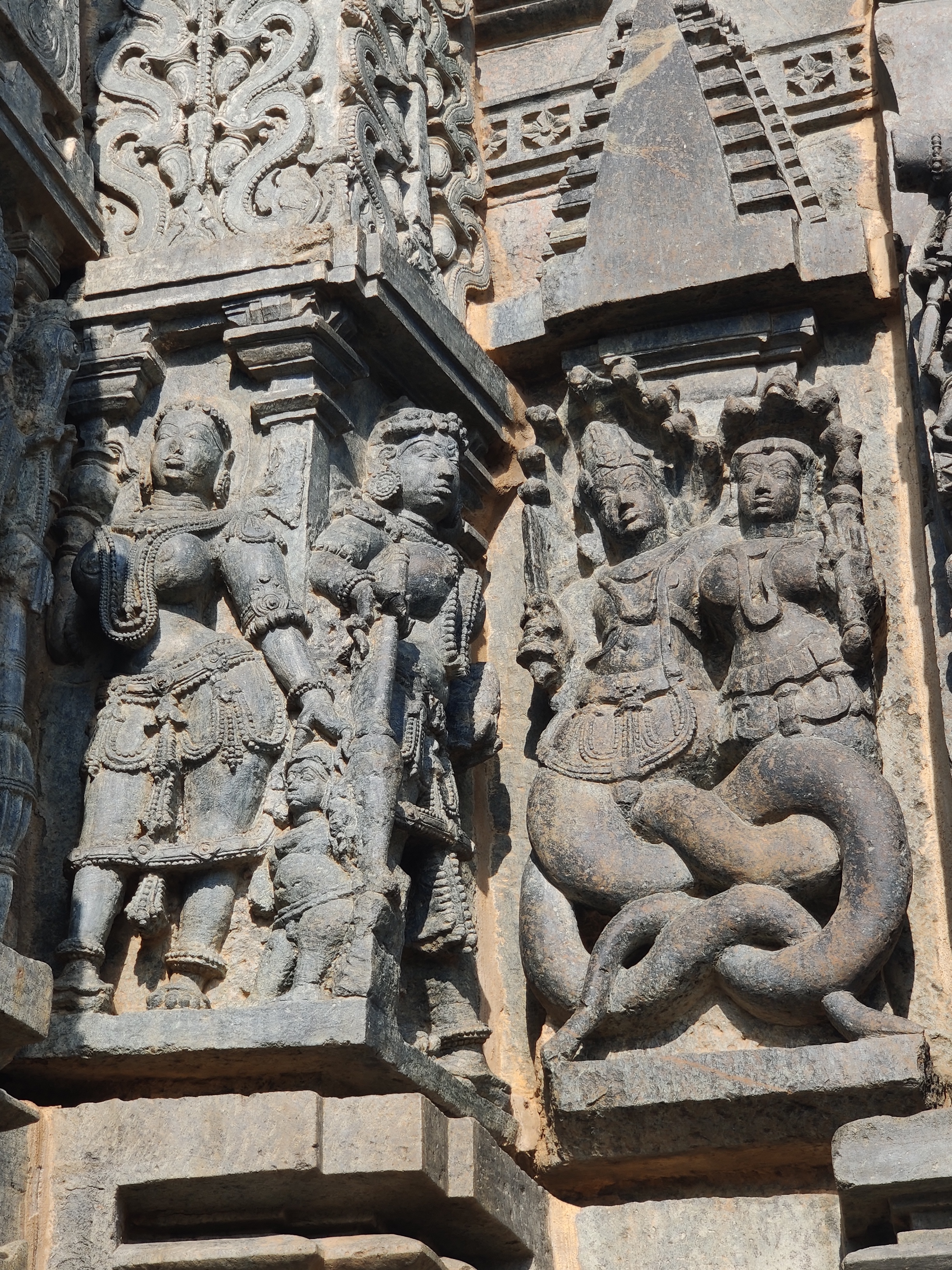
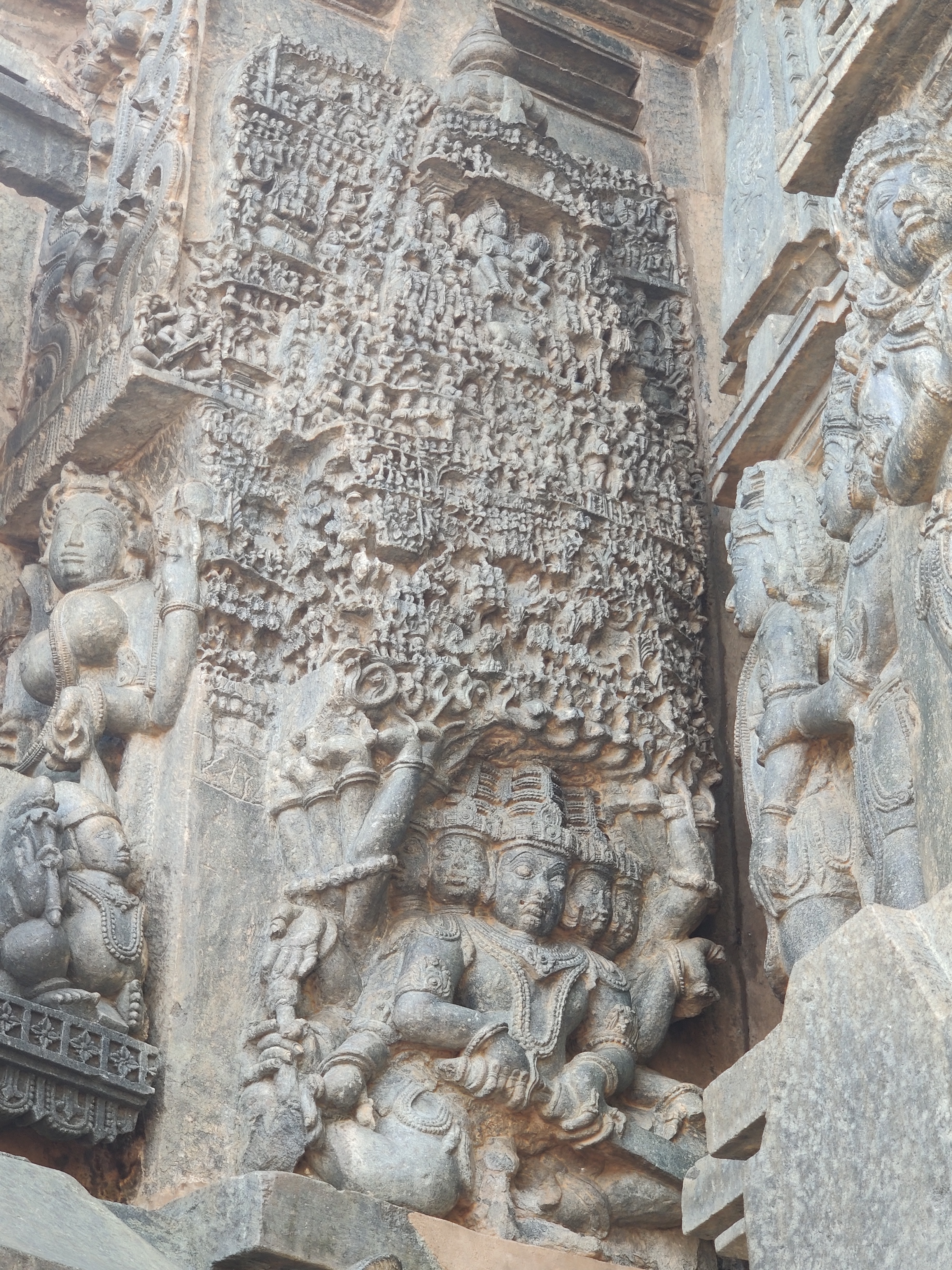

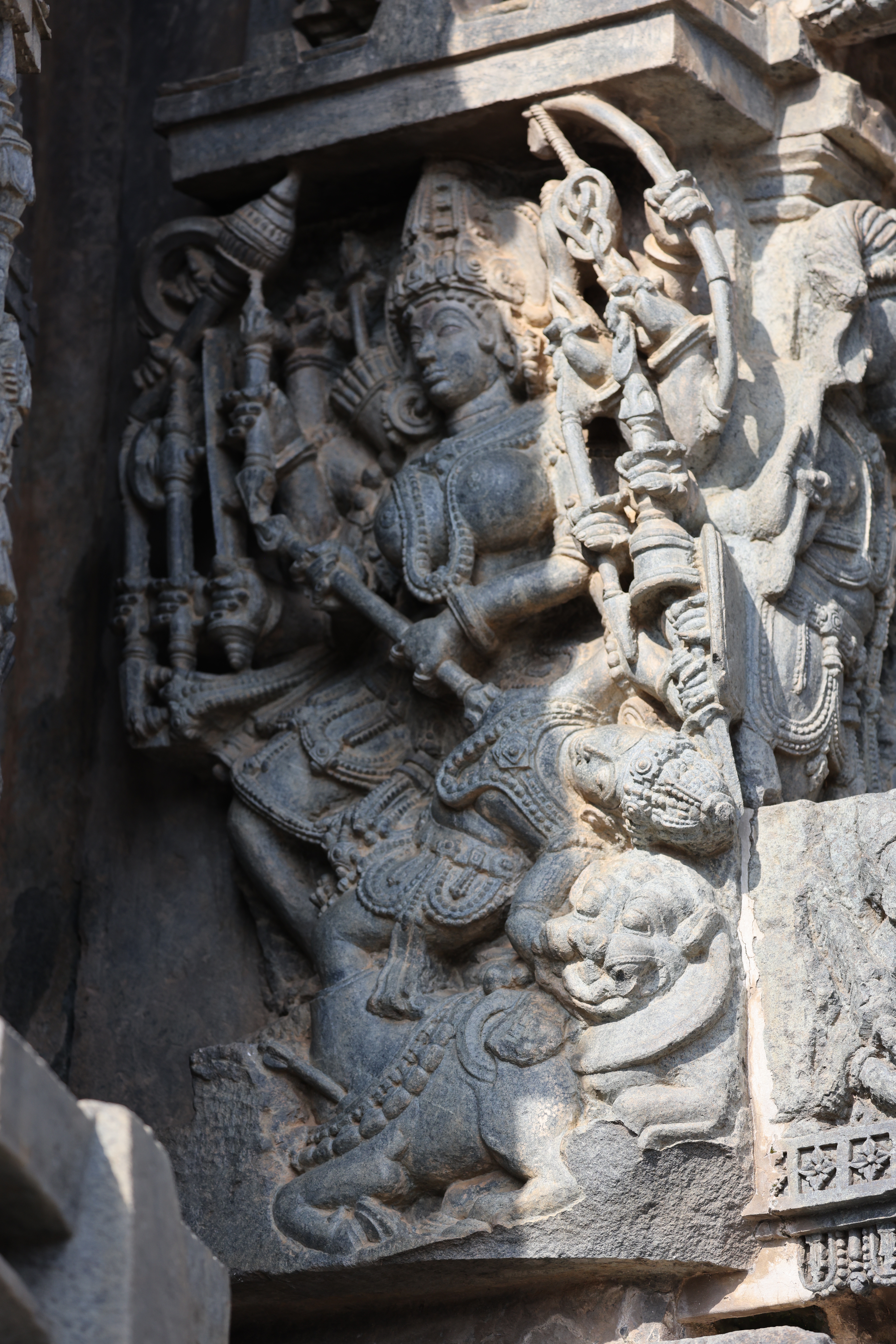
Bracket Figures
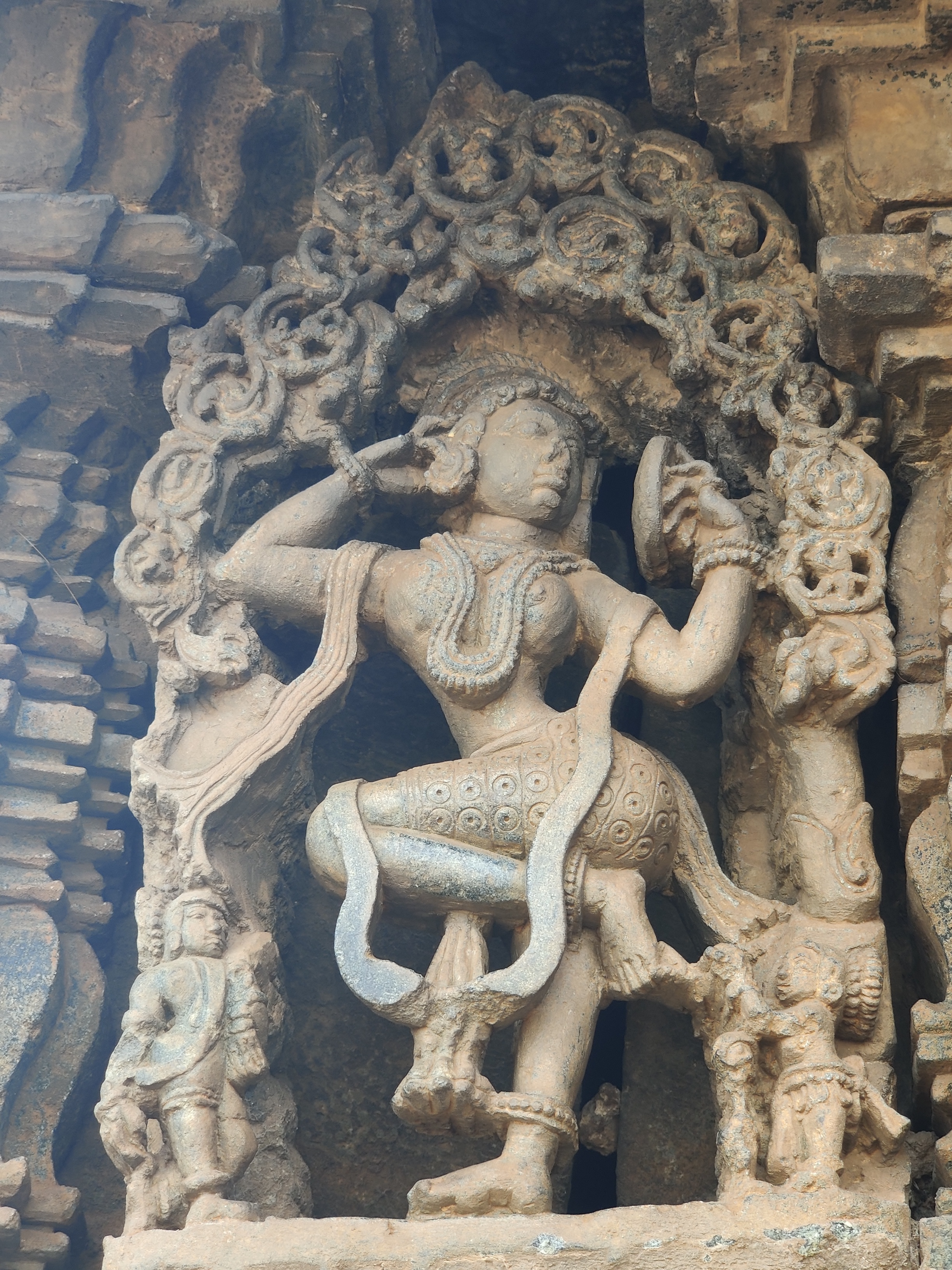
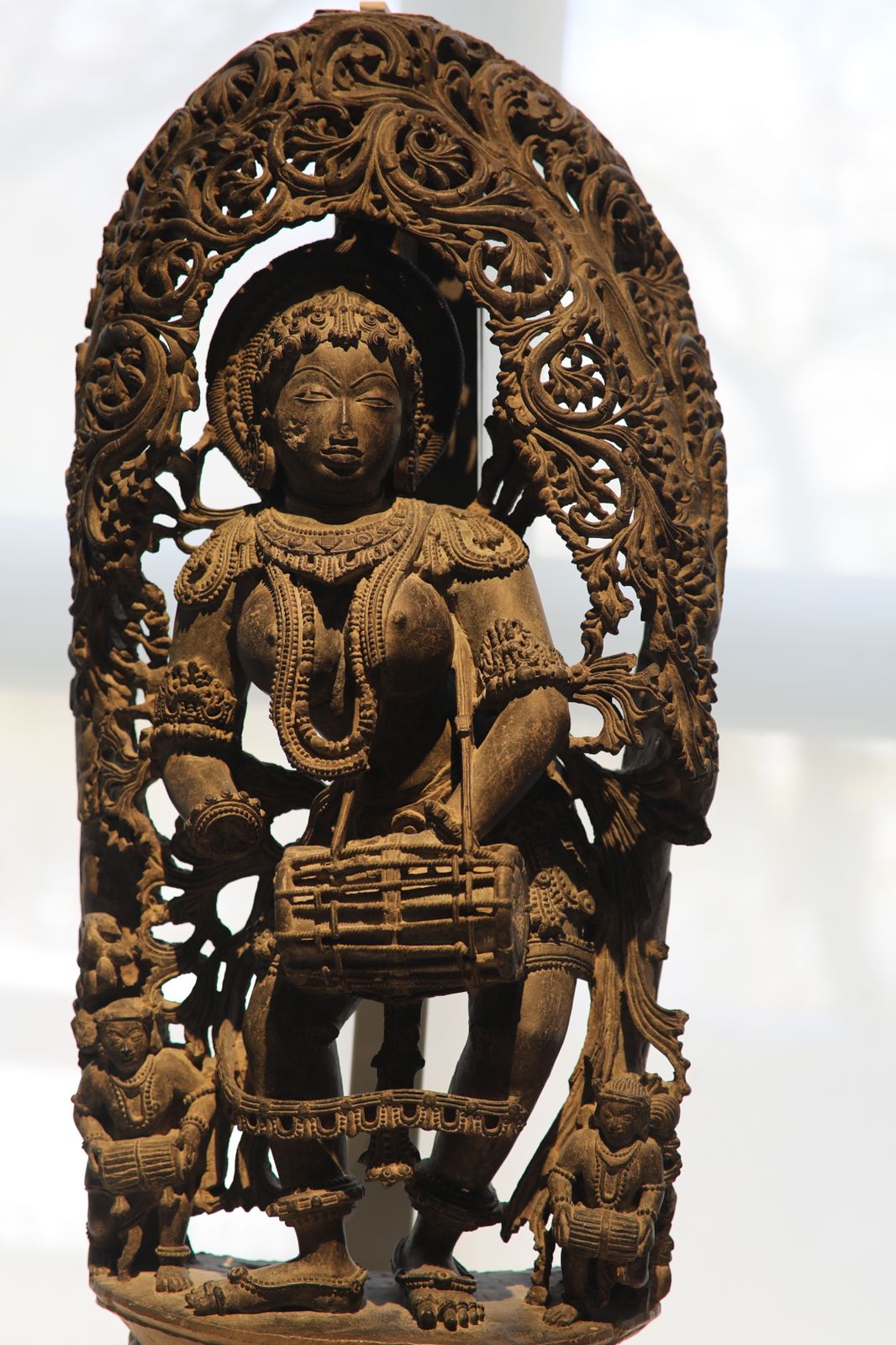
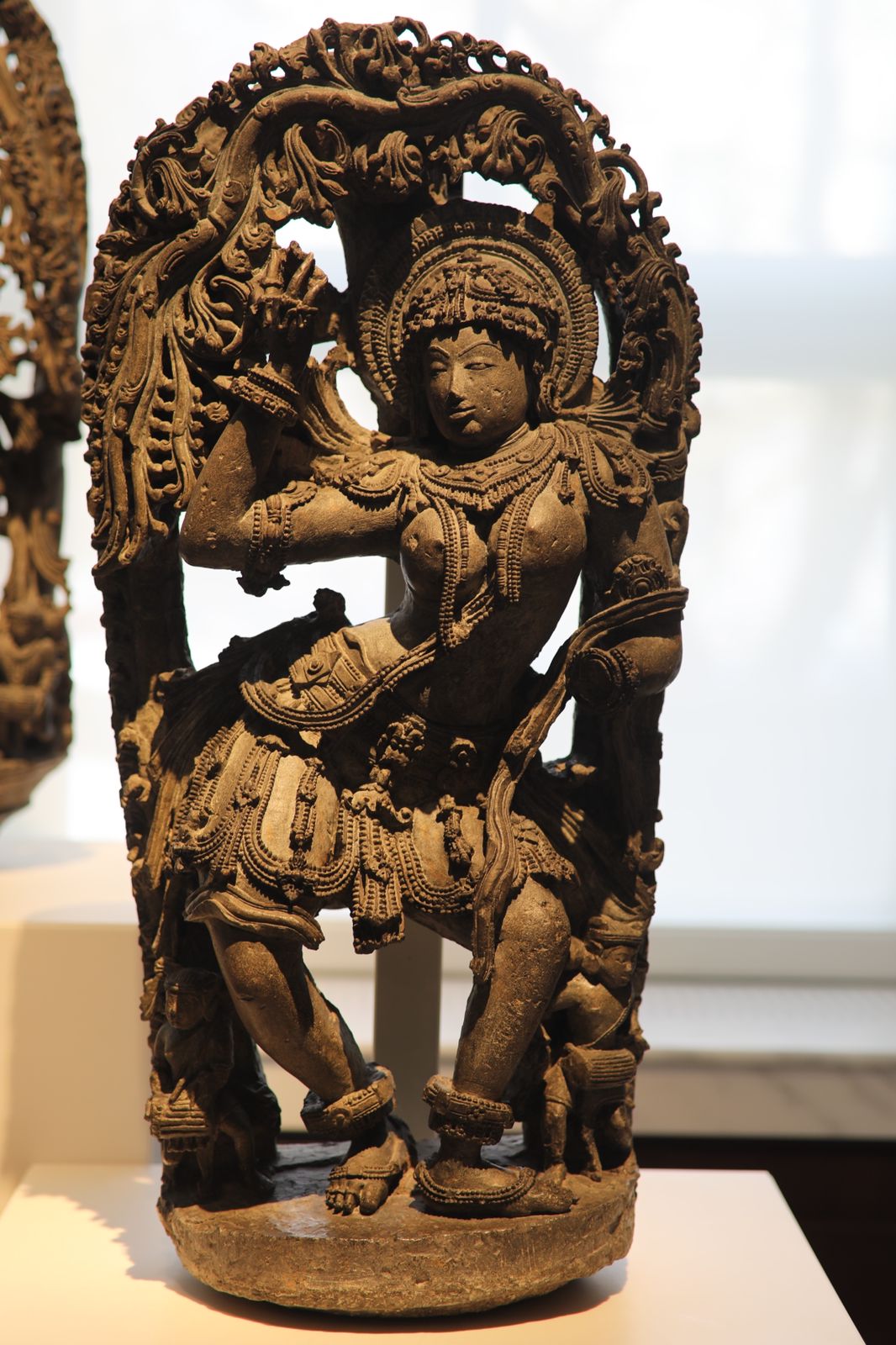
The exterior wall encircling the Navranga comprises eight sections, each adorned with finely carved sculptures mounted just below the temple’s eaves. These sculptures, known as Madanikas or apsaras, represent various aspects of social life, reflecting the diverse upbringing of queens who gained expertise in music, drama, dance, literature, and even adventurous pursuits like hunting. Each Madanika, mounted on an oval lotus pedestal, celebrates feminine form and beauty with exquisite craftsmanship.
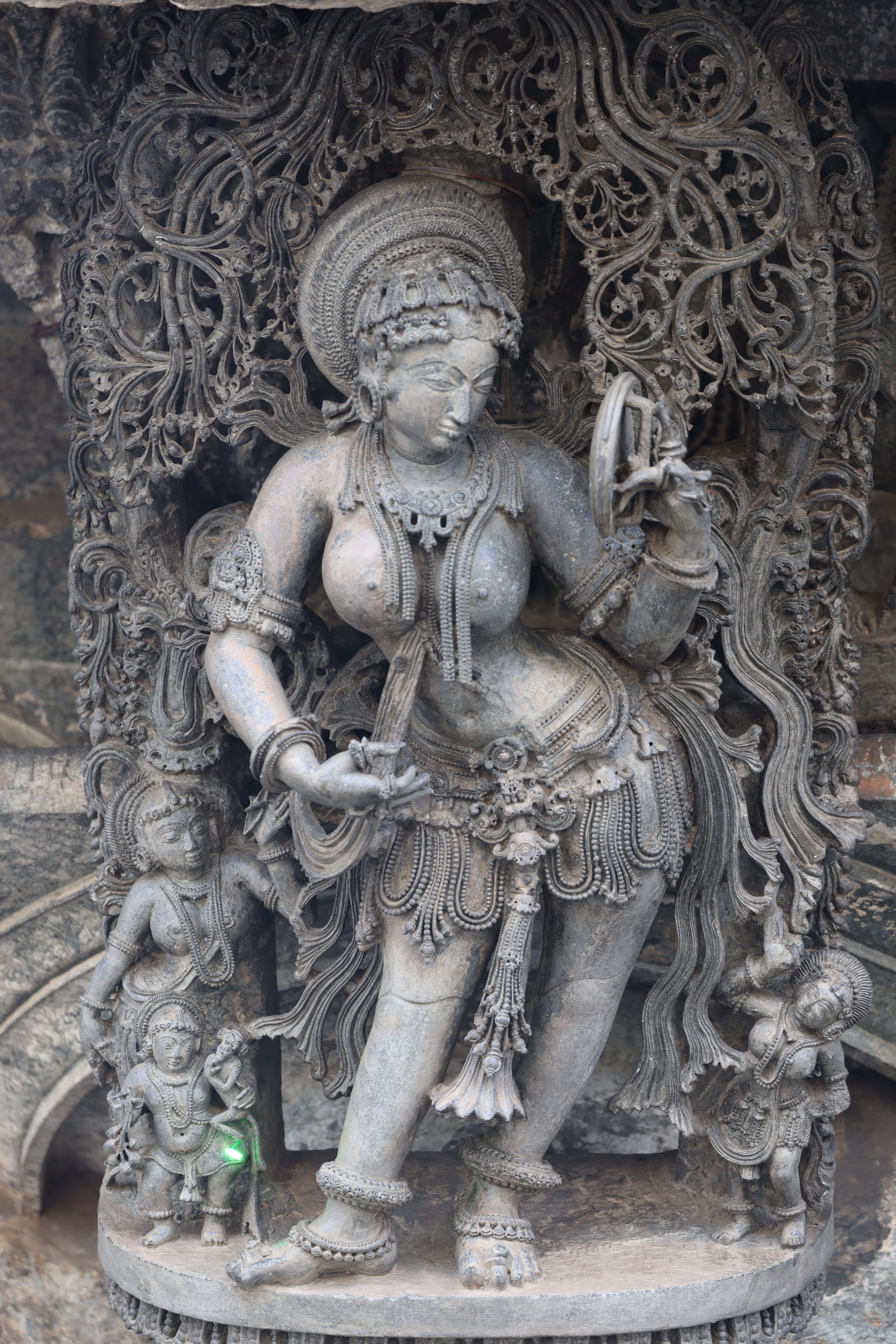
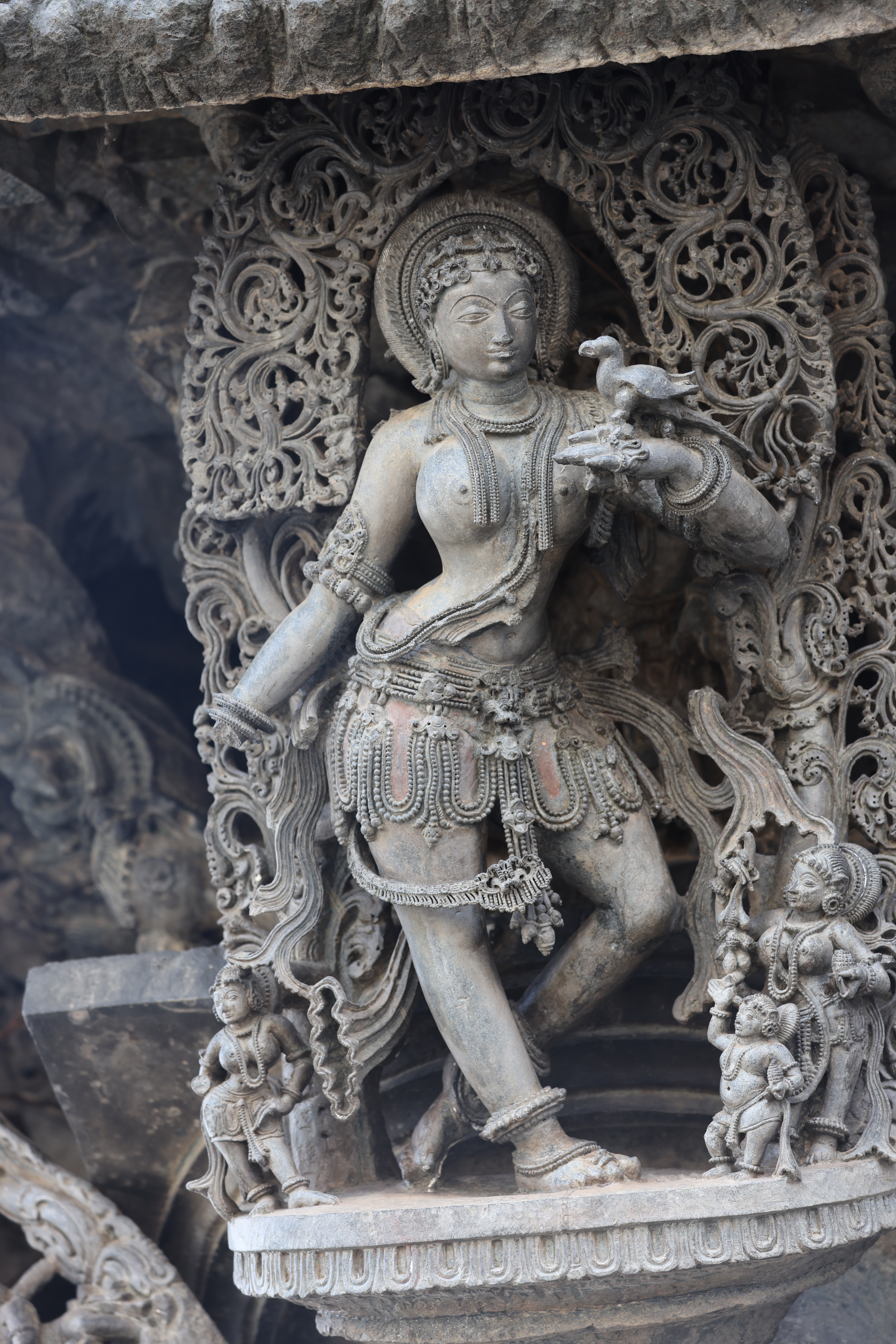
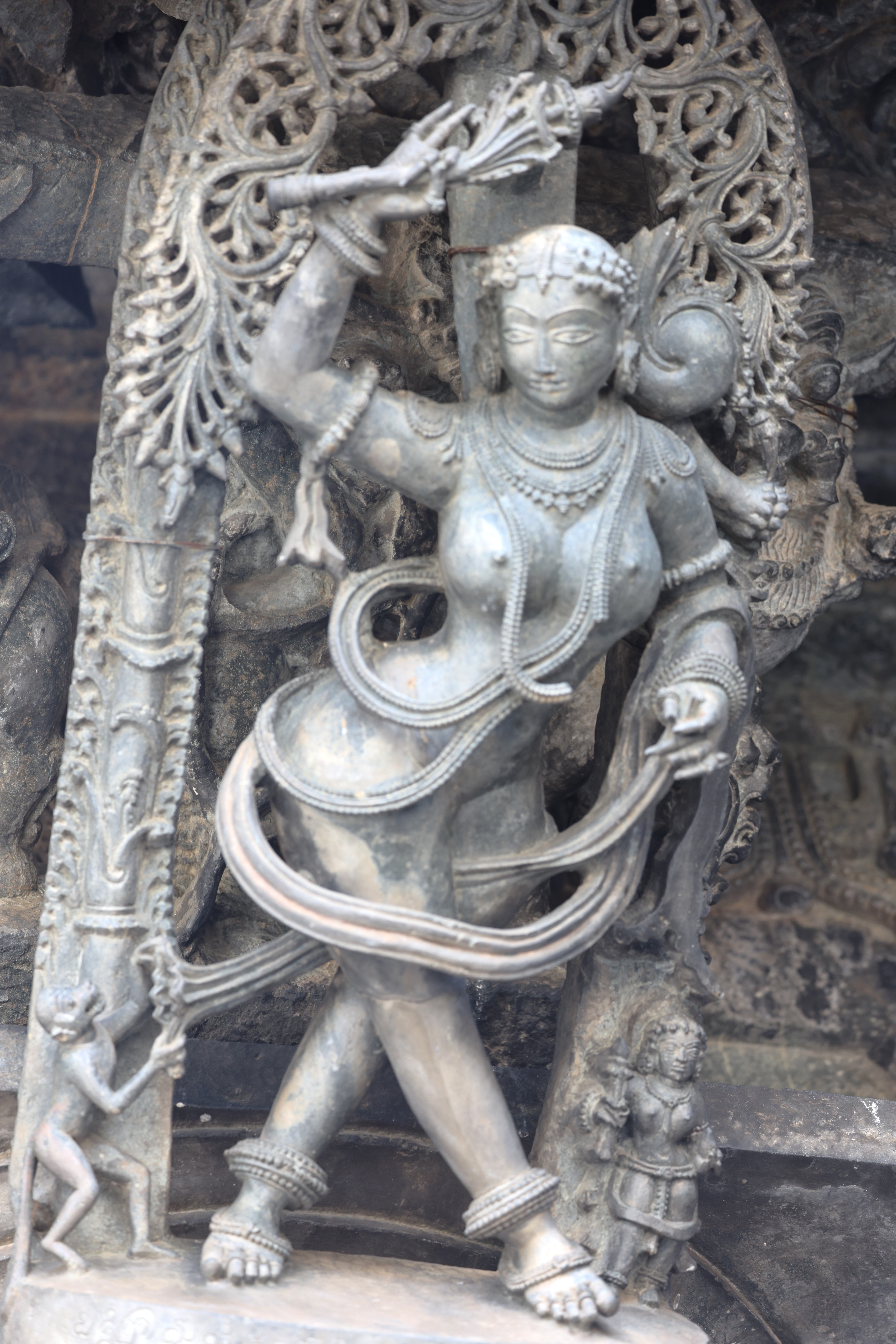
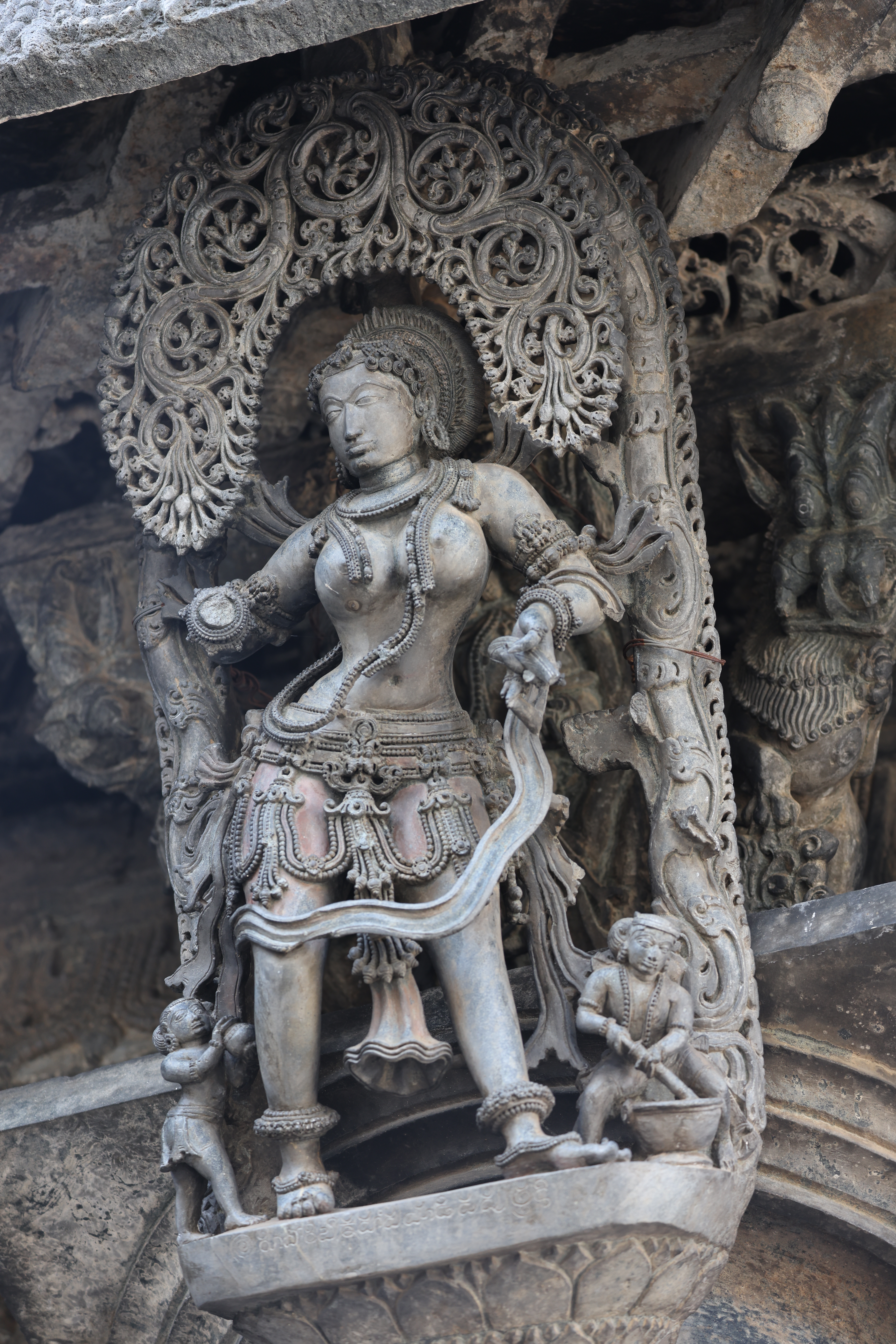
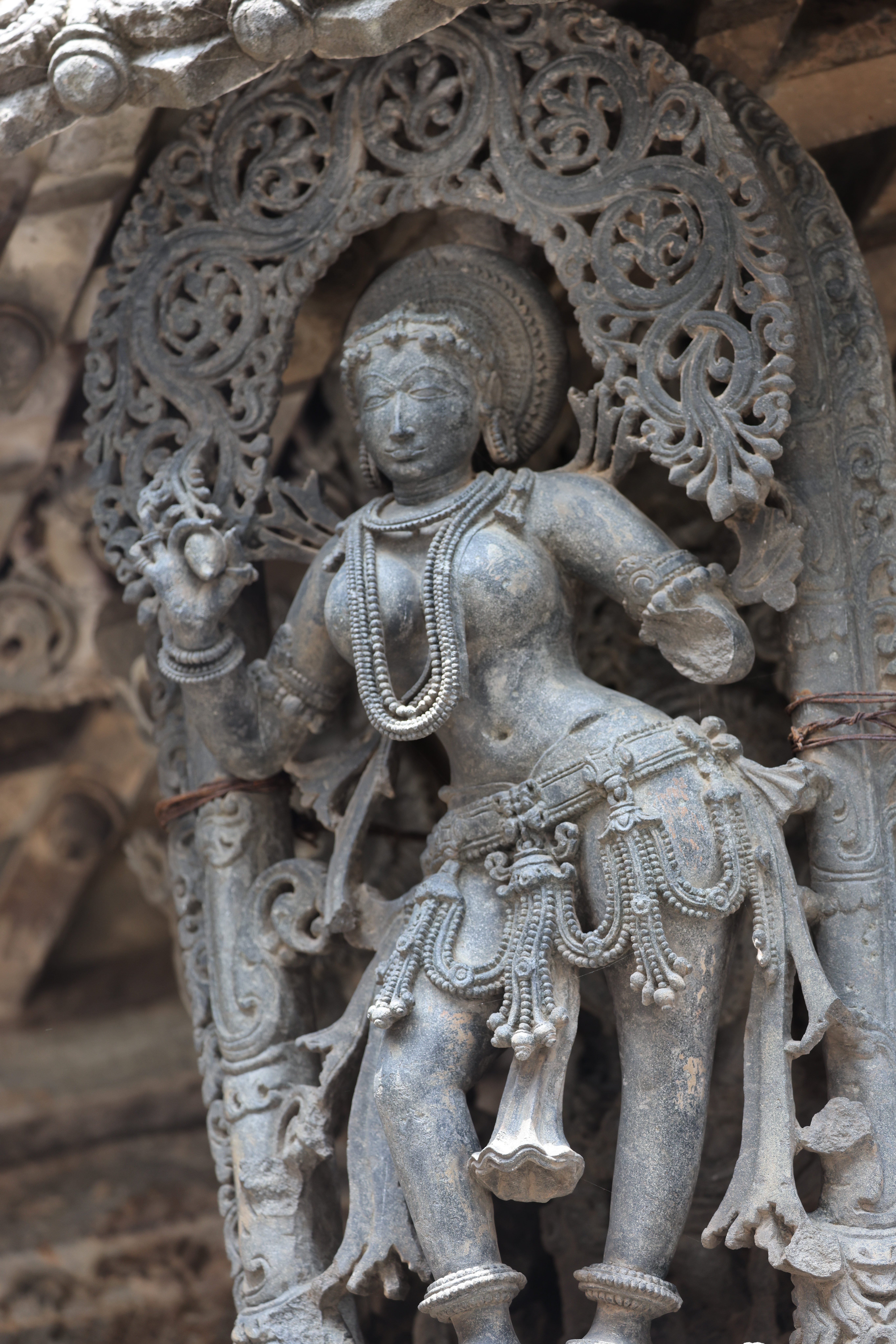
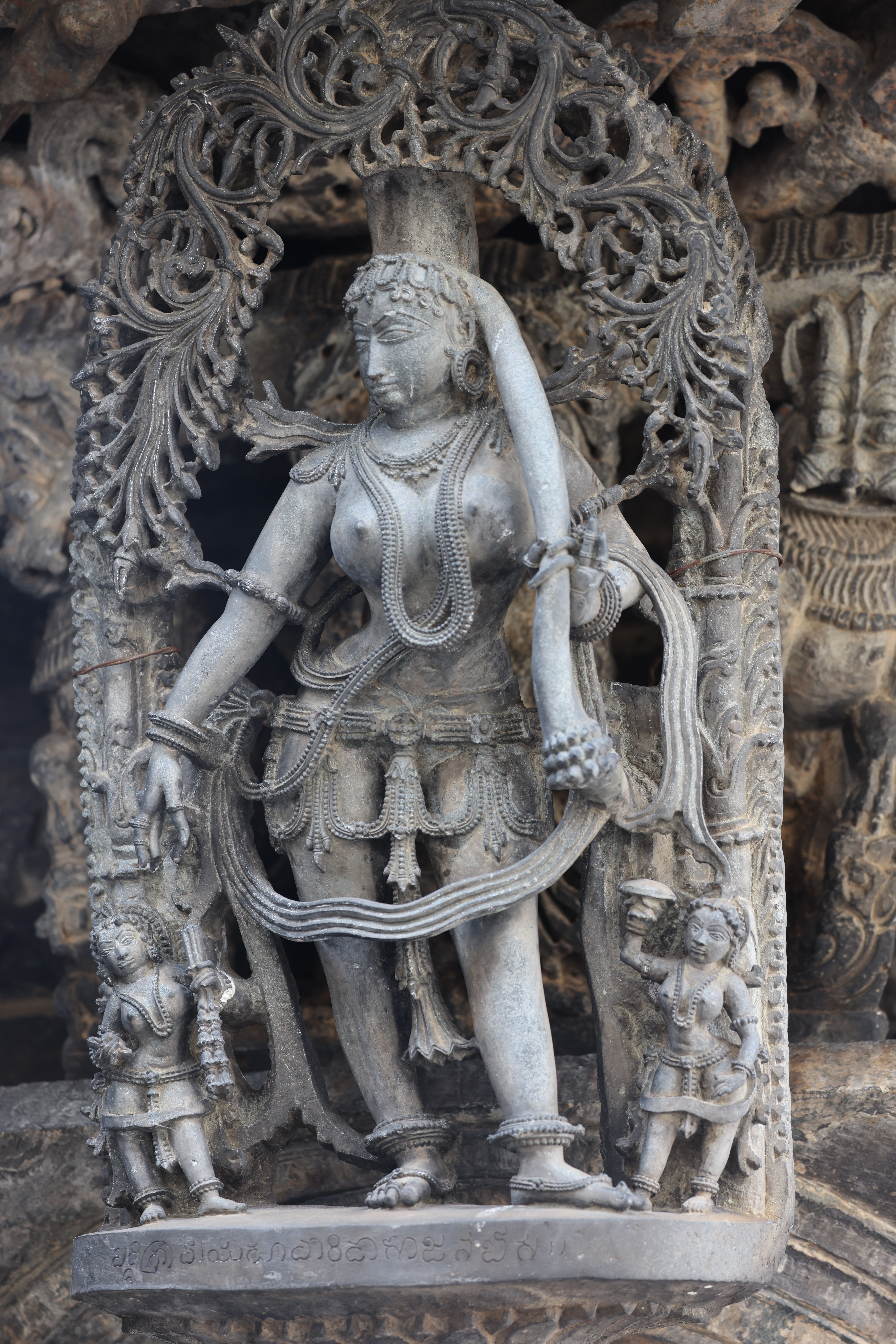

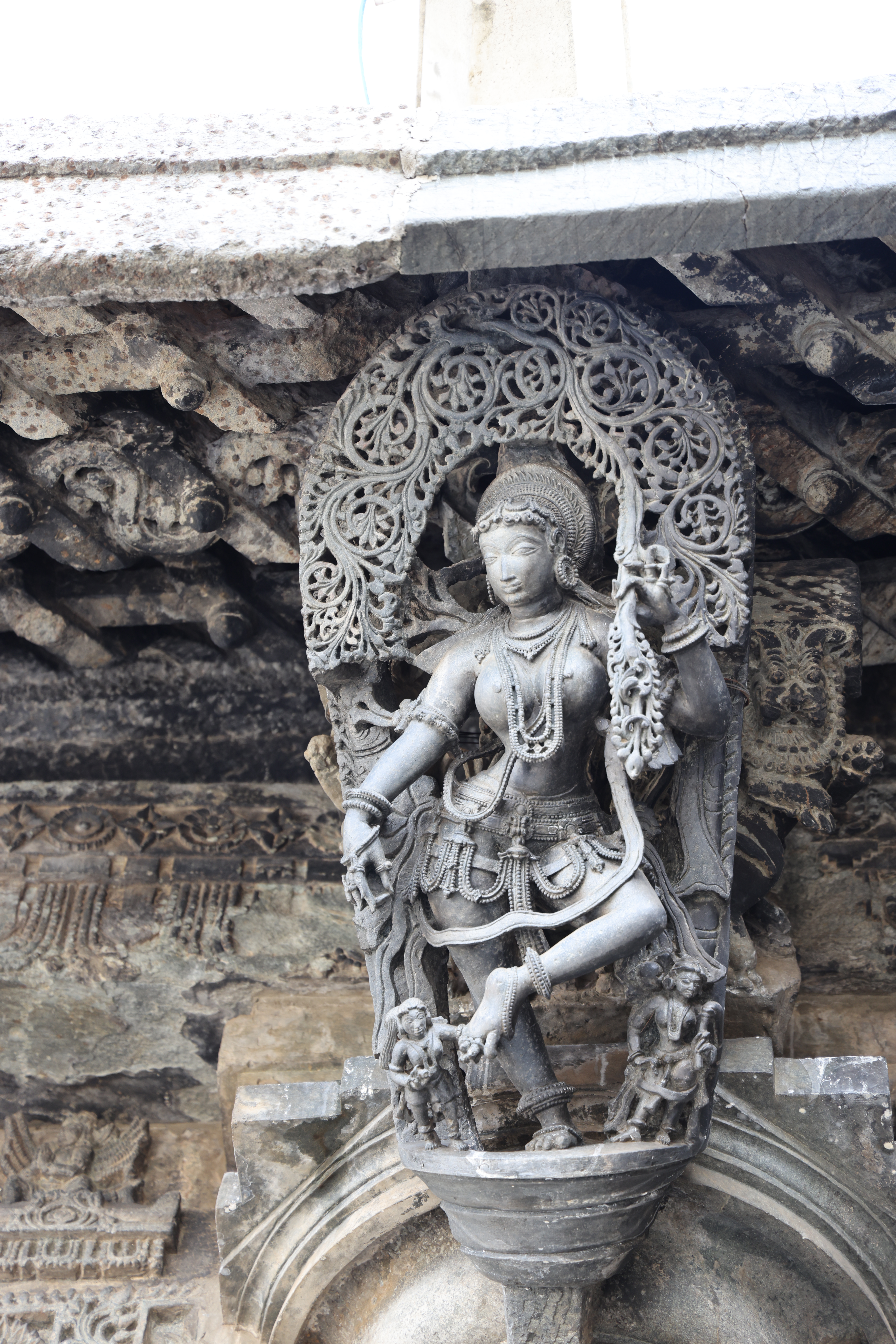
Several brackets also highlight the royal family’s inclination toward art and culture, particularly noteworthy given Queen Santala’s expertise in traditional Indian dance forms.
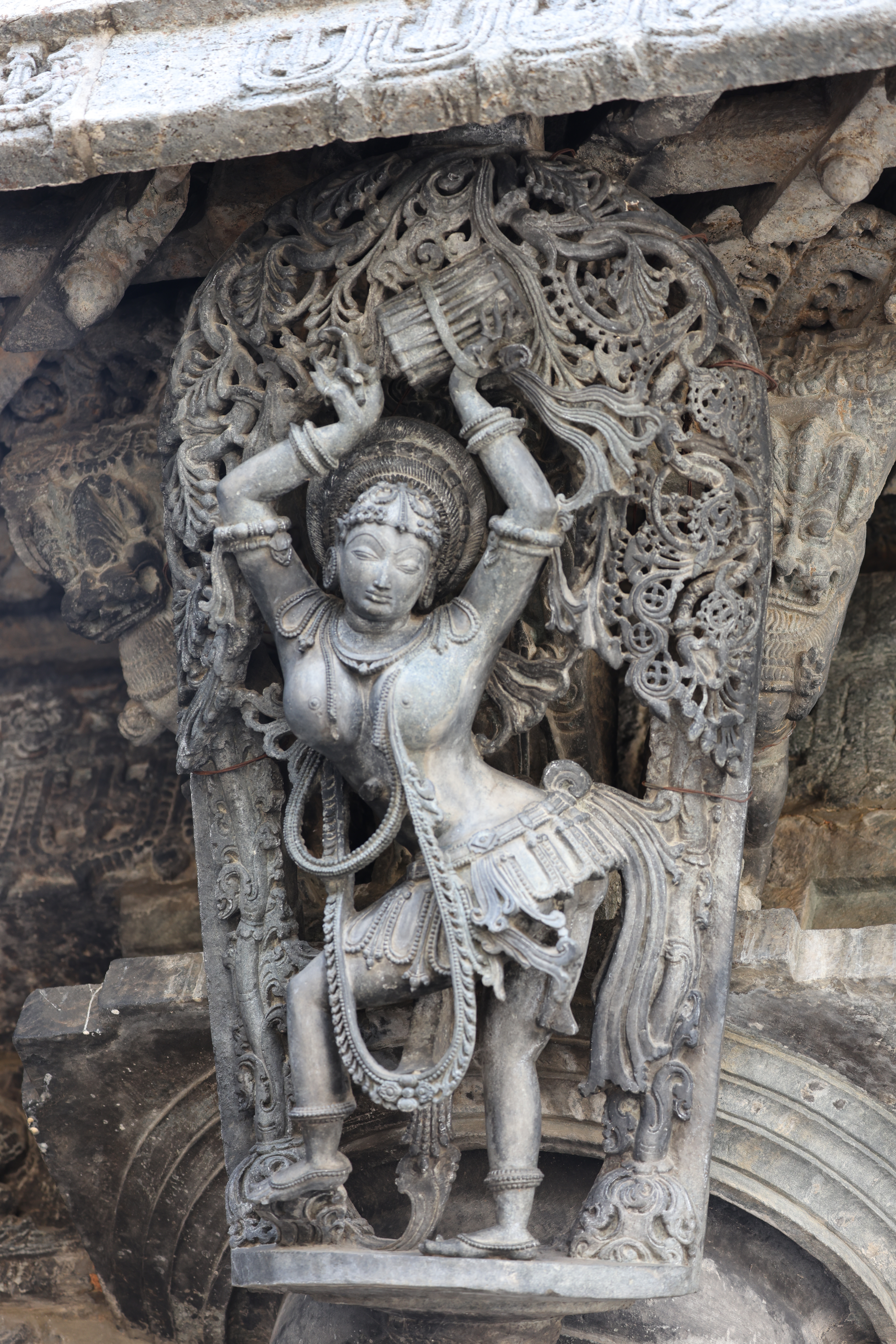
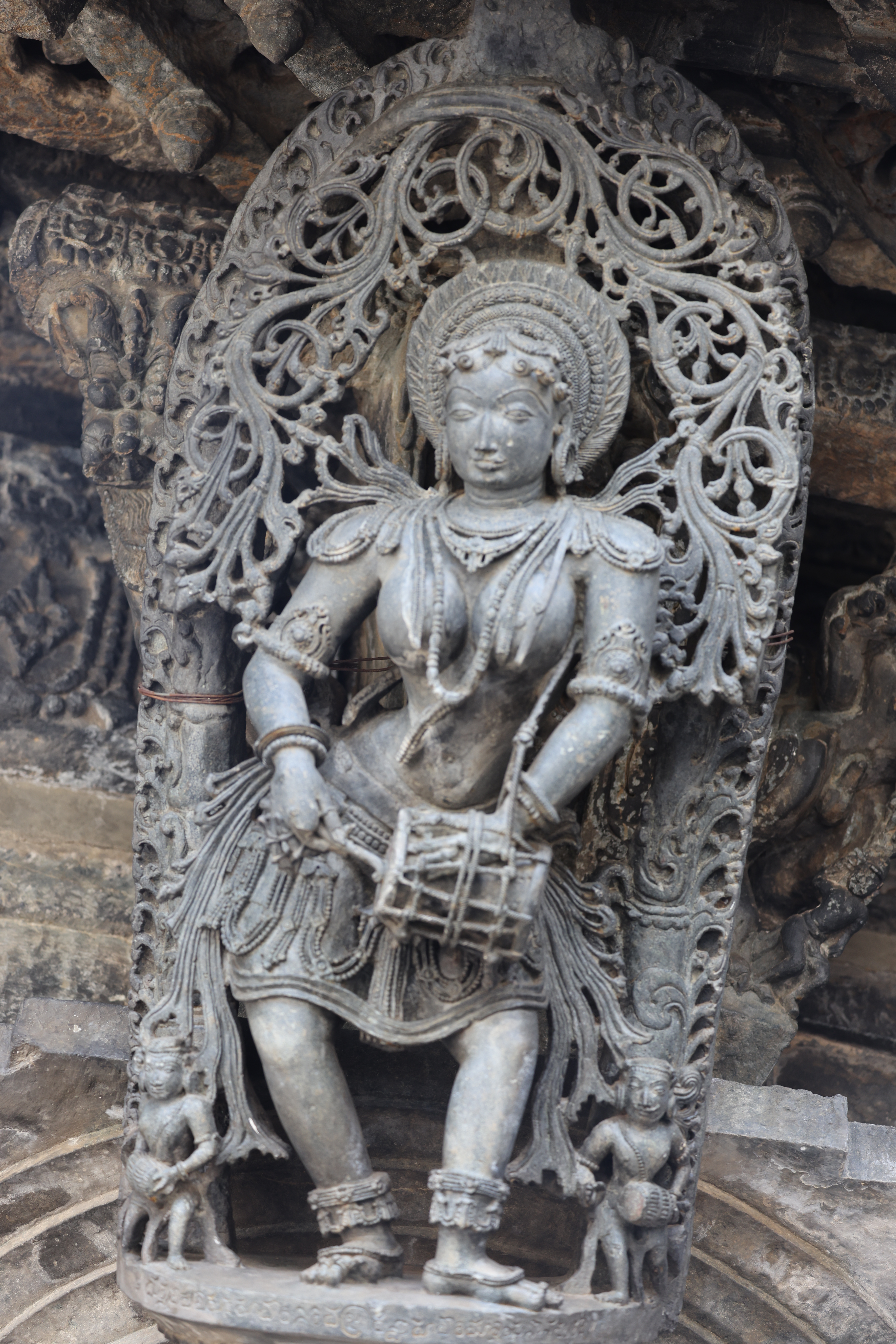
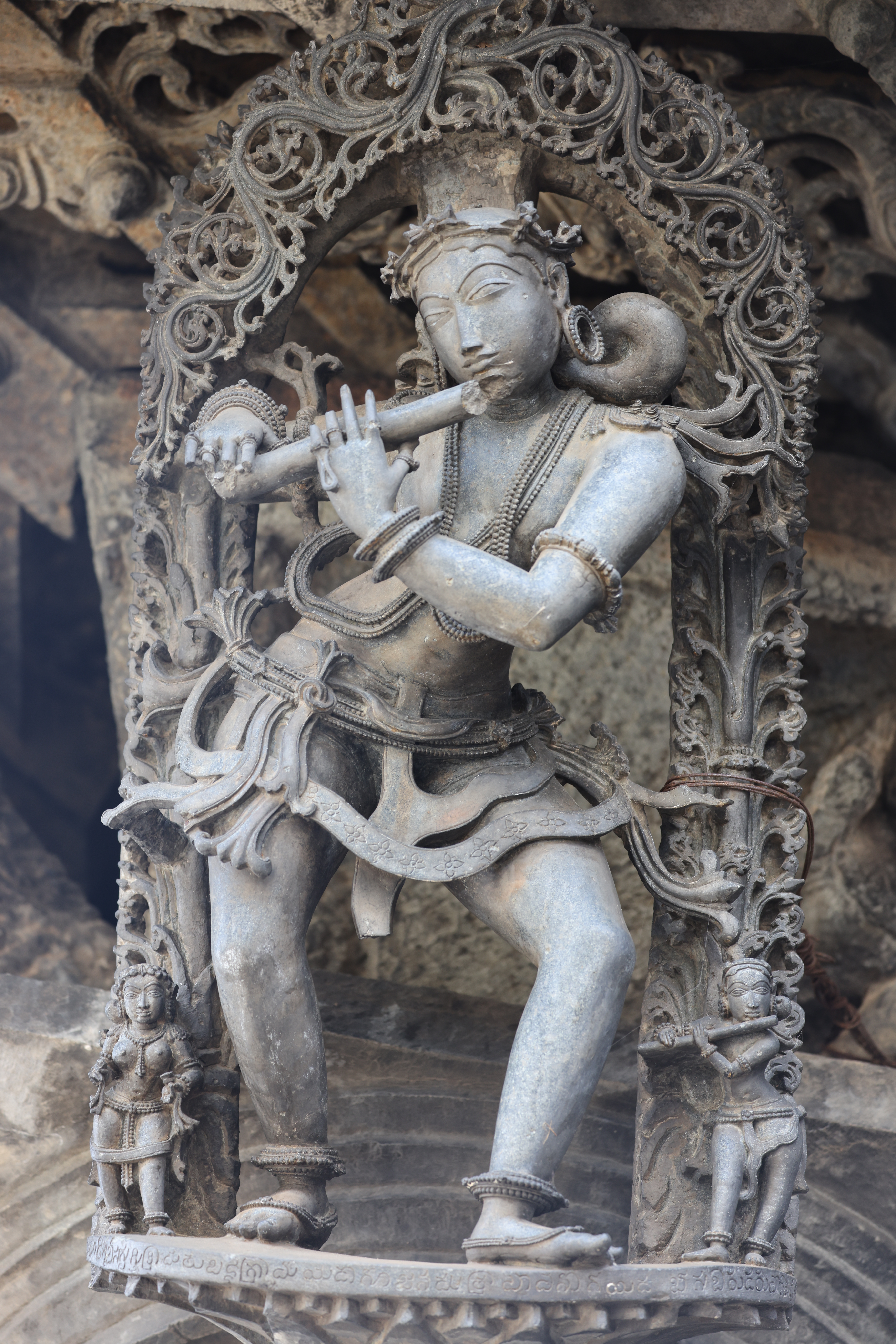
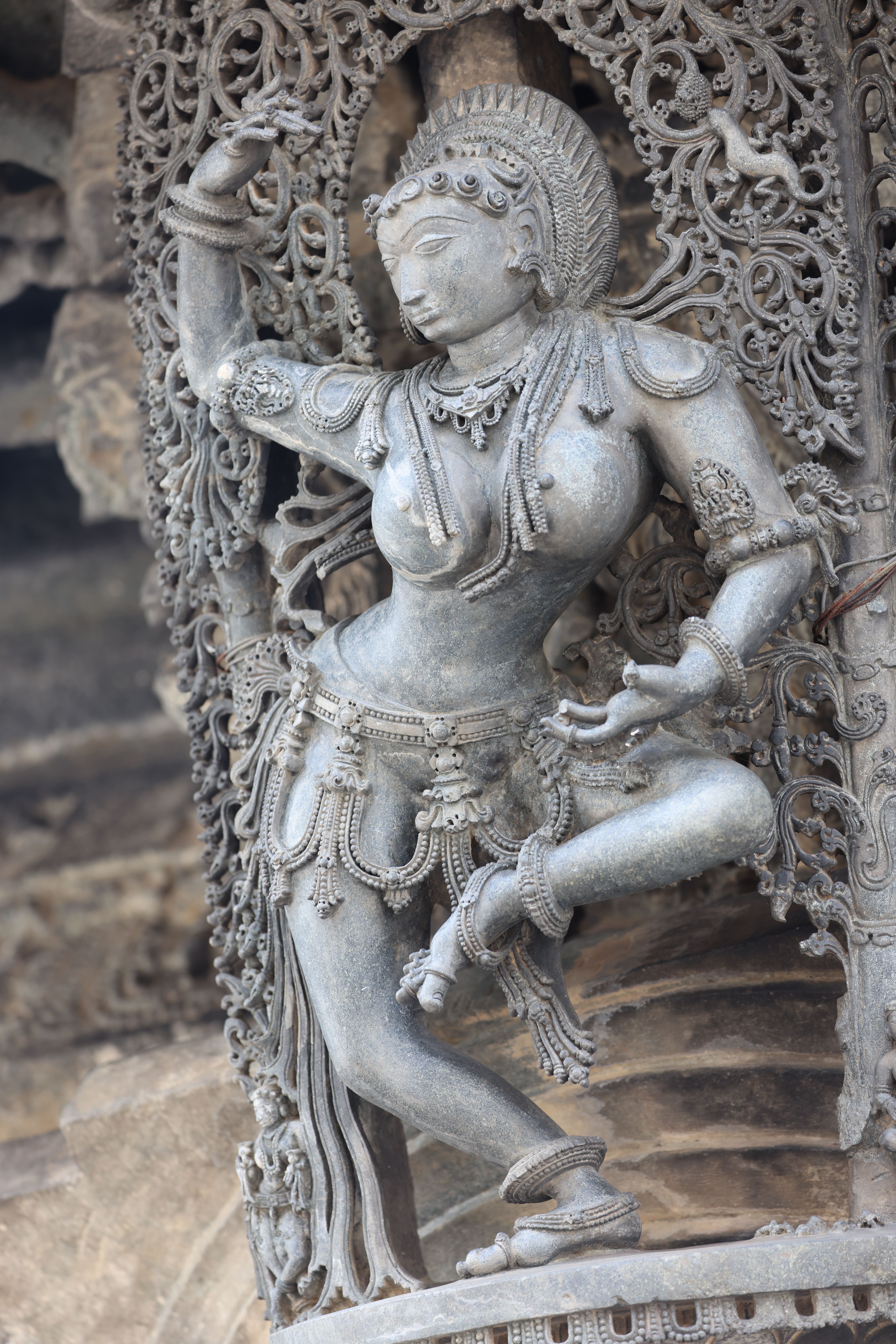
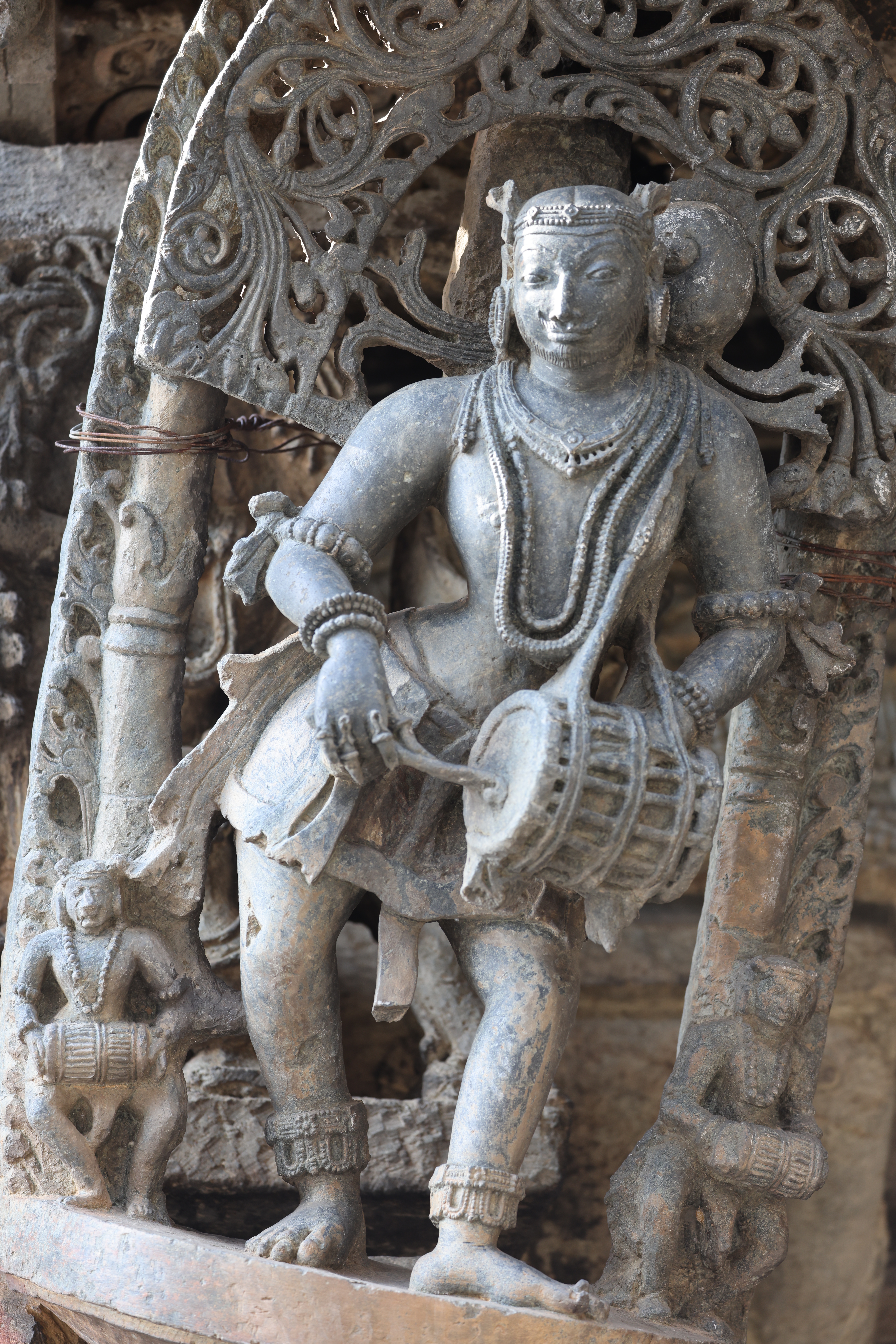
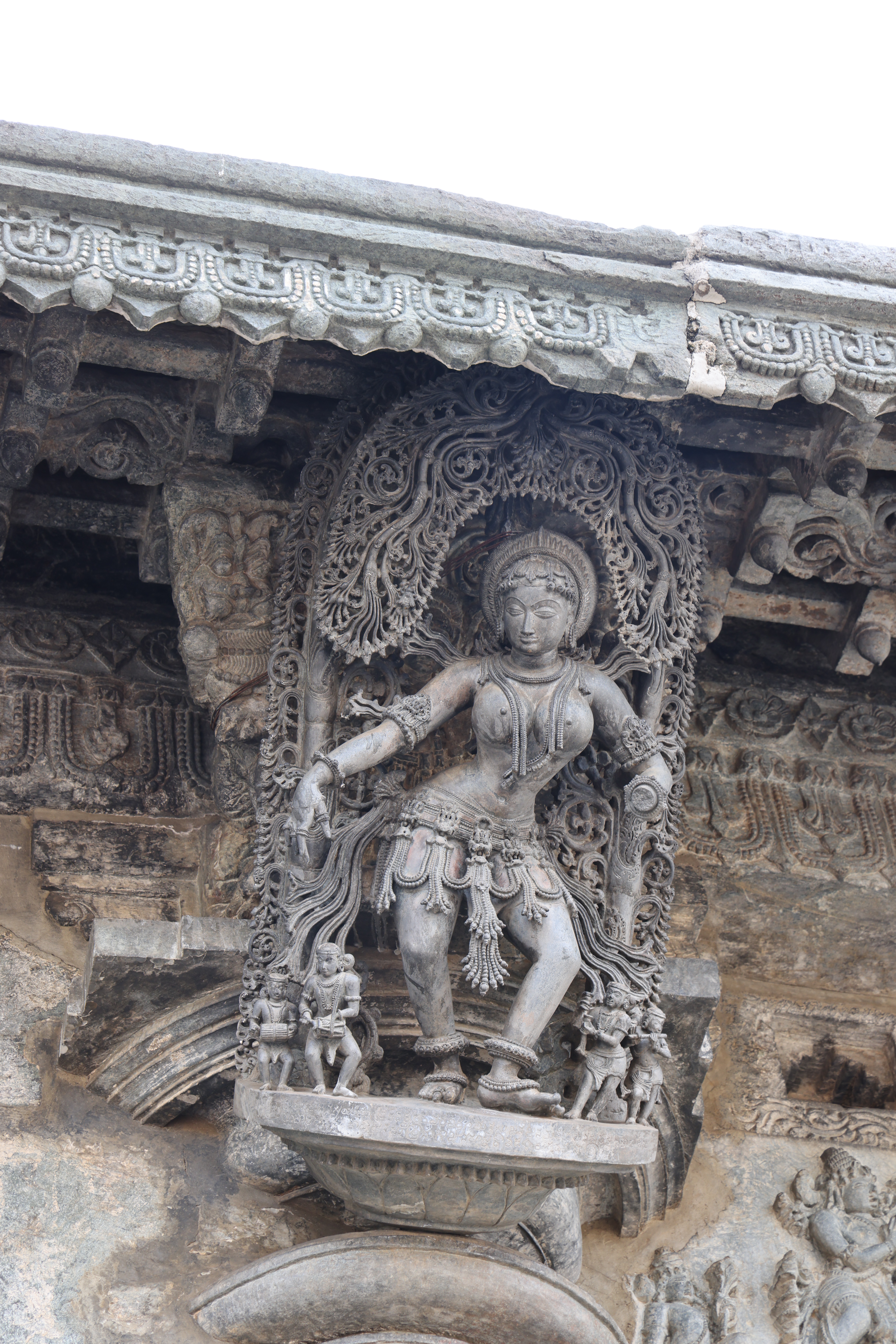
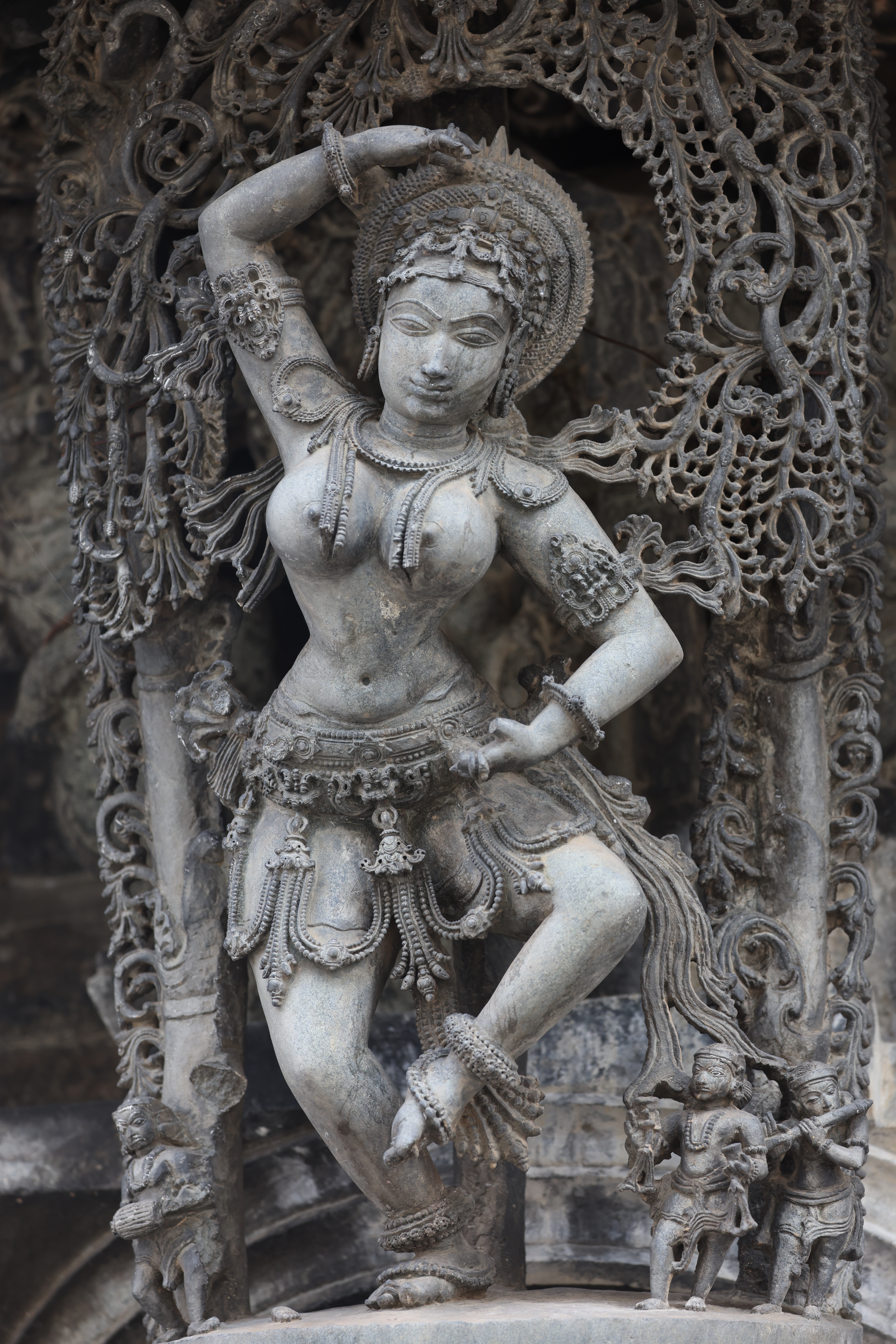
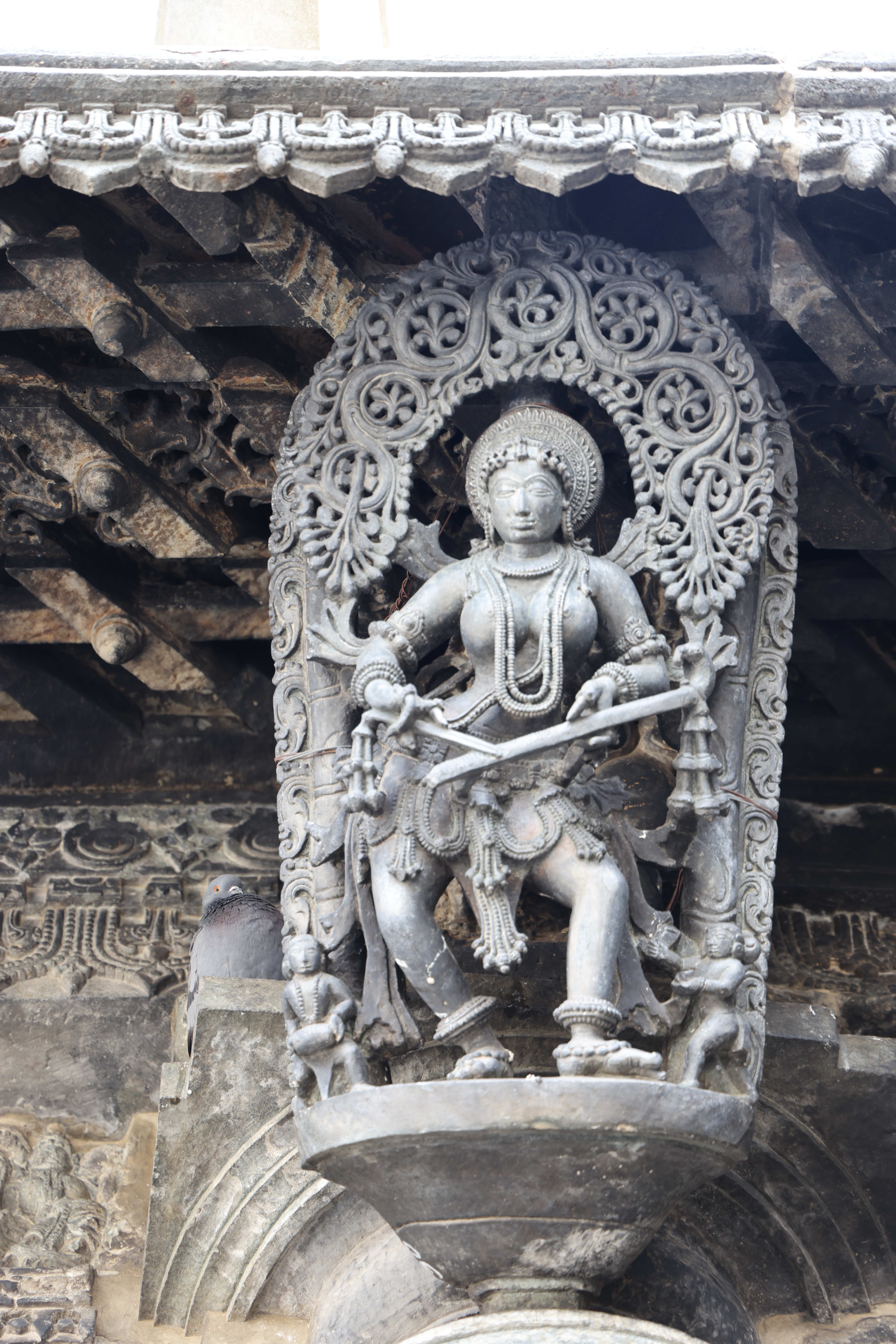

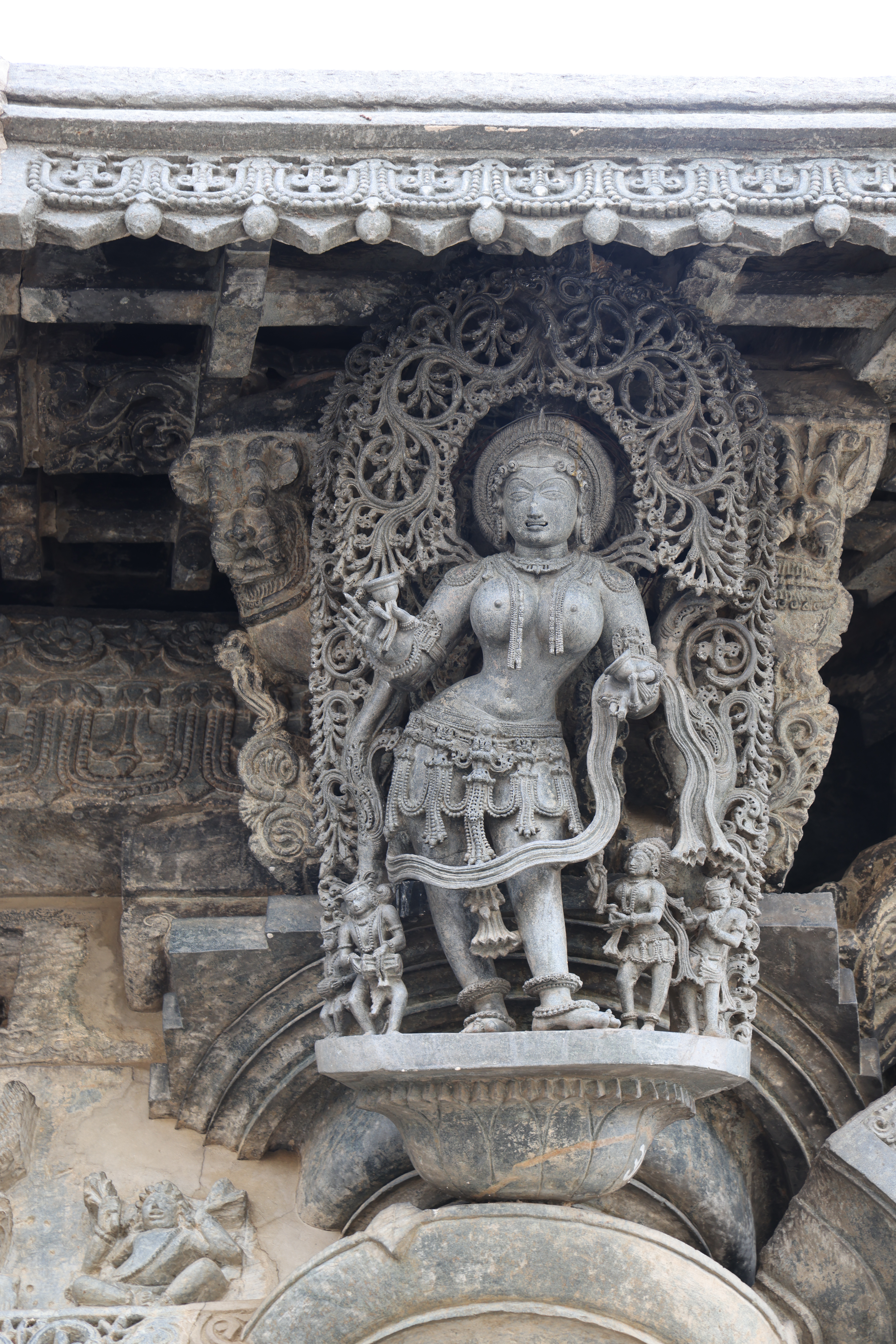
Hoysala queens indulged in a wide array of indoor and outdoor games for relaxation. Their activities varied depending on the season and climate, alongside their pursuits in music and dance.

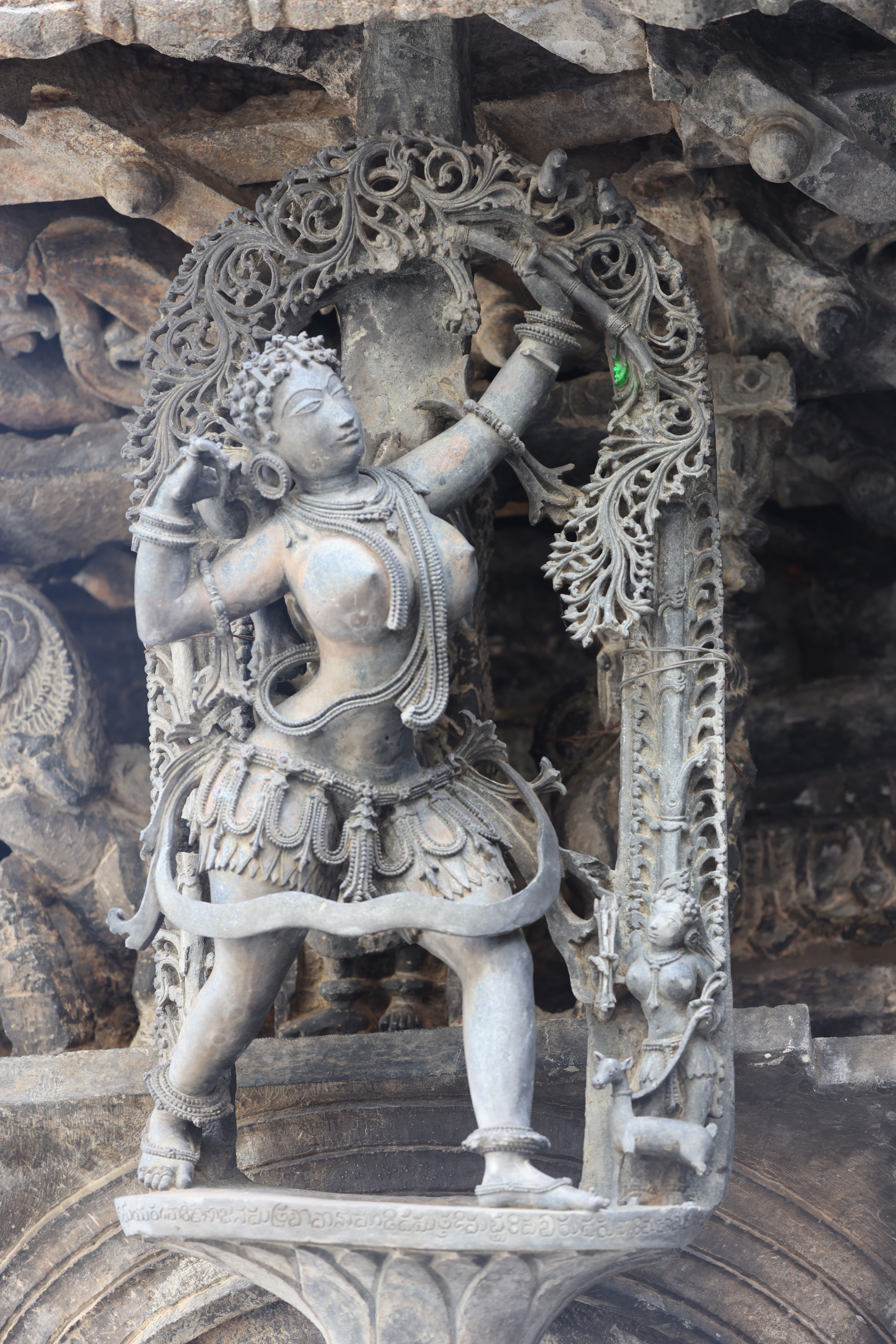
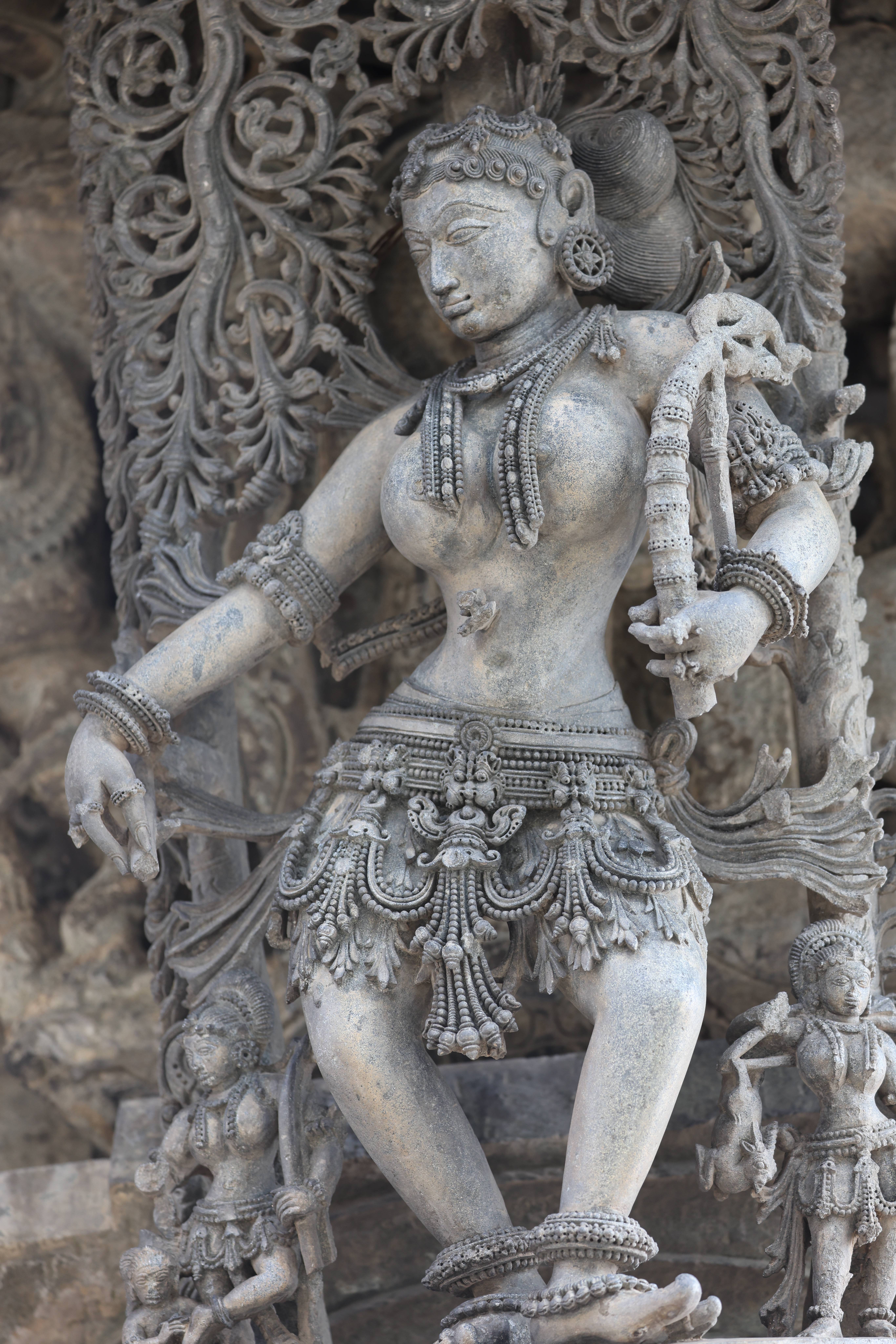
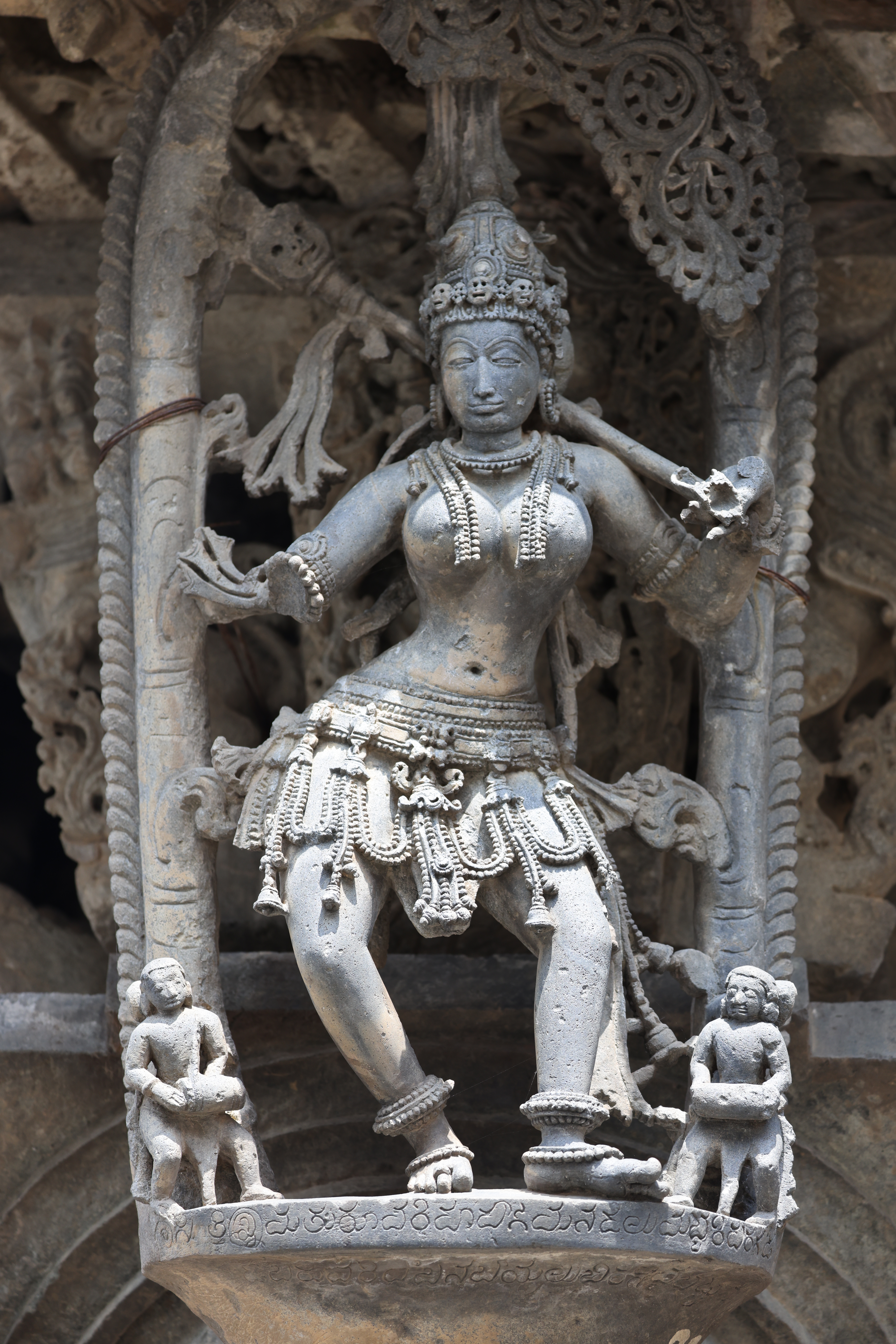

Apart from the bracket figures, the Madanikas are also depicted as miniatures on the tailed parapet of the exterior walls.

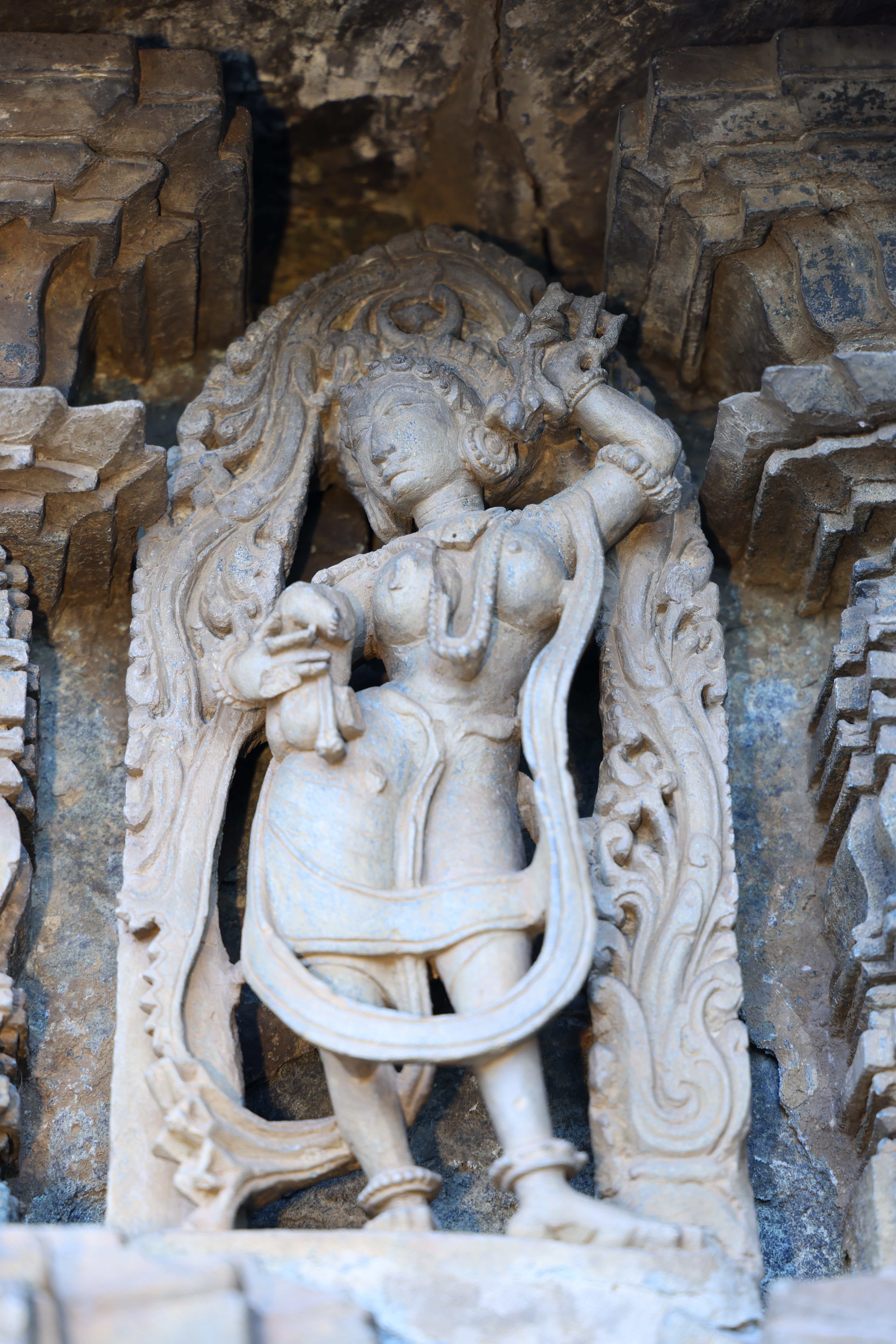

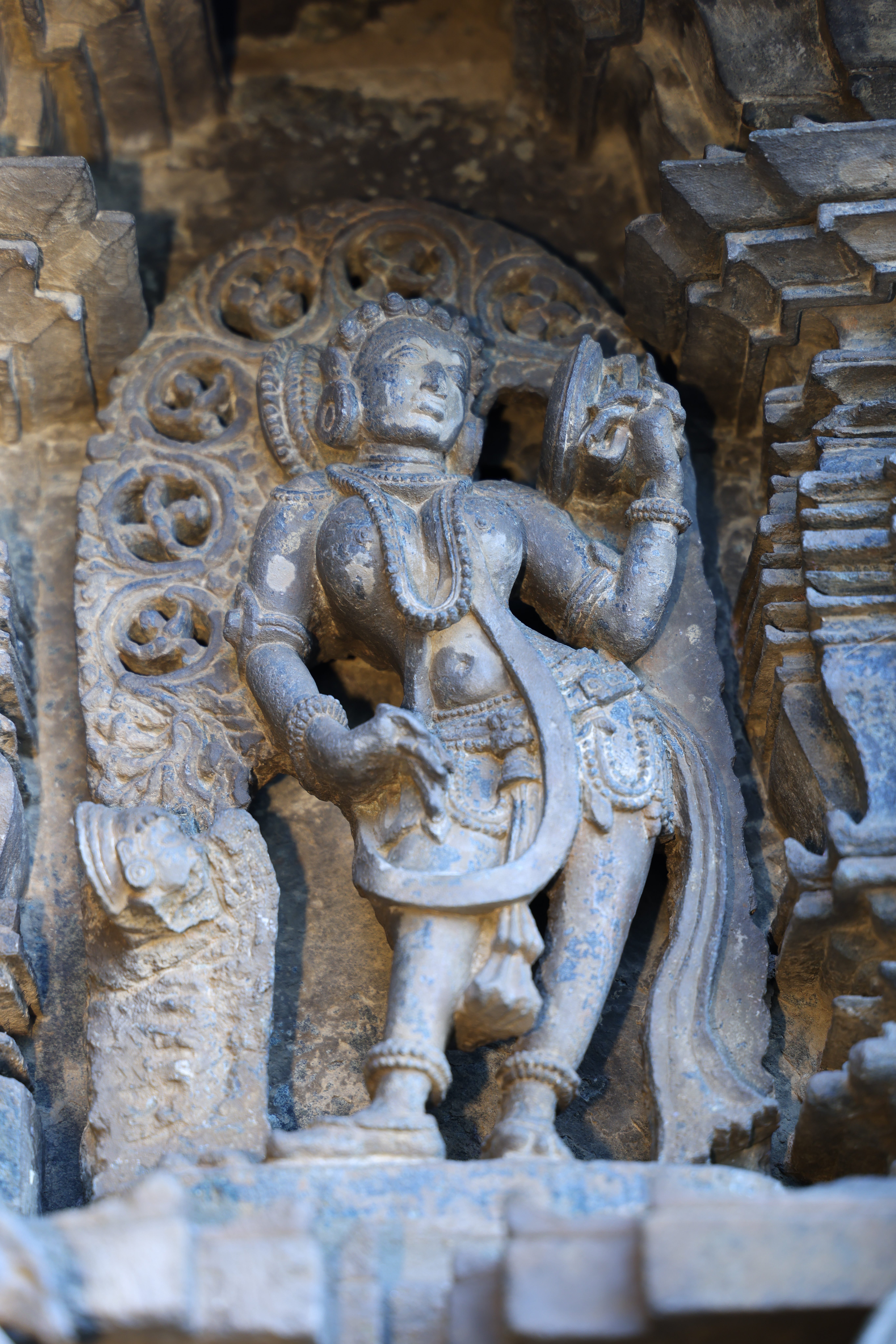
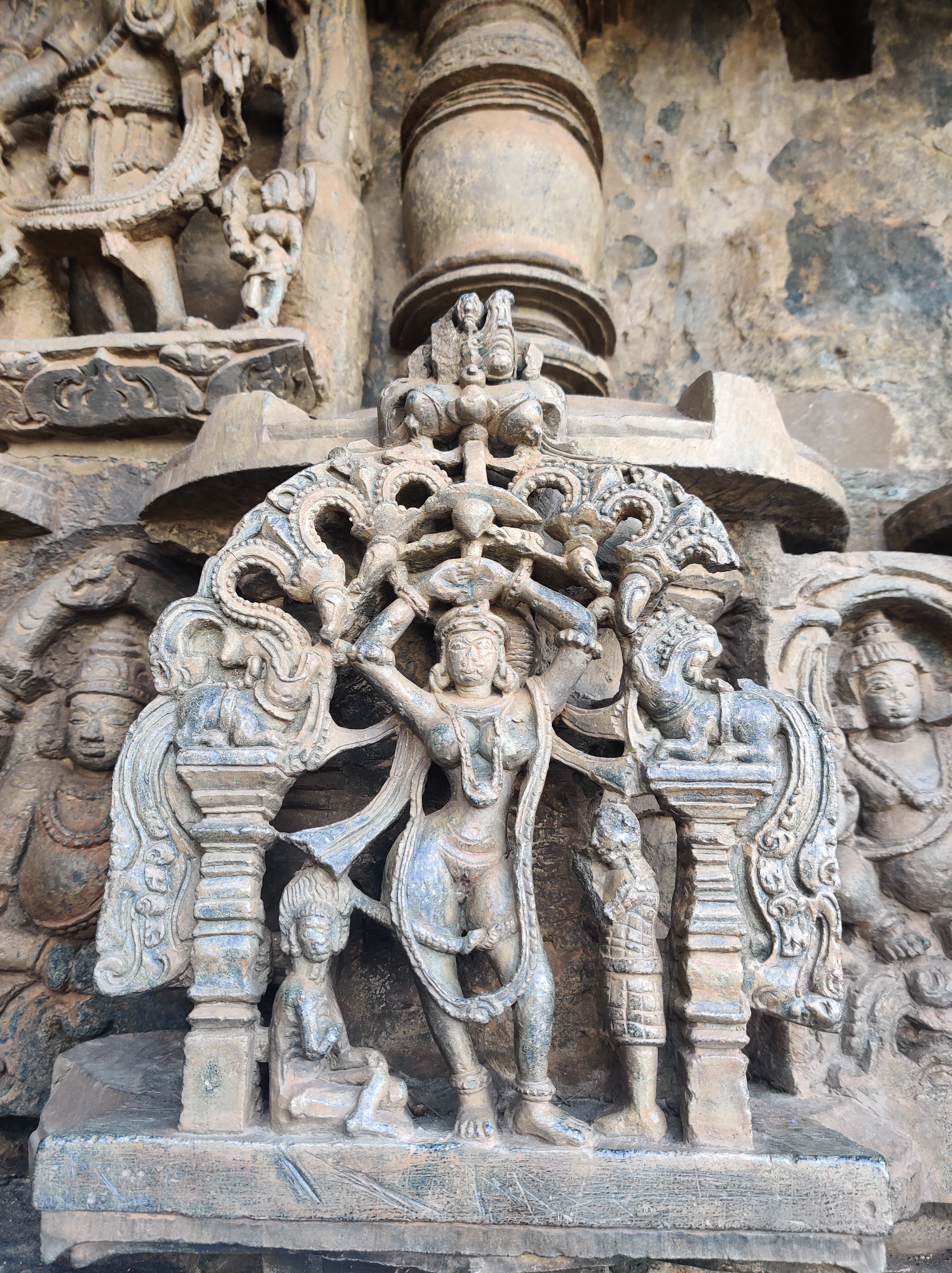
Entrance gate doorways
Flanking the doorway of the east gate are statues of Manmatha and Rathi. Passing through this gate symbolizes transcending desires or ‘Kama’ and entering the realm of divinity.
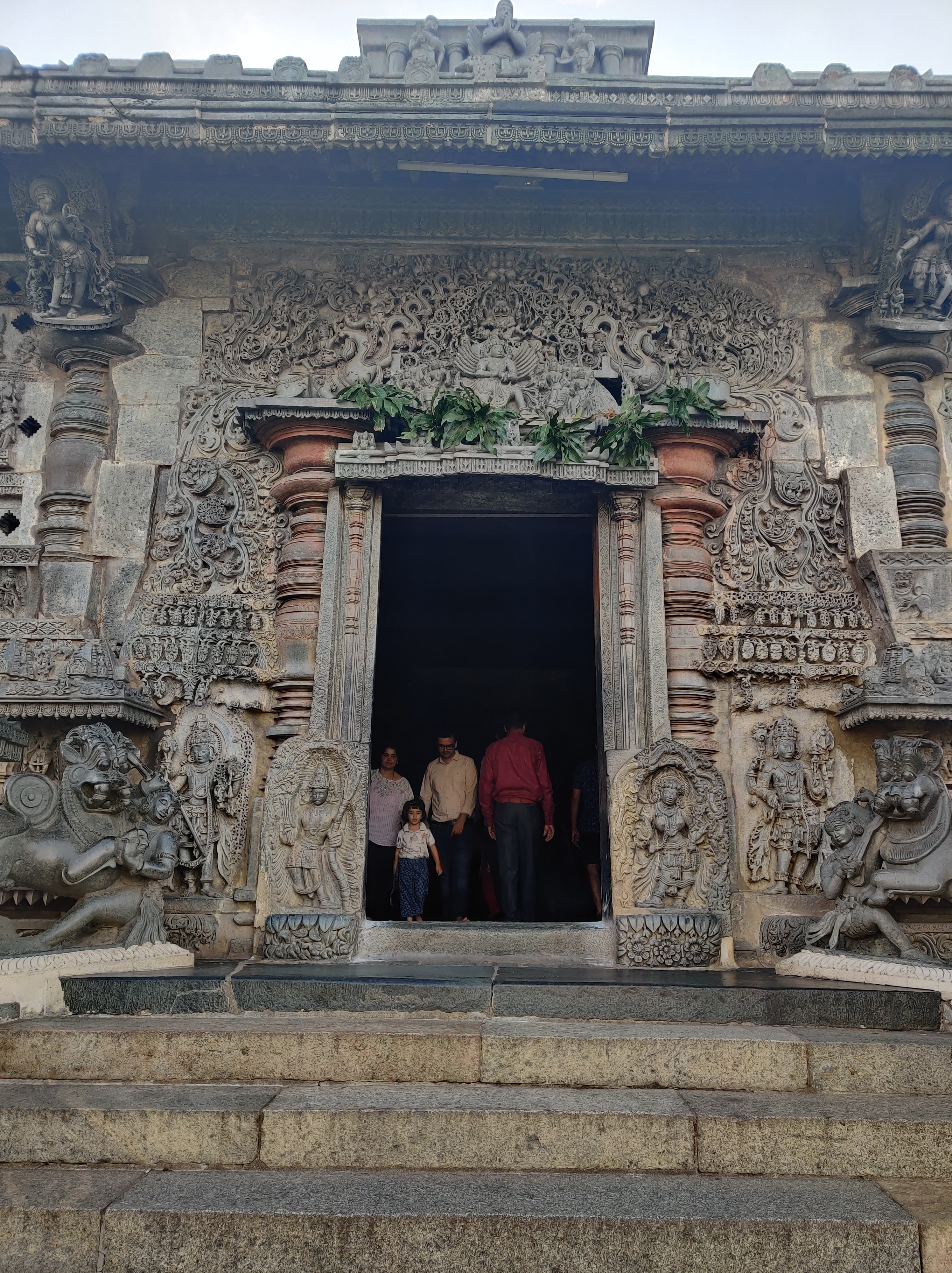
The panel above the east gate’s doorway features Garuda, Vishnu’s mount, flanked by makaras with their flowered tails. Above Garuda, Lord Narasimha is depicted slaying the demon Hiranyakasipu. Decorative creepers on either side of Narasimha depict the ten incarnations of Vishnu.
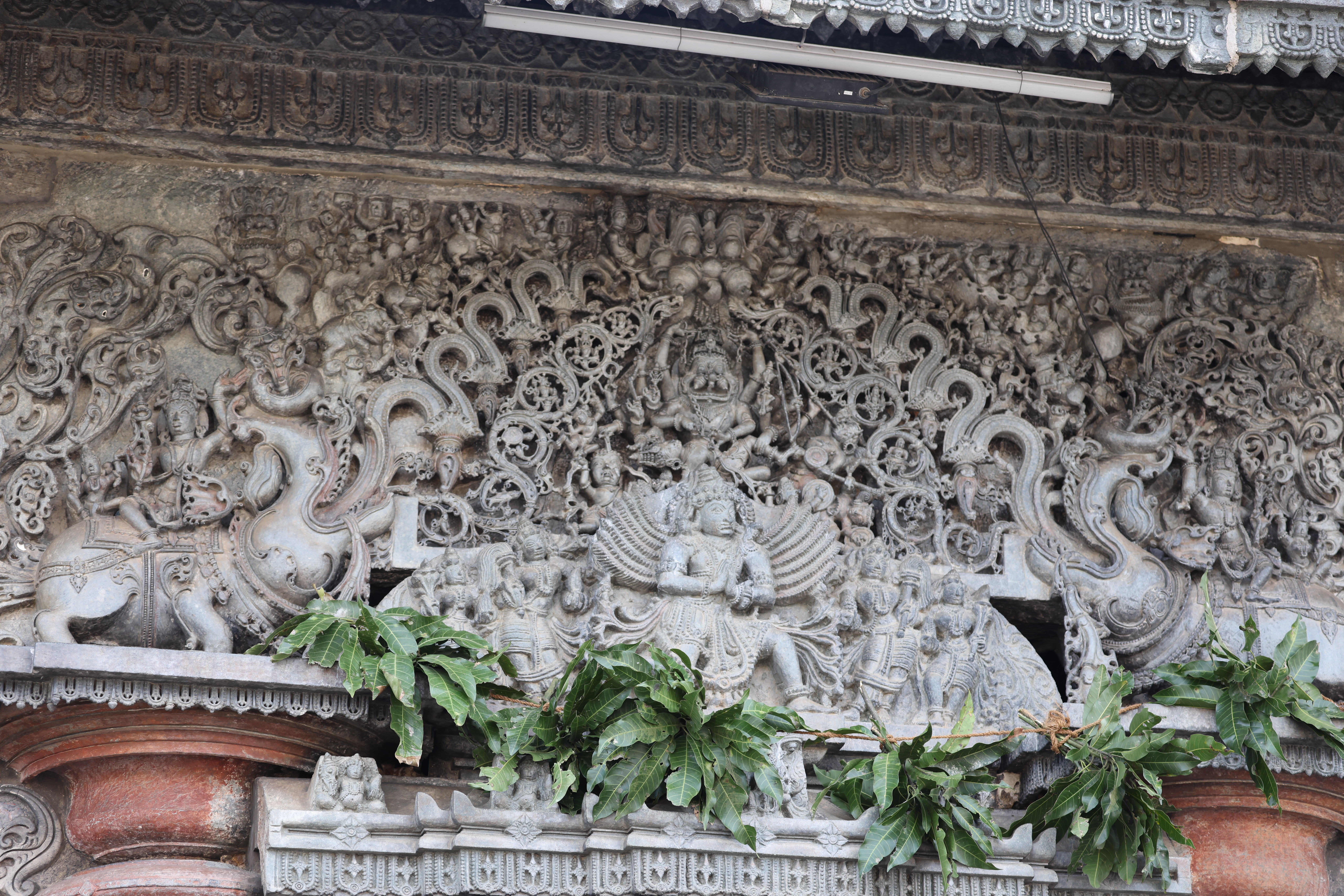

Although the hall has entrances facing north, east, and south, it’s the eastern one that directly faces the shrine.
Interiors of Chennakesava
Legend has it that King Vishnuvardhana dreamt of Lord Keshava, who instructed him to build a temple in Belur. The sanctum sanctorum houses the statue of Chenna Keshava, flanked by consorts Sridevi and Bhudevi, as the primary deity. Worship has continued for approximately 850 years. Photography of the main shrine is strictly prohibited, but I managed to capture this lucky snippet while focusing on the carvings above!
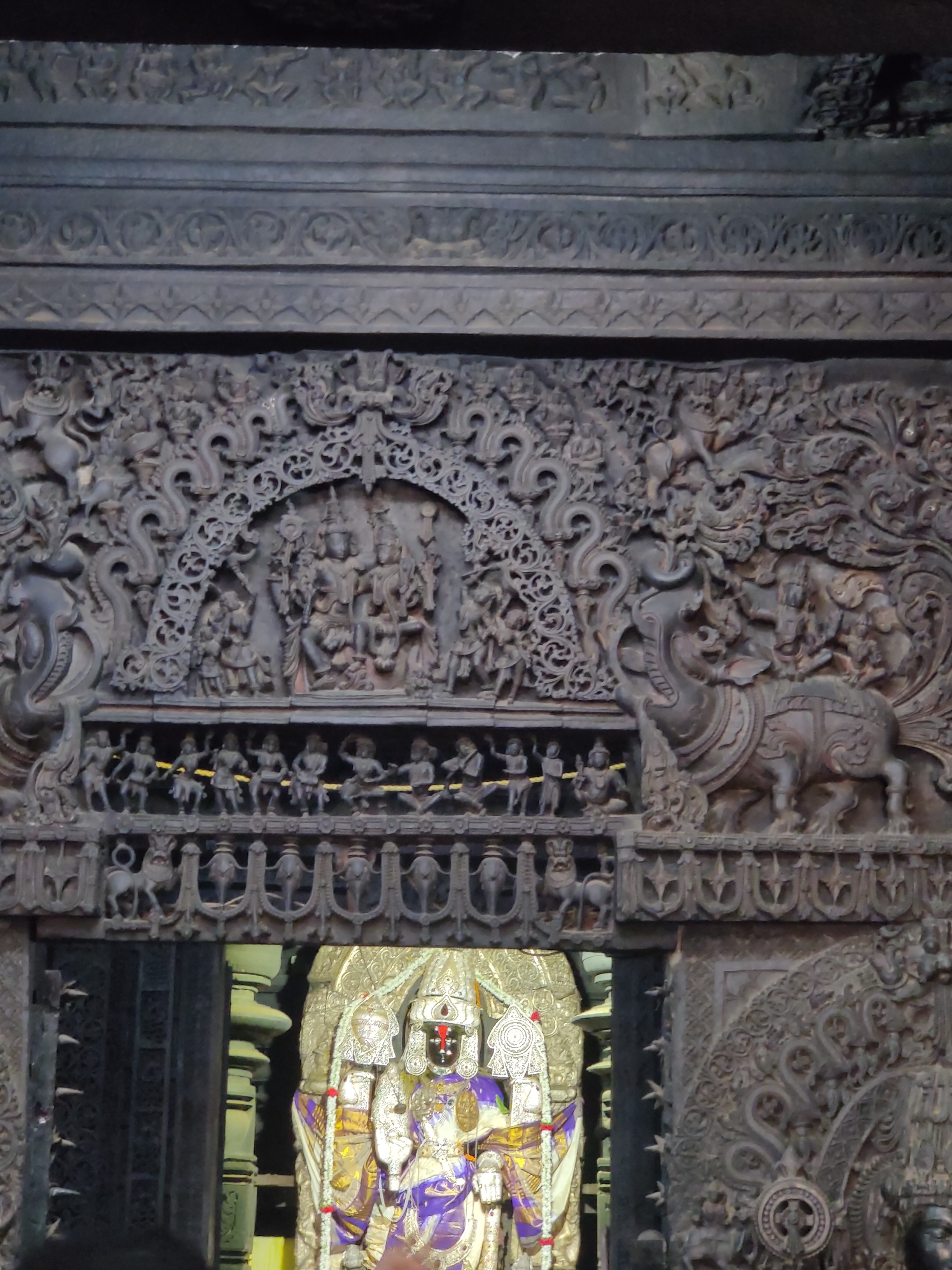
The makara torana above the sanctum doorway boasts unique Hoysala architectural elements. In the center, Lakshminarayana is seated, flanked by makaras, mythical creatures and the chosen vehicle of Lord Varuna. Each makara carries Lord Varuna and his consort on their backs.
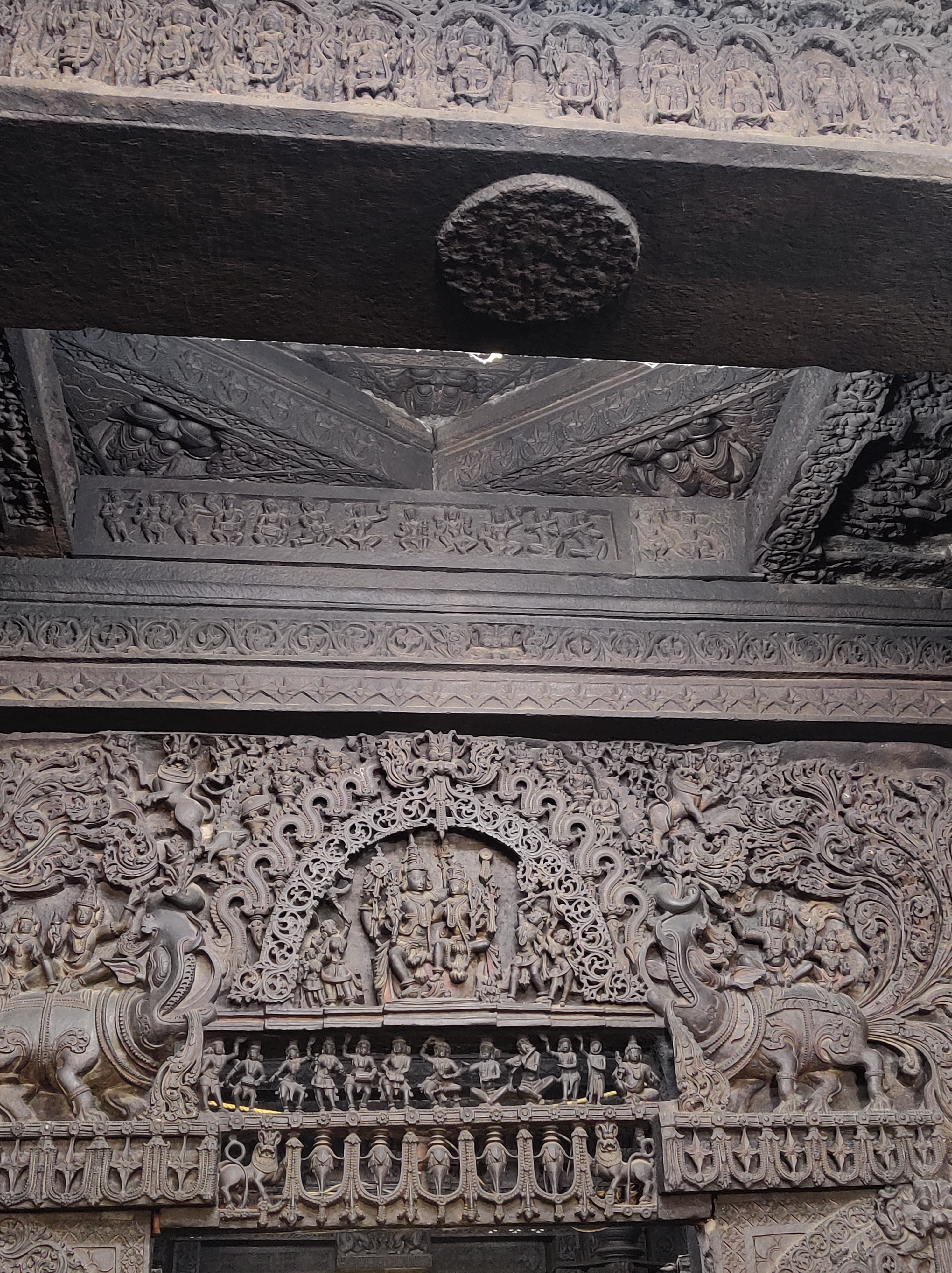

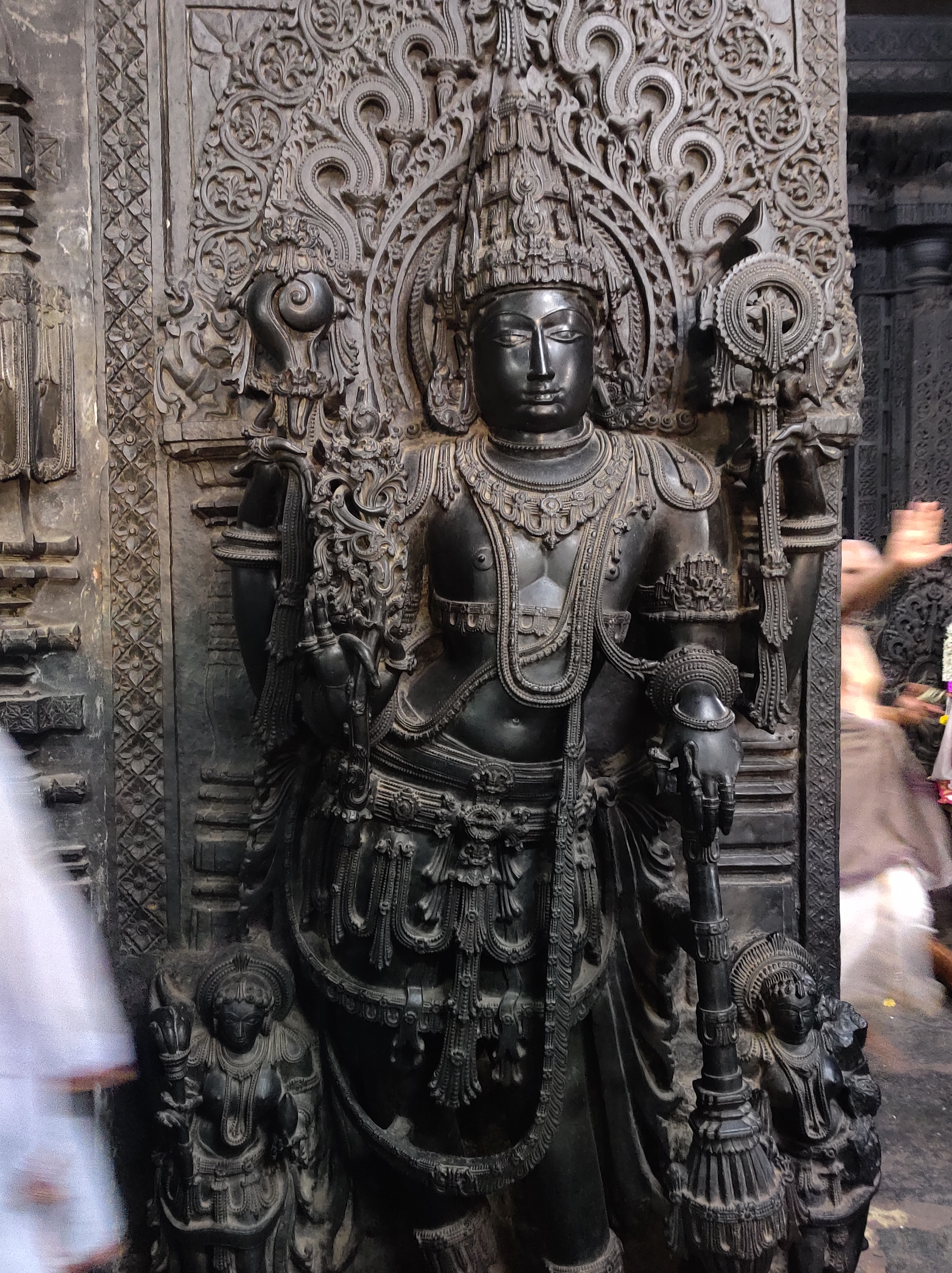
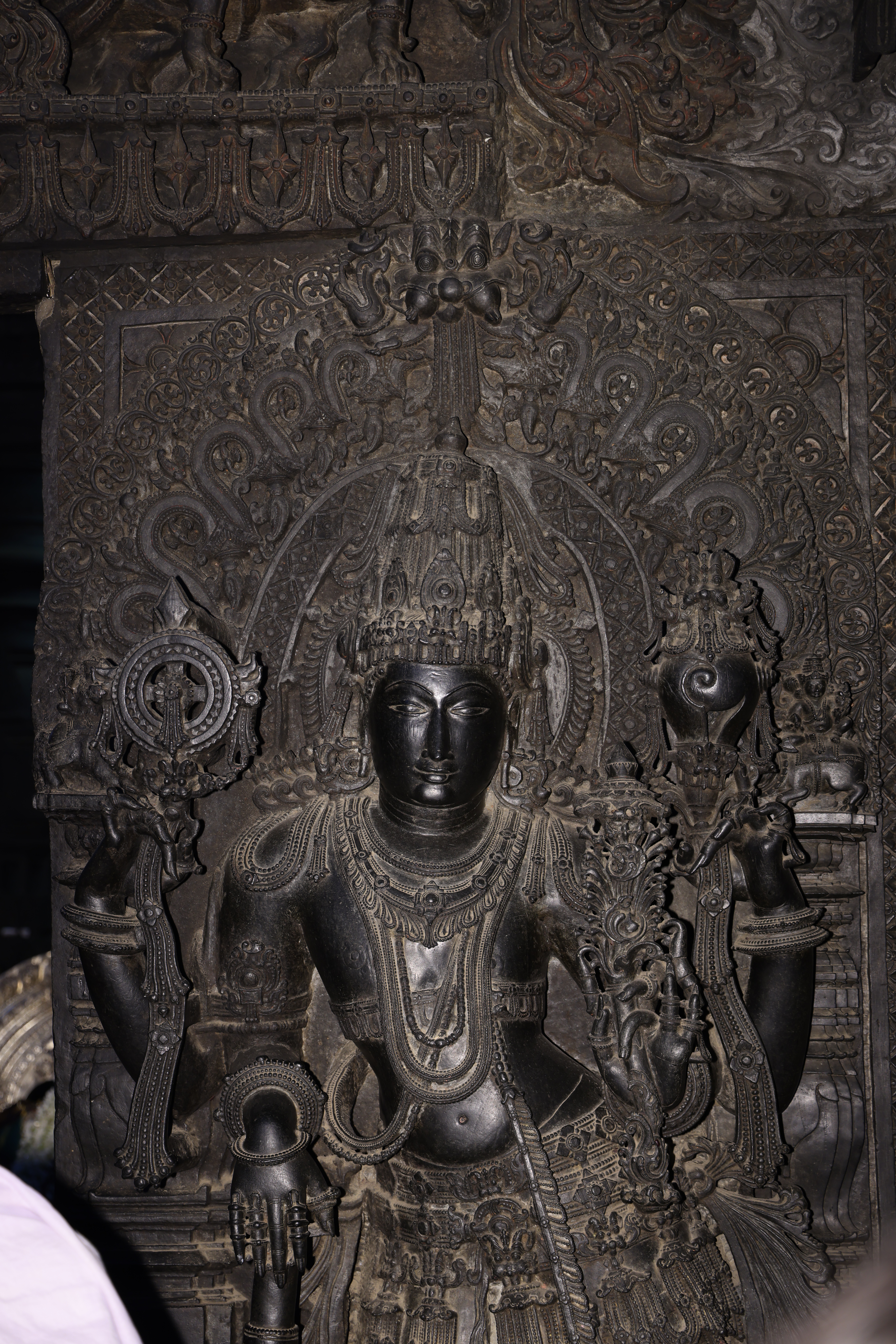
The sukhasana doorways adjacent to the inner sanctum were erected in 1381 AD under the decree of Vijayanagara king Harihara II to reinforce the room’s structure. Guarding the inner sanctum are intricately carved dvarpalakas named Jaya and Vijaya.

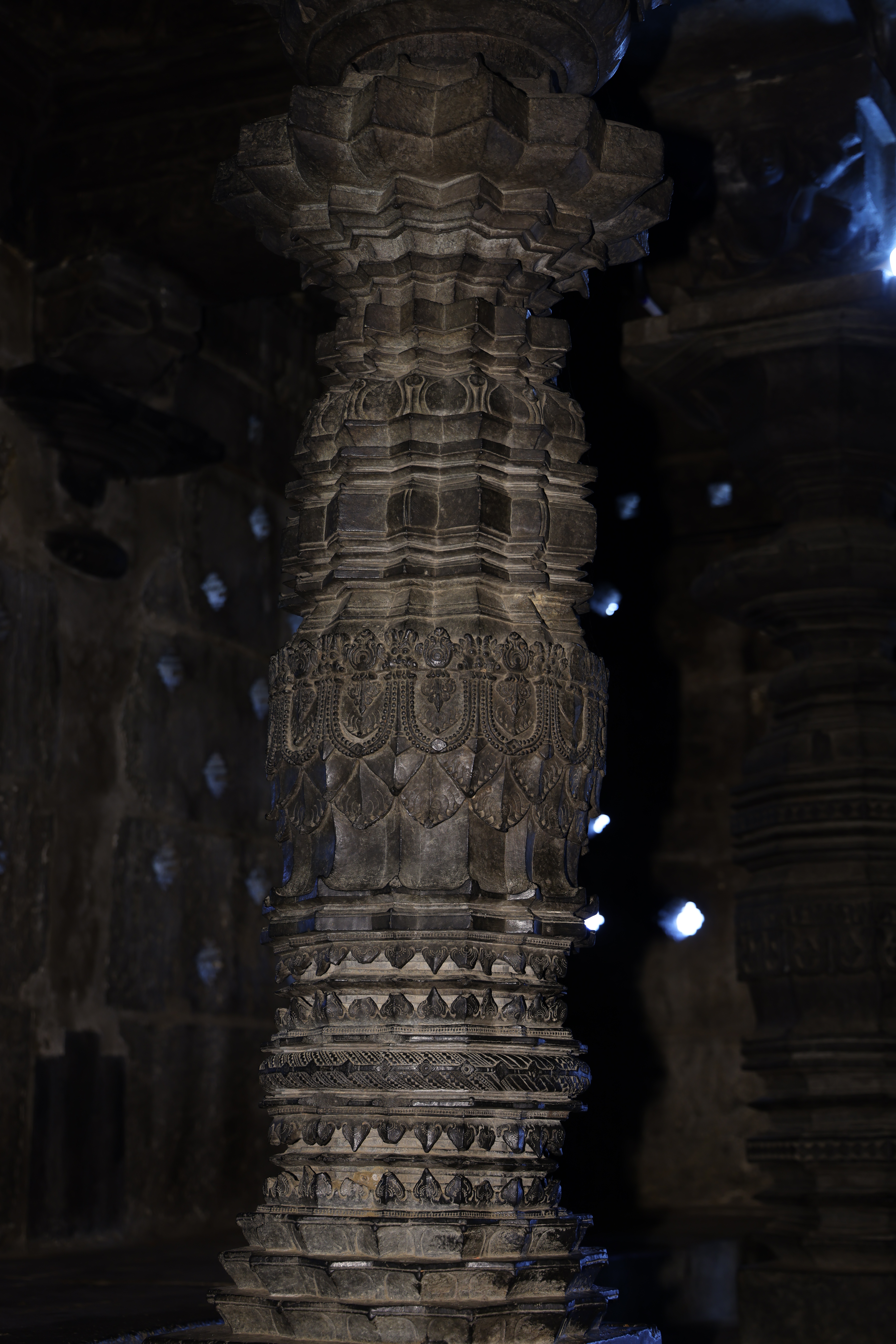
Stepping from the sanctum and its doorways, you enter the navaranga, the central hall, enclosed by four pillars at its corners. Besides these central pillars, the navaranga boasts an additional 48 pillars, each with its unique design. Some support the roof, while others serve decorative purposes. Despite the dim lighting within the temple, these pillars gleam as if forged from metal.
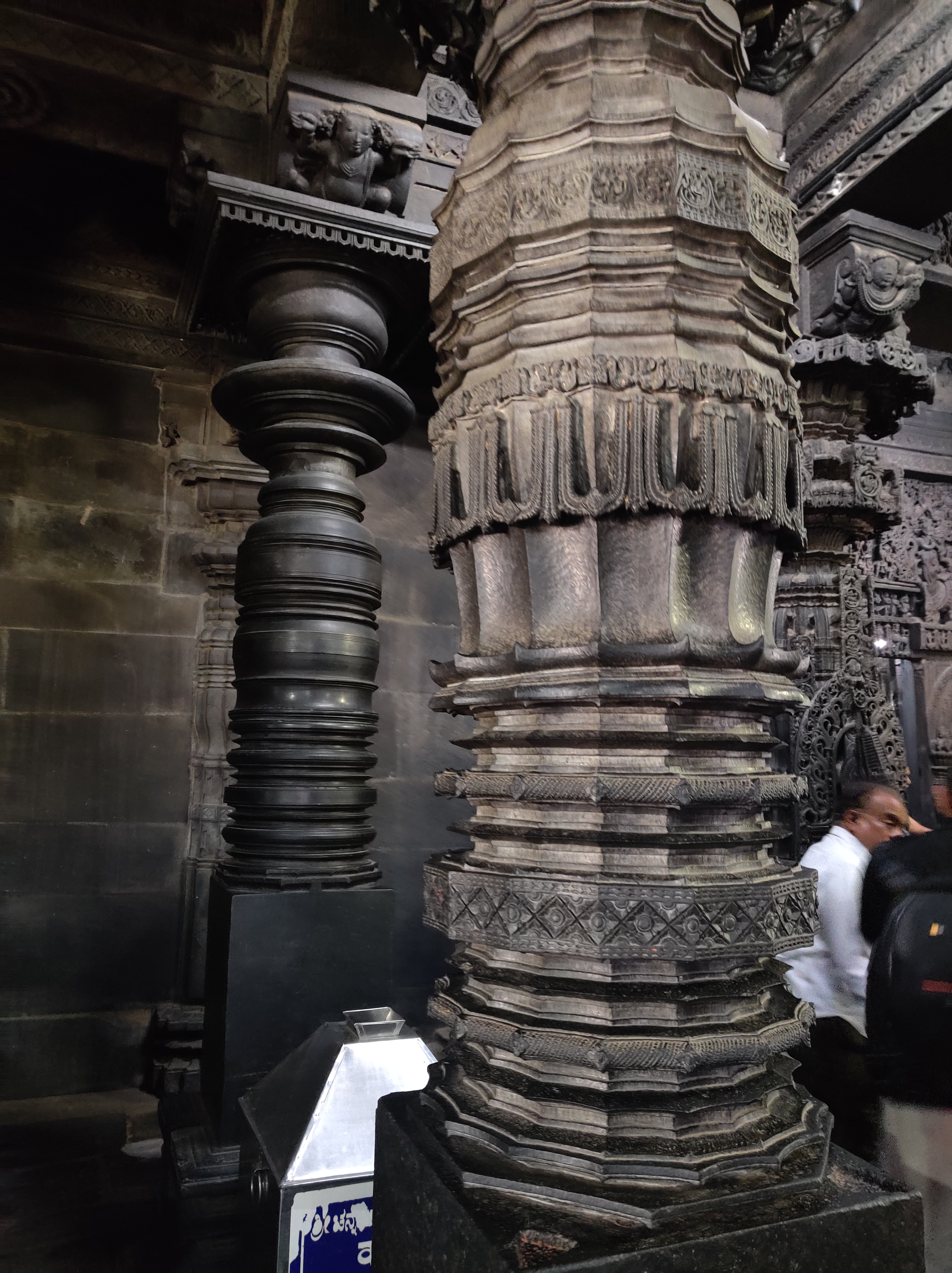
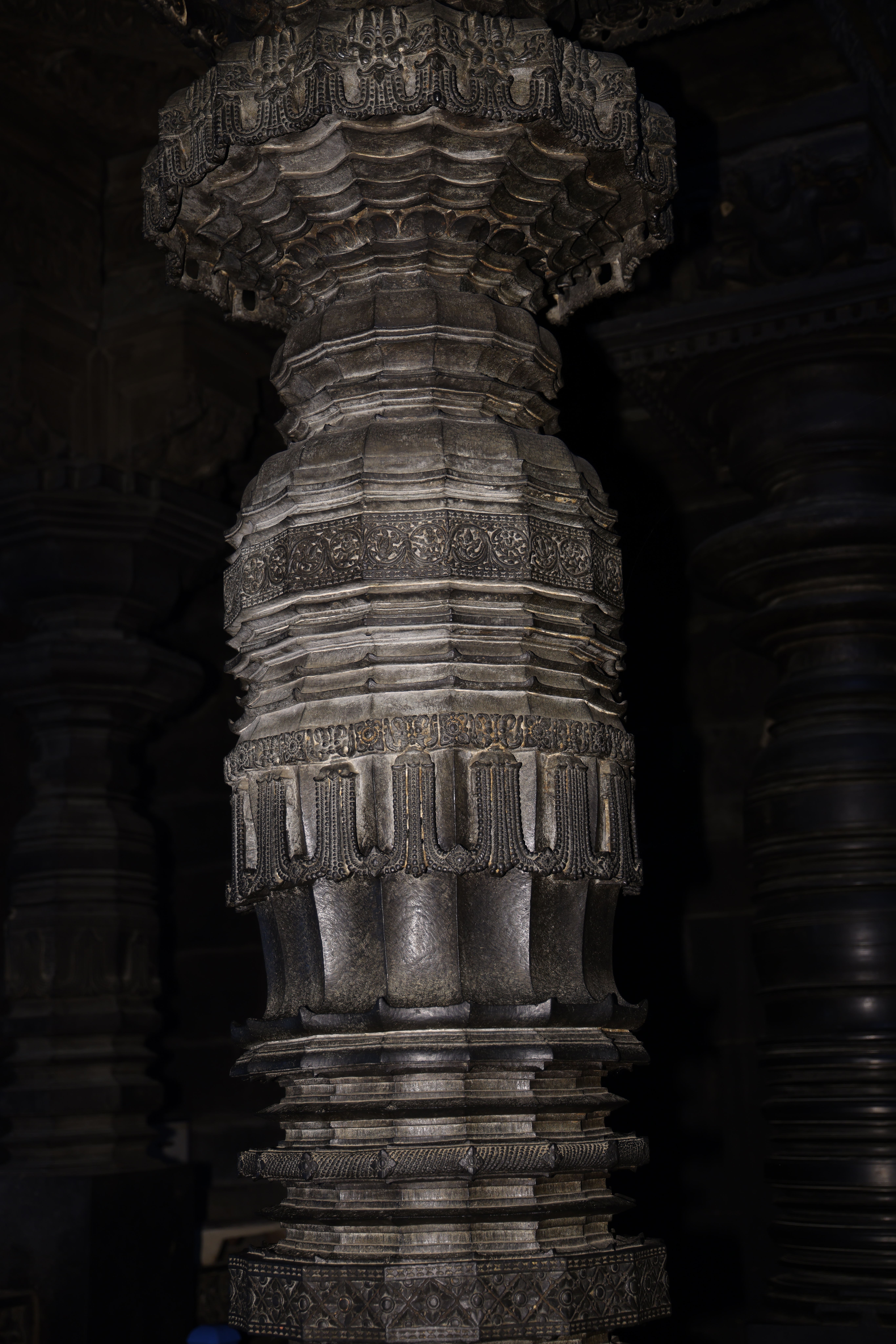
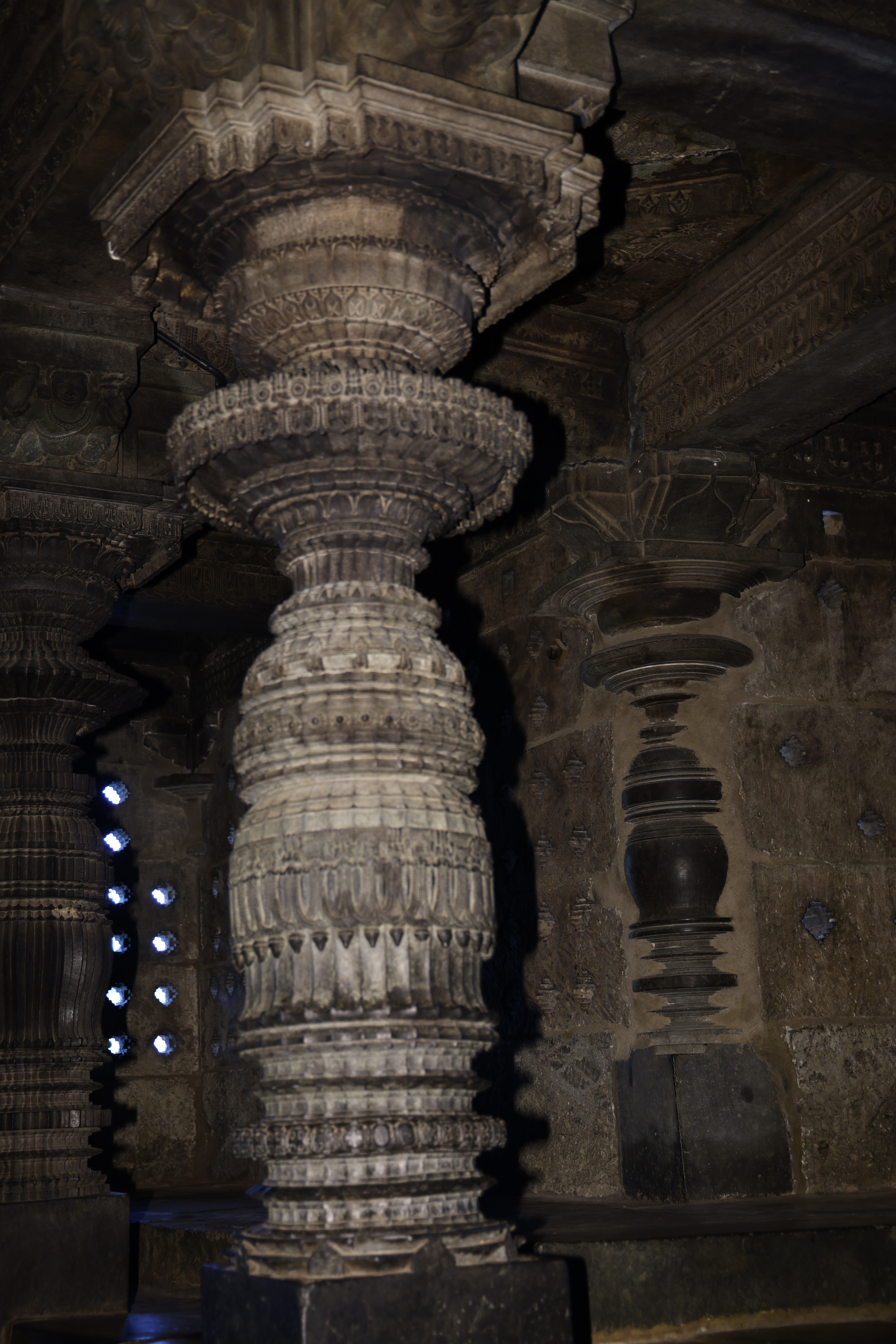
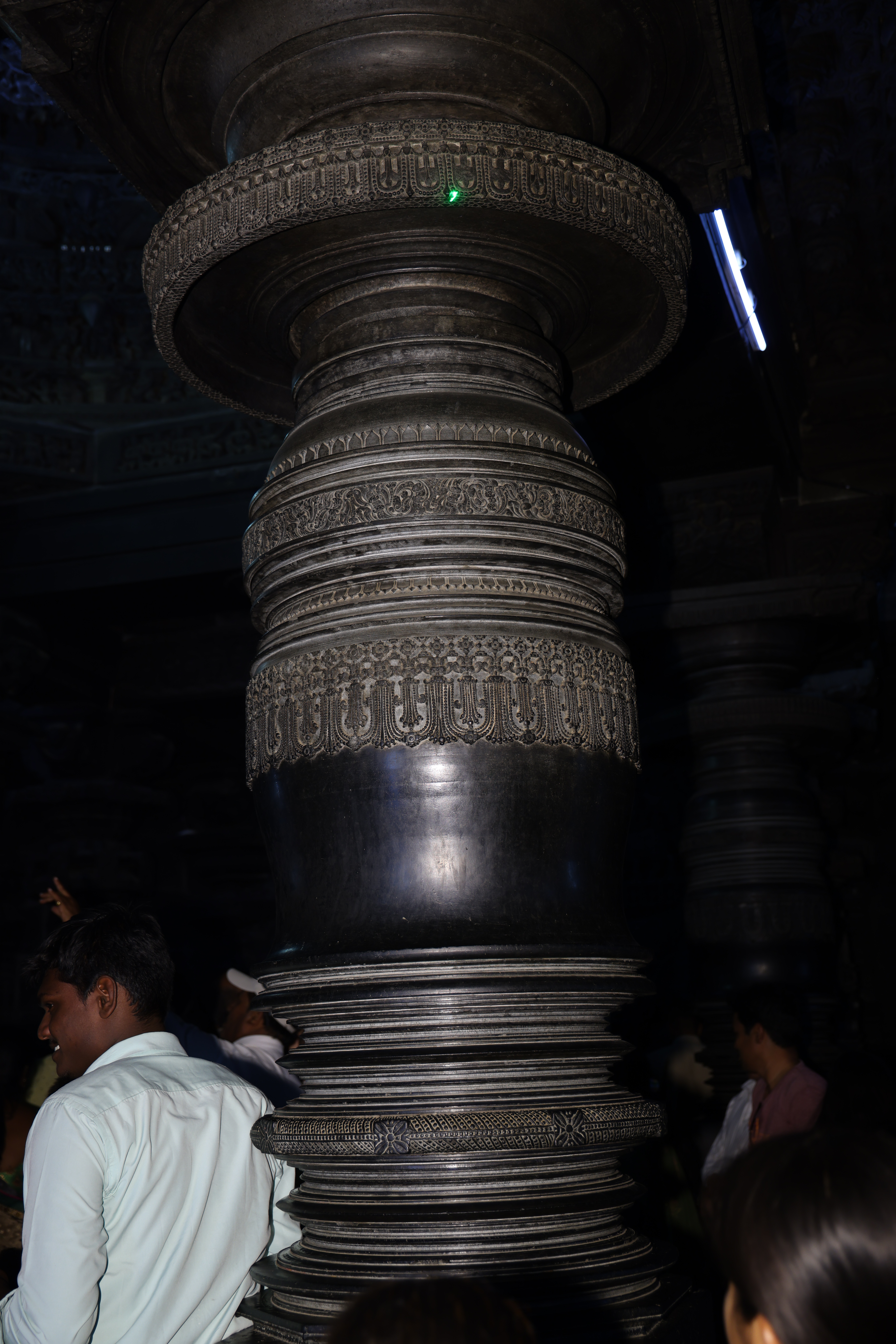
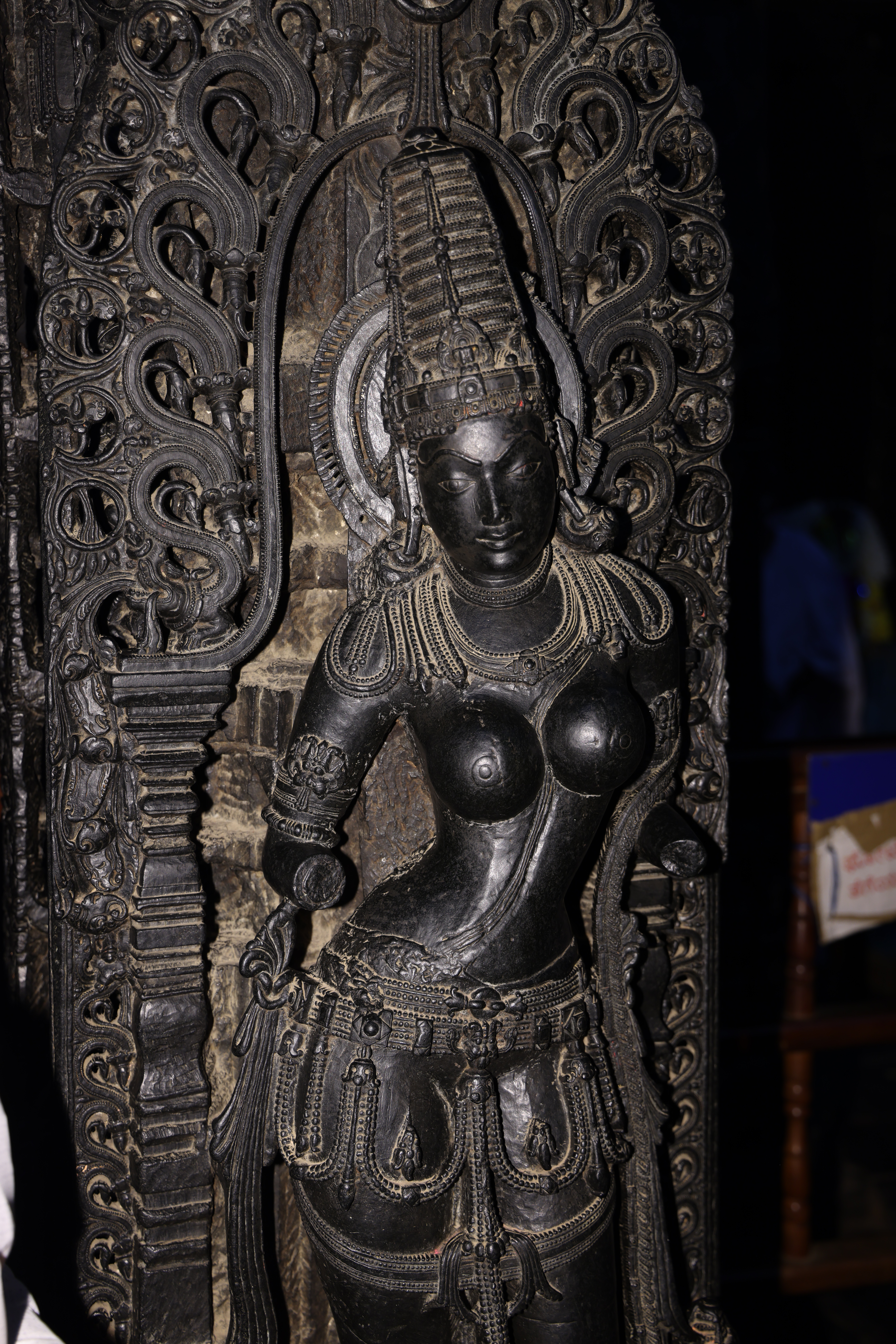
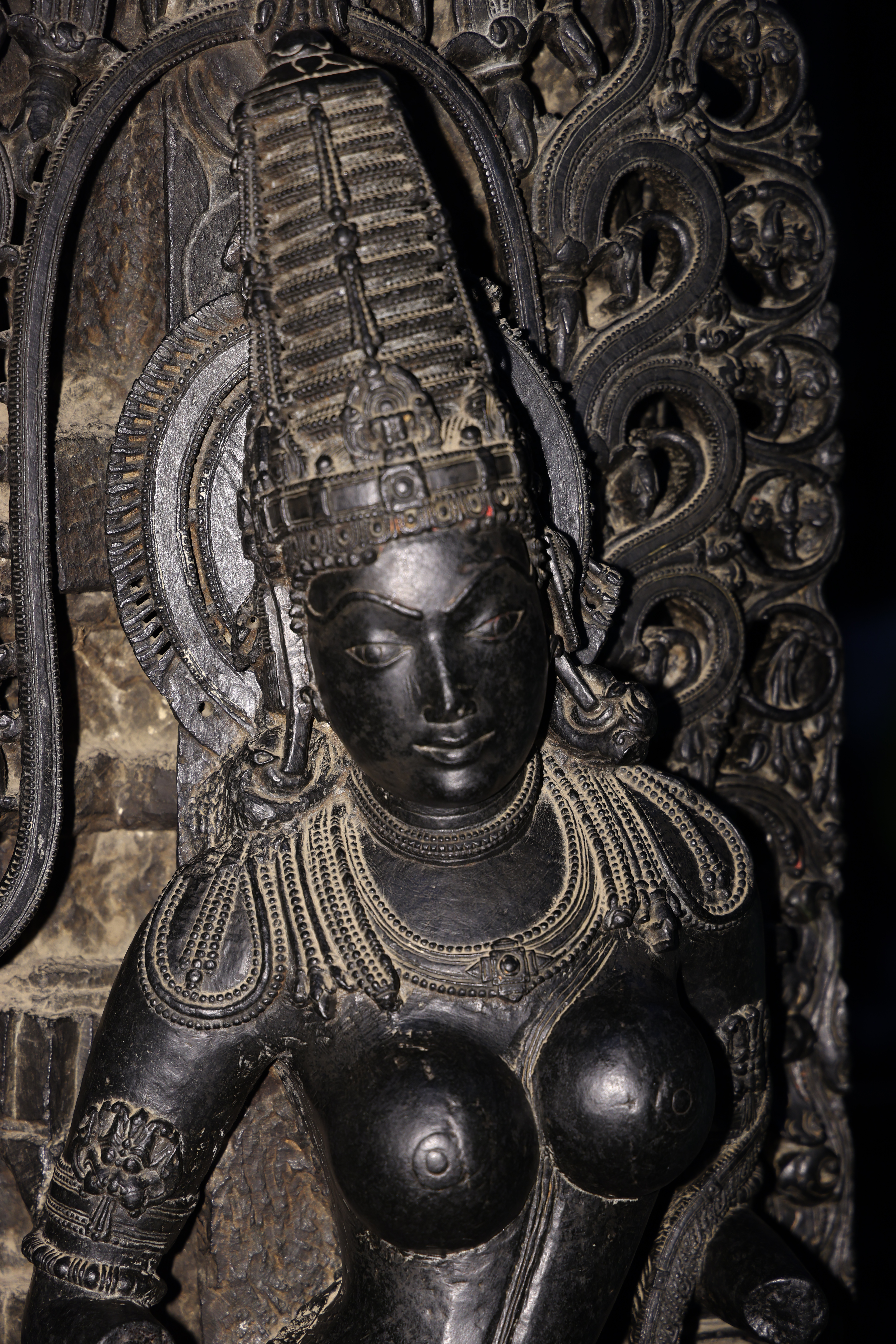
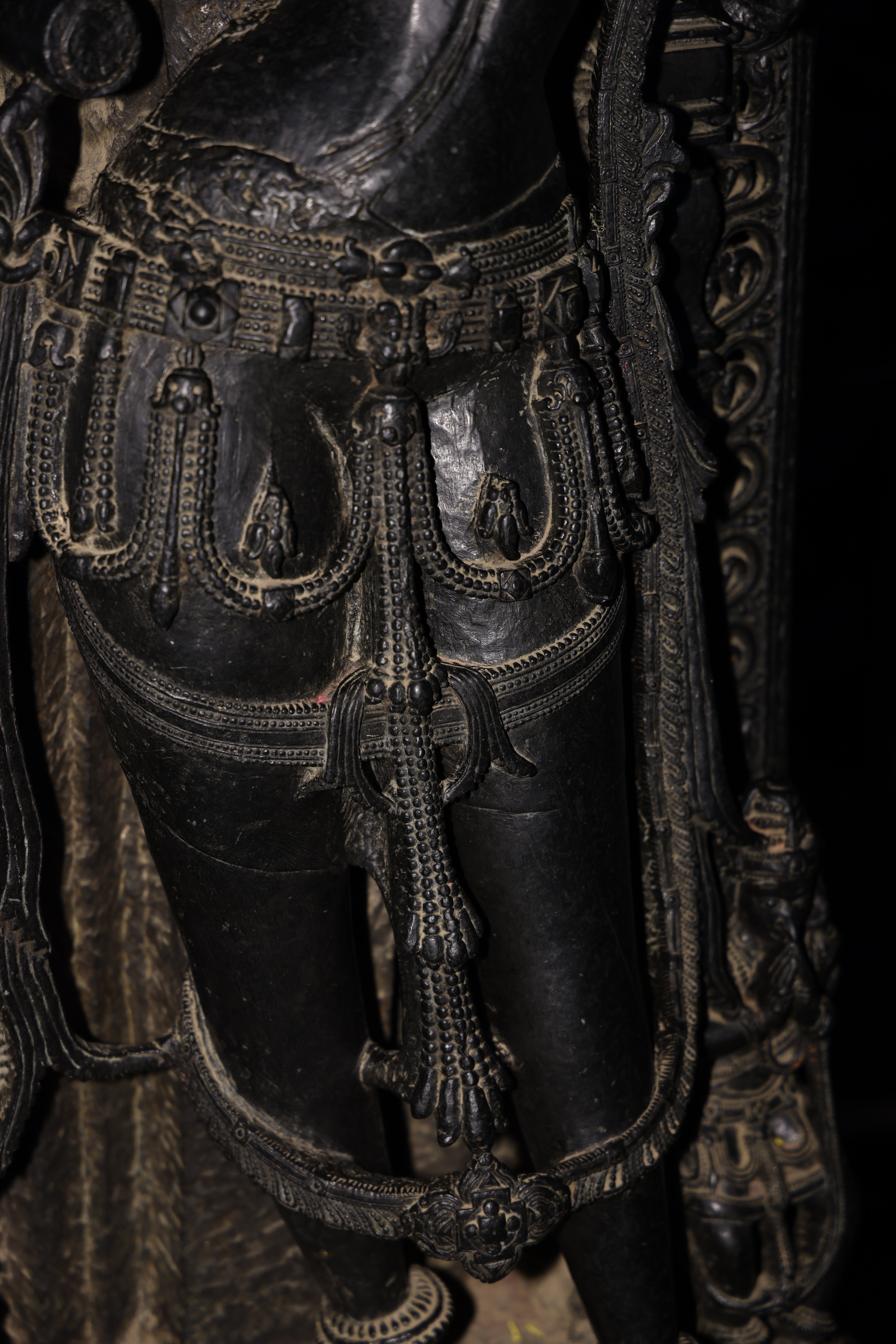
Pillar of repute here would be the Mohini pillar, positioned notably closer to the inner sanctum. The female figure depicted is believed to be Mohini, the form assumed by Vishnu to vanquish Bhasmasura, a demon capable of turning any individual to ash by touching their head. Carved entirely from black stone, locally referred to as Krishna Shila, this sculpture stands apart from the temple’s other reliefs, which are crafted from soft soapstone. An intriguing aspect of the statue is the presence of a looped thread spanning from the left shoulder to the waist, known as the yajnopavita. It symbolizes one who has mastered the Vedas and undergone the Upanayana ceremony, typically a male.


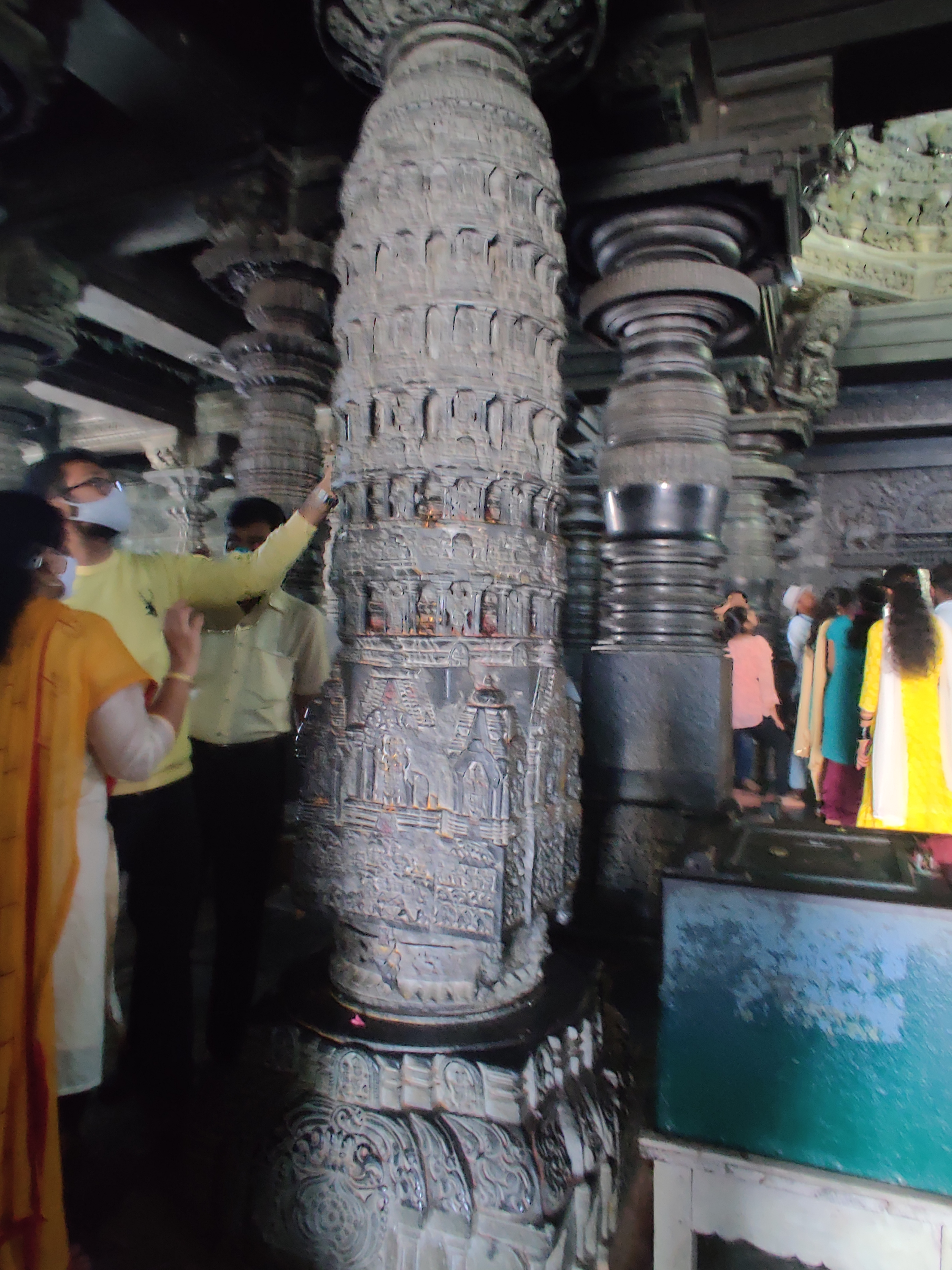
Among the hall’s collection, the most captivating and magnificent pillar is undoubtedly the Narasimha pillar, distinguished by the red vermilion marks left by devotees. It stands as a remarkable testament to the skill and creativity of the temple’s builders and artisans. Constructed with a ball-bearing axis at both the bottom and top, akin to a rotating mechanism, this pillar can rotate on its axis autonomously. Intricately carved with exquisite filigree work, it depicts various episodes, including Samudra manthana and Ravana shaking Mount Kailash, alongside carvings of numerous deities.
The four central pillars of the Navranga uphold a grand domed ceiling, adorned with intricate and elaborate decorations. Additionally, each of these pillars features a gracefully arranged madanika.
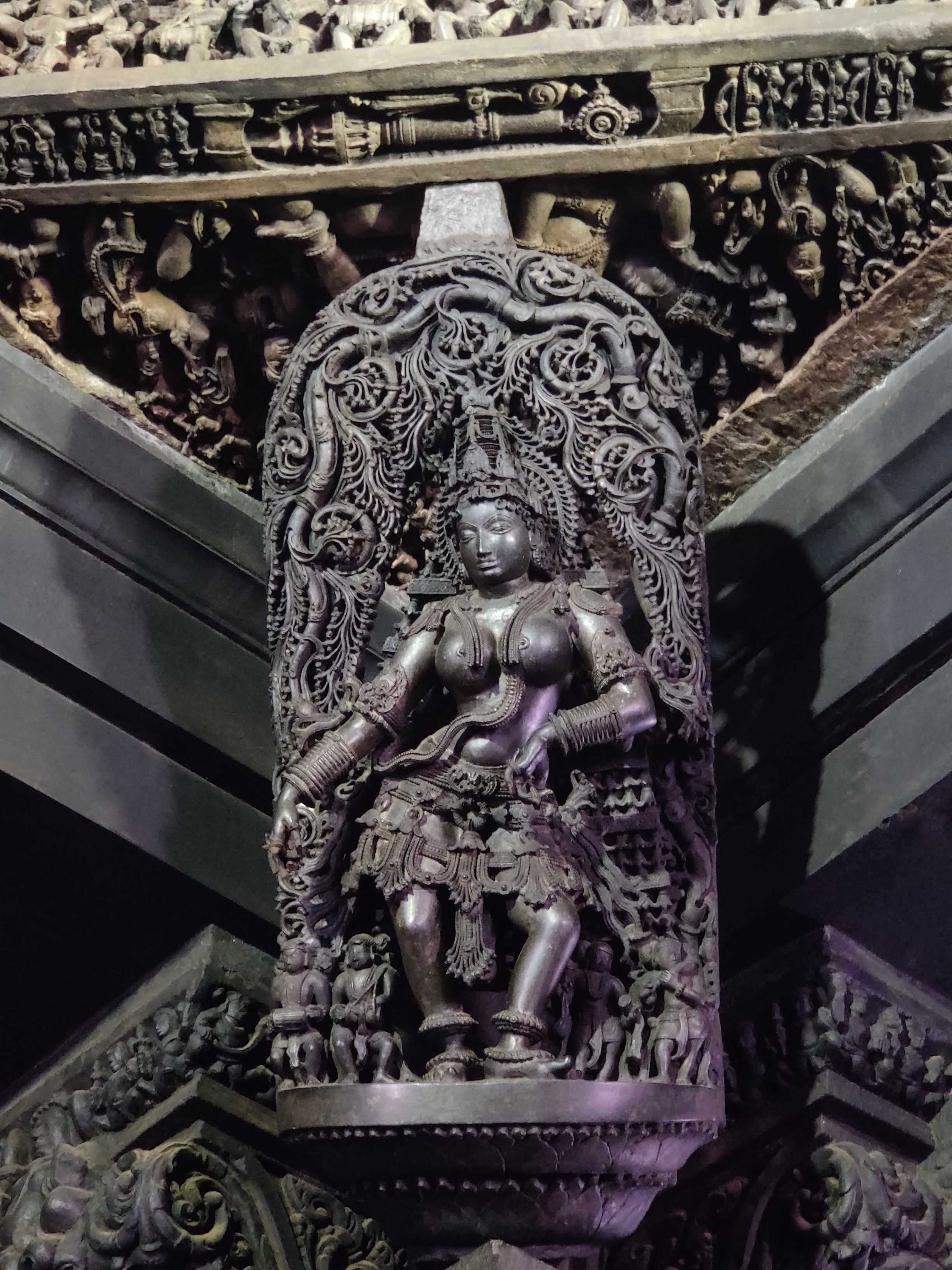
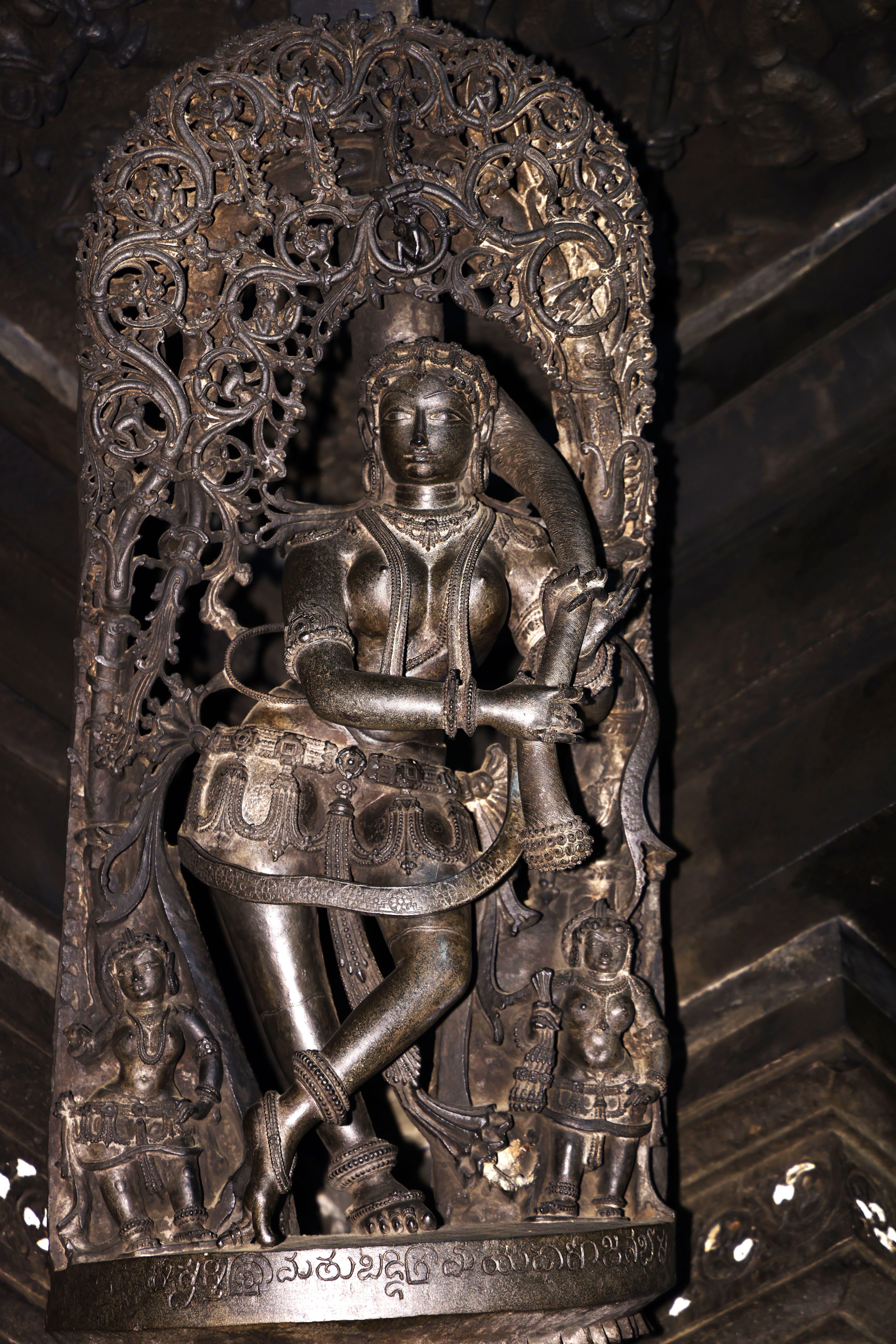
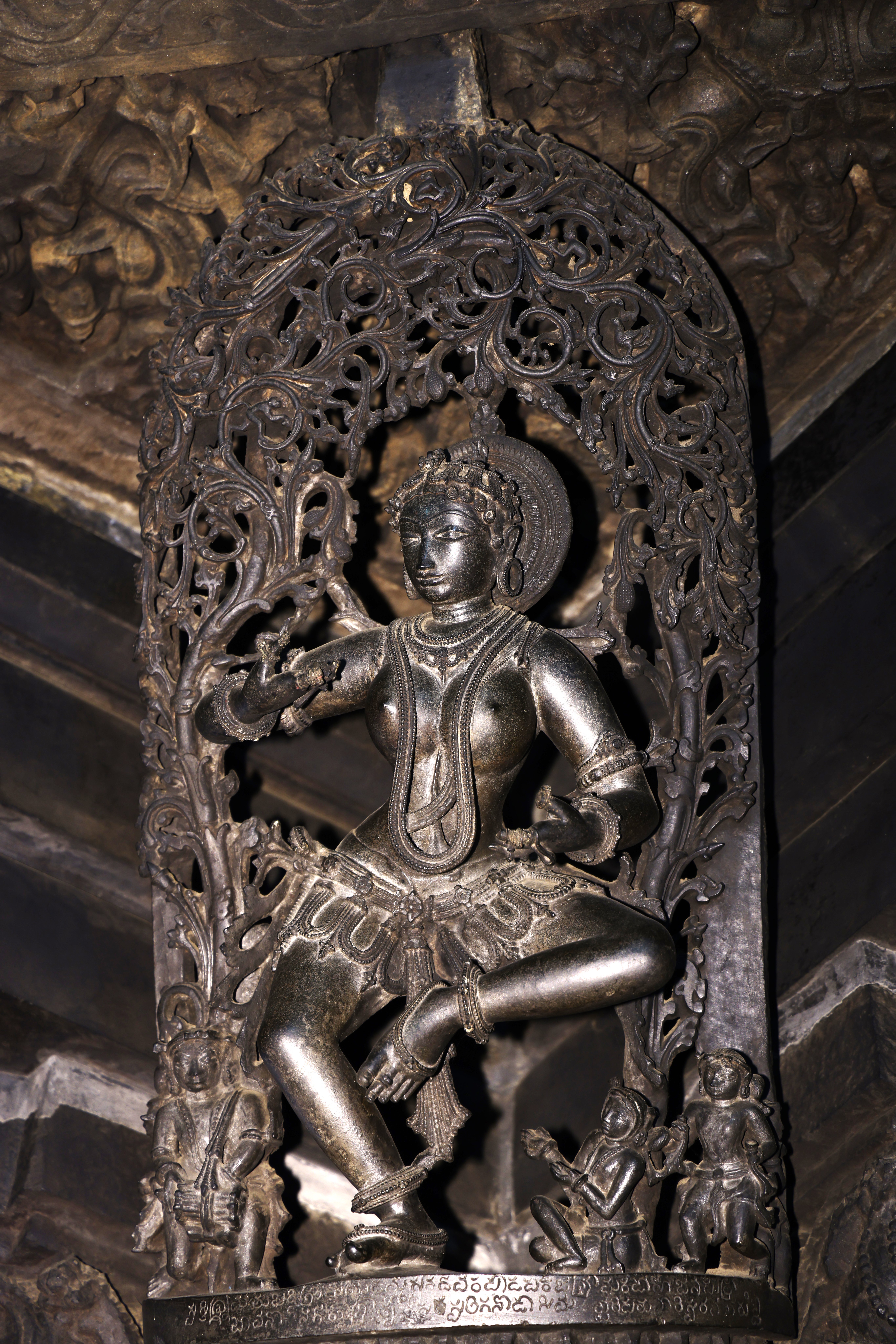
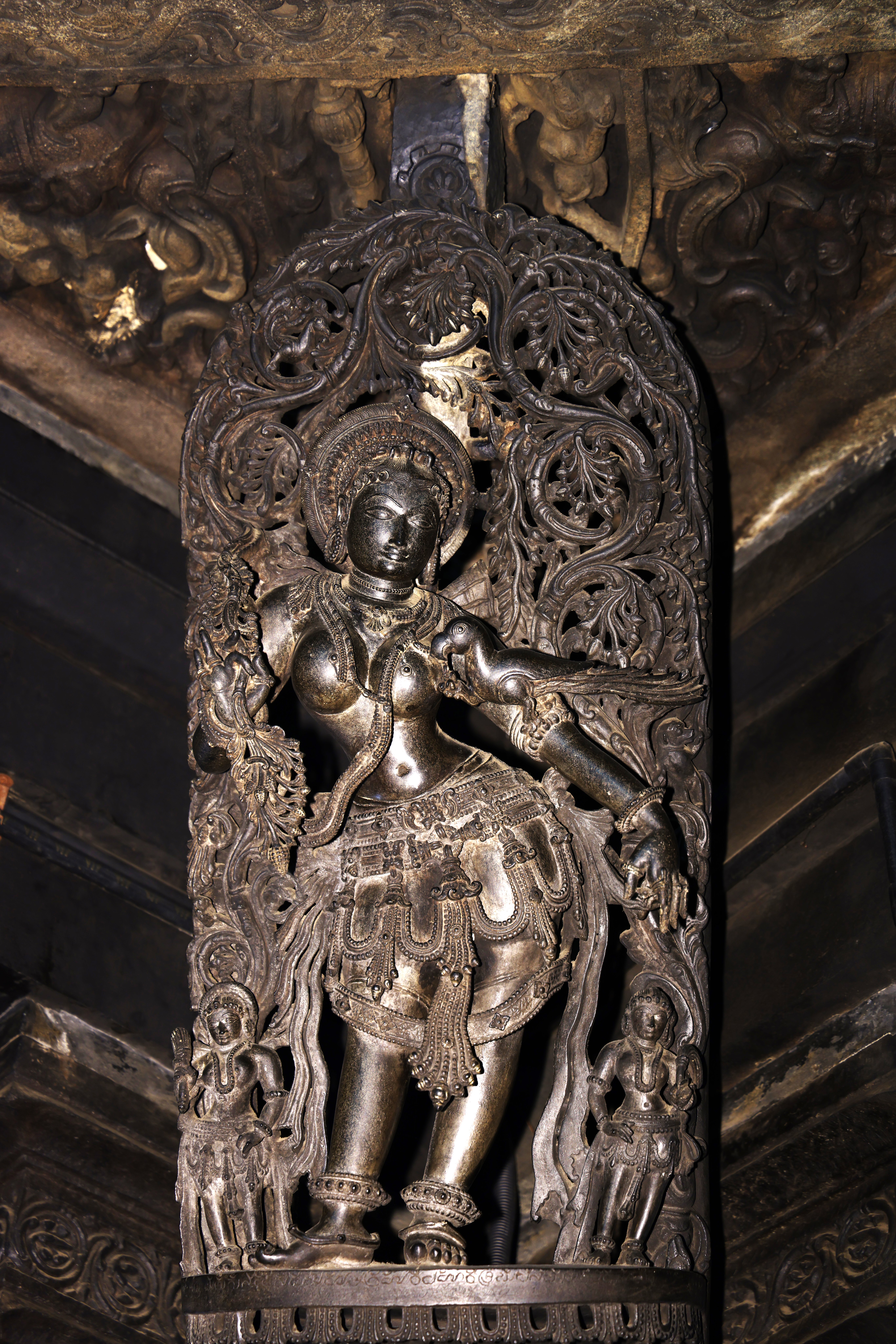
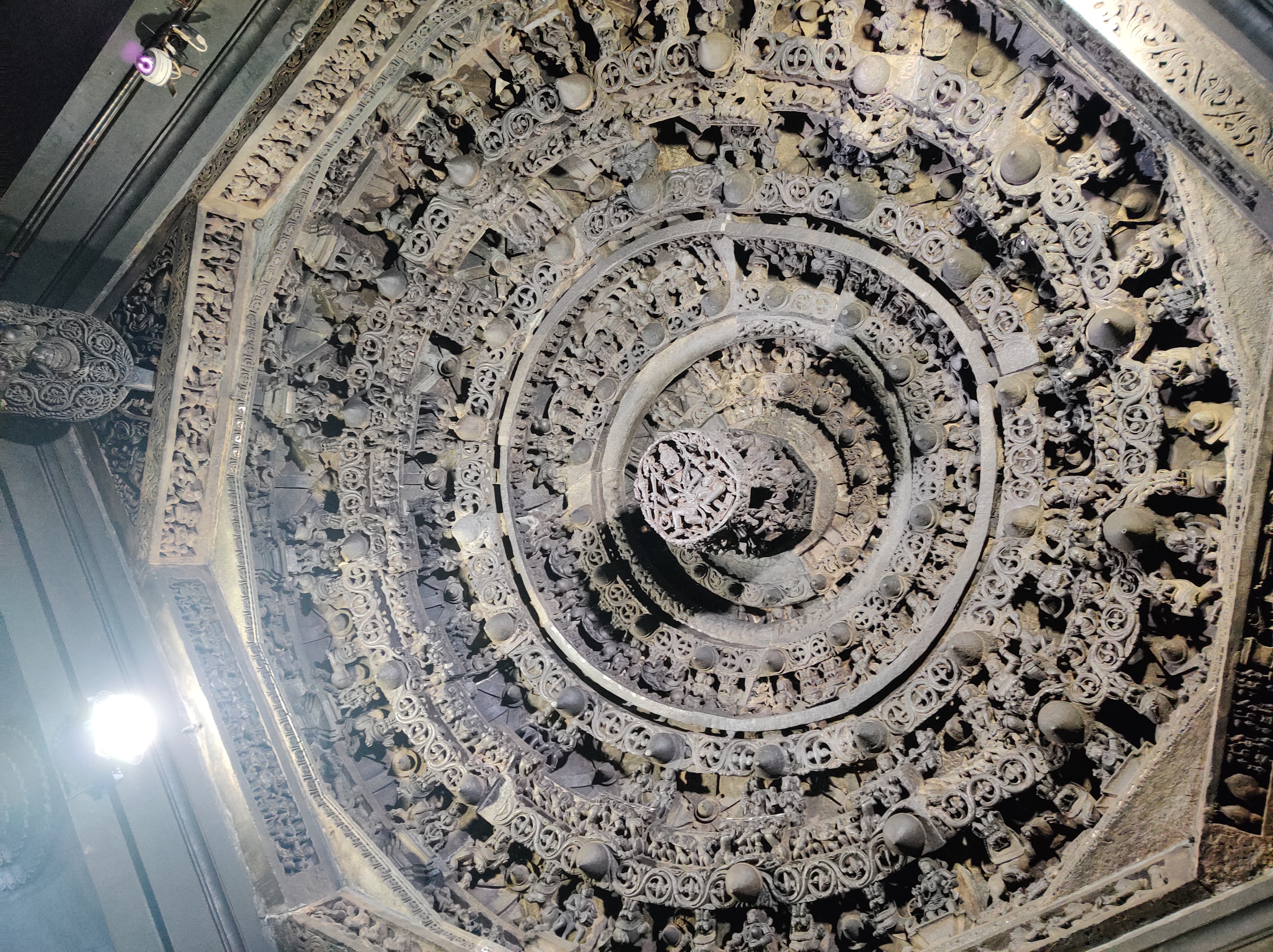
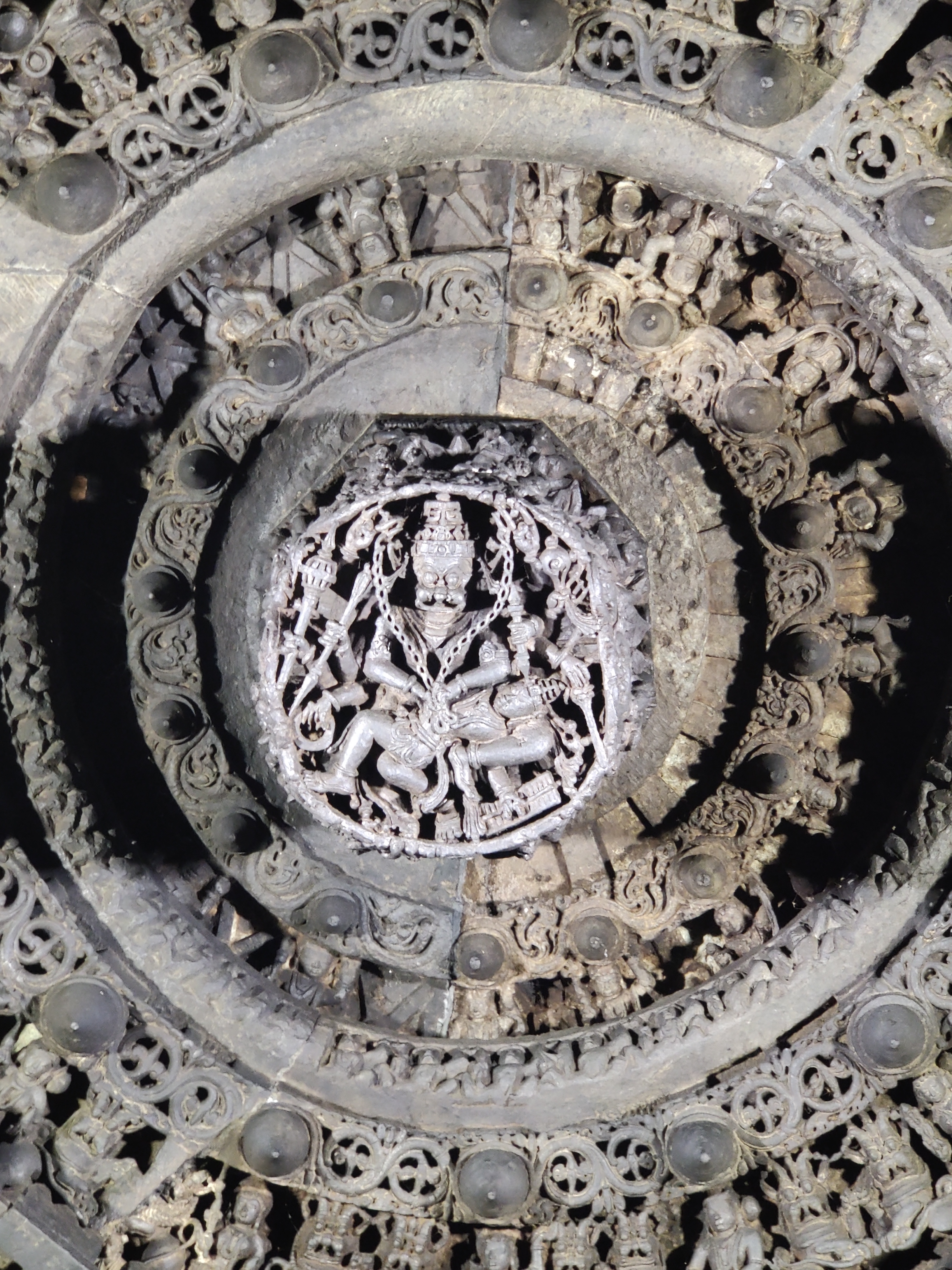
Legend has it that Chenna Keshava often journeys to the nearby hills of Baba Budan to reunite with his consort. As a result, cobblers from the town offer footwear in the temple, which supposedly vanish miraculously. However, since footwear isn’t permitted inside active Indian temples, there’s no need to fret over mysterious disappearances.
Interesting fact:
During a visit to the British Museum in 2019 while I was in the UK, I stumbled upon two missing bracket figures comfortably nestled within the museum’s collection. The bottom of the plaque reads “1962, 0721.1, Brooke Sewell Permanent Fund,” along with a descriptive text detailing the origins of the sculpture.
Pro tip:
Belur is approximately 3.5 hours (150 km) away from Mysore, while Halebeedu is 143 km from Mysore. The distance between the two towns is around 17 km, which takes about 30 minutes to travel. During my five-day stay in Mysore for the Dussehra celebrations, I chose to combine Belur and Halebeedu into a day trip and rented a car.
Except for the inner sanctum or shrine, there are no restrictions on photography. Ensure you have a flash (for DSLRs) or night mode settings (for your phone) when capturing the temple interiors. It’s incredibly exquisite but equally crowded. If using a wide lens, make sure it’s not overly conspicuous. For instance, my dad’s Canon wide lens has a distinct white body, which caught the attention of temple security personnel.
The Hoysala series:
- Poetry of Stones – Hoysala temple I: Somnathapur
- Poetry of Stones – Hoysala temple II: Belur
- Poetry of Stones – Hoysala temple III: Halebidu
- Poetry of Stones – Hoysala temple IV: Smaller shrines of Belur
References:
Along with the oral narration from the guide at the temple, the specific stuctural references has been taken from the following books. If anyone is interested in using the images, request you to hit me up and attribute.
- Architectural Wonder: The Chennakesava temple at Belur, and
- The Glory of Hoysala Queens: Belur Chennakesava temple by Rekha Rao
Related (and not-so related) Posts:
 The Lost Coordinates
[…] Poetry of Stones – Hoysala temple II: Belur […]
LikeLike
[…] Poetry of Stones – Hoysala temple II: Belur […]
LikeLike
[…] grandeur, opulence, and architectural style, the temple stands as a formidable counterpart to the Chennakesava temple of Belur. Legend has it that the architects of both temples engaged in an internal competition to determine […]
LikeLike