
Legend has it that while hunting in the Sahaya mountains, Sala heard the cries of a saint shouting “Poy Sala”—meaning “Strike, Sala”—as a tiger approached during his religious rites at the temple of Goddess Vasantika in Angadi (now known as Sosevuru). Responding to the call, Sala killed the tiger, an act that was memorialized and later evolved into the name “Poysala,” which eventually became “Hoysala.” This event inspired the creation of the Hoysala emblem. Sala is recognized as the first historical figure or progenitor of the Hoysala family. For over three centuries, the Hoysalas, of Yadava descent, ruled a significant portion of southern Karnataka.
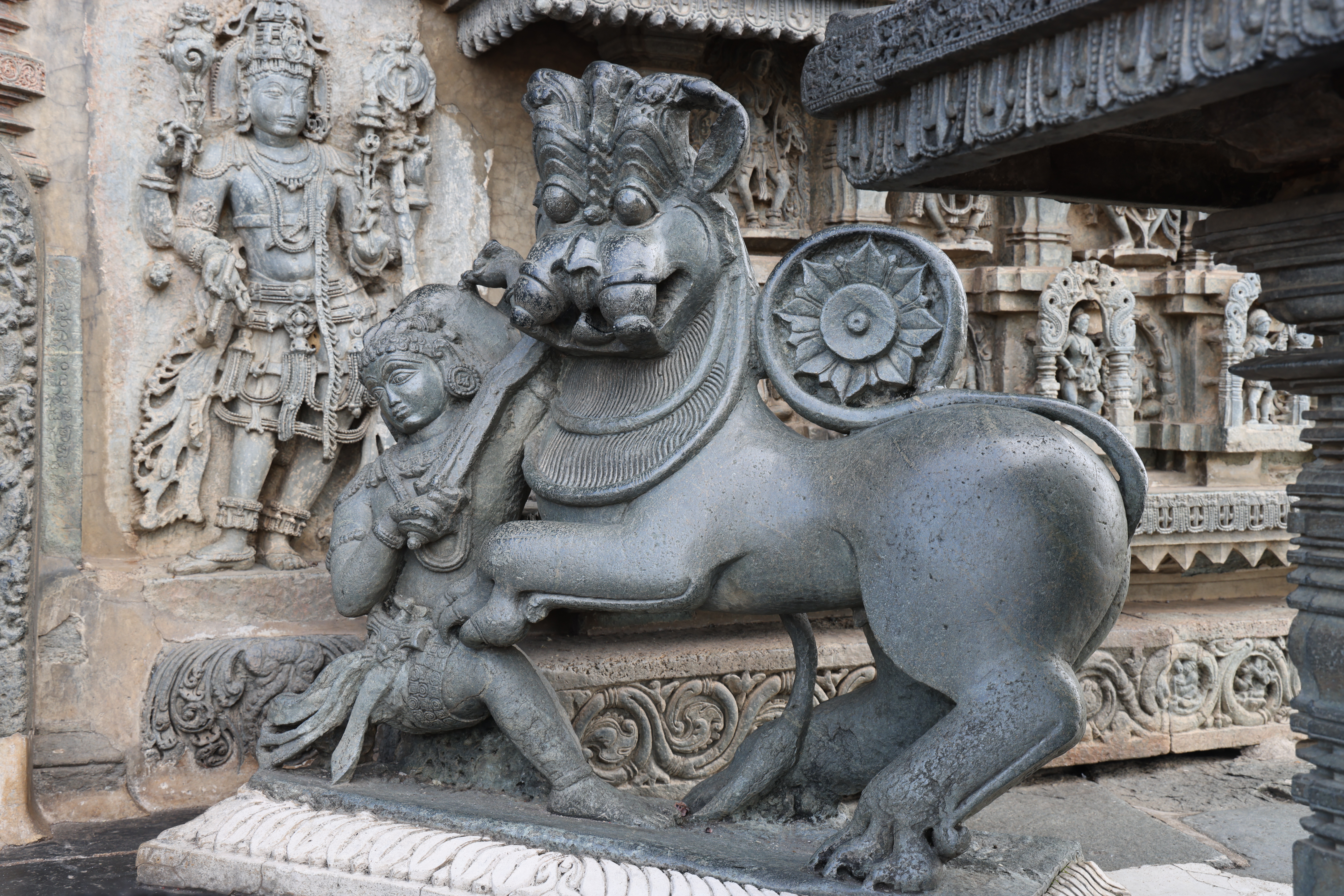
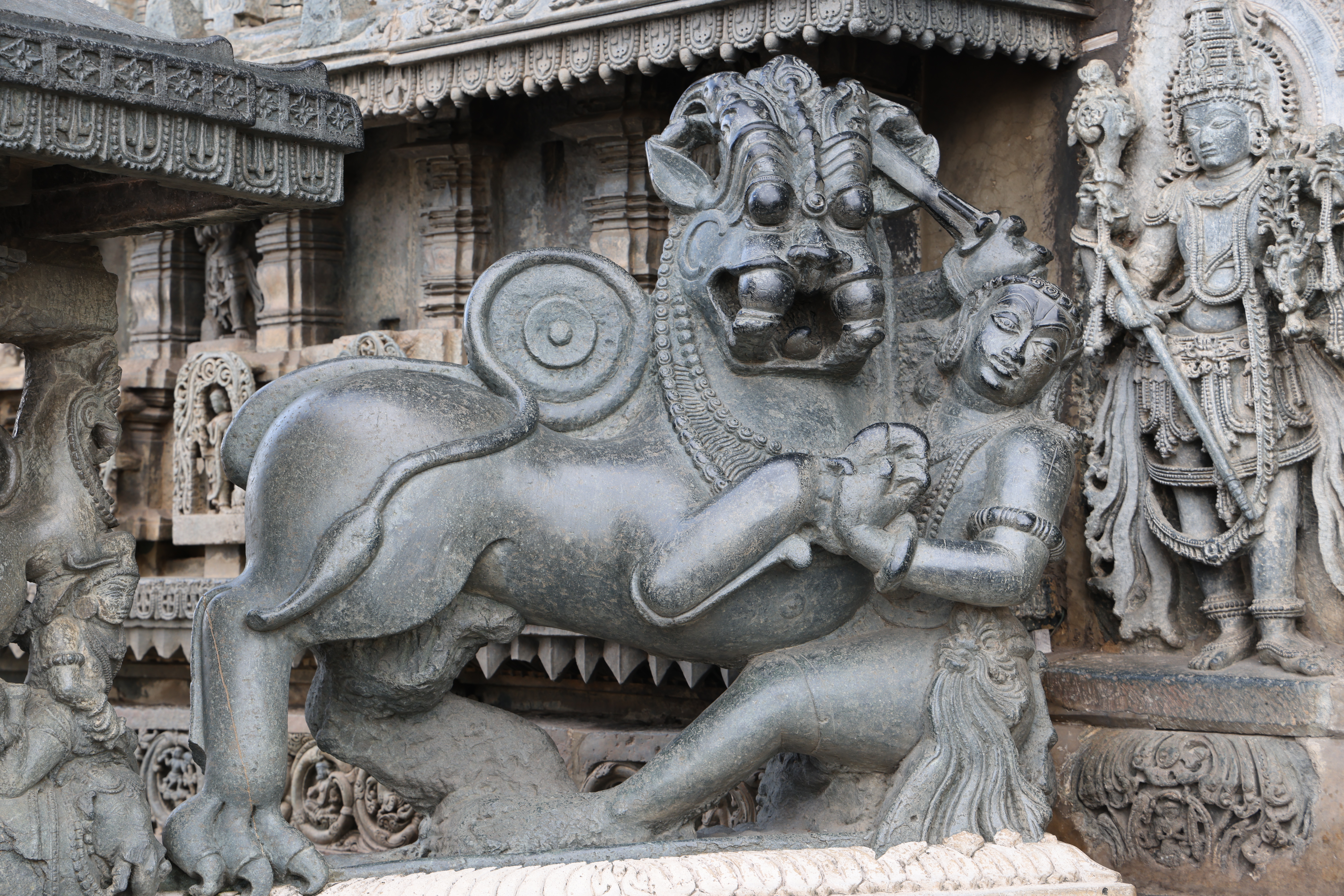
Architectural Charcateristics:
The Nolamba (late 8th–11th century) and Western Ganga (350 CE–1000 CE) dynasties, predecessors of the Hoysalas in Southern Karnataka, constructed Hindu and Jain temples inspired by Tamil heritage. In contrast, the Hoysala rulers were influenced by Western Chalukyan architecture, employing their craftsmen as well. Hoysala temples are richly adorned with figure sculptures, facilitated by the use of soapstone, which allows fine detailing, clarity, and durability. The Hoysala style blends southern Dravida and northern Nagara elements, known as the Vesara style. Further details on architectural characteristics of Hoysala temples can be checked out here. This post is the third part of the series dedicated to this unique symphony of human ingenuity. The rest of series comrades can be found here.
Hoysaleswara Temple, Halebidu
While the origin may trace back to Sala, the Hoysala dynasty reached its zenith under the reign of King Vishnuvardhana, flourishing politically, militarily, and culturally. Numerous temples were erected, and cultural events abounded. Subsequent heirs, like Ballala-II (1173-1220), also left their mark, as seen in his enhancements to the Vijaya-Narayana temple at Belur. However, let’s save that discussion for another post! Here, our focus is on the quaint town of Halebid, situated 27 km from Hassan and 17 km from Belur. Once known as Dvarasamudra or Dvaravatipura, Halebid served as the opulent capital of the illustrious Hoysalas under Vishnuvardhana, who shifted the capital from Belur, also called Velapura, to Dvarasamudra, now known as Halebid. The name “Halebid” translates to “The Ruined City or Village” in Kannada, a testament to its once prosperous status, which was marred by invasions, notably by Malik Kafur, the renowned general of Alla-ud-din-Khilji, and later by Muhammad-bin-Tughluq in 1326.
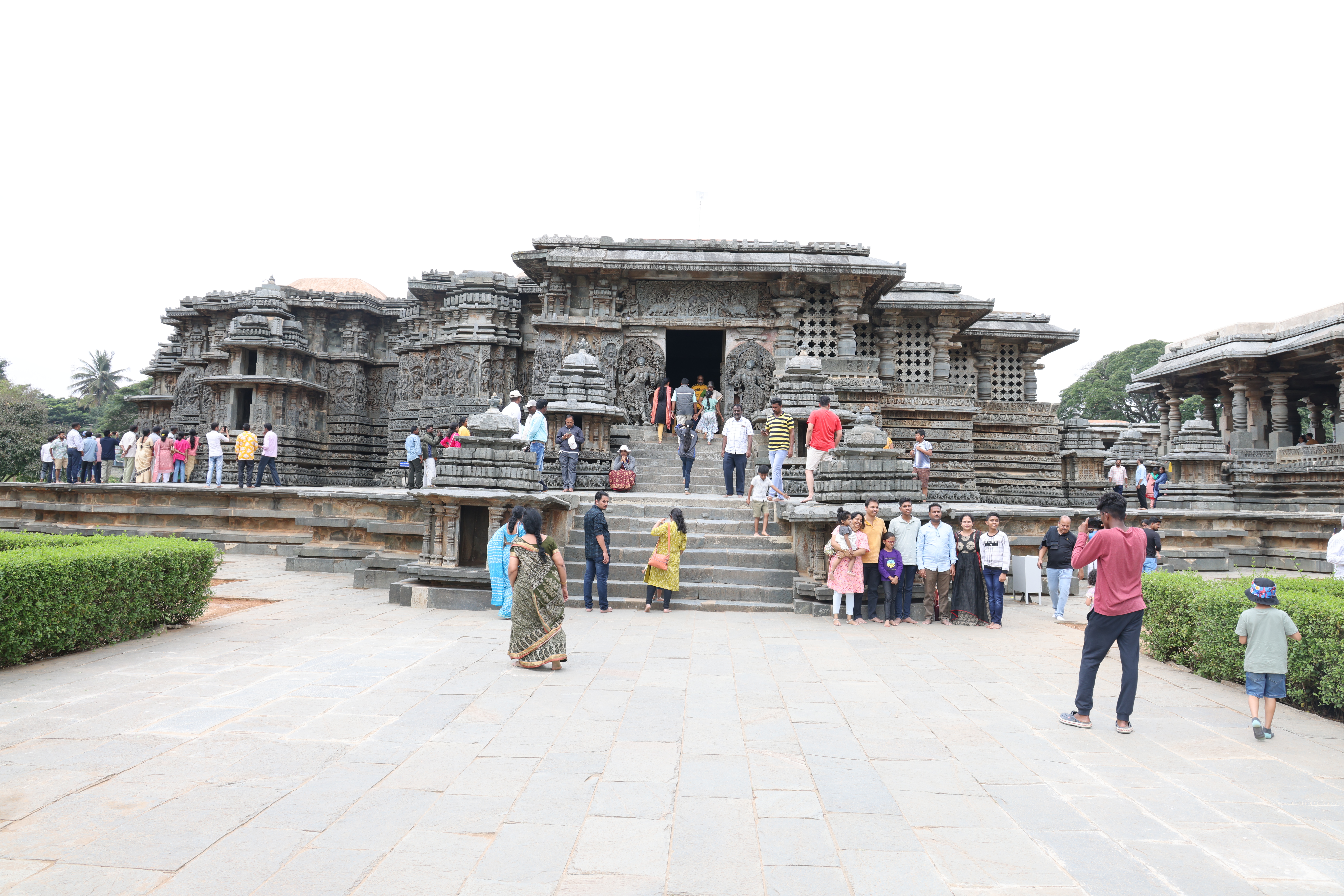
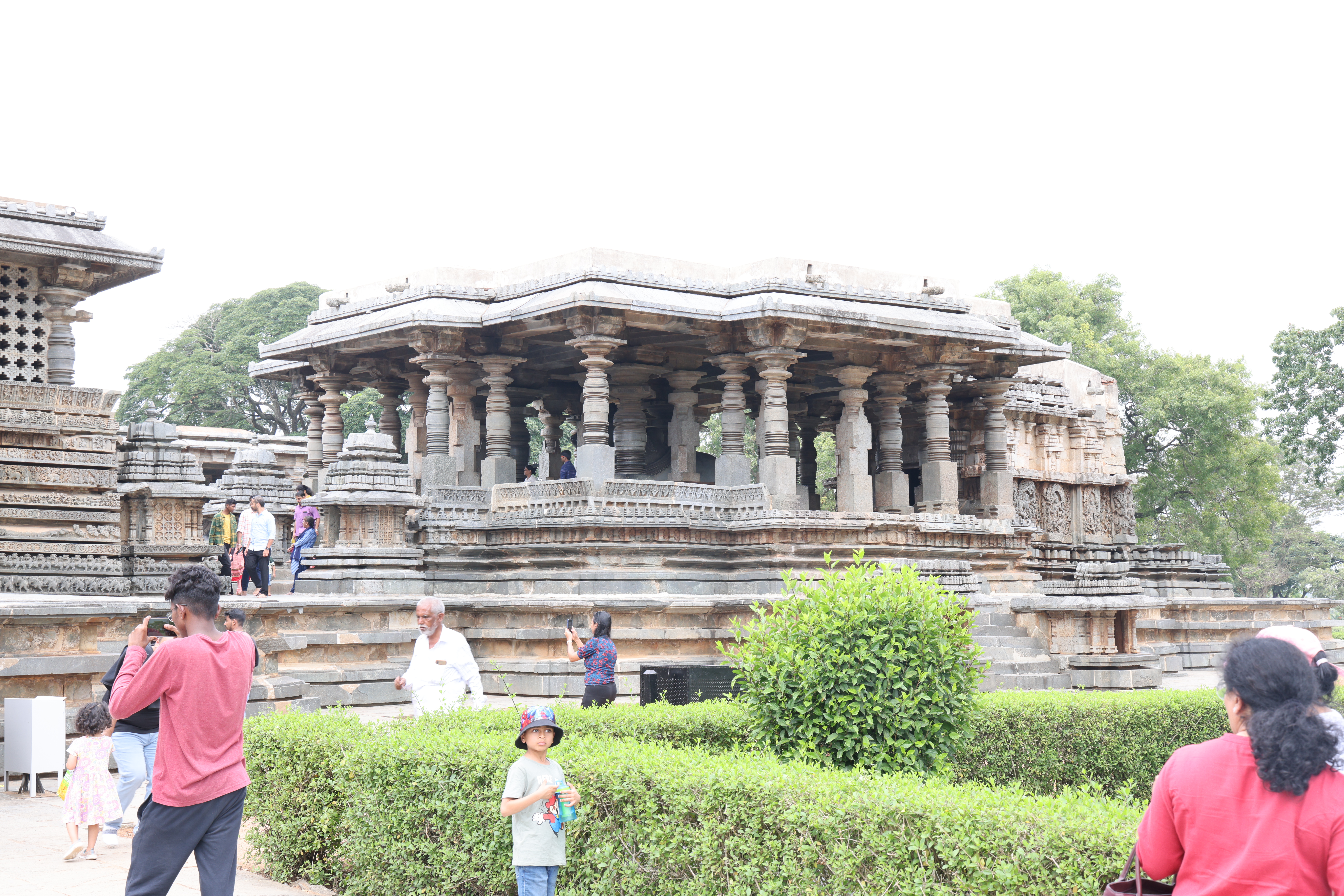
The Hoysaleswara Temple, also known as the Halebidu temple, ranks among South India’s largest shrines dedicated to Lord Shiva. Commissioned by Ketamalla, an officer of the king, the temple’s construction was carried out in the name of Hoysala king Vishnuvardhana and his queen Santaledevi. Renowned for its grandeur, opulence, and architectural style, the temple stands as a formidable counterpart to the Chennakesava temple of Belur. Legend has it that the architects of both temples engaged in an internal competition to determine which design would emerge superior.
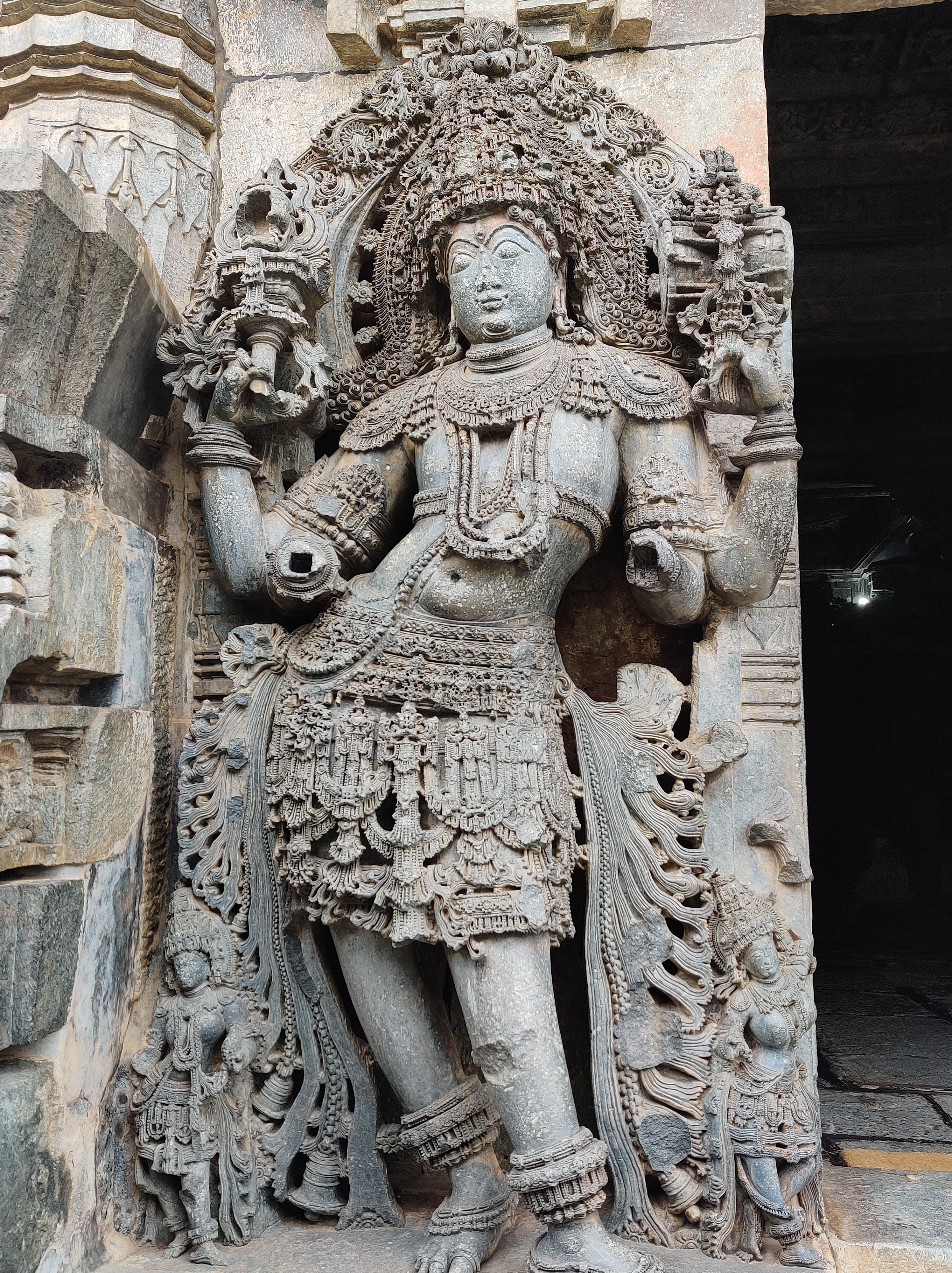
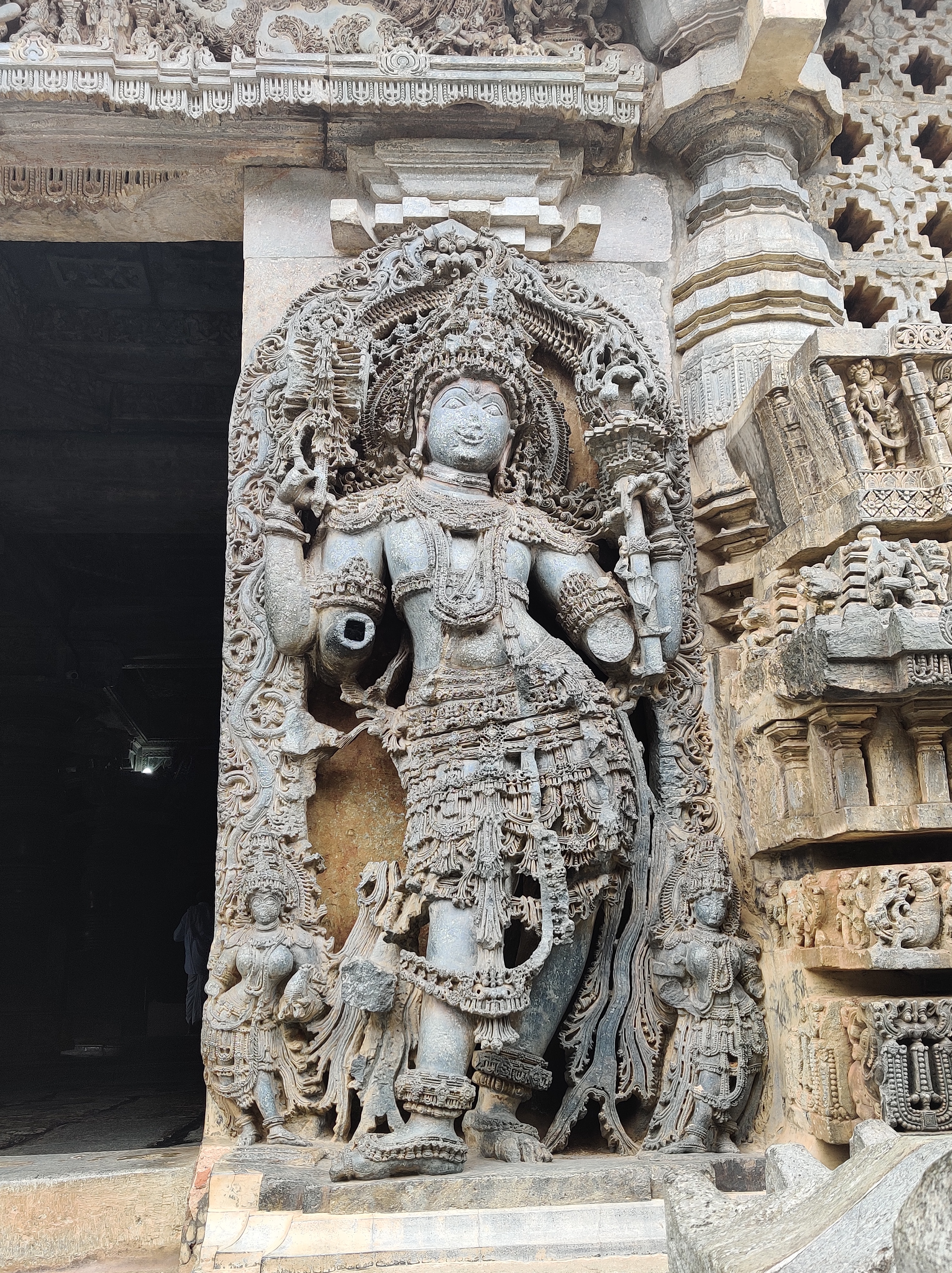
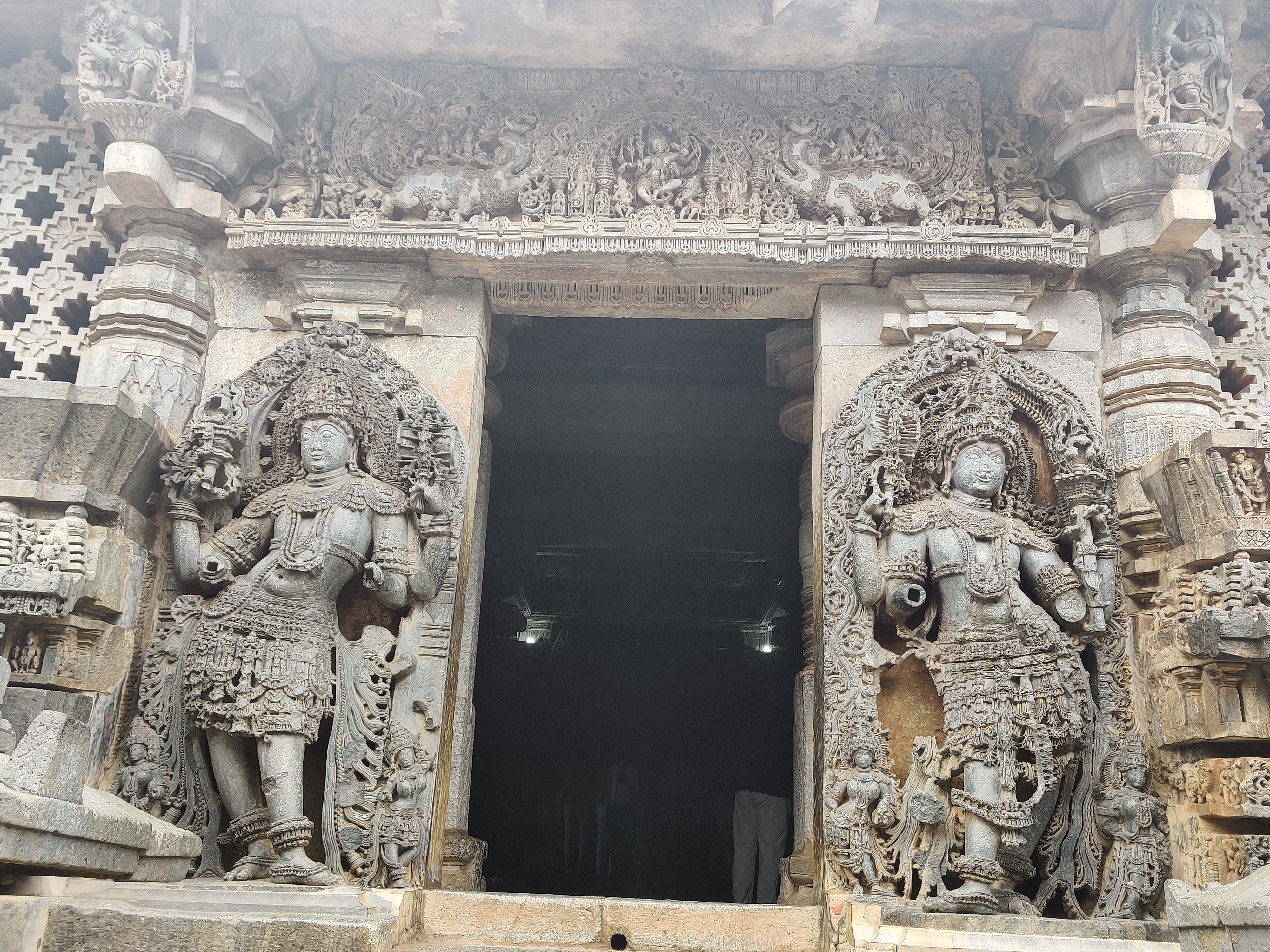
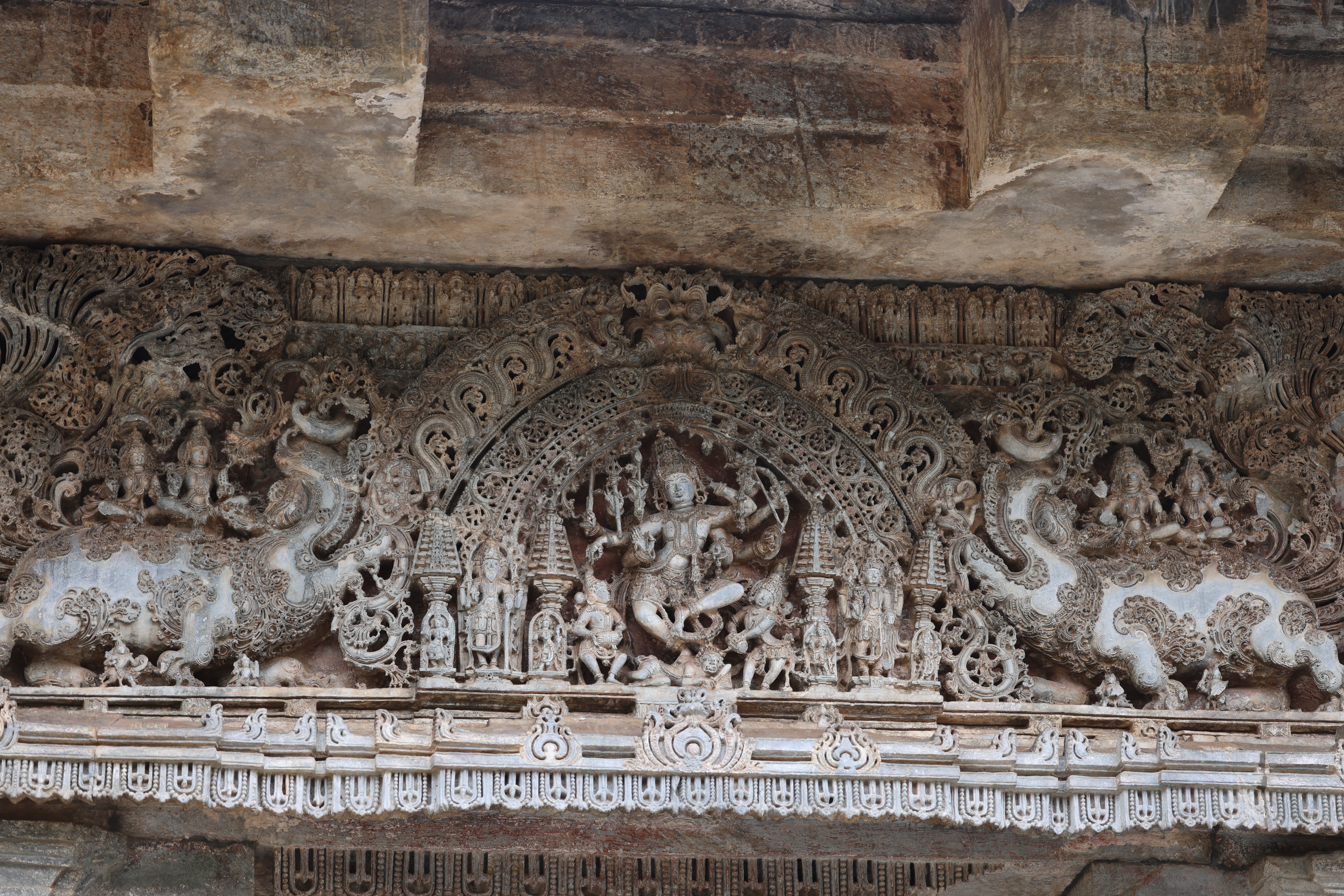
Like typical Hoysala temples, this one follows a star-shaped pattern atop a raised platform. Accessible through four doorways—two in the east, one in the north, and another in the south—the entrances are guarded by dvarapalakas. In Shaivite tradition, these guardians are believed to be Nandi and Mahakal. They typically feature four hands holding a Pasha (noose) and Trishula (trident) in their upper hands, and a Gada (blunt mace) in one of the lower hands. The lintel above the entrance depicts a finely sculpted Shiva in the Tandeshwar form at the center, with makaras being driven by Varuna and his consort on either side.
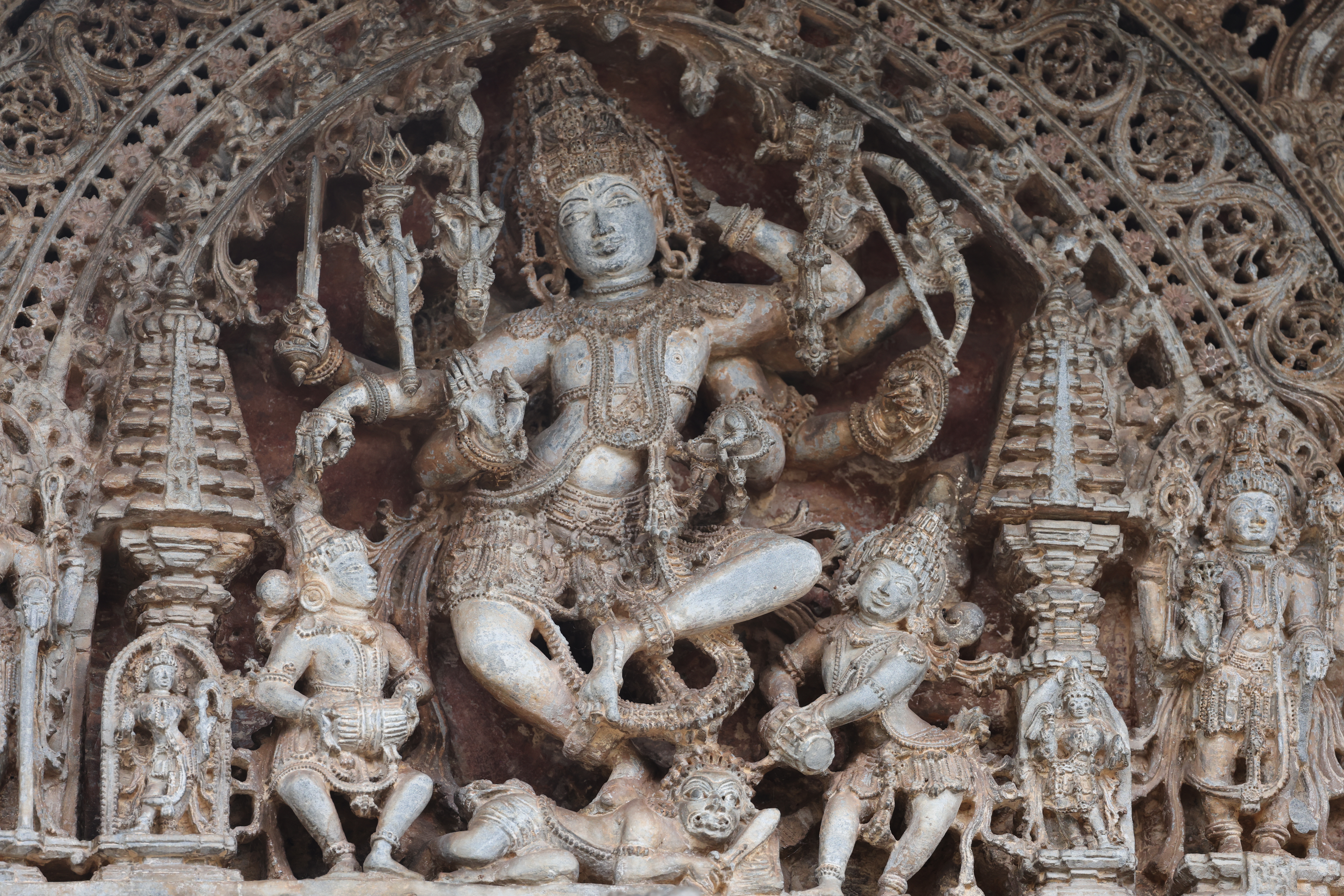
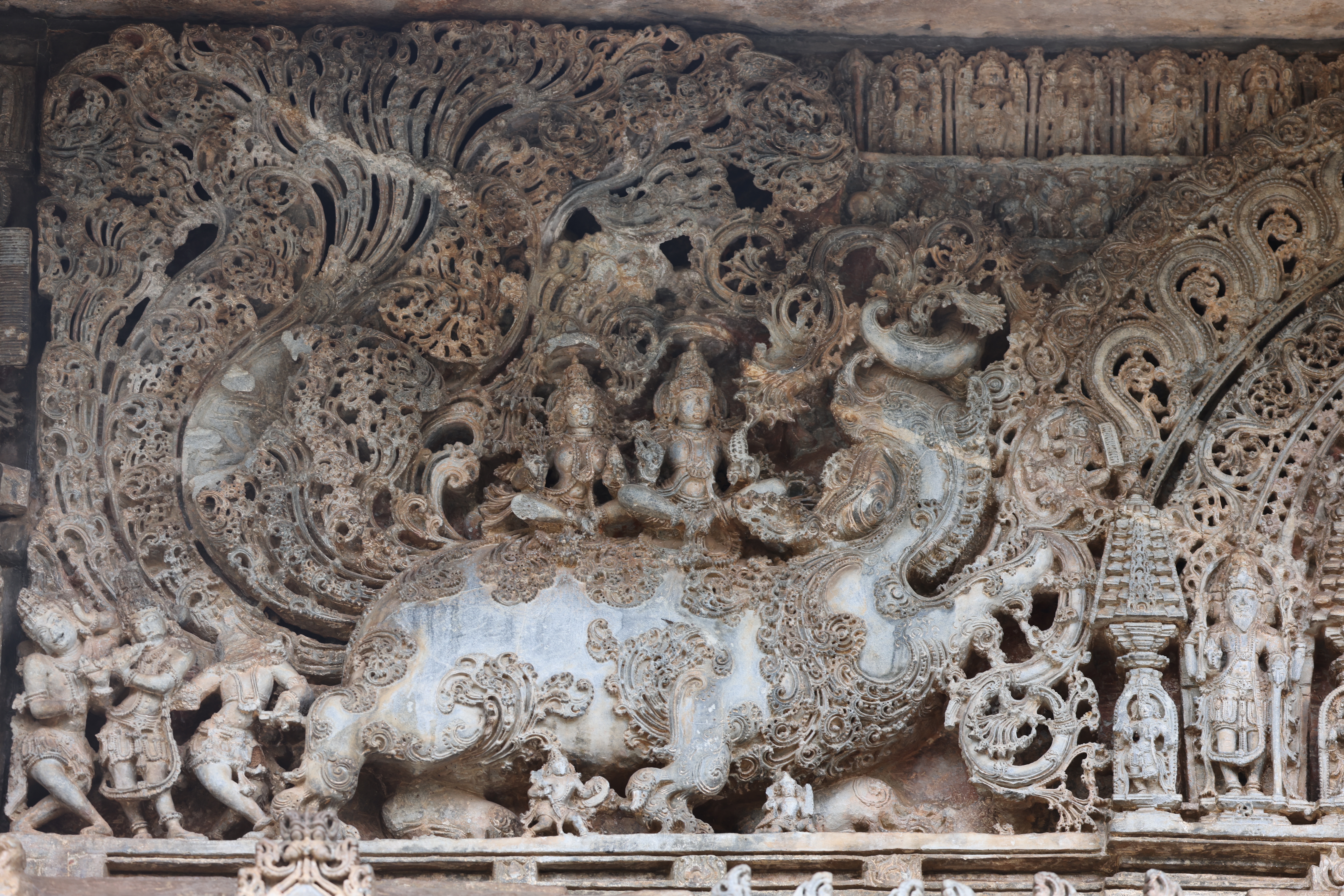
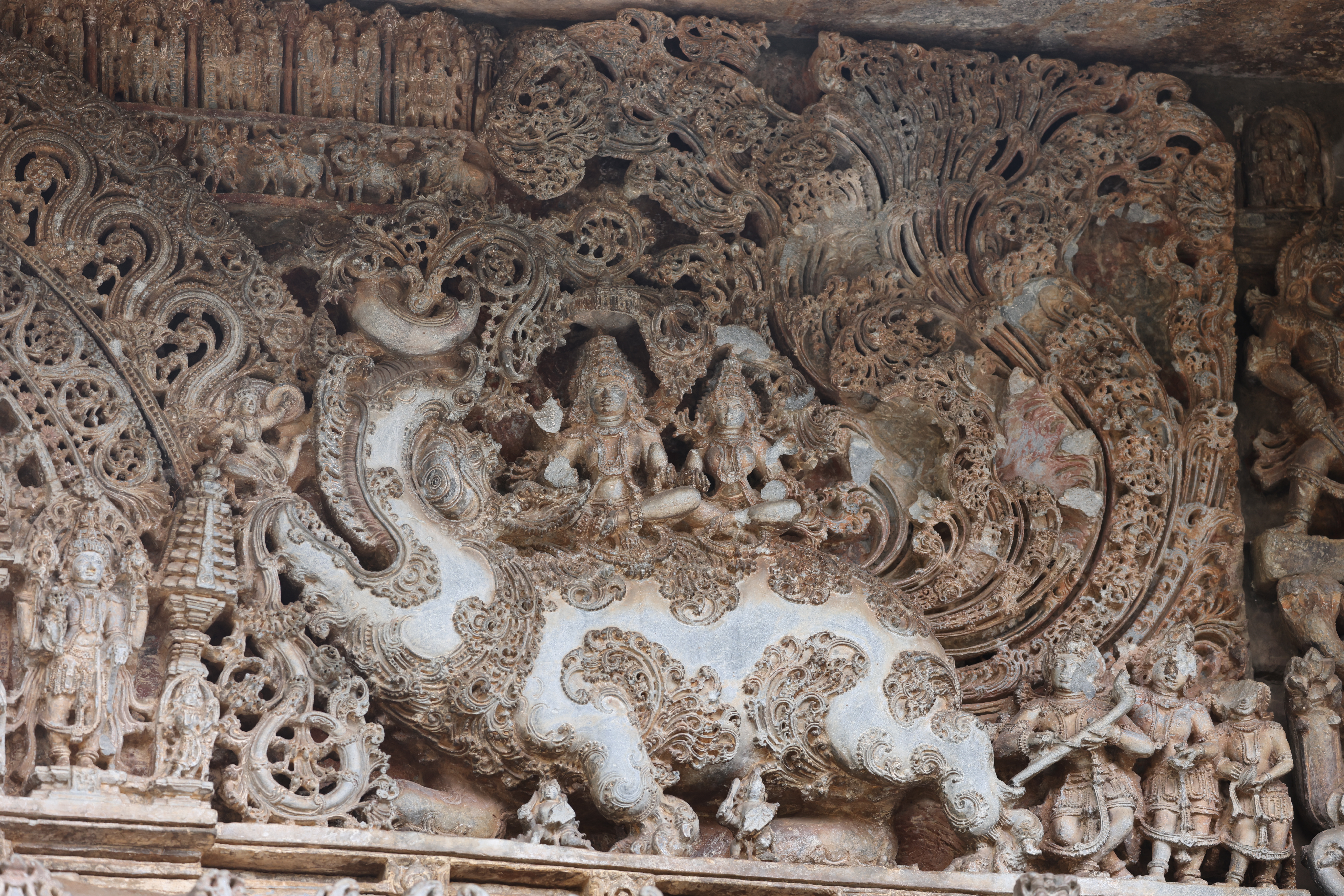
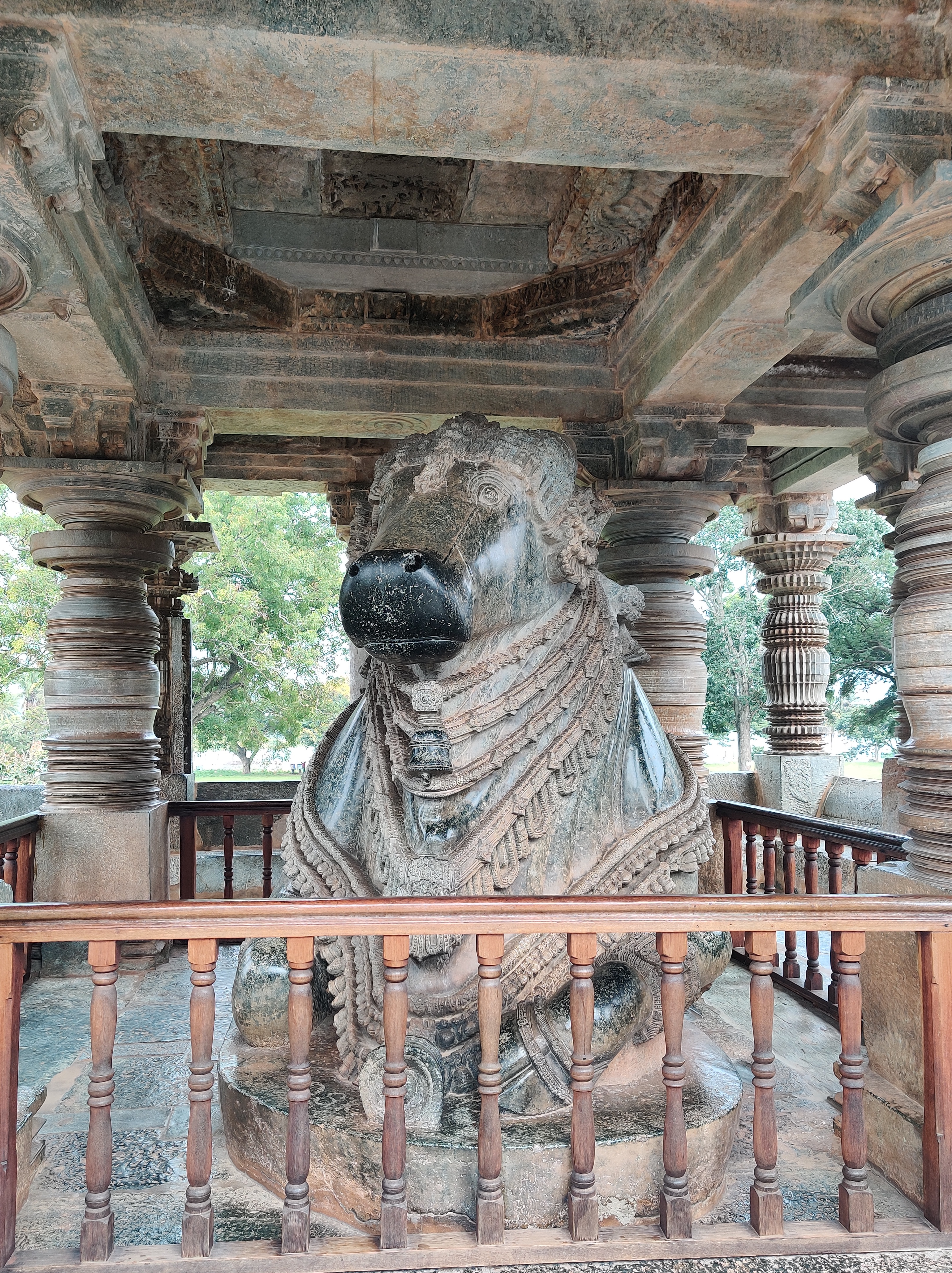
The southern gateway stands out for its exceptional ornamentation, believed to have been the preferred entrance of the King due to its proximity to his palace. Though the palace may no longer stand, its former opulence is evident, notably in the finely carved stone jewelry adorning the gatekeepers. Opposite the eastern doorway are two open-pillared mandaps housing beautiful and gigantic Nandi sculptures, renowned for their ornate craftsmanship.
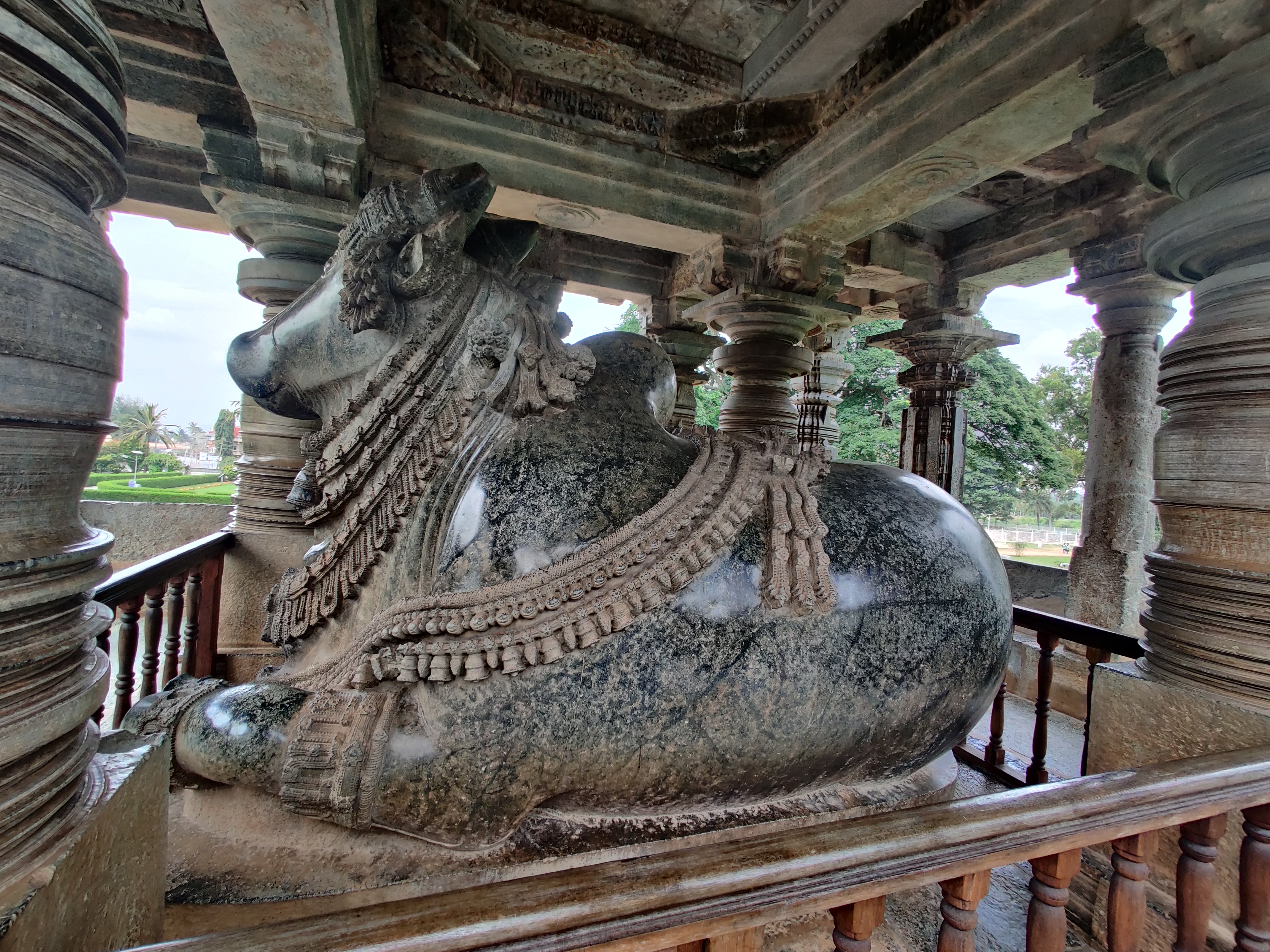
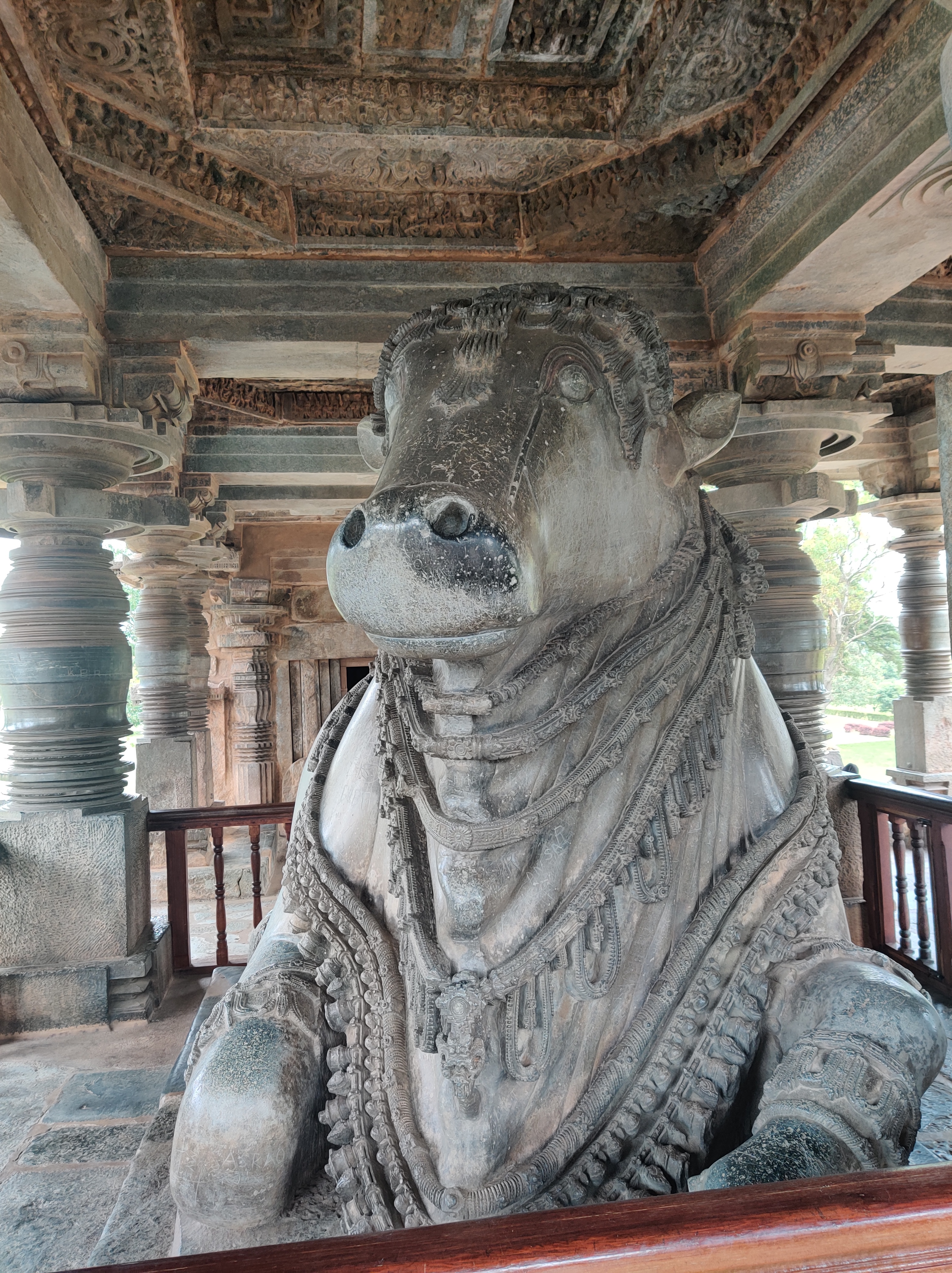
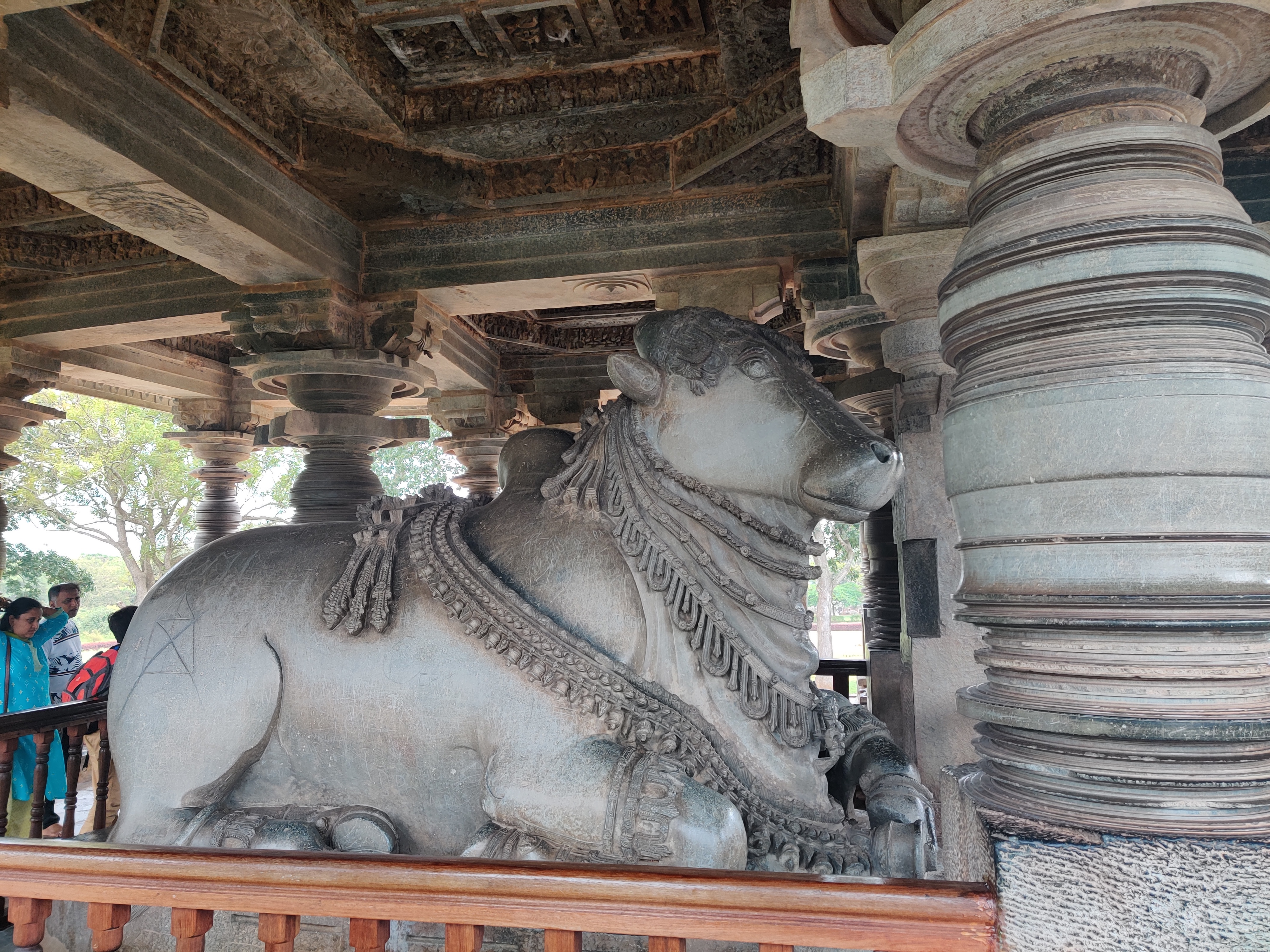
The external walls of the Halebidu temple boast numerous sculptures, while Belur temple is famed for its exquisite interiors. A railed parapet, or jagati, adorns the temple, stretching from the right side of the north doorway along the entire east face to the left side of the south doorway. The iconography on the parapet reflects the distinct Hoysala architectural style and symbolism, featuring layers of elephants, lions, scrollwork, horsemen, puranic scenes, makaras, swans, seated and standing miniatures, beadwork, miniature turrets, and figurine panels between double columns.
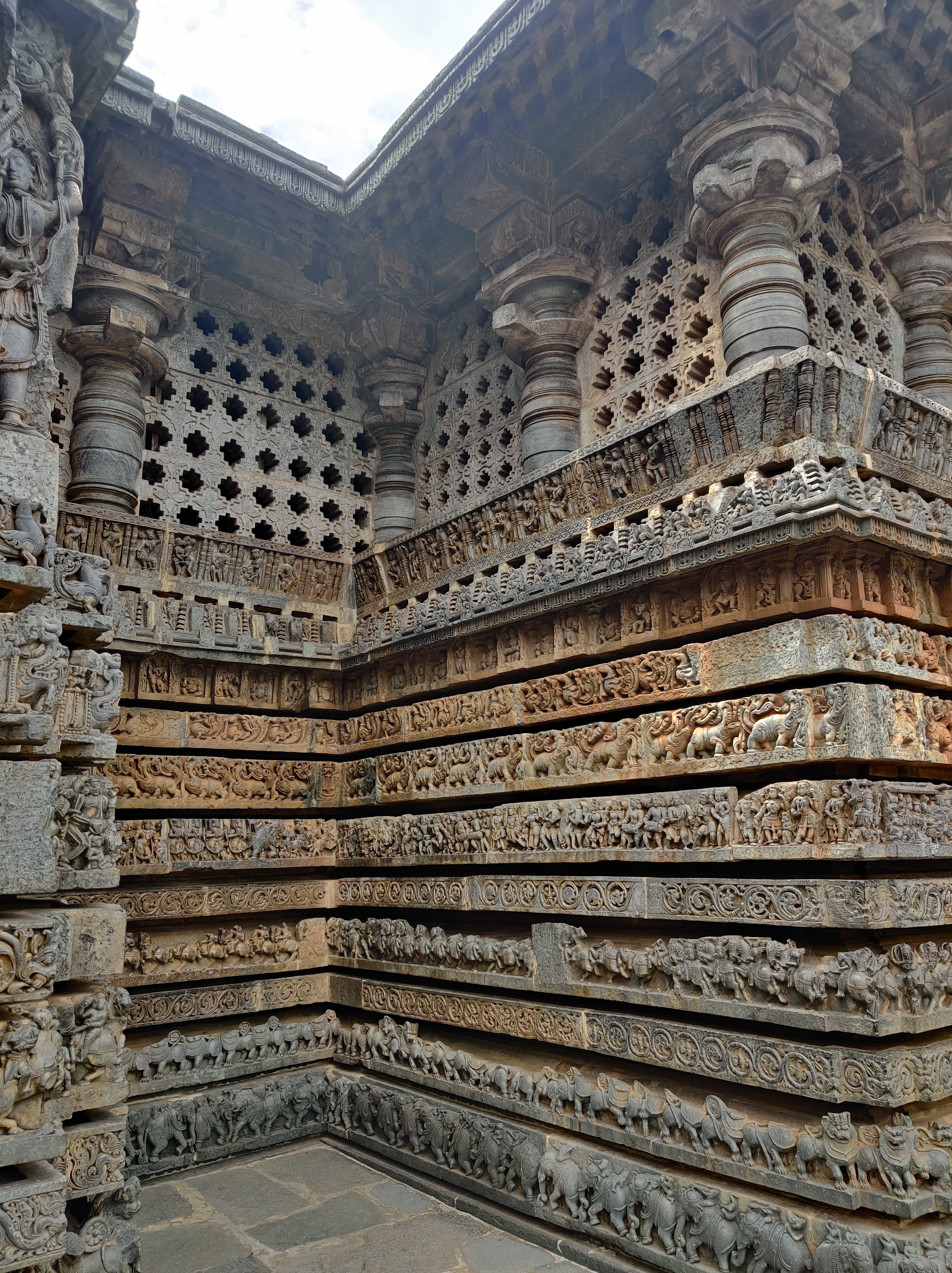
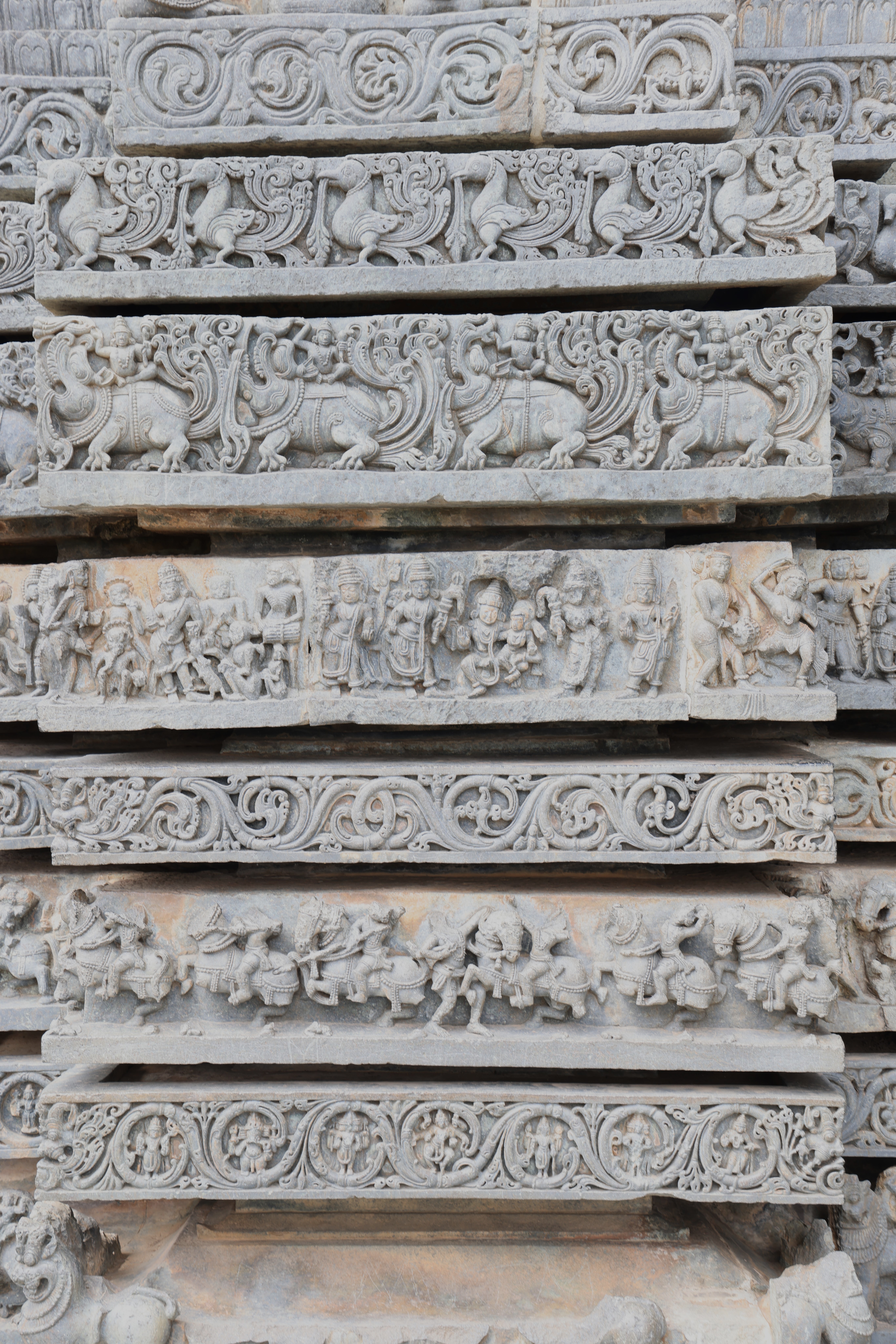
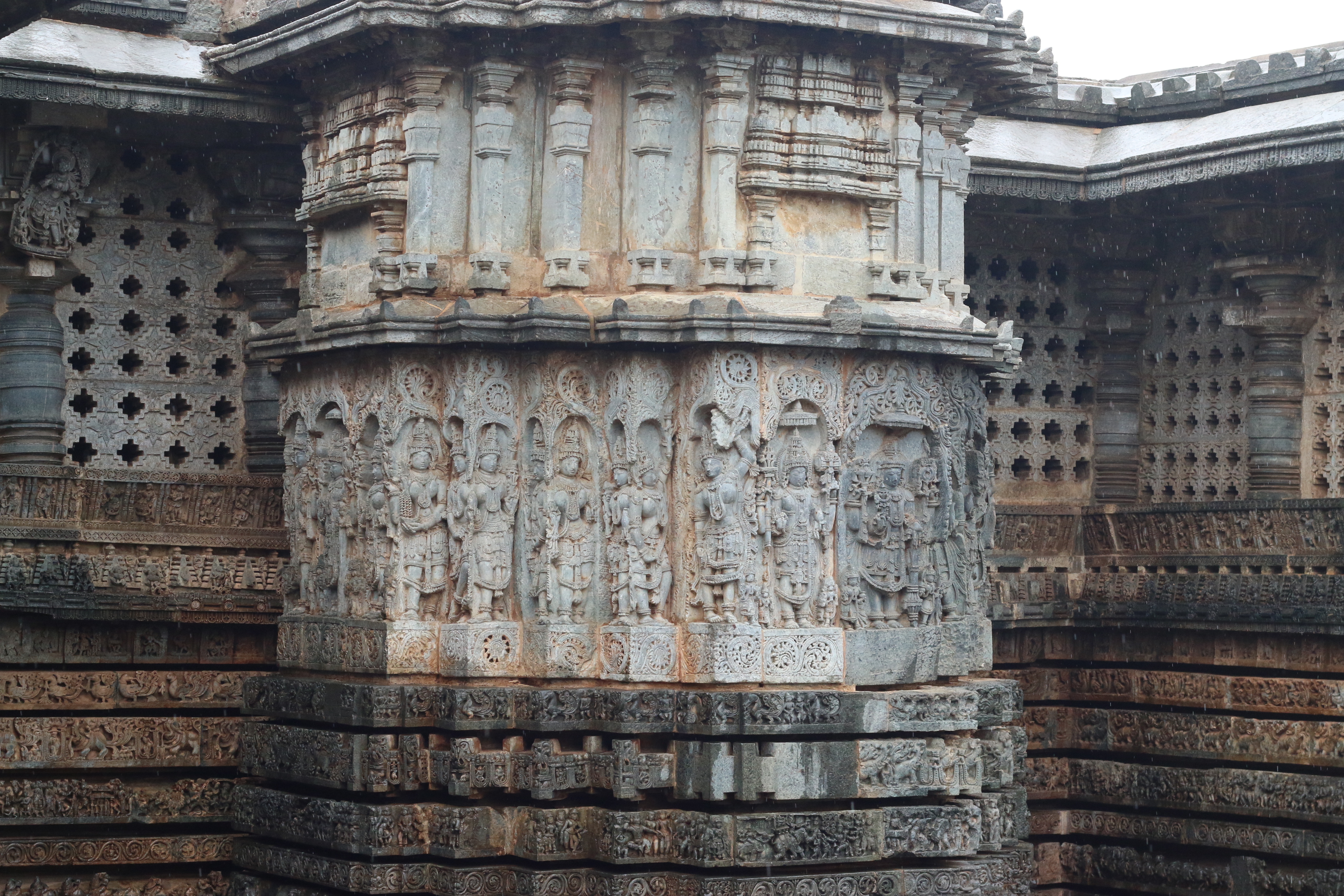
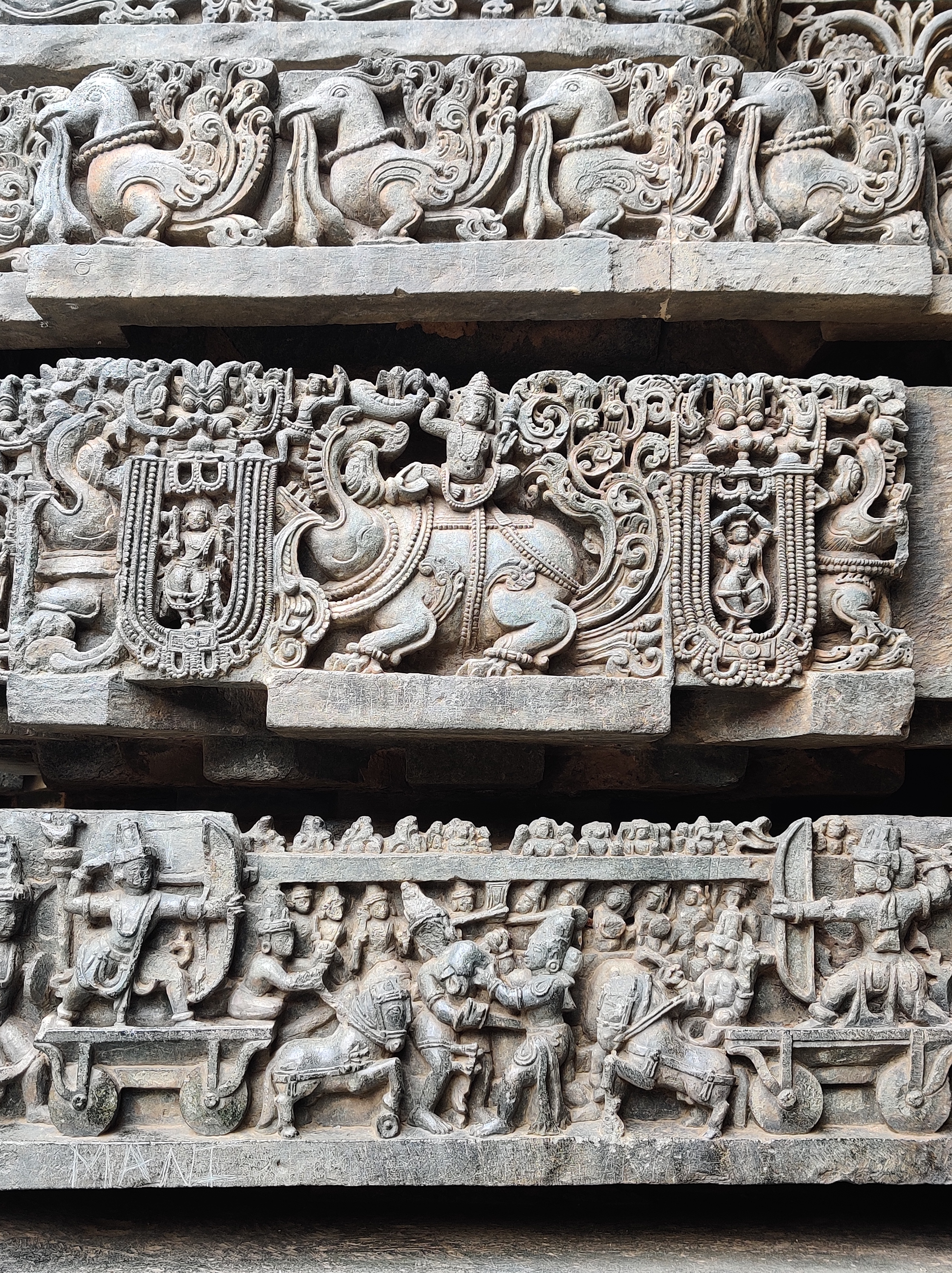
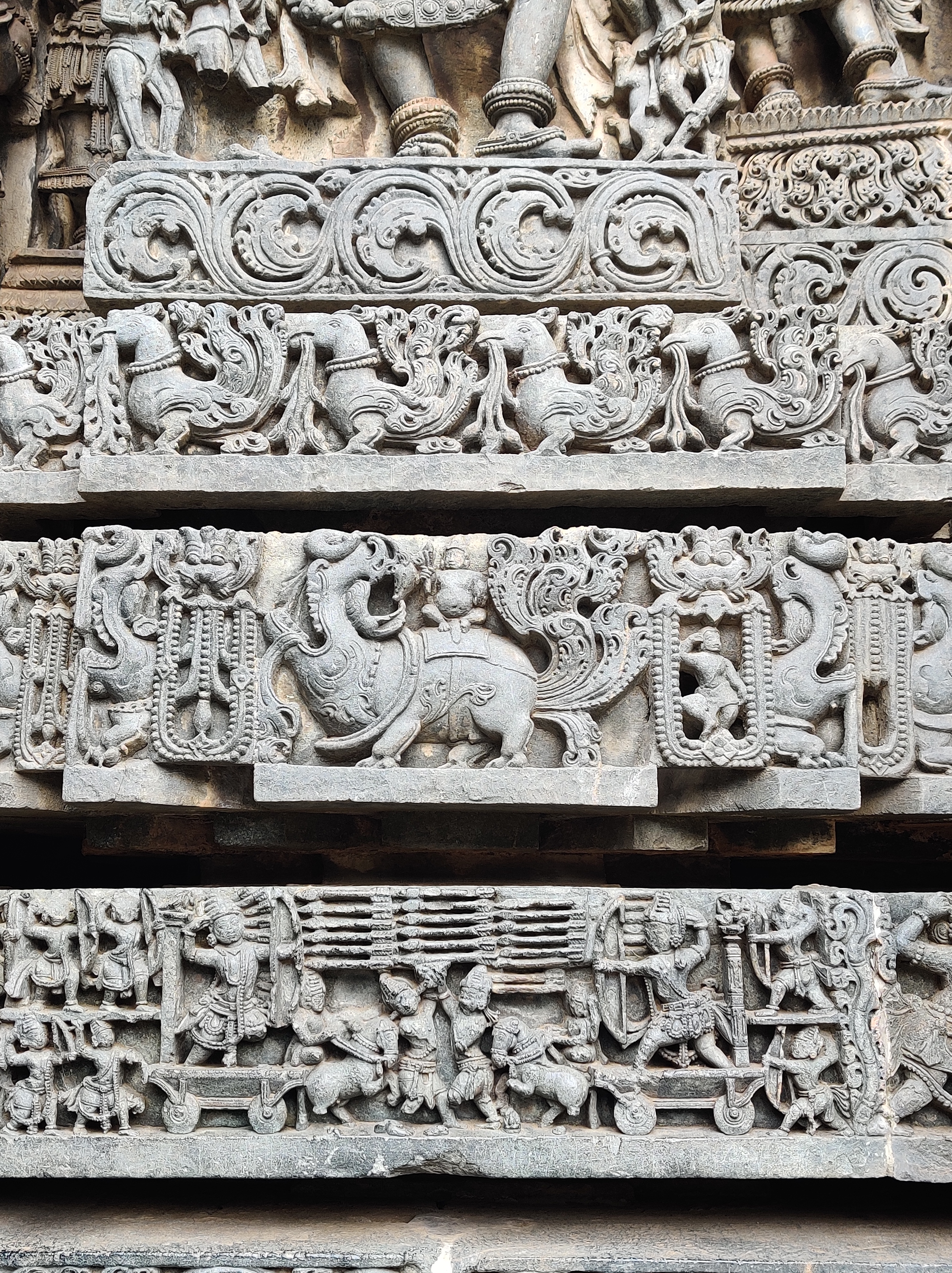
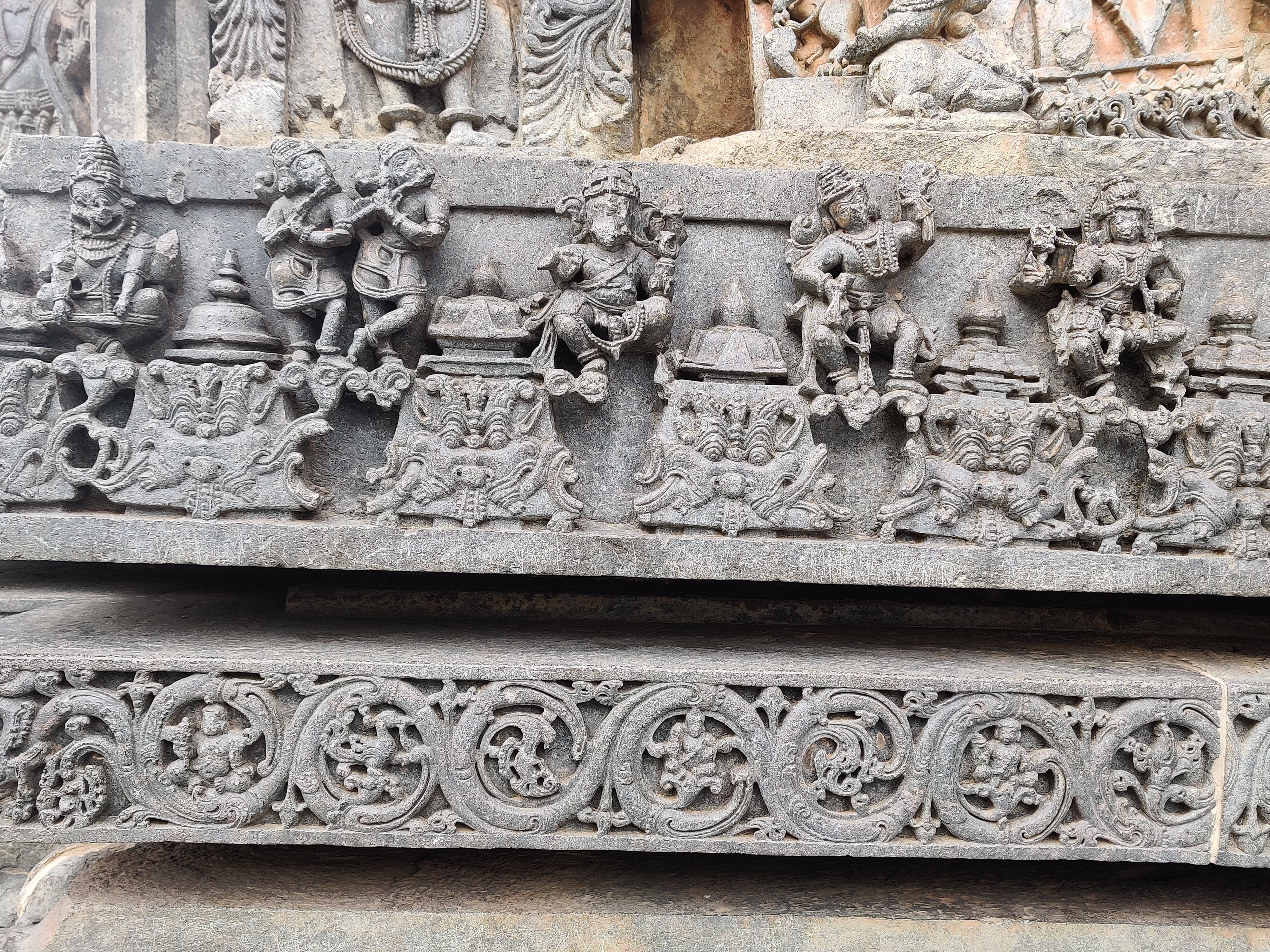
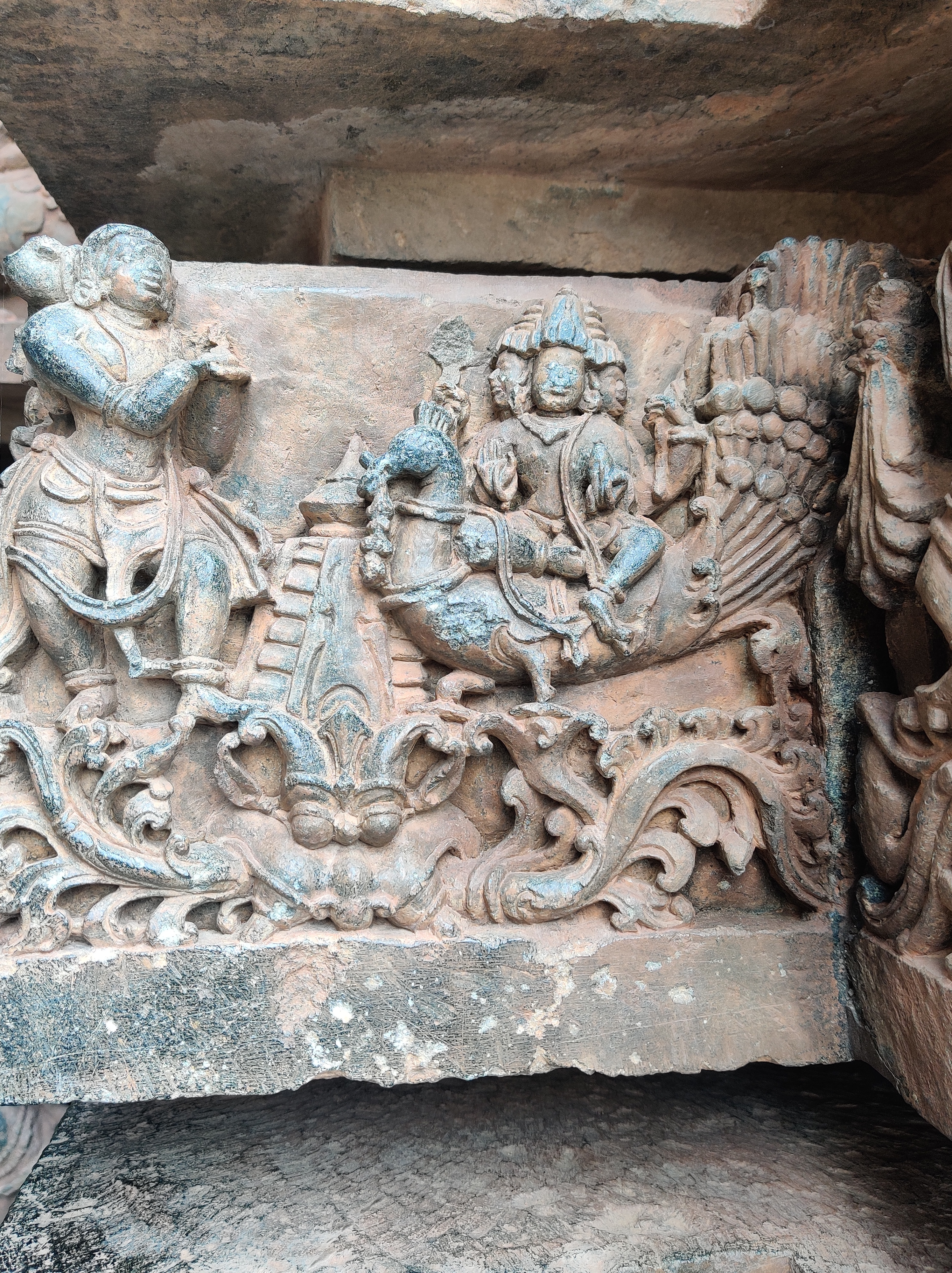
The temple wall exteriors are intricately adorned with numerous large-scale carvings, surpassing both the size and quantity seen at the Kesava temple in Belur. According to our guide, the western face alone boasts 281 larger images, with 167 depicting females and the remainder portraying males.
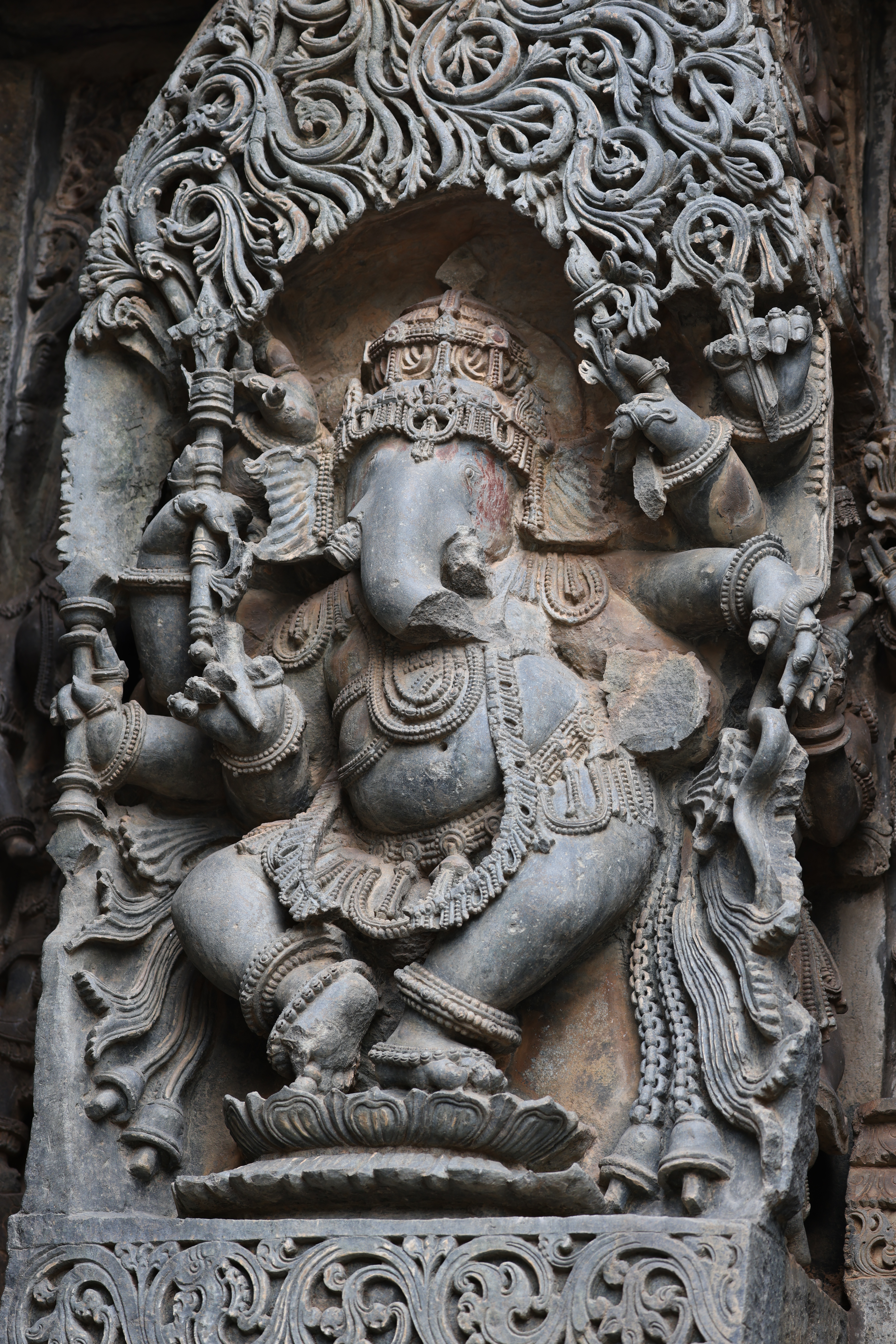
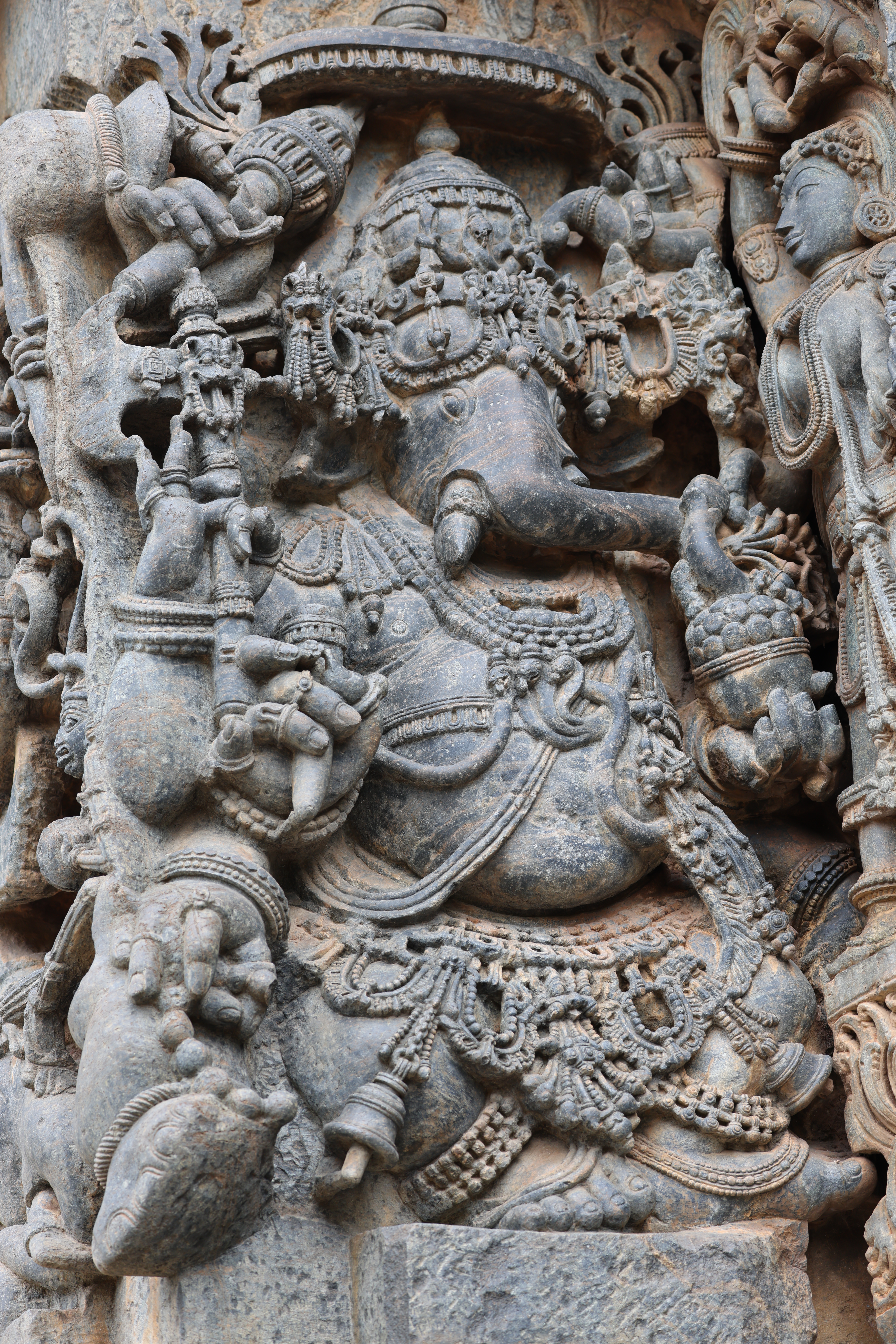
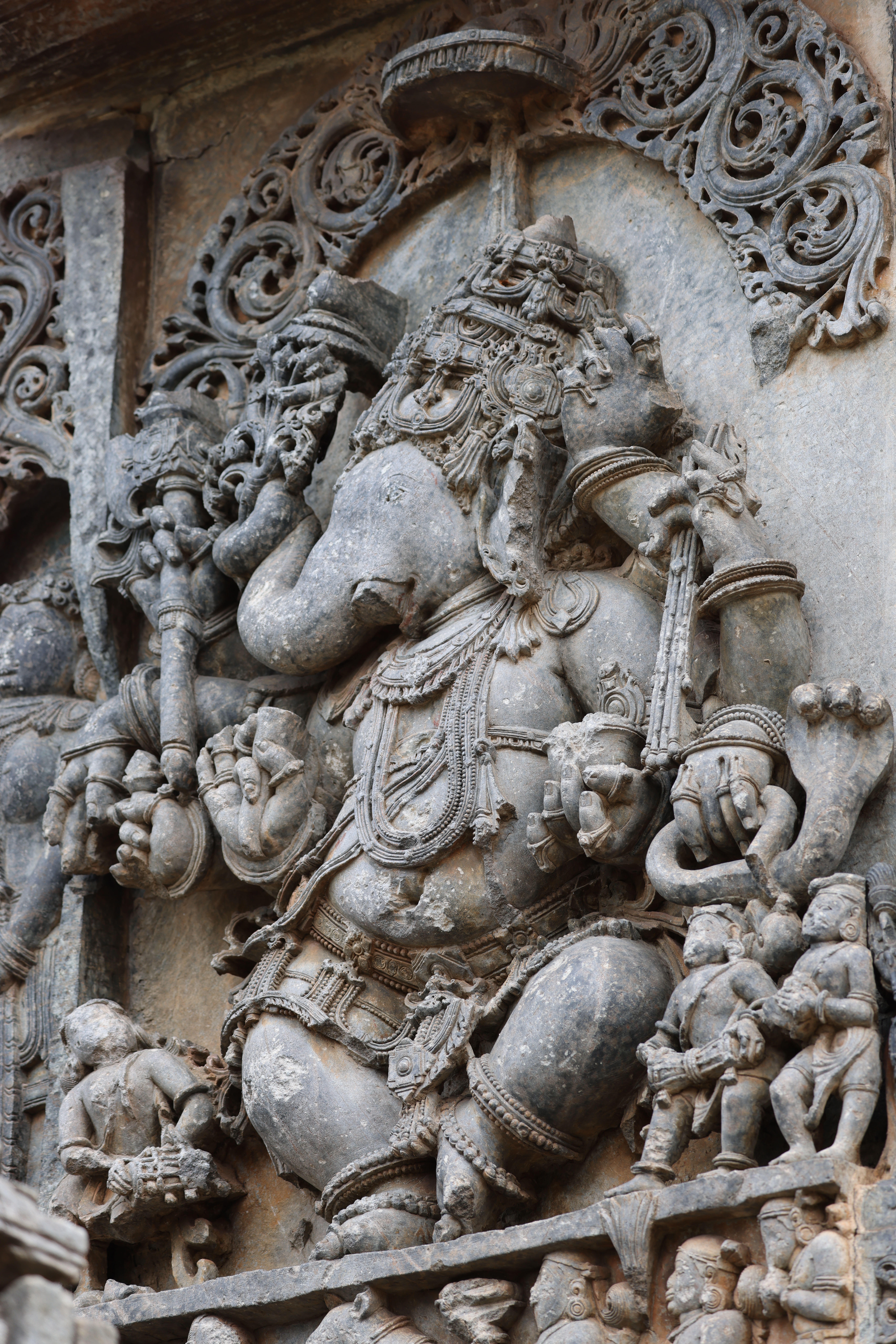
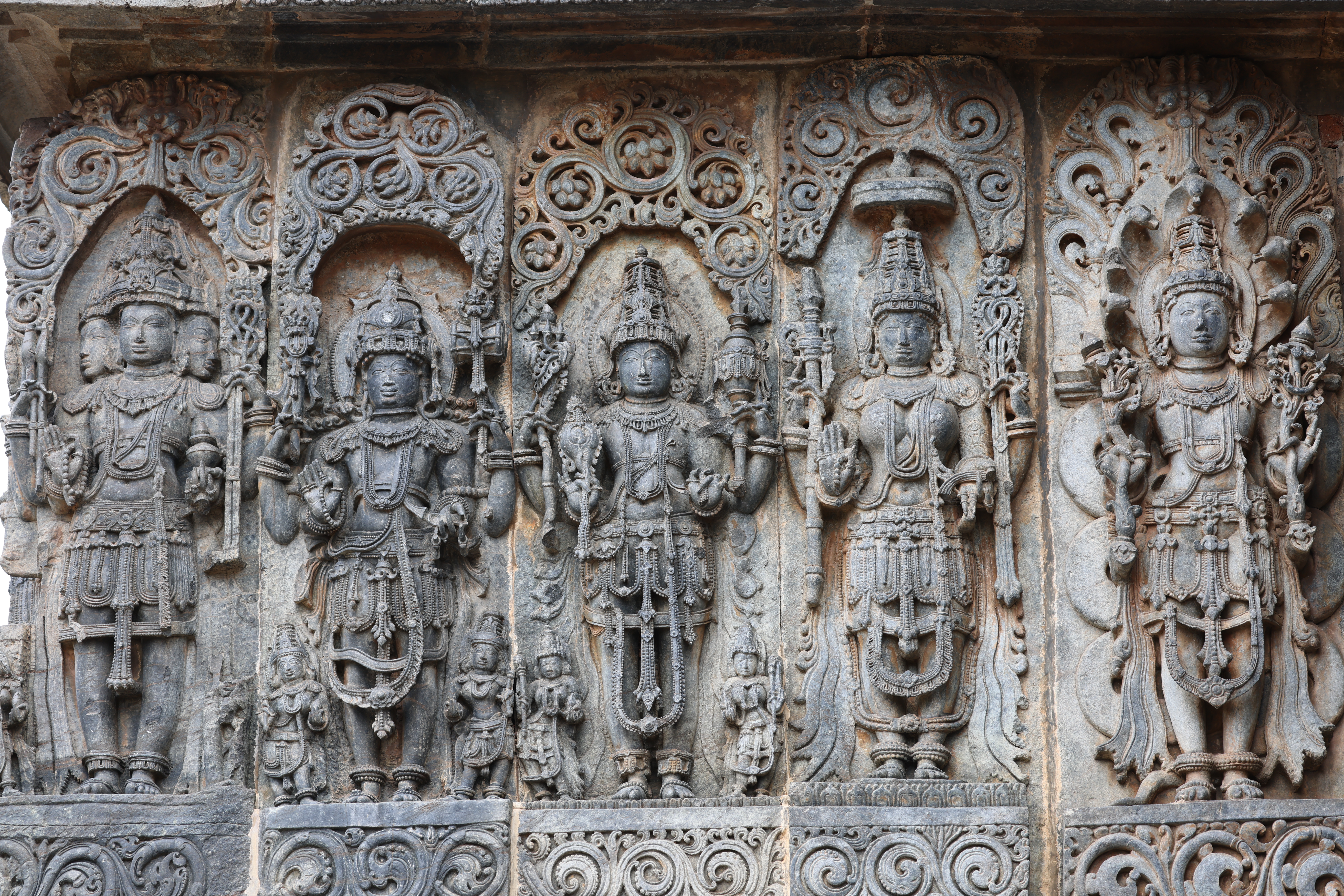
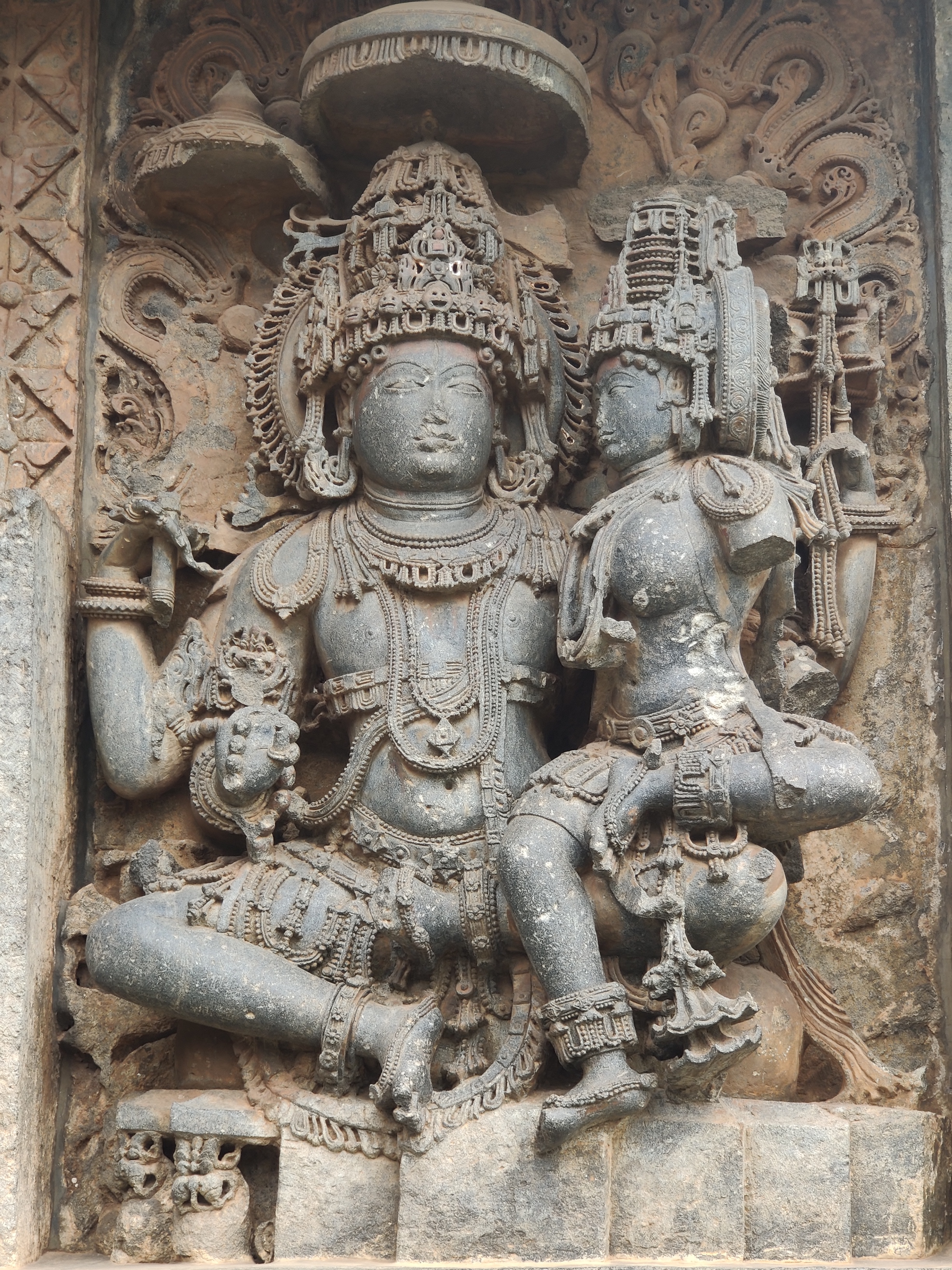
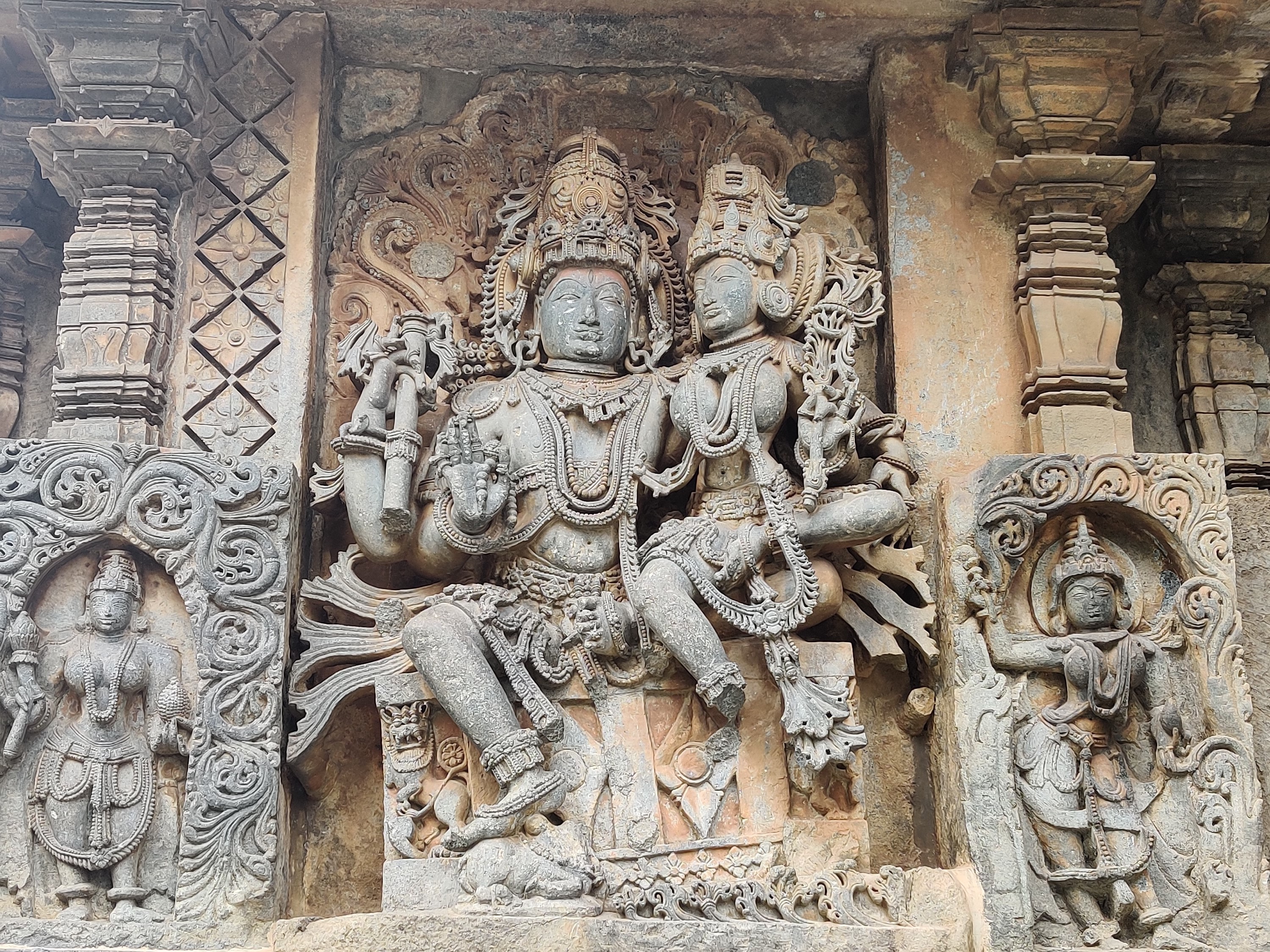
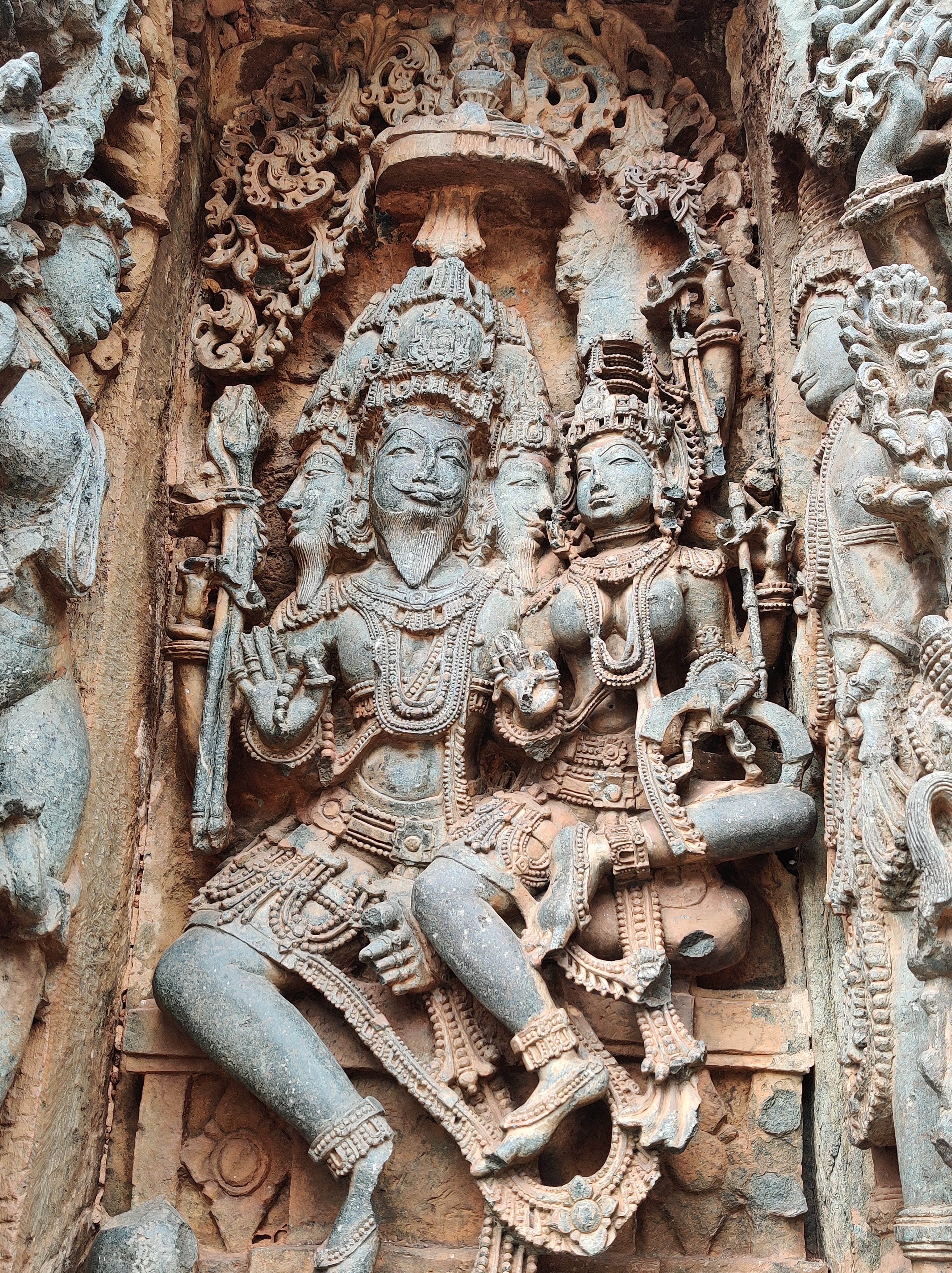
Being a Shiva temple, the majority of depictions naturally revolve around Shiva. Similar to Vaishnavism, Shaivism also acknowledges various incarnations of Shiva. Bhairava, Virabhadra, Lakulisha, Sharabha, Harihara, and Dakshinamurti are among those considered to be Shiva incarnates. The Shaiva Puranas elaborate on numerous other forms of Shiva, such as Gajasurasamhara Shiva, Tripurantaka Shiva, and Andhakanta Shiva, which have been subjects of sculpture art throughout the development of various Shaiva sects and cults, including those represented here in Halebeedu.
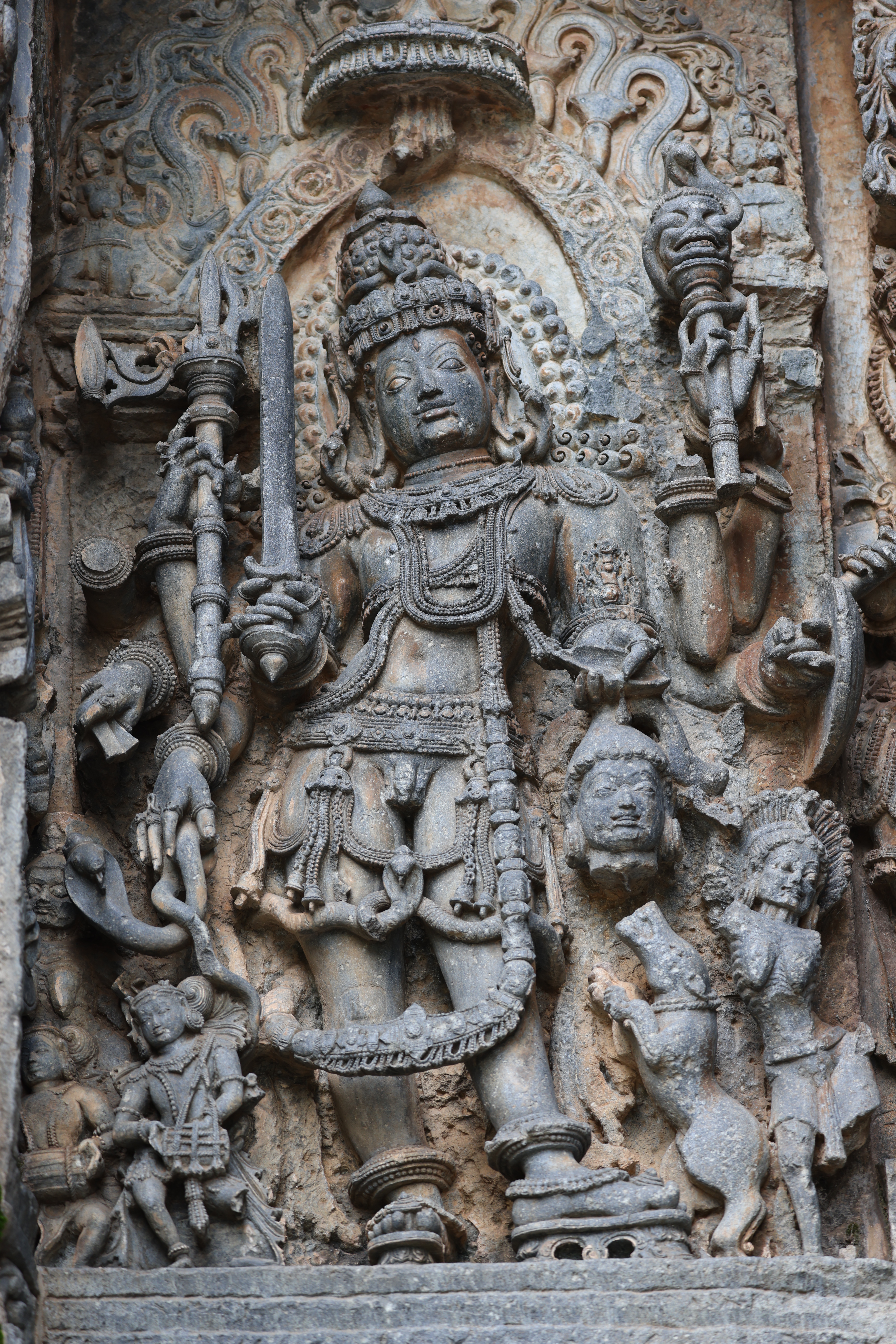
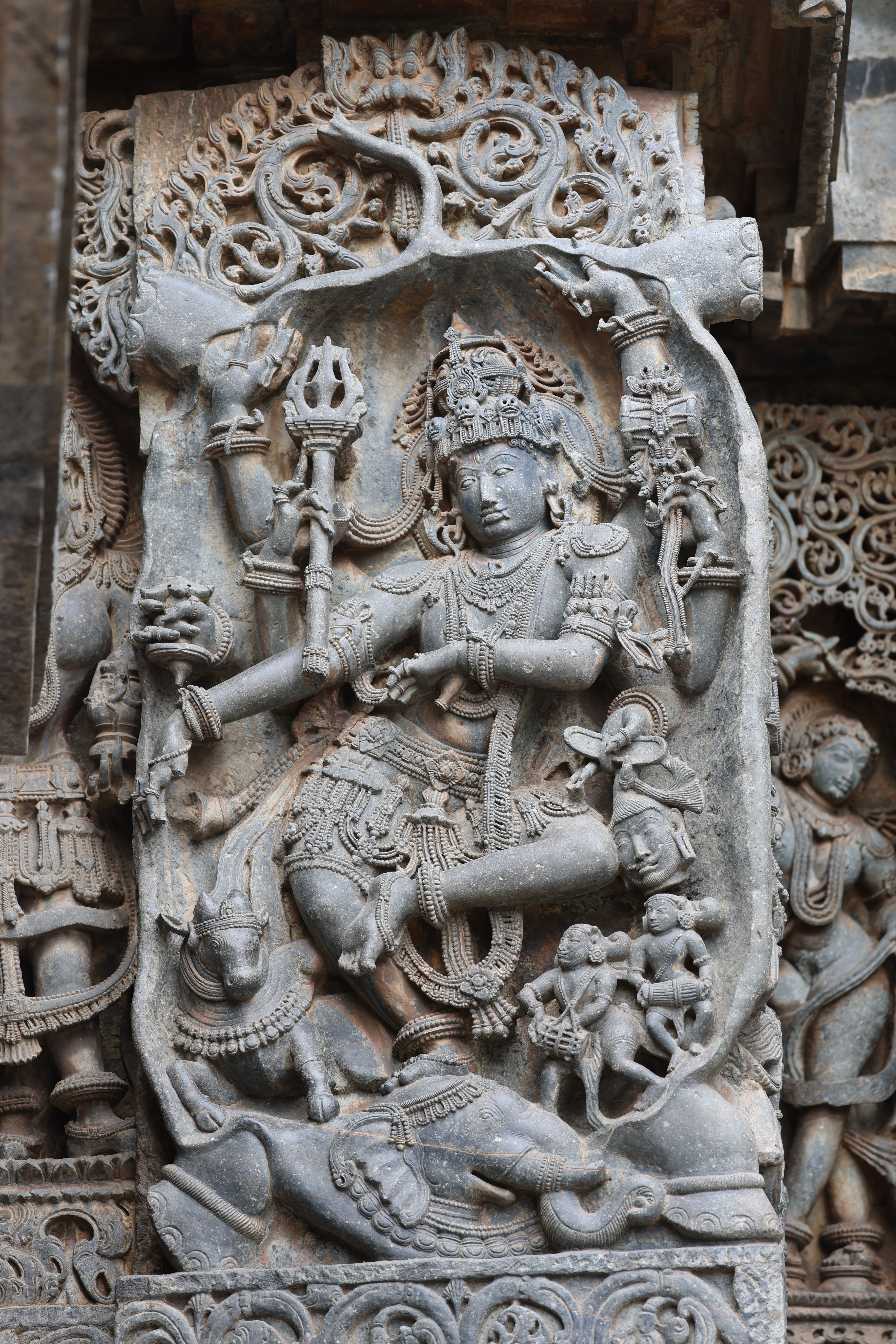
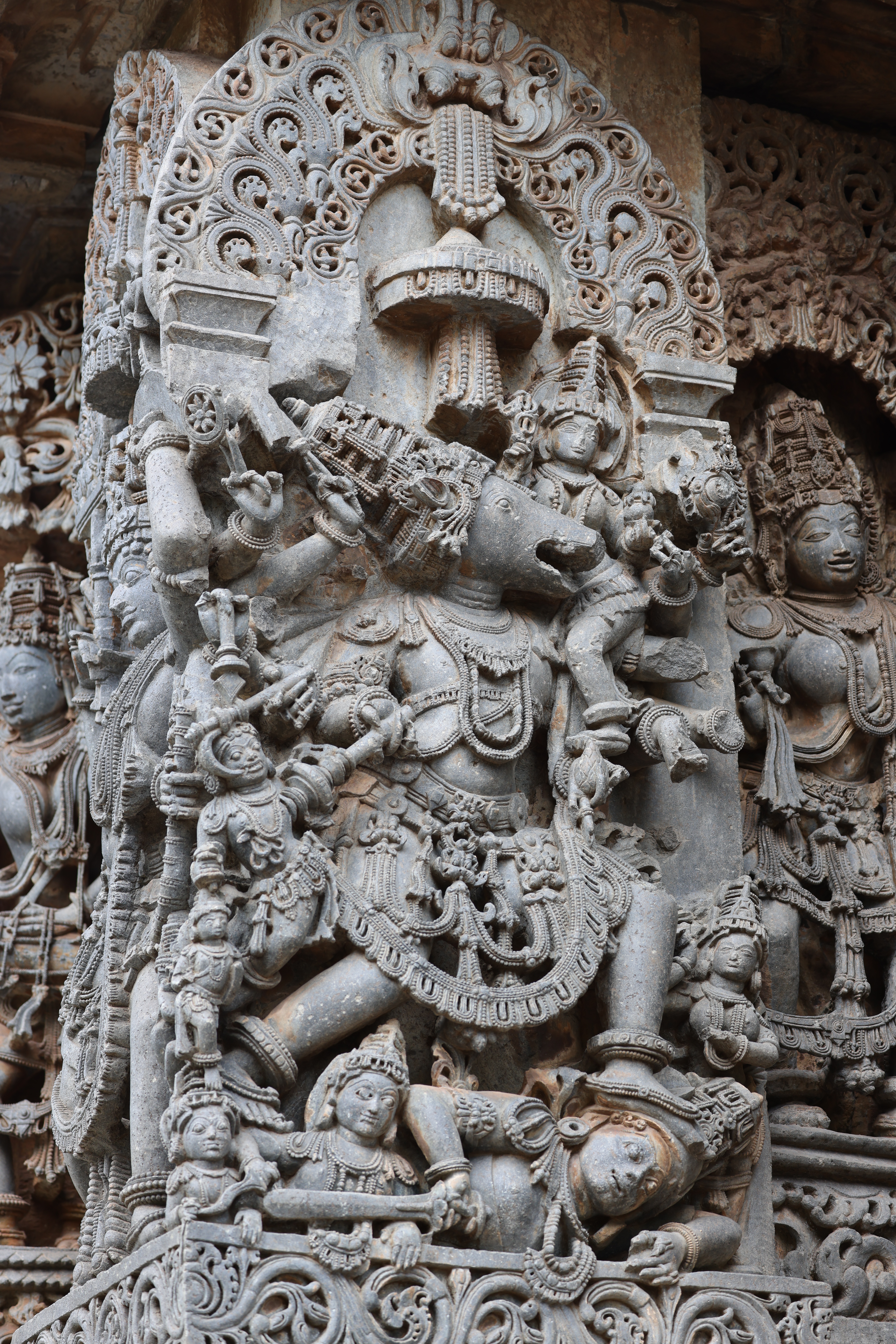
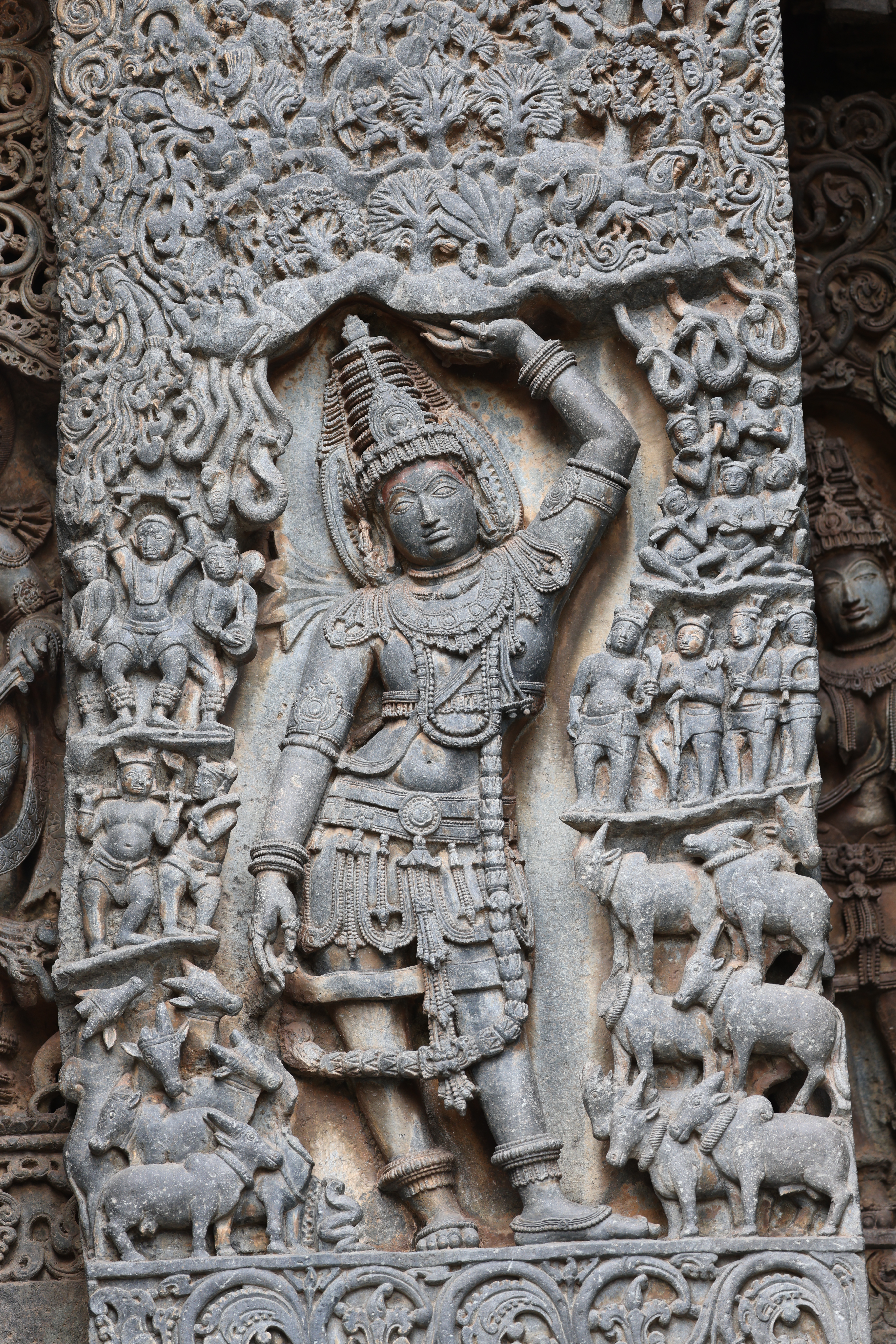
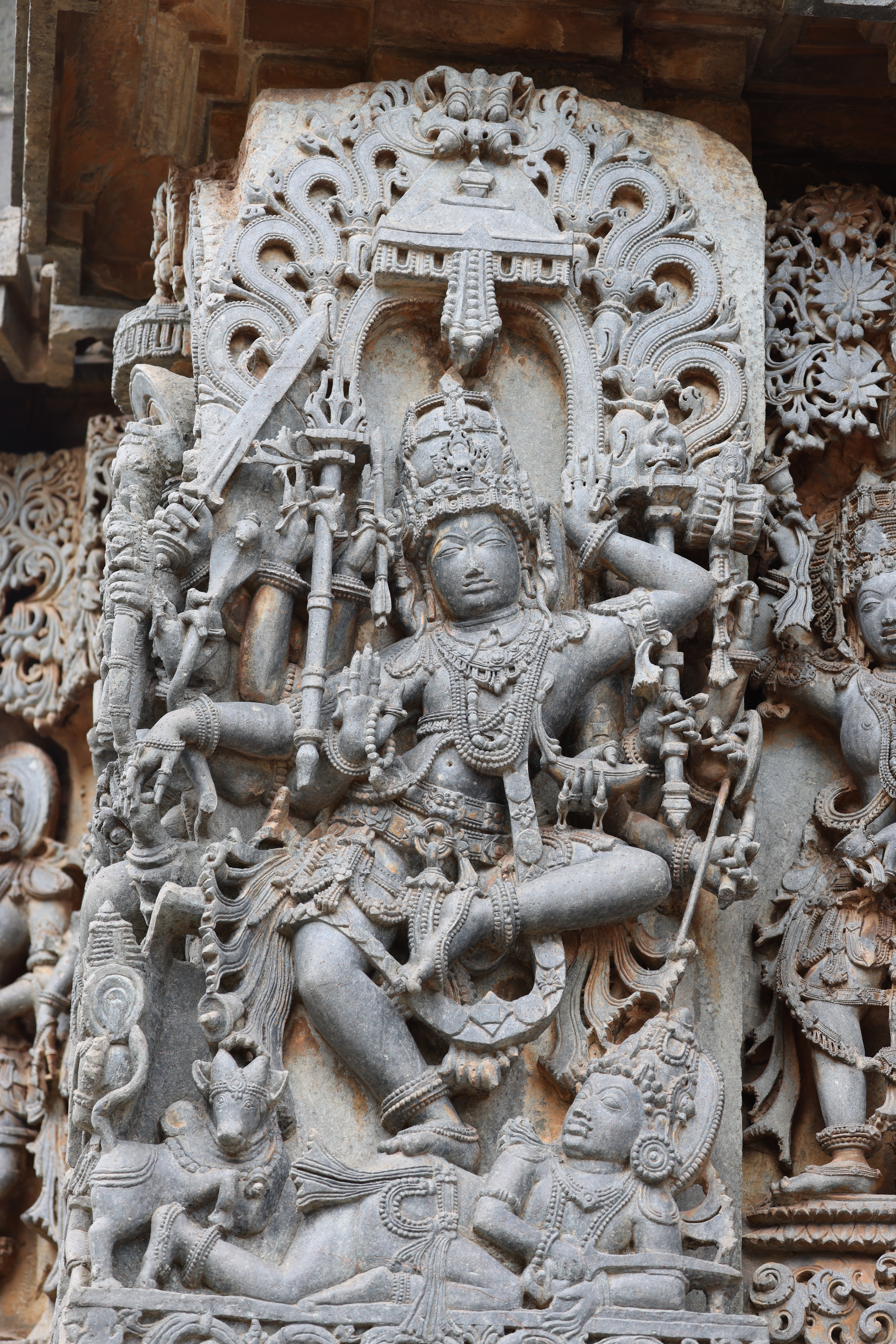
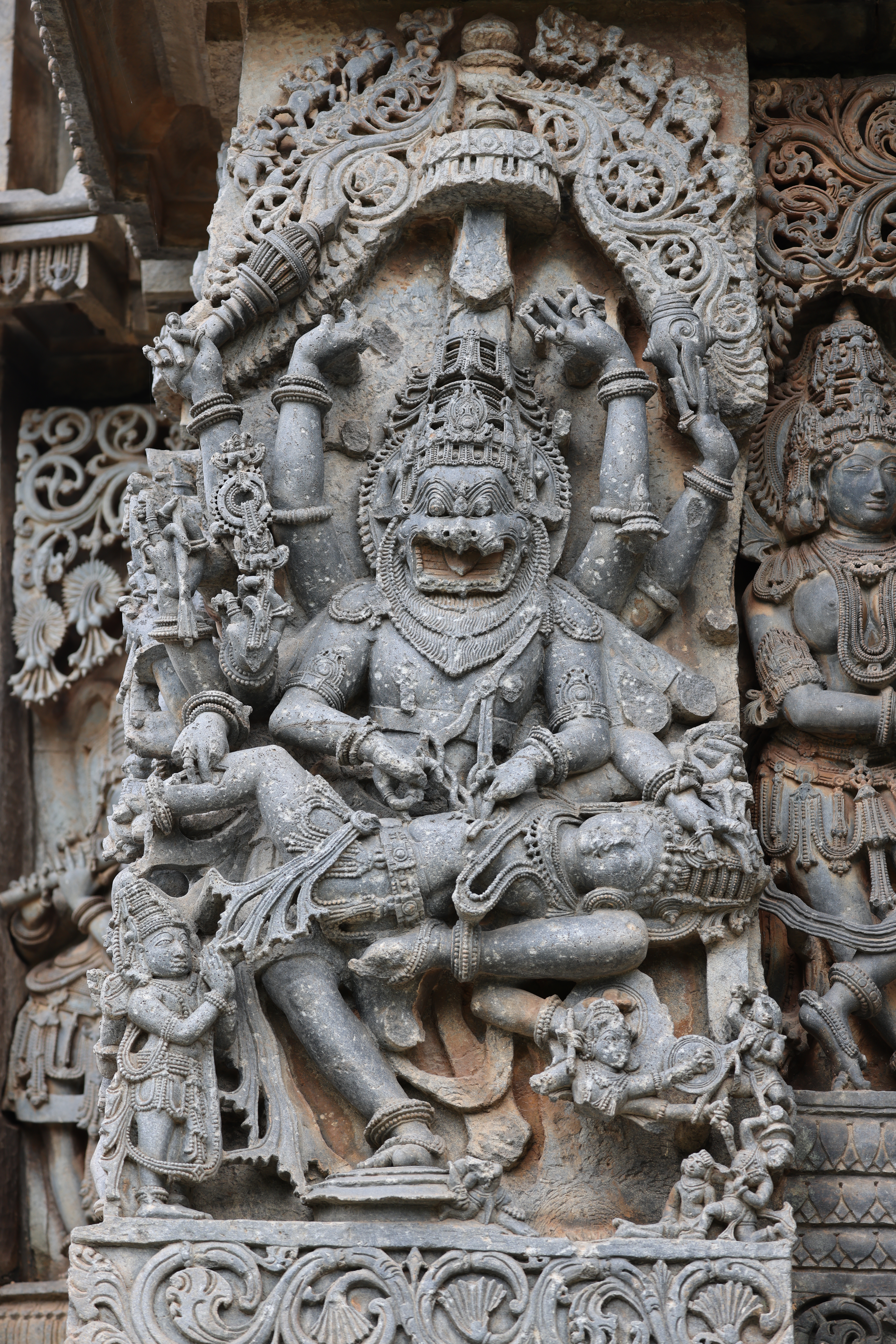
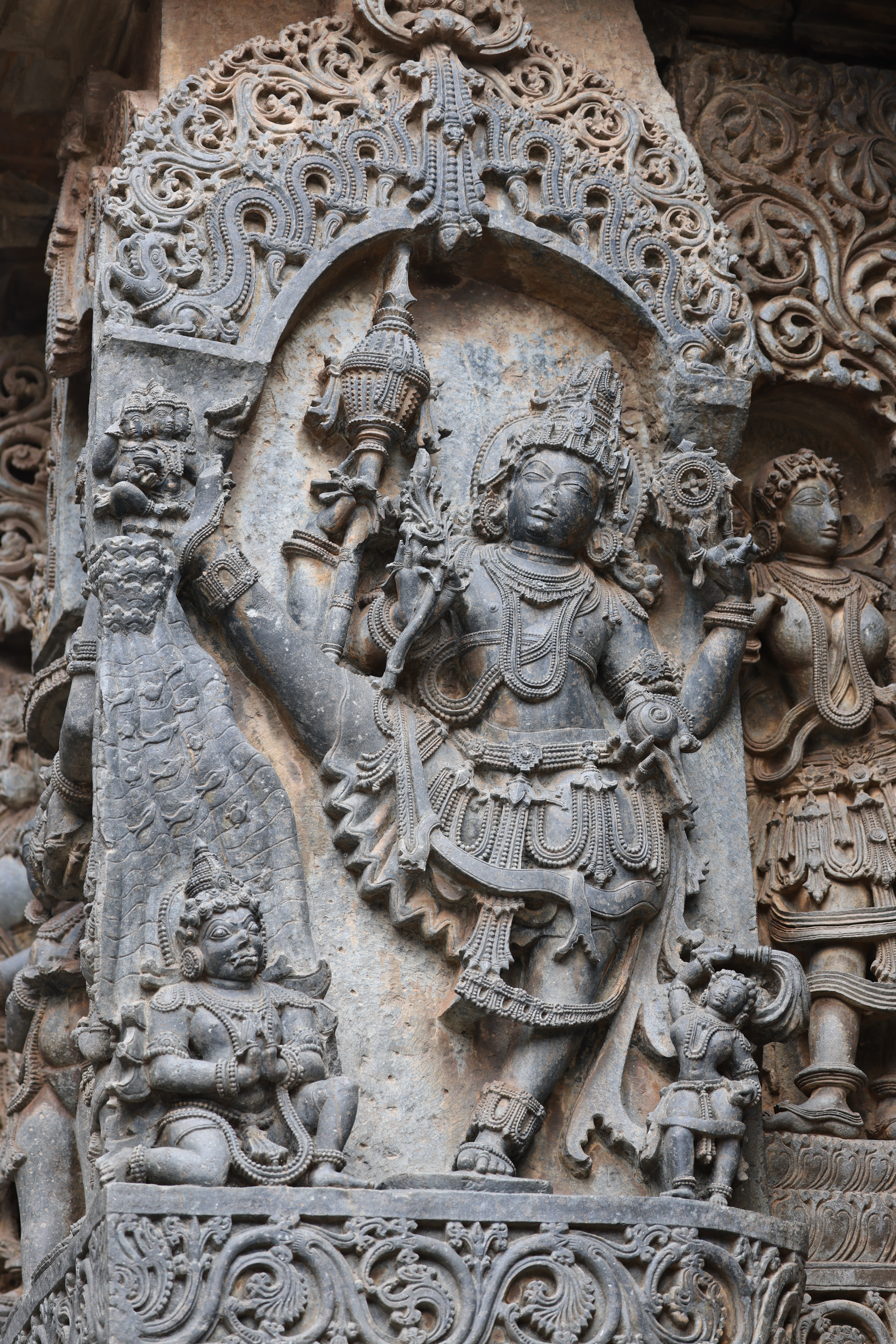
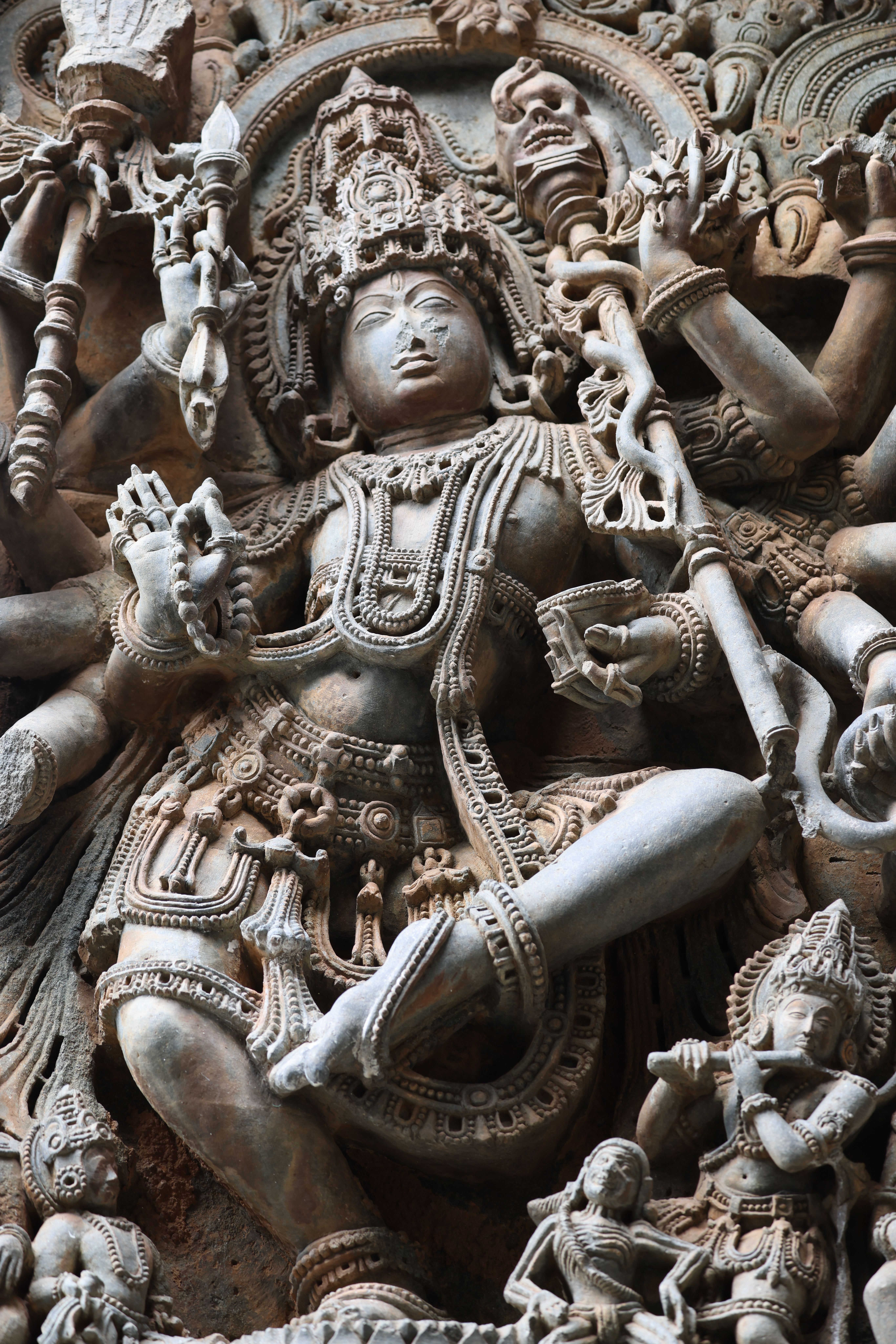
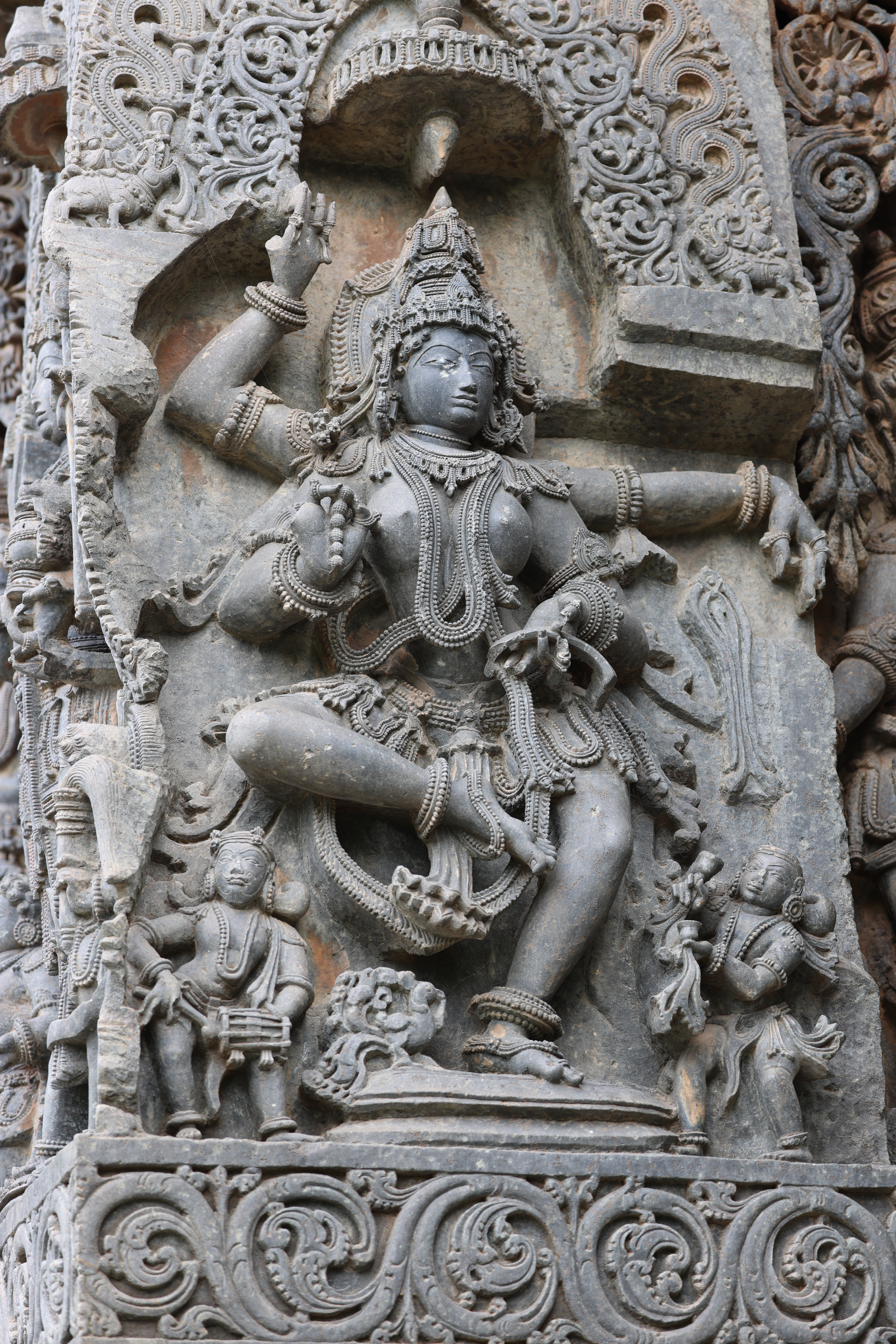
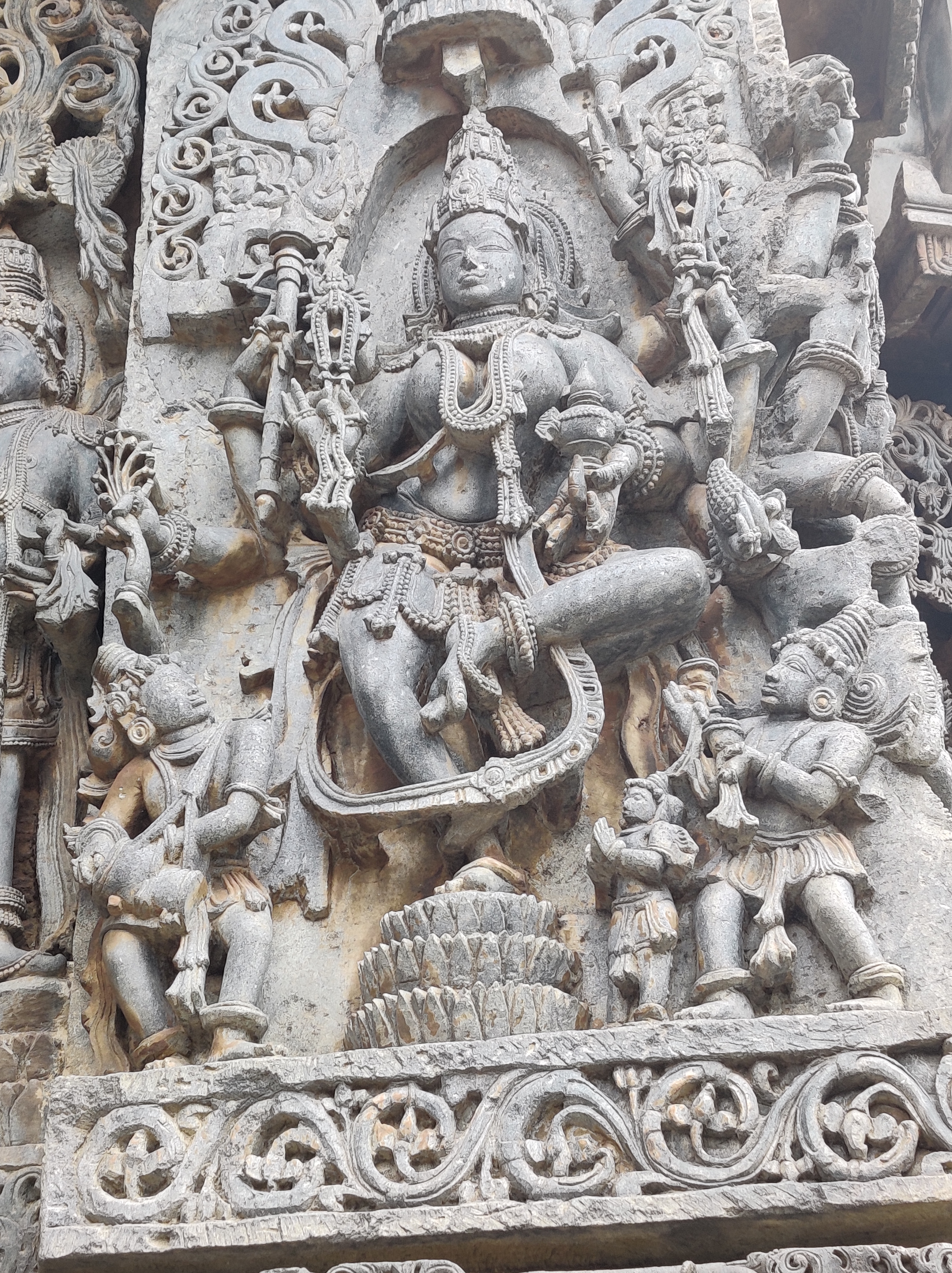
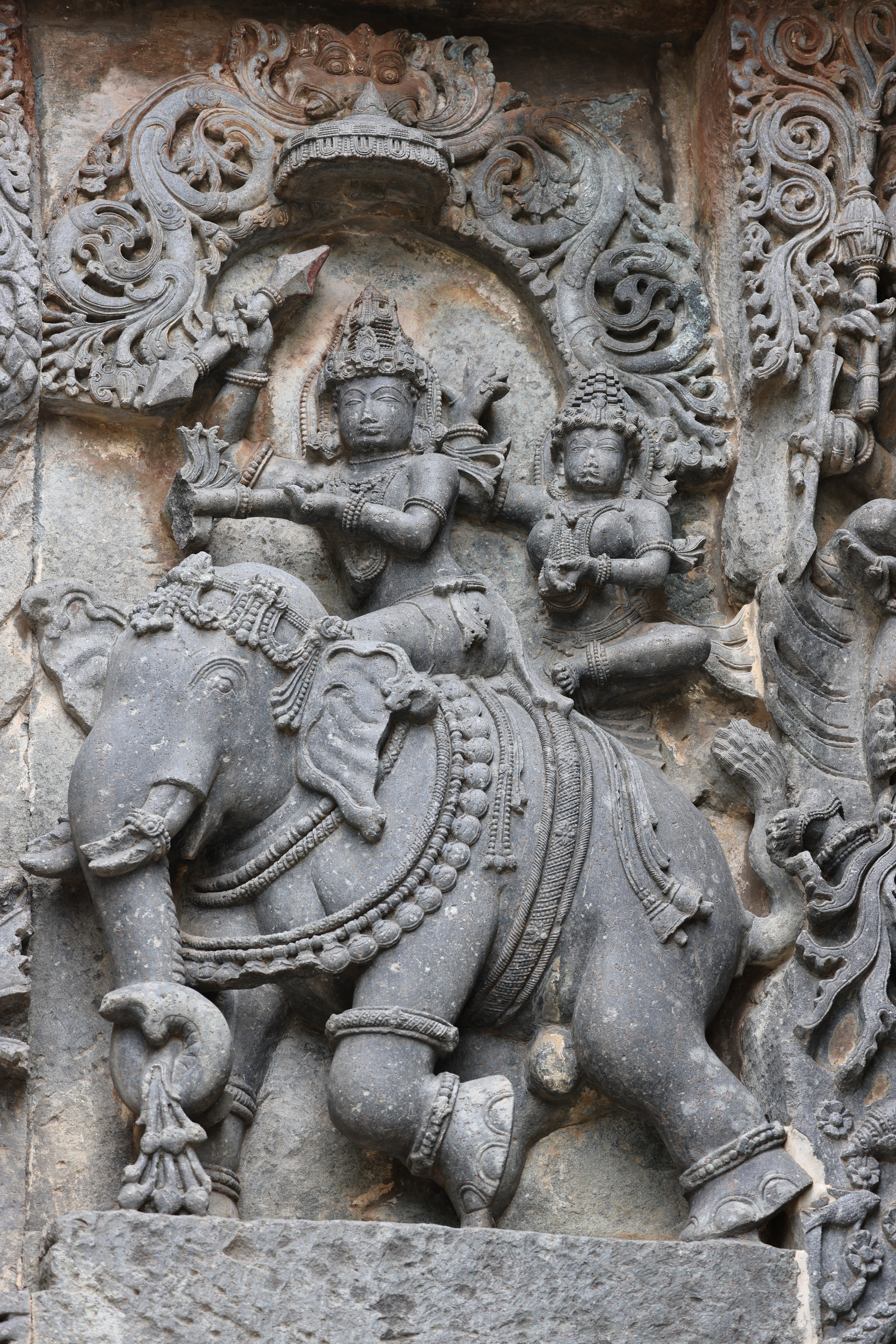
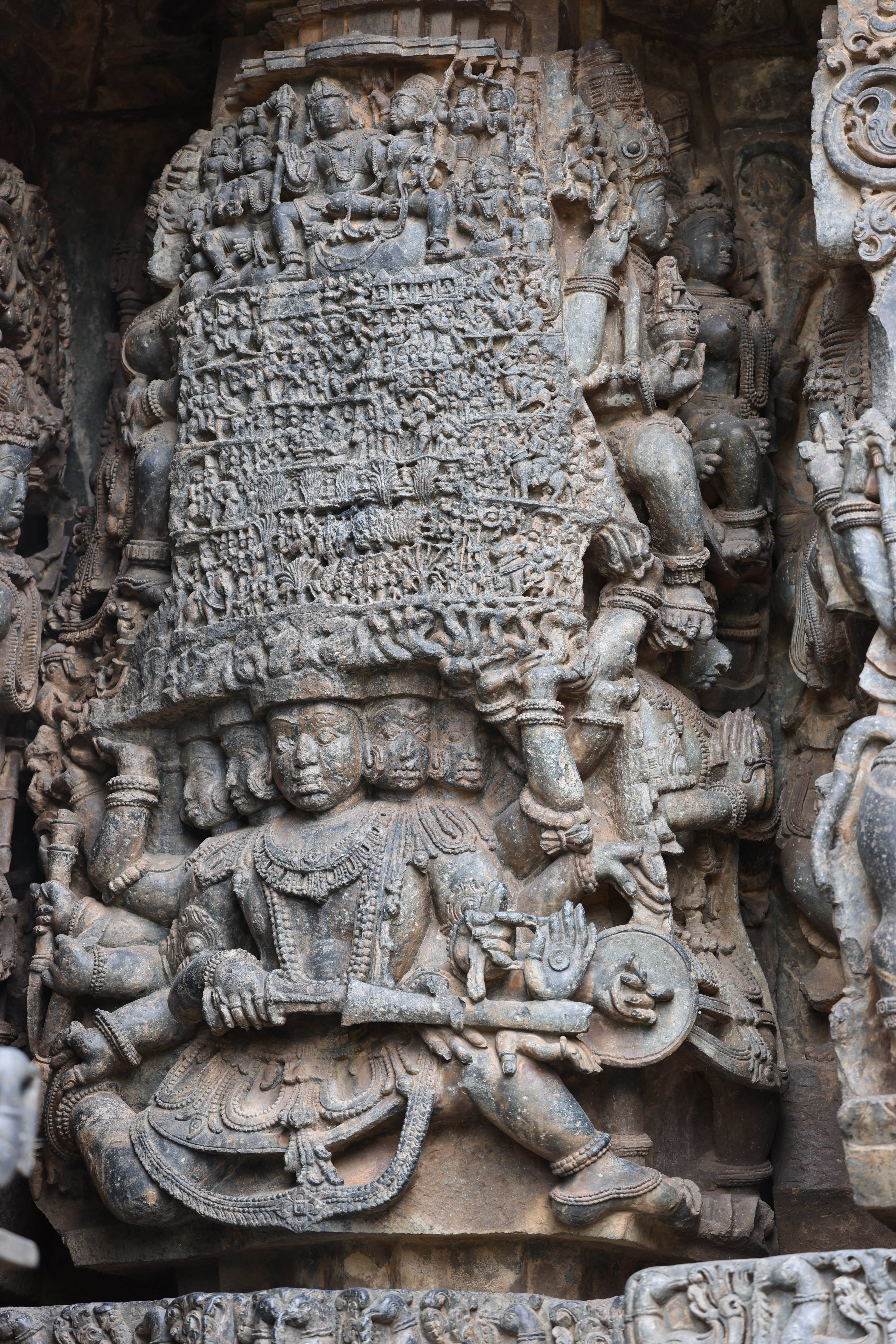
seated with Parvati. Depicted on the Kailasa are Gods and Goddesses with their vahanas
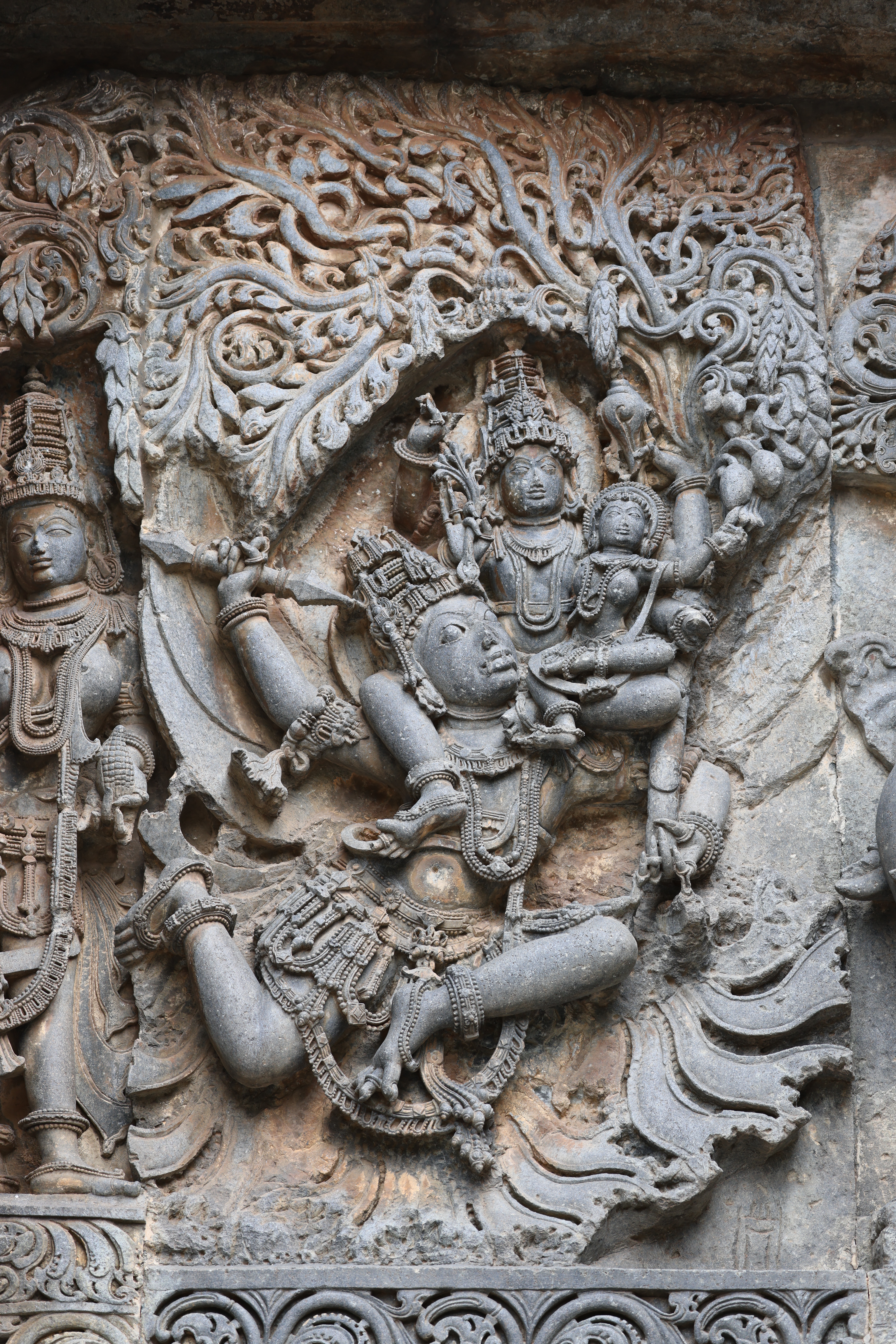
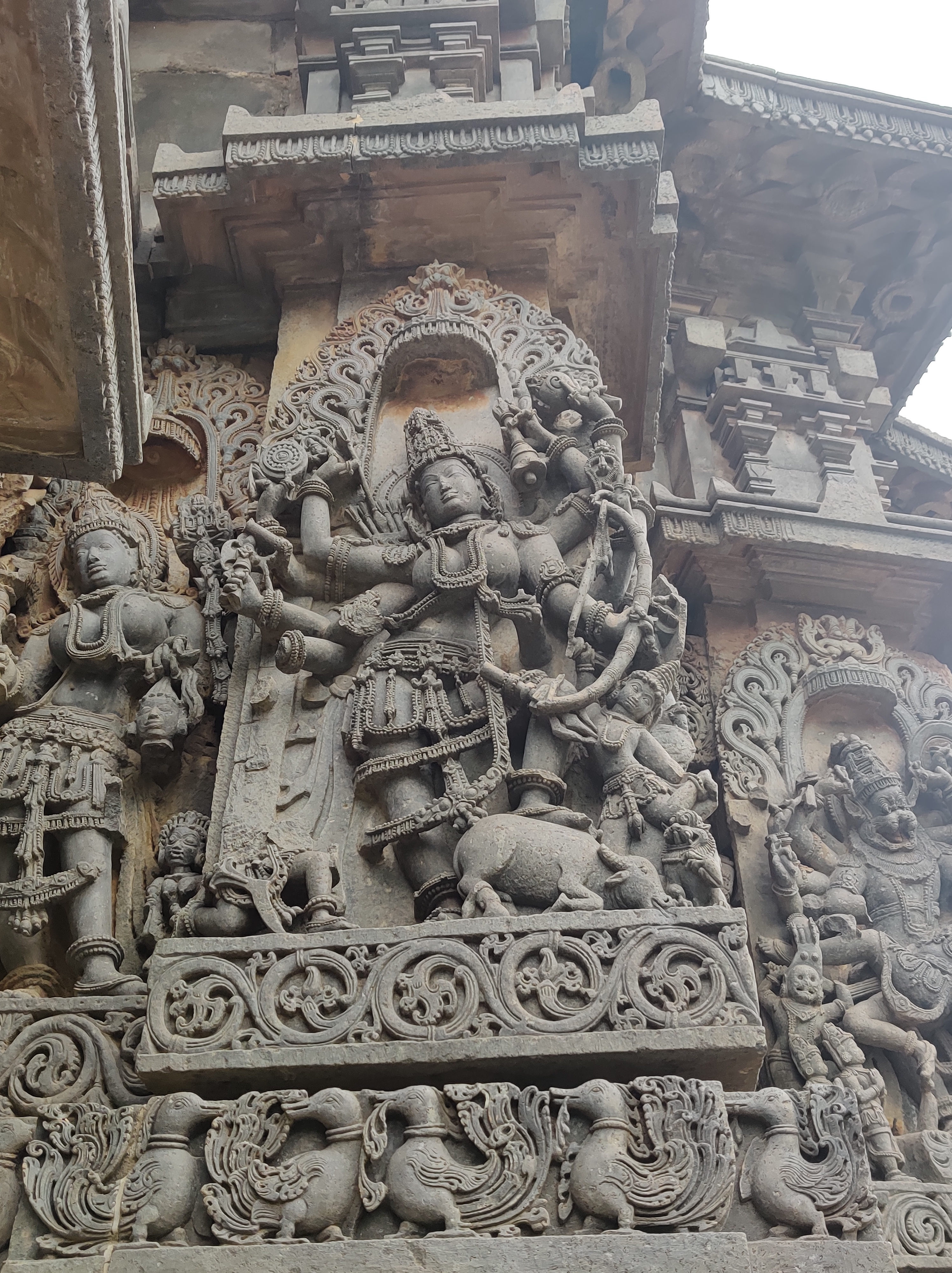
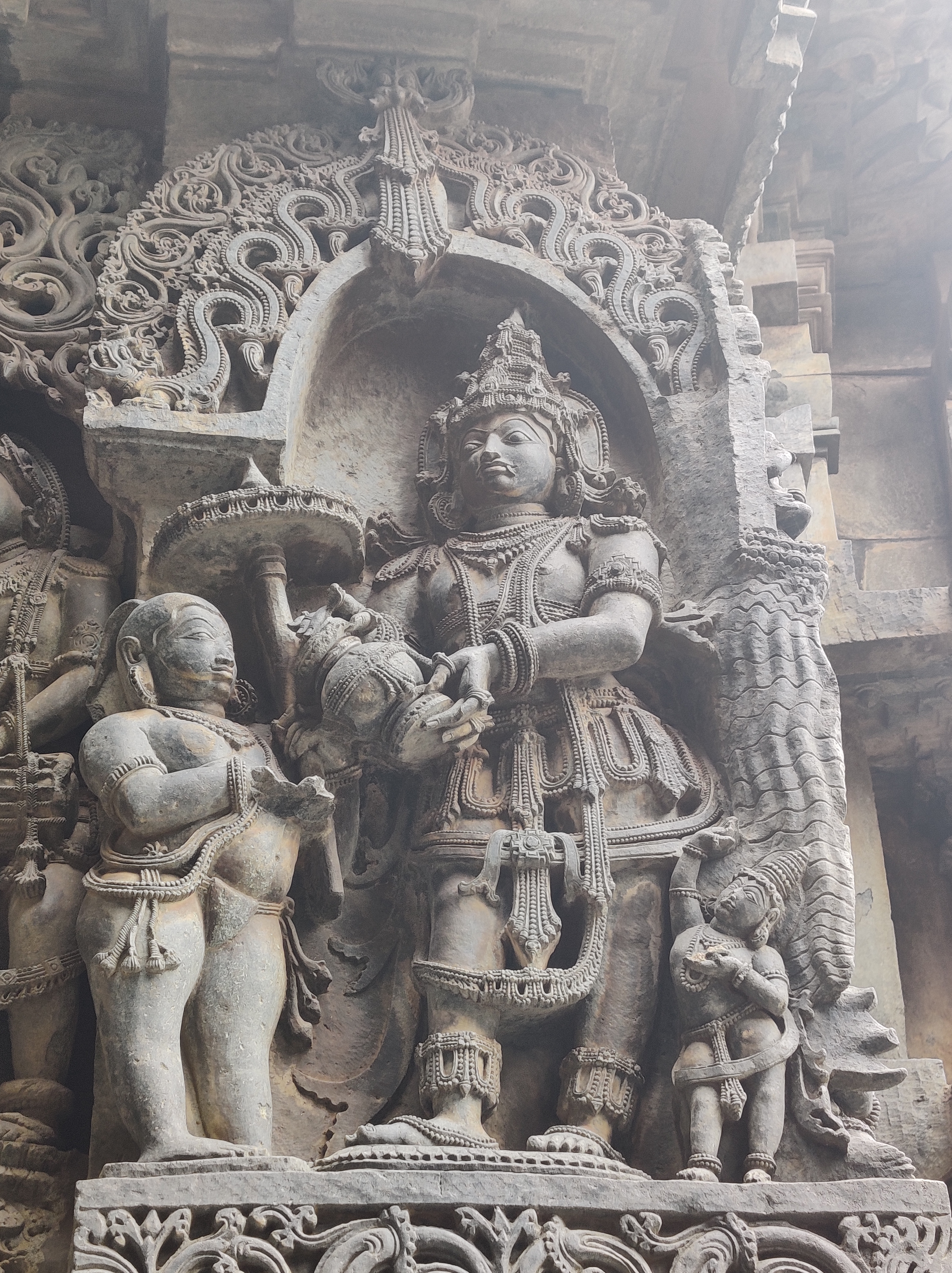
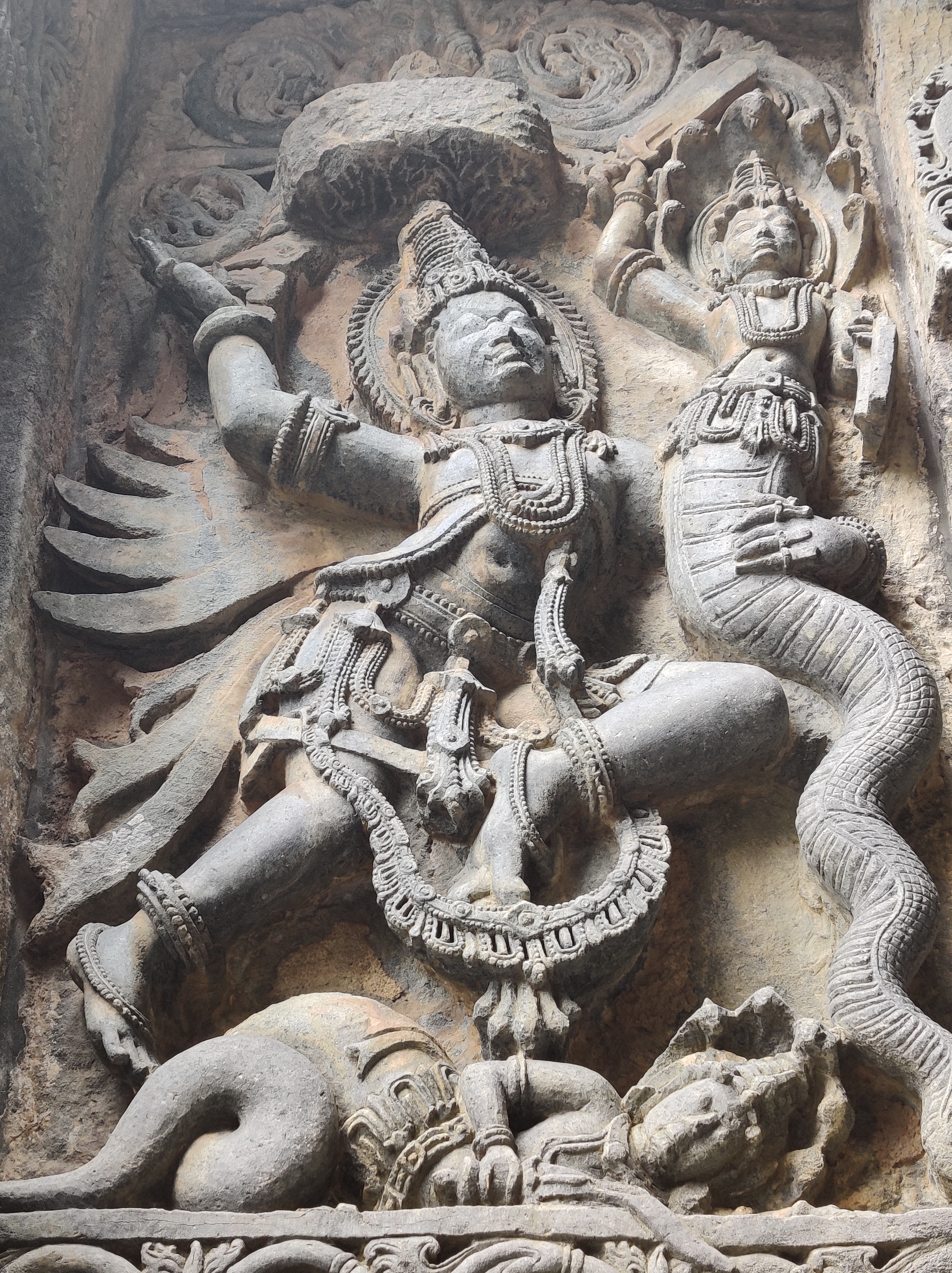
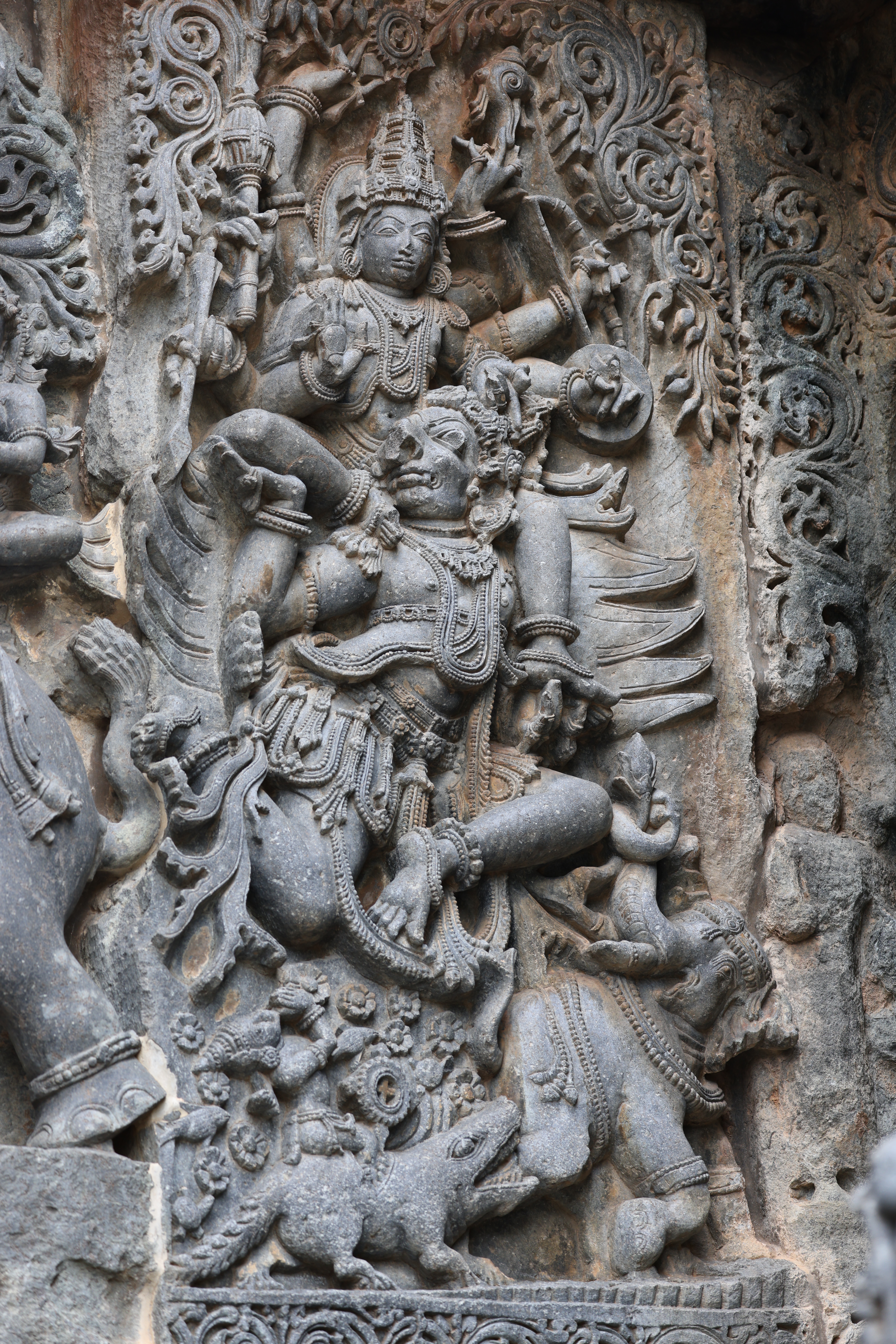
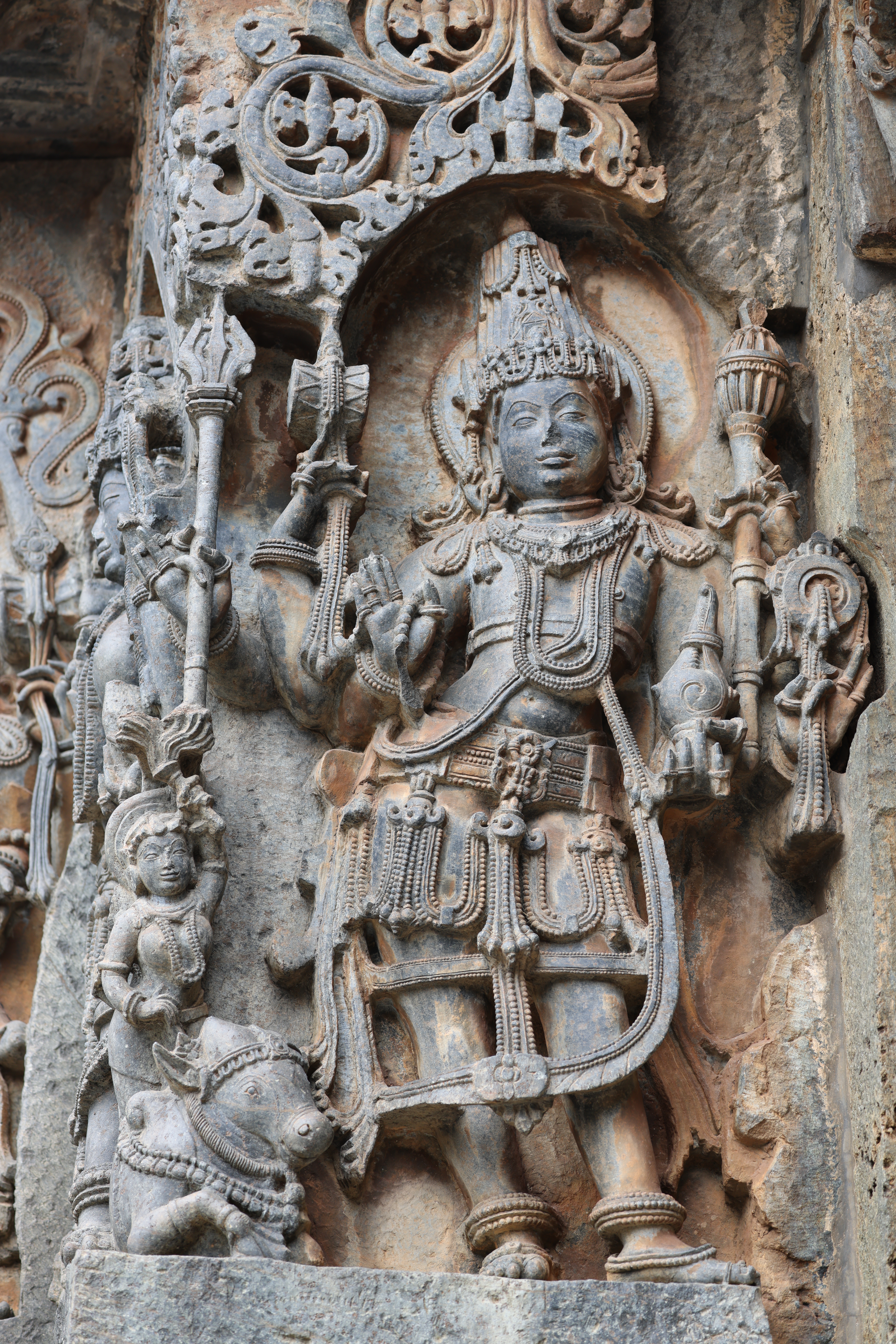
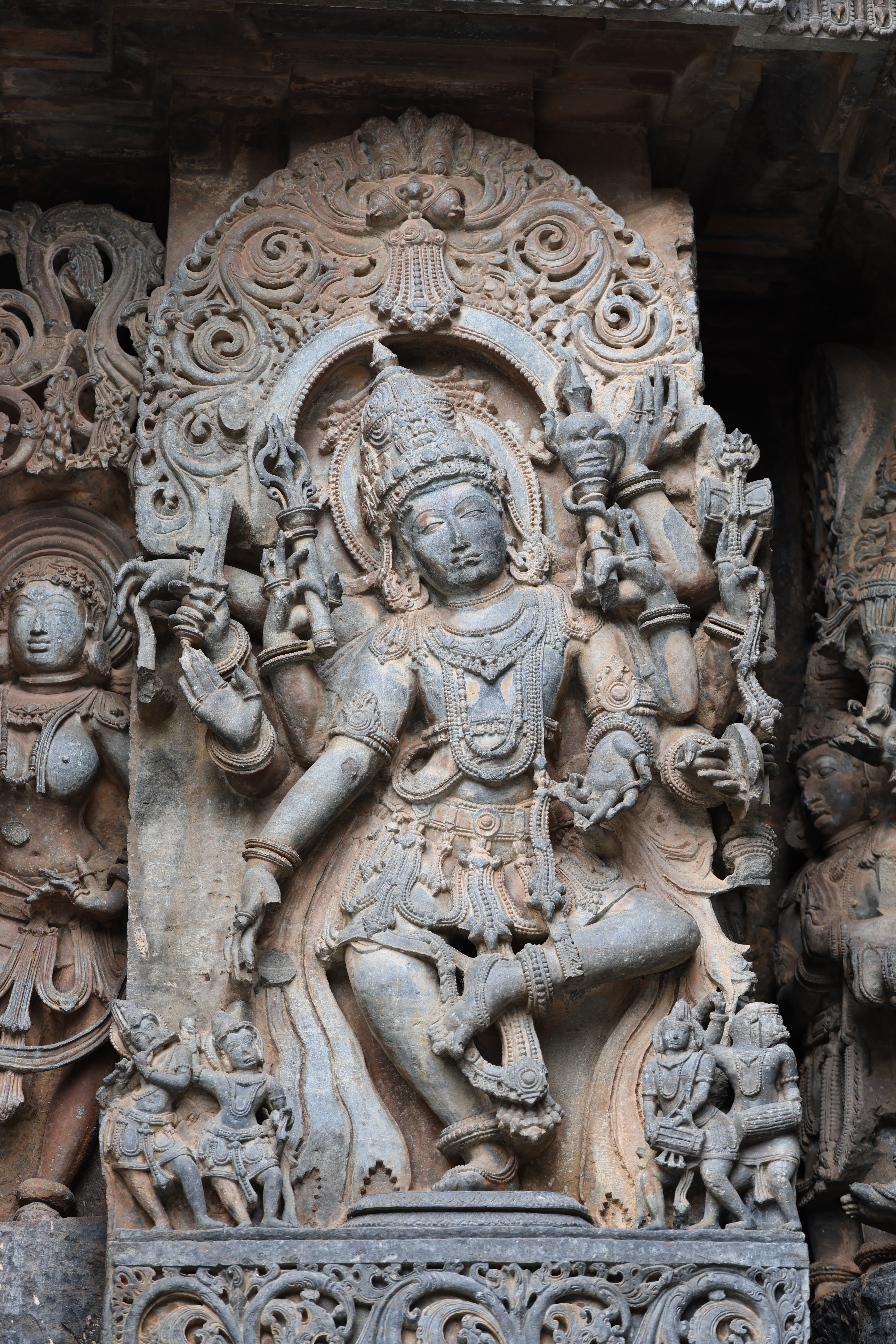
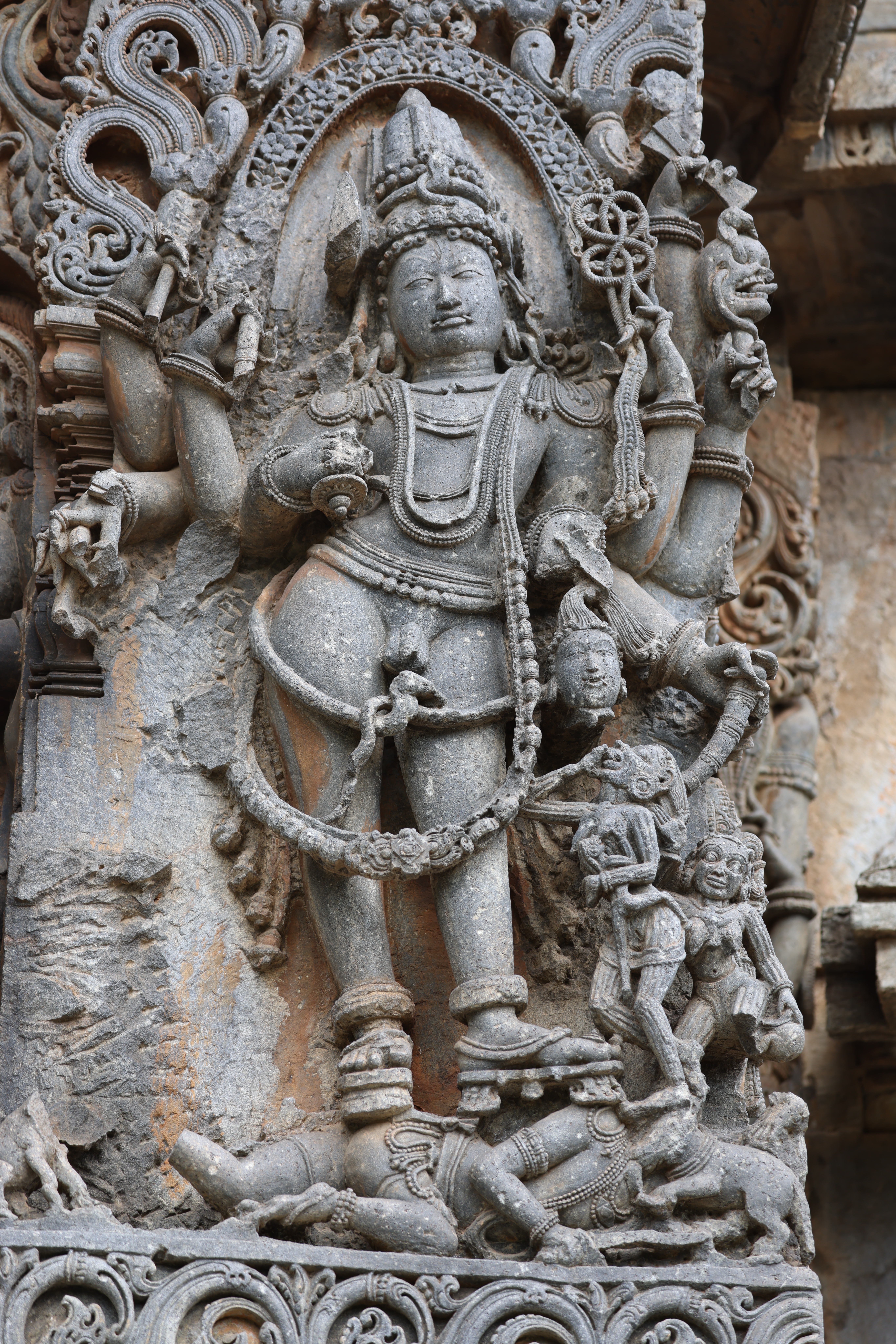
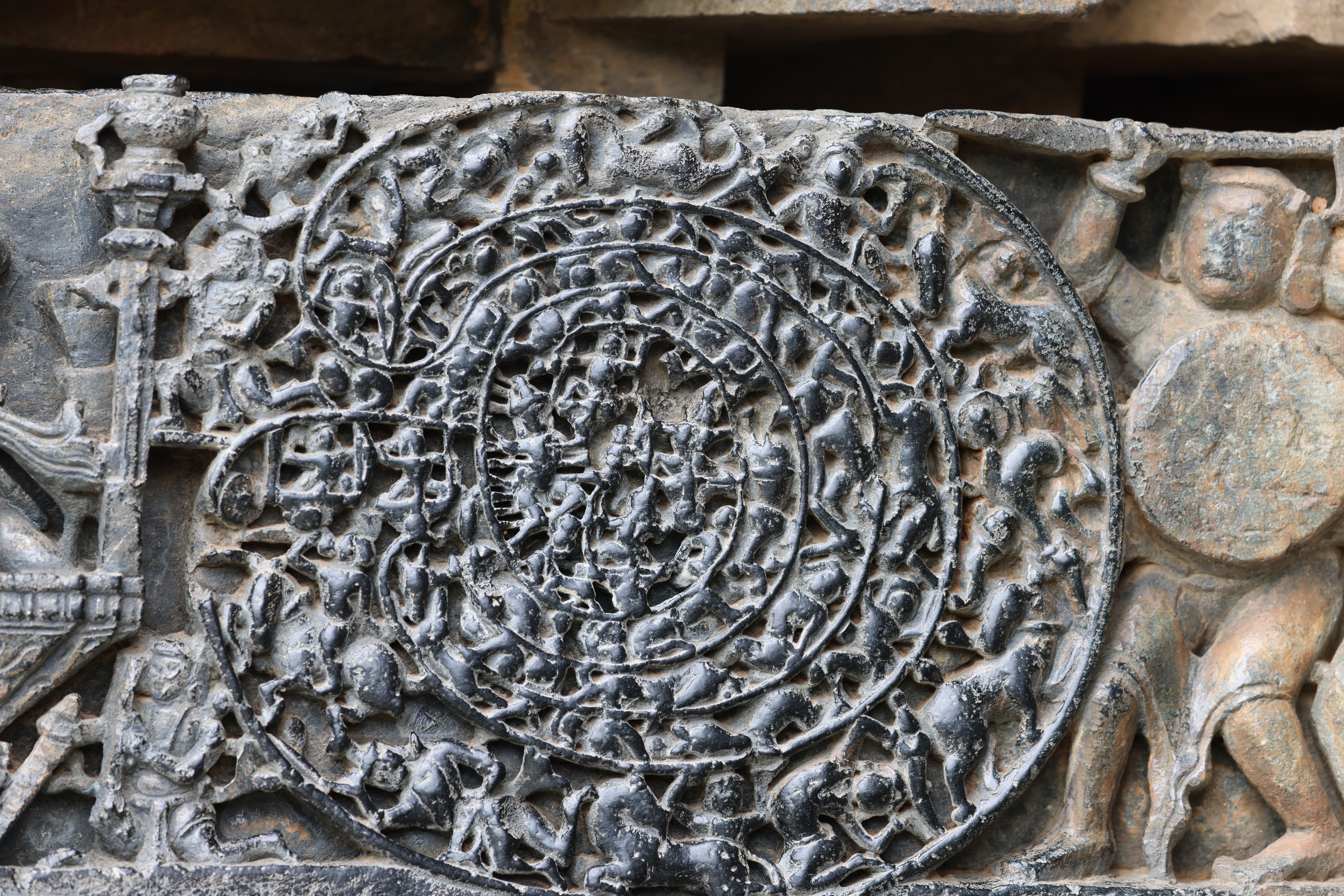
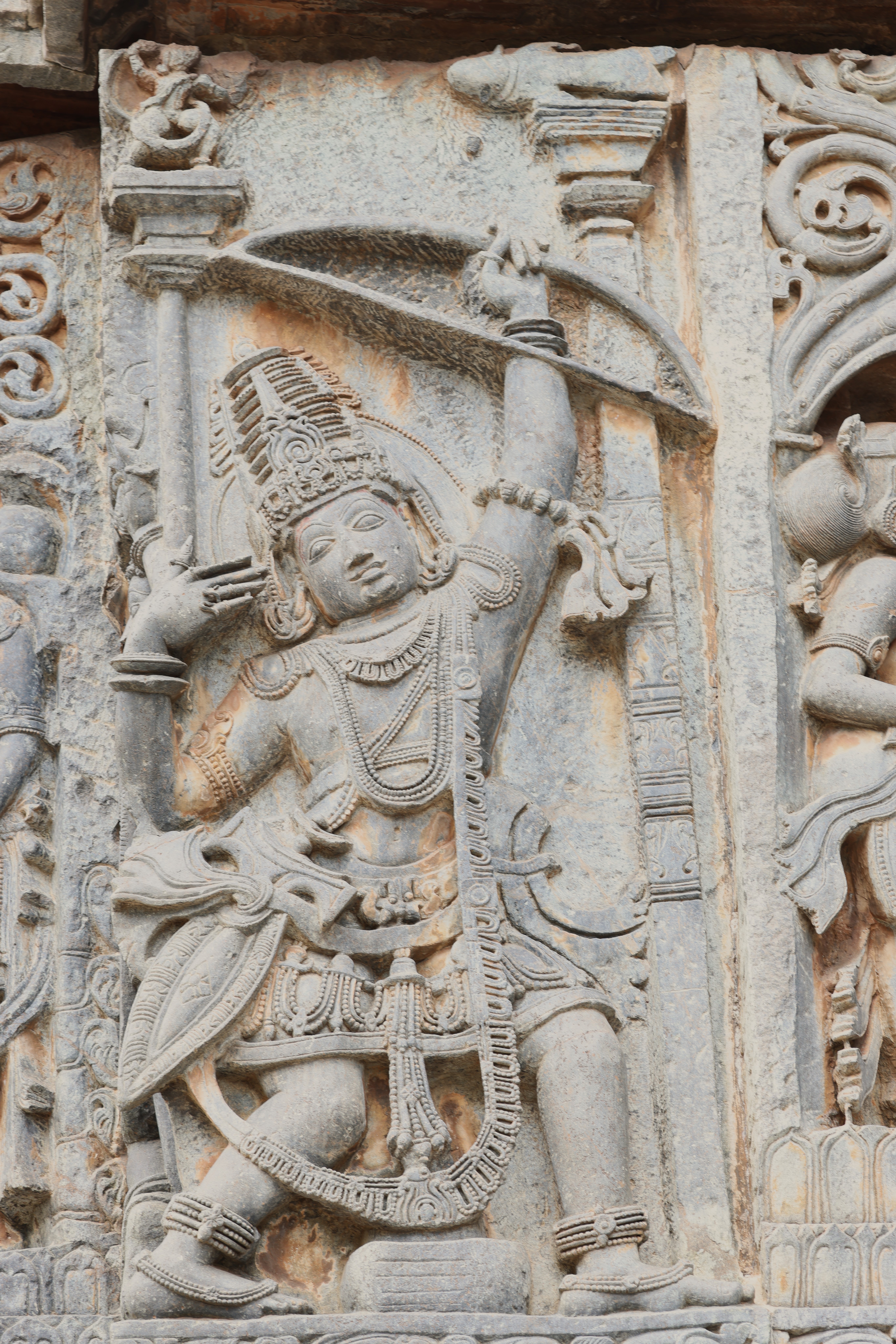
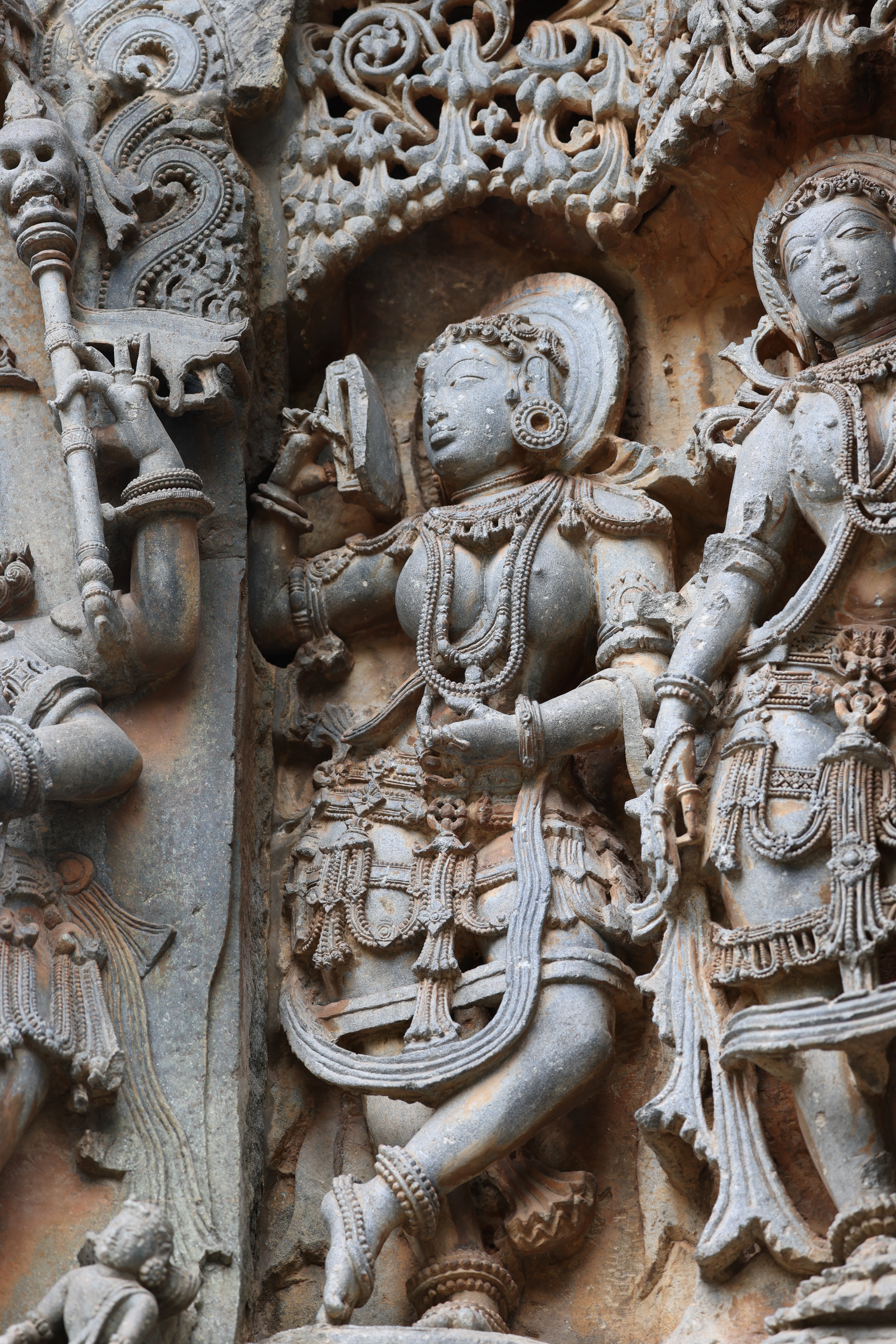
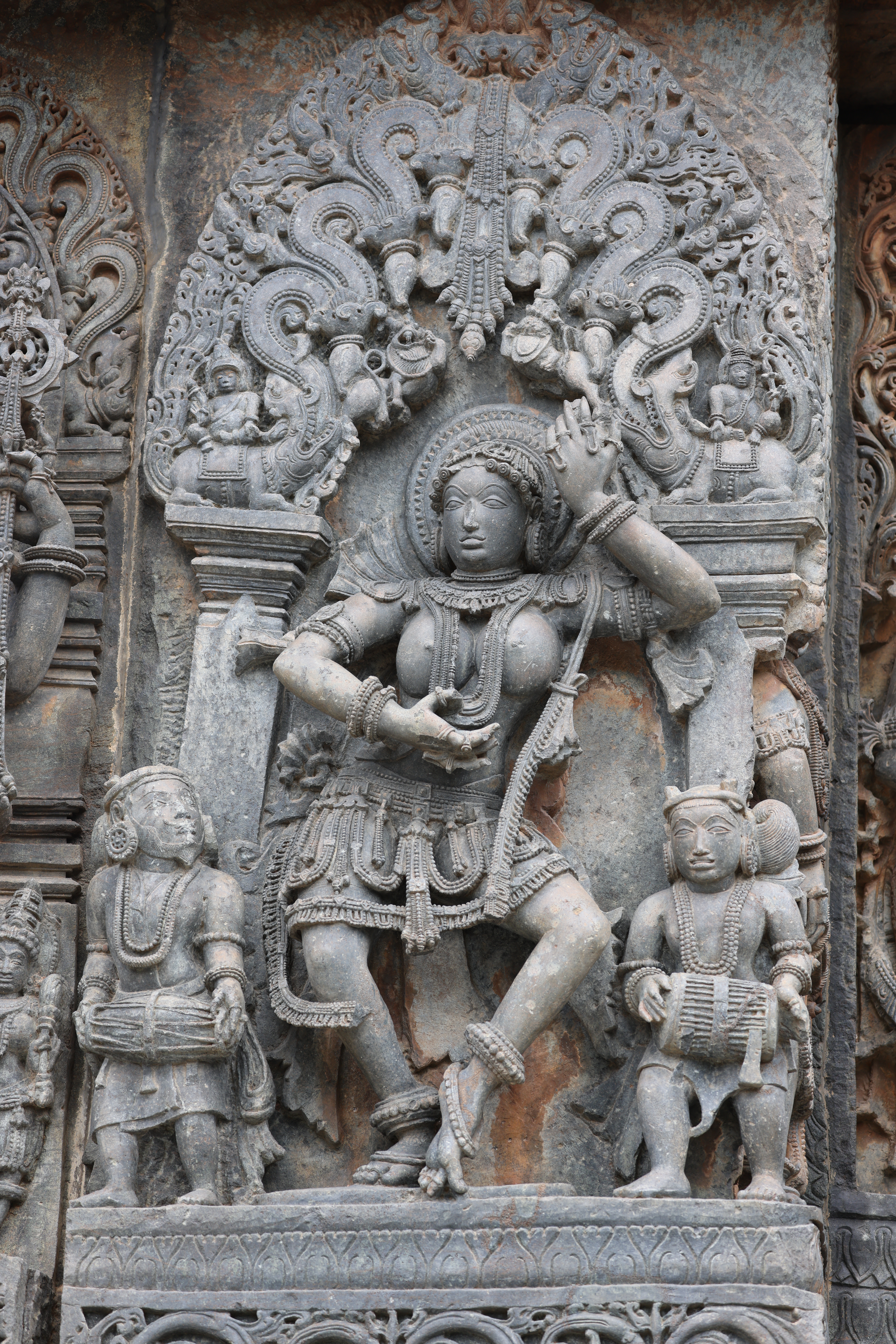
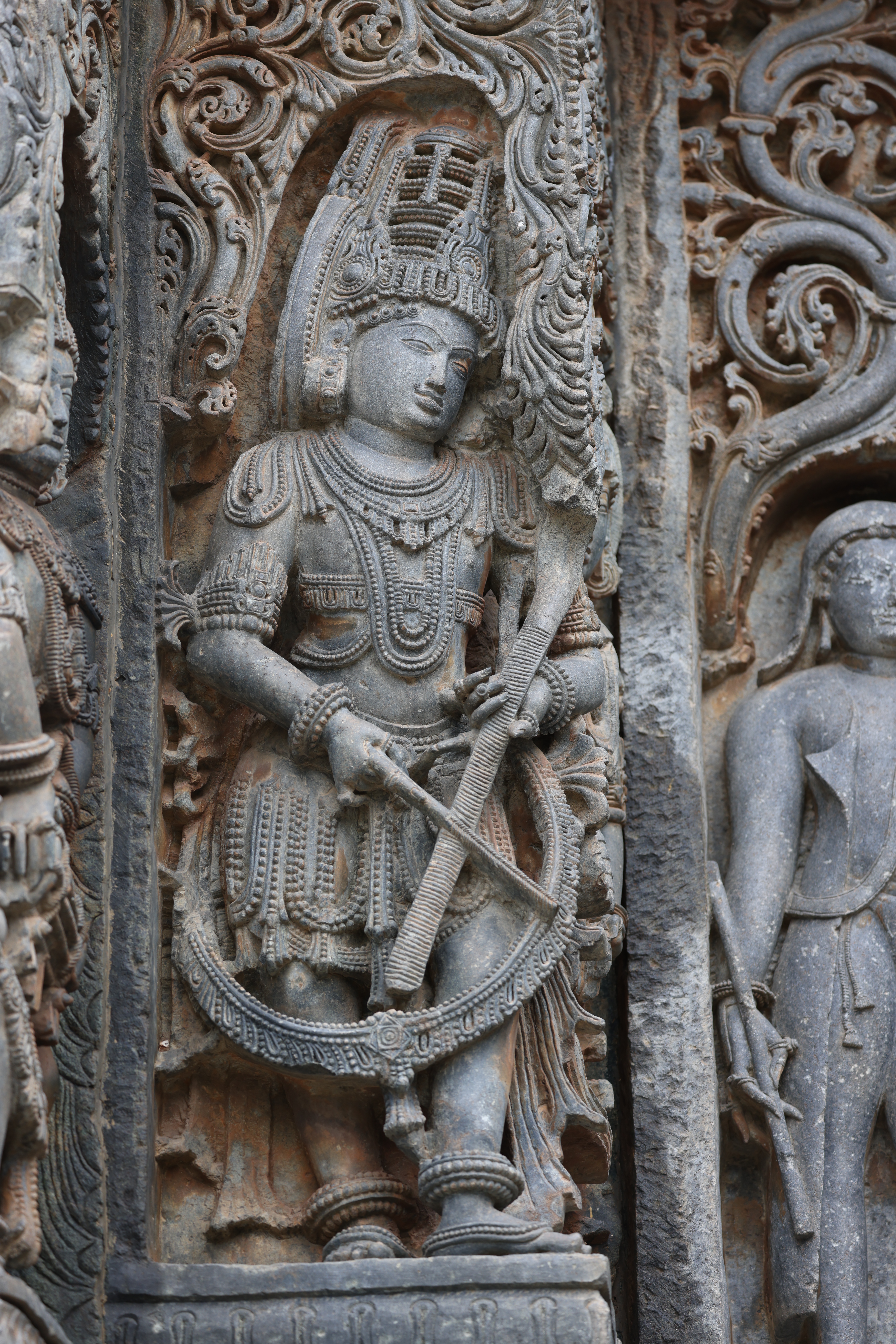
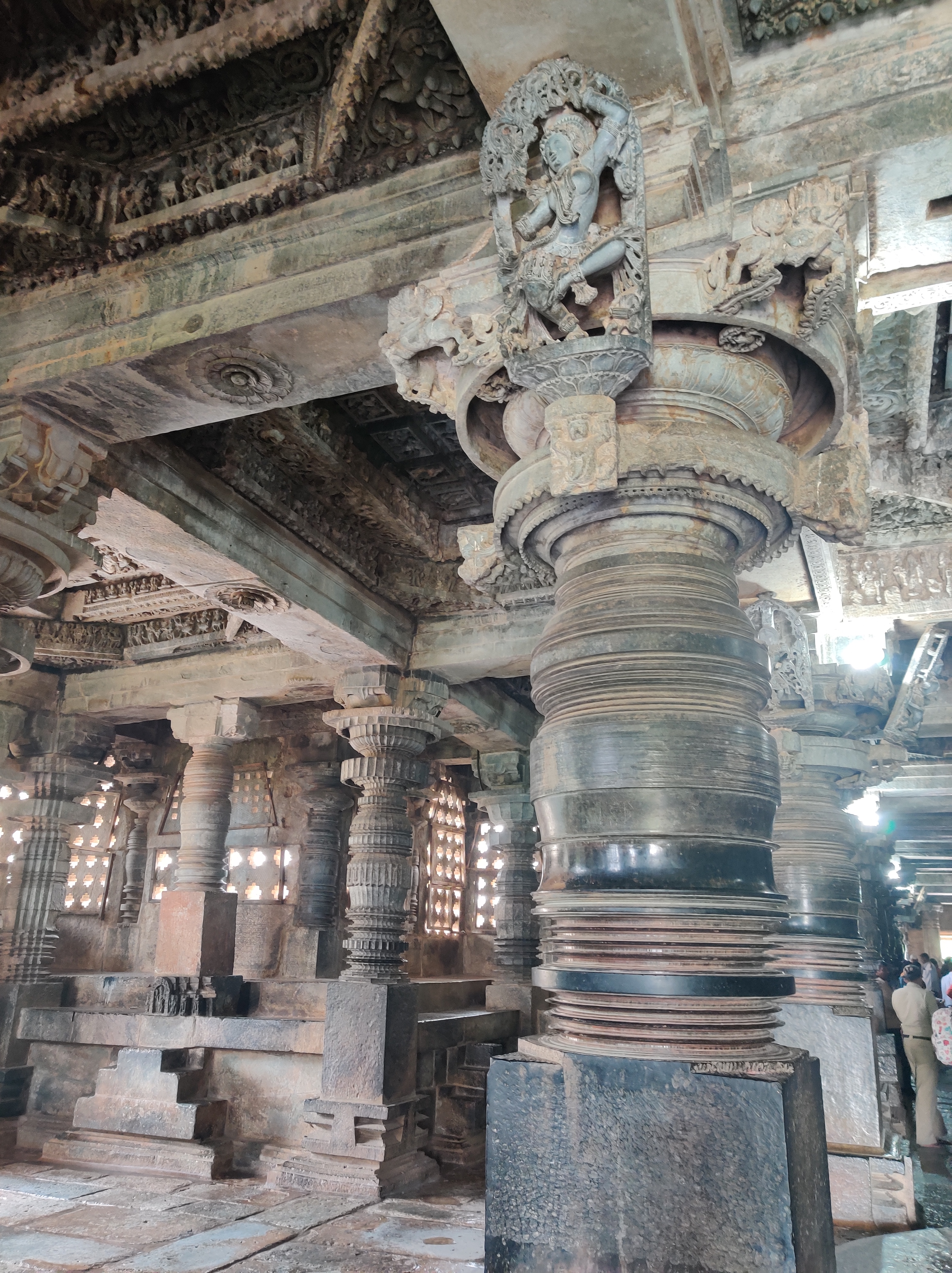
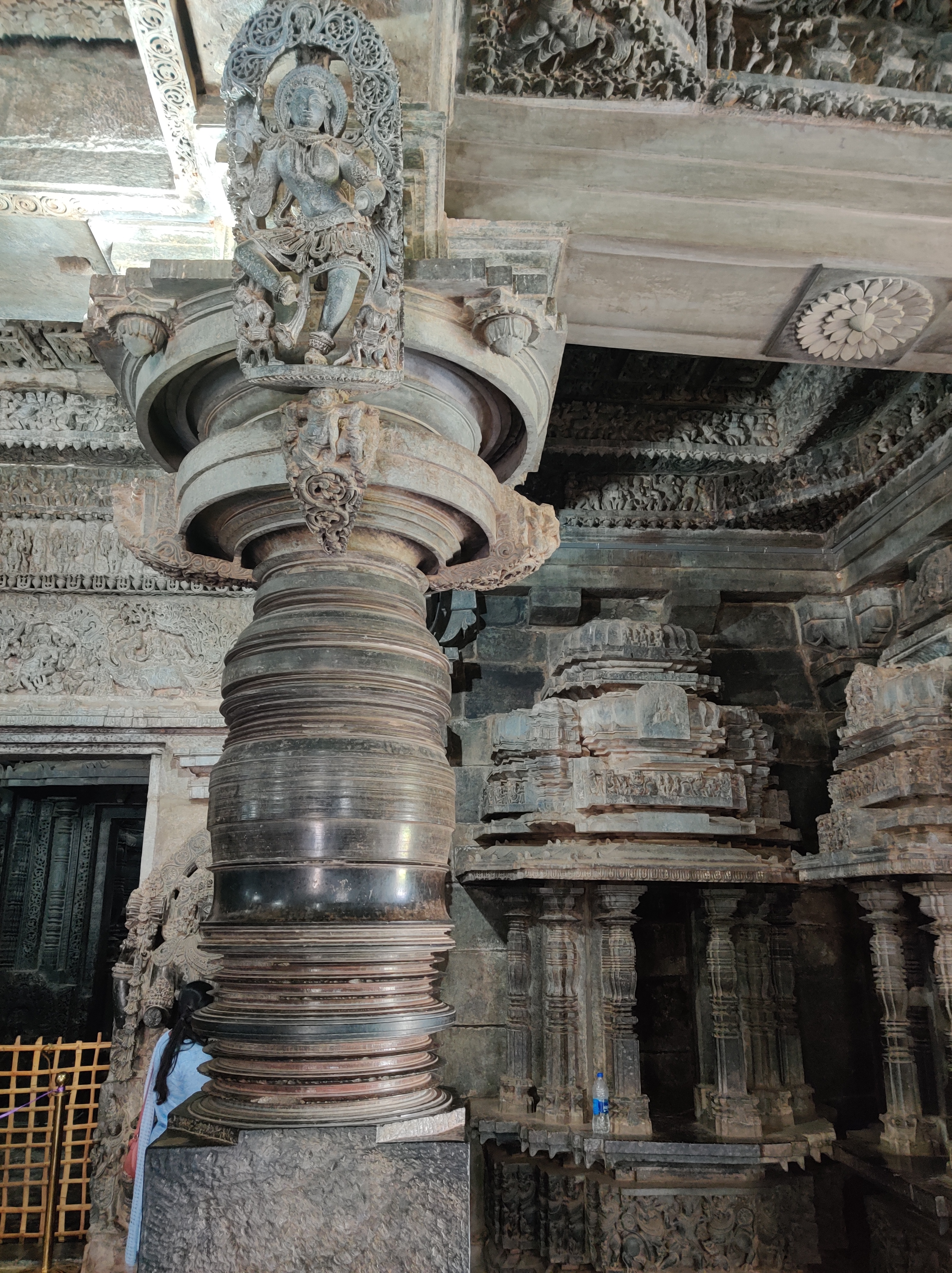
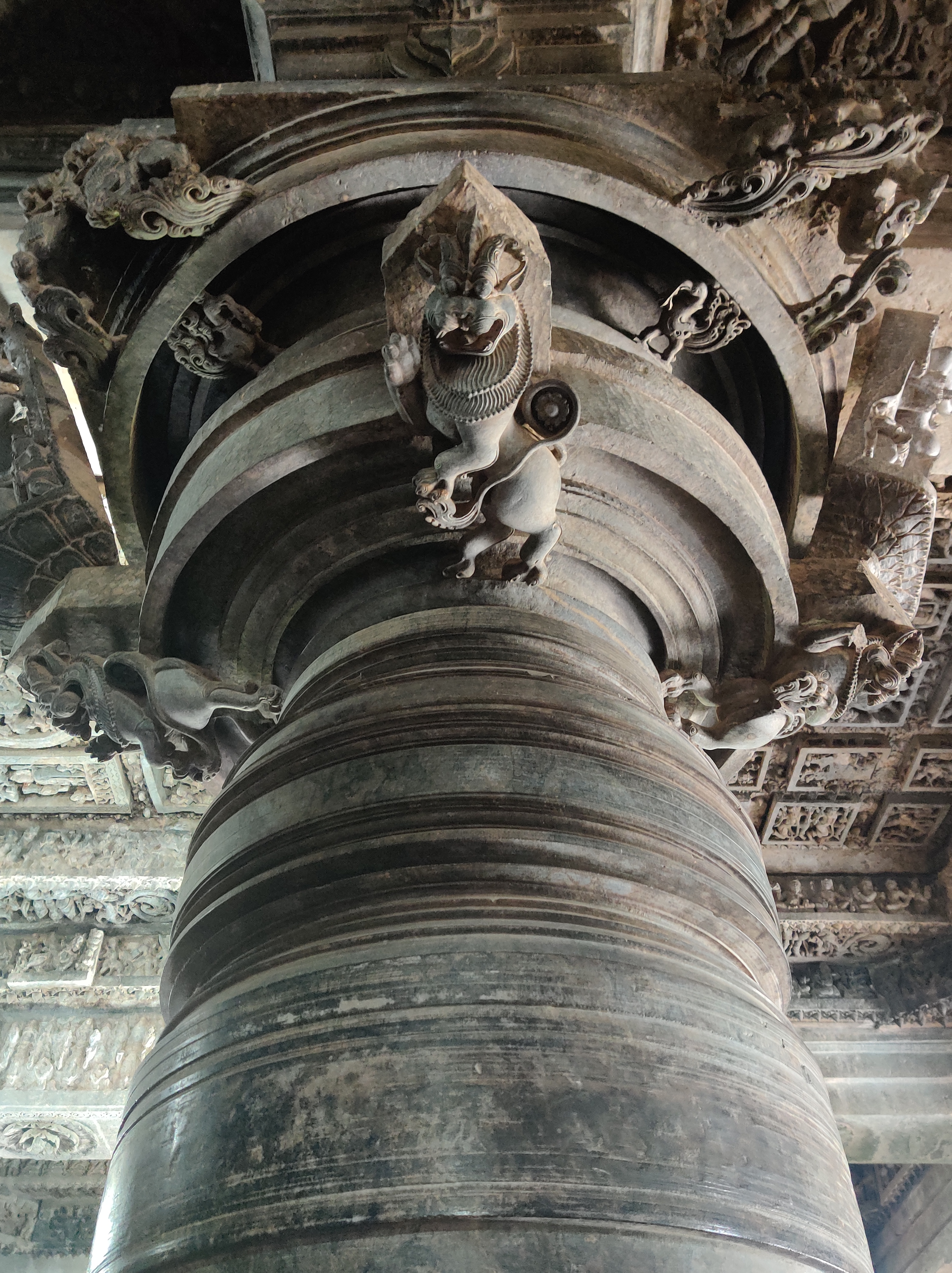
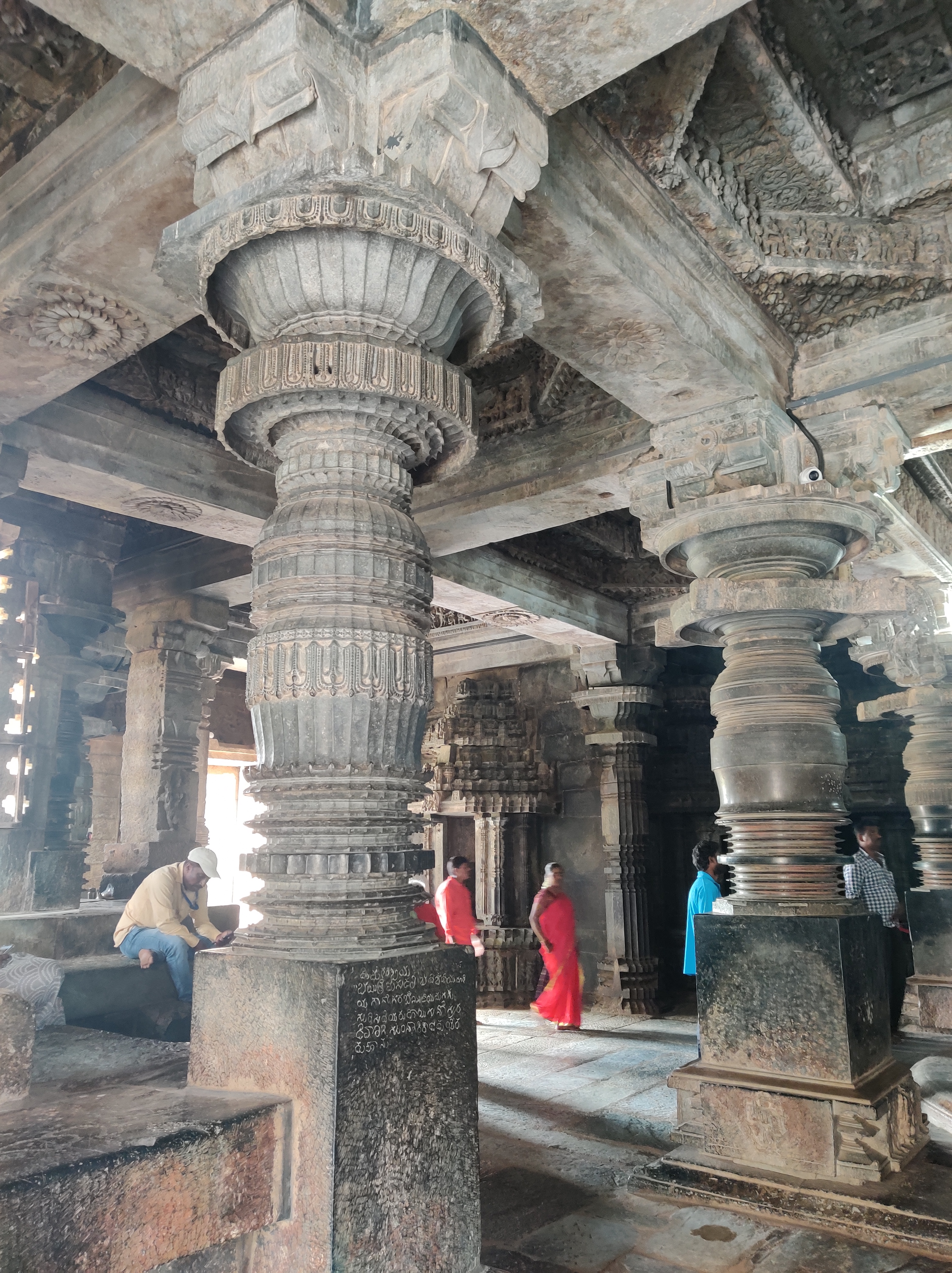
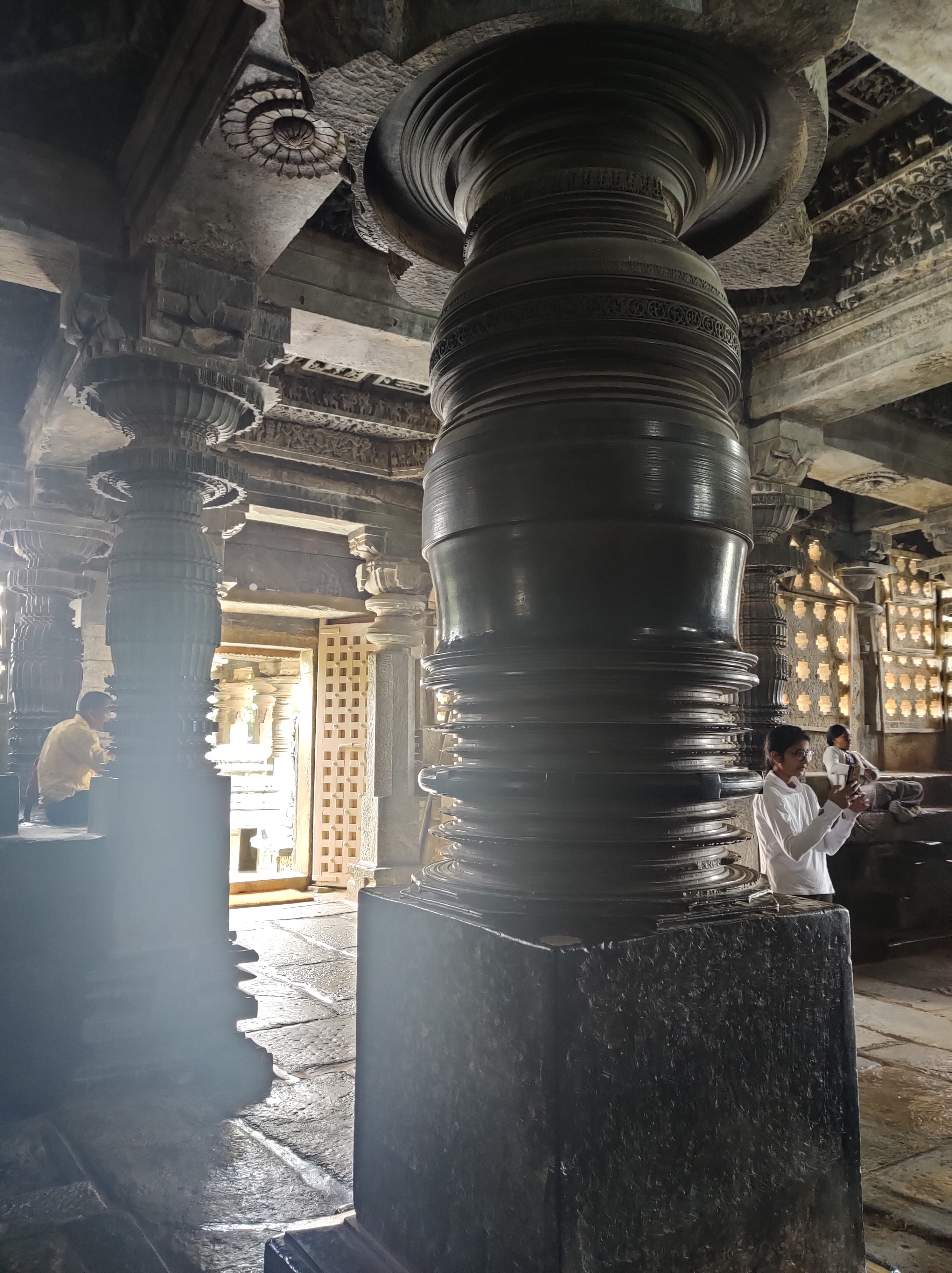
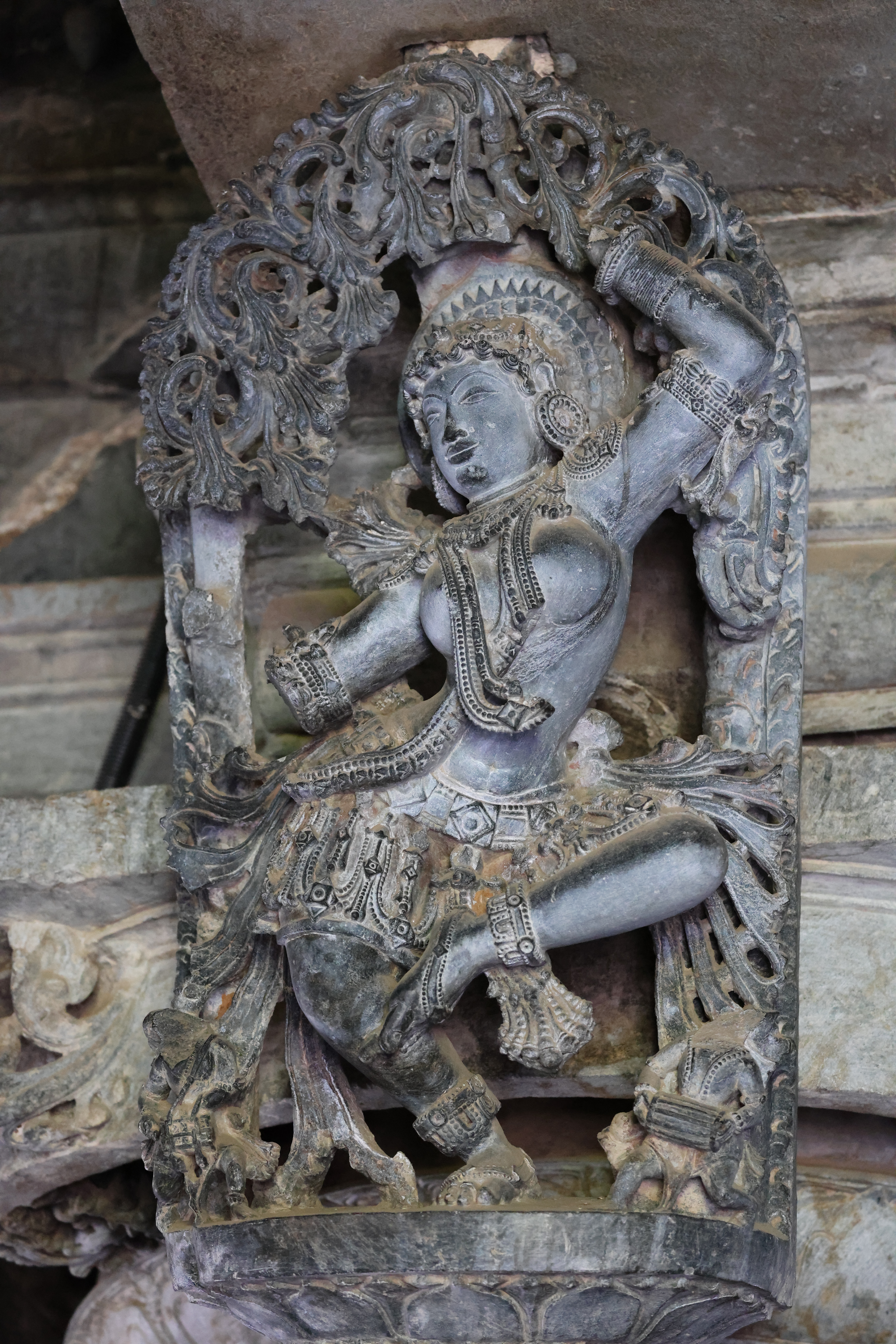
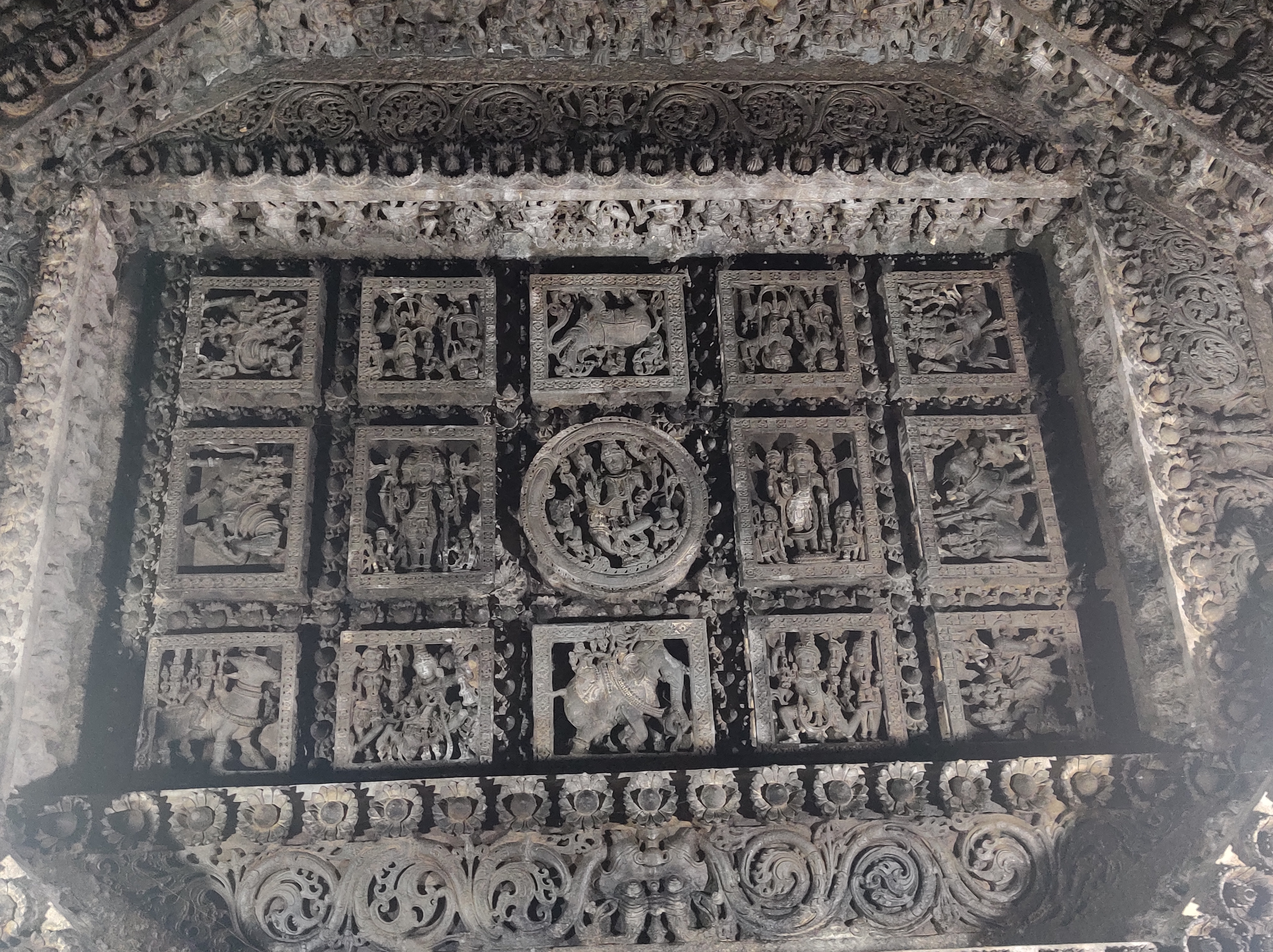
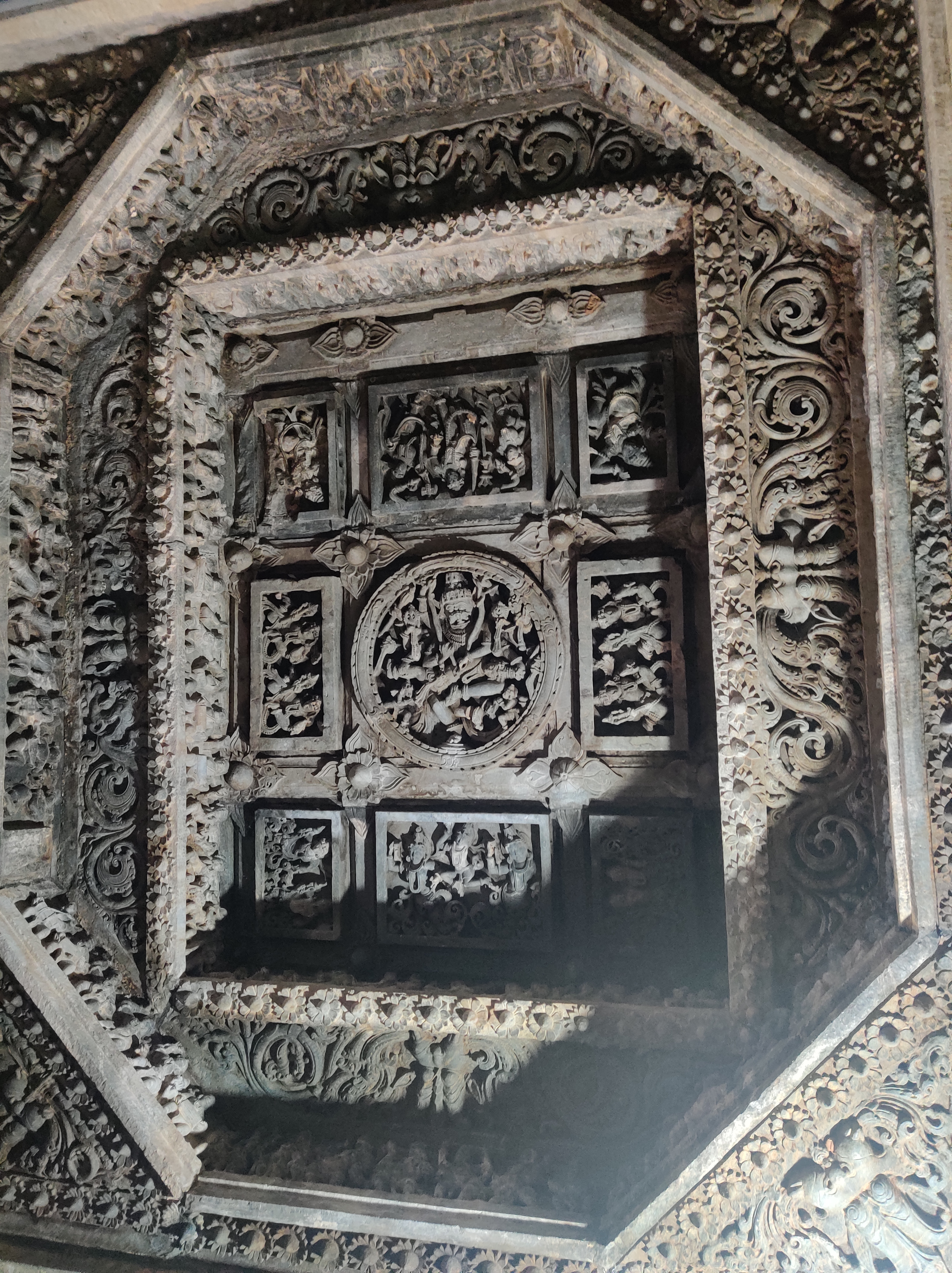
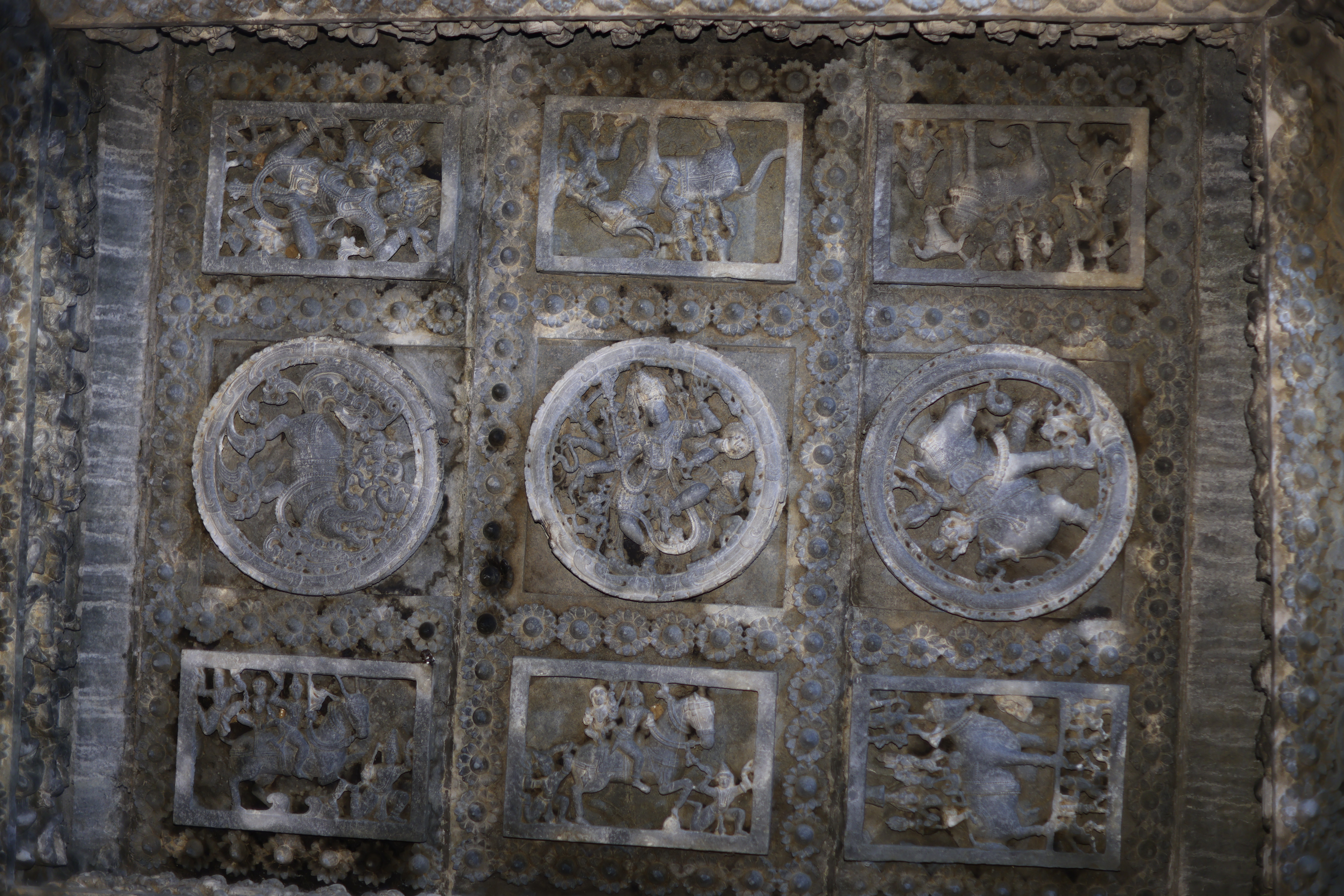
In contrast to the Belur temples, the number of madanikas—bracket figures of apsaras—here is fewer. While the exterior madanikas showcase excellence and exquisiteness, aligning with the overall opulence of the Hoysaleswara temple, personally, the interior depictions of madanikas were somewhat underwhelming compared to those in Belur.
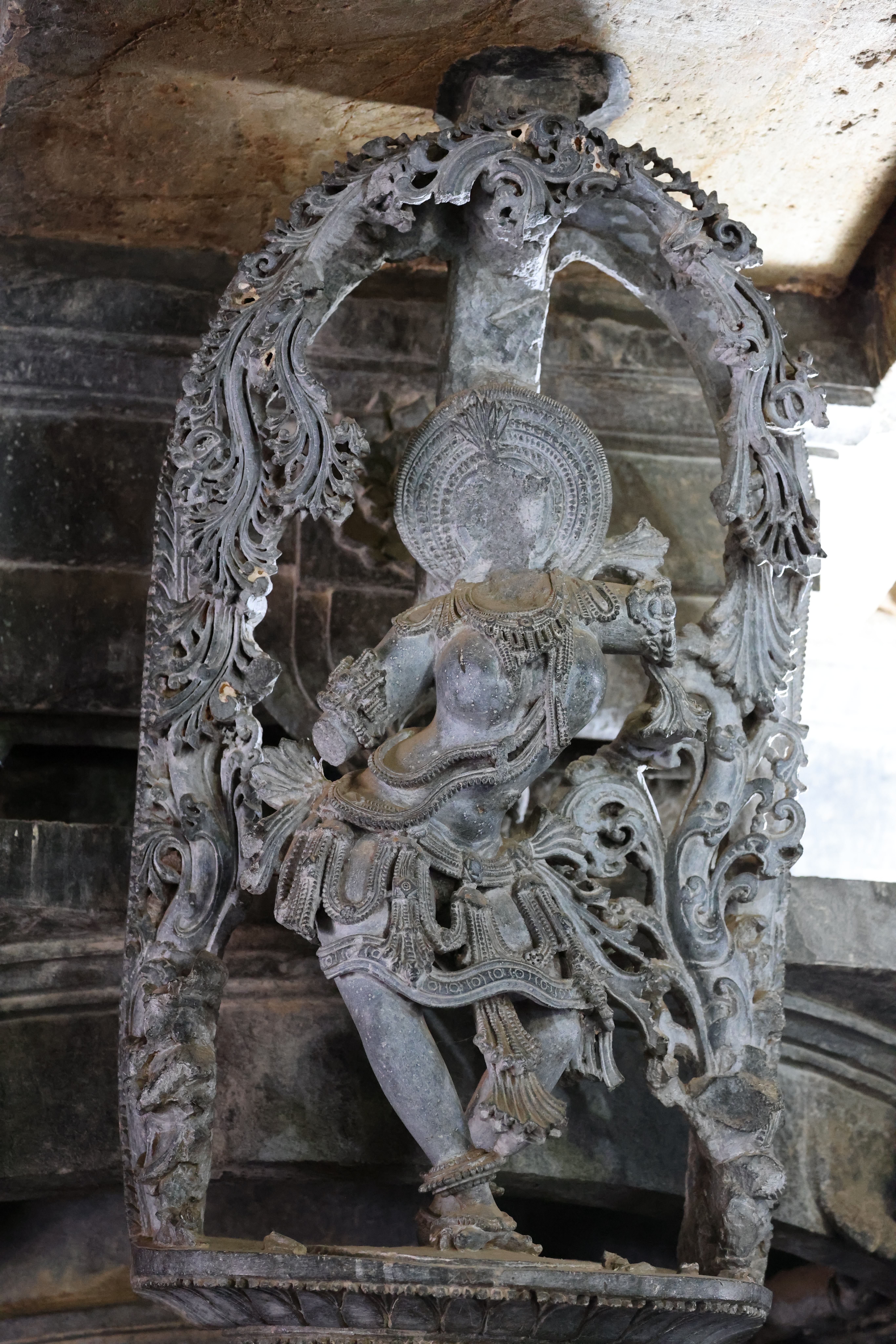
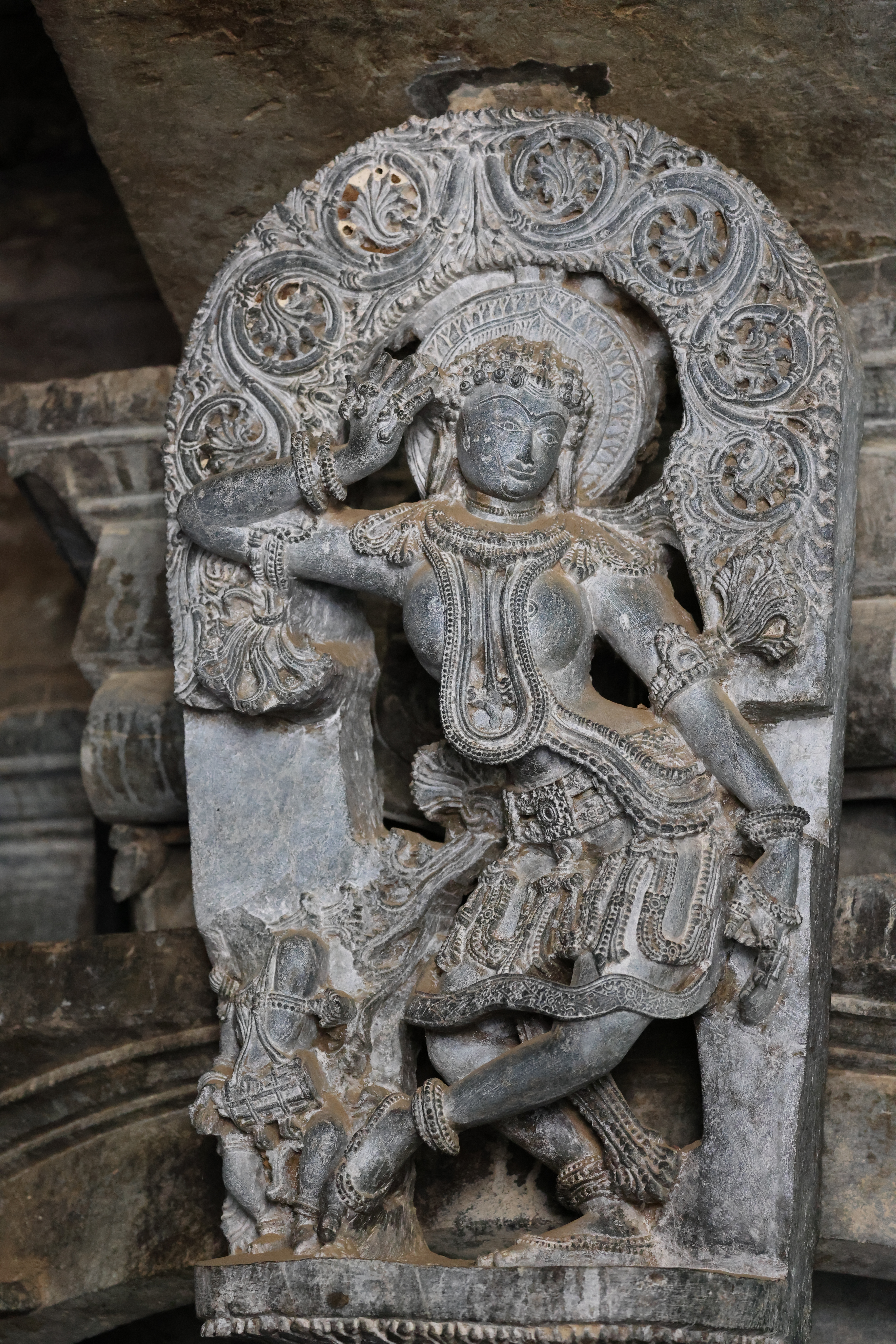
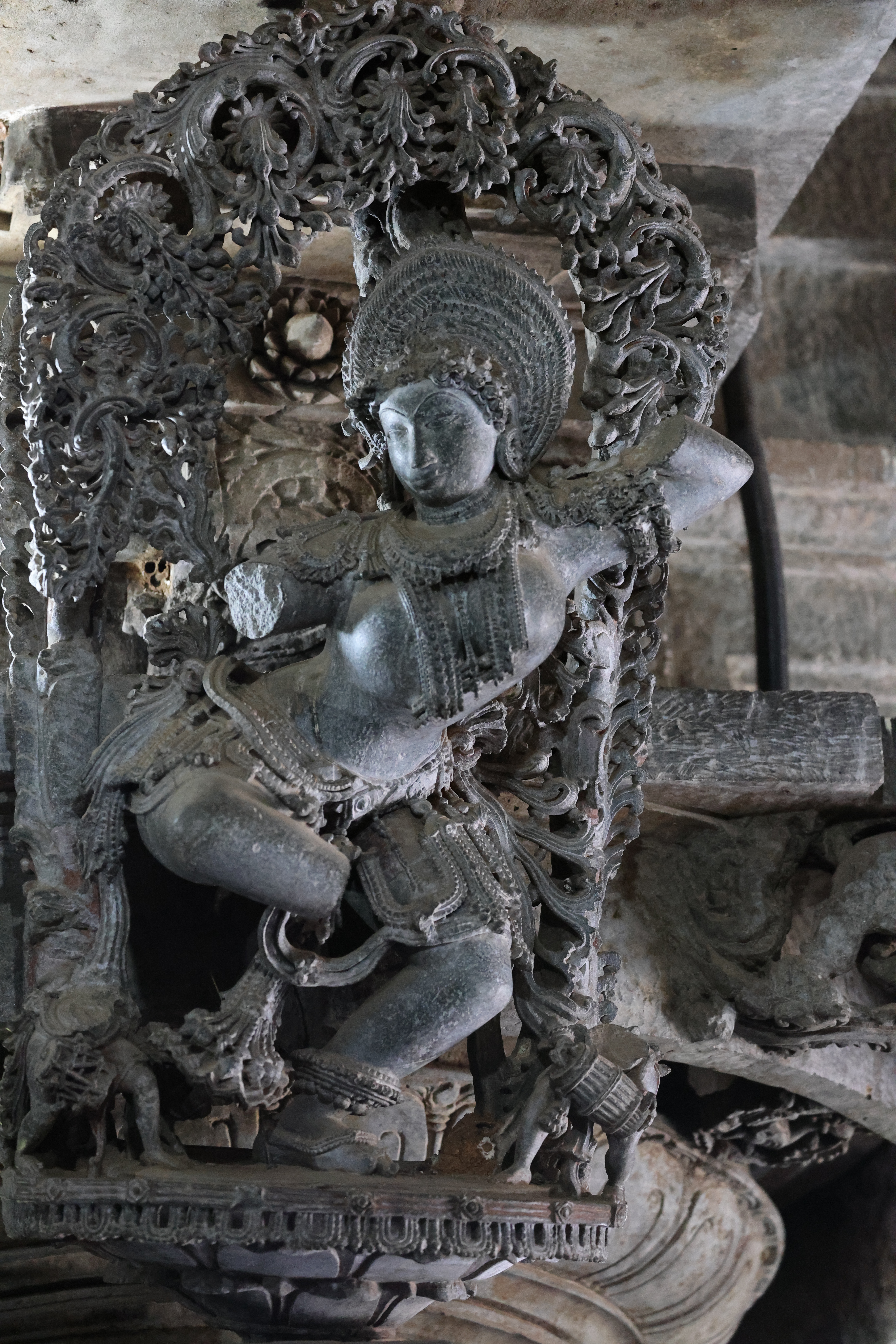
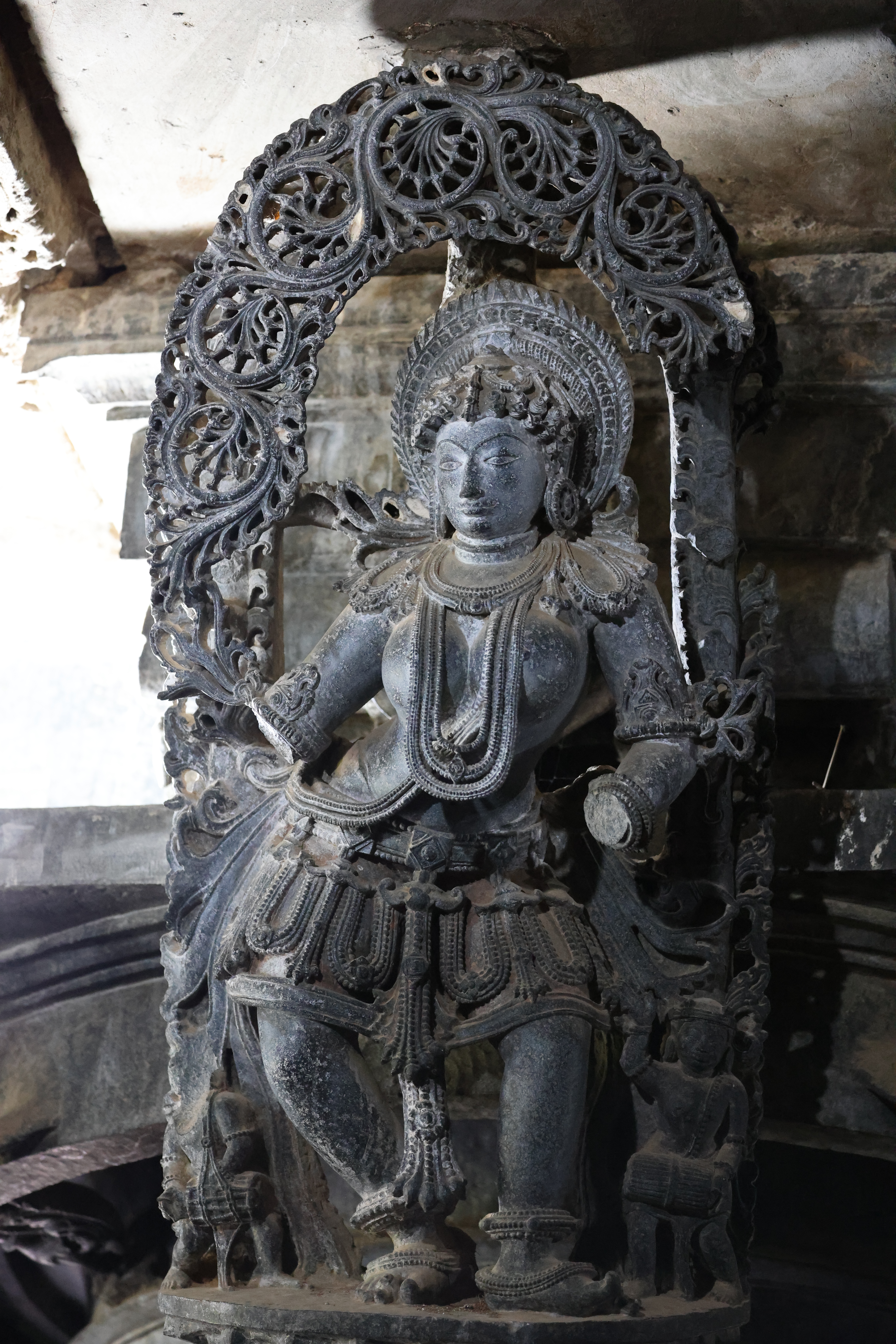
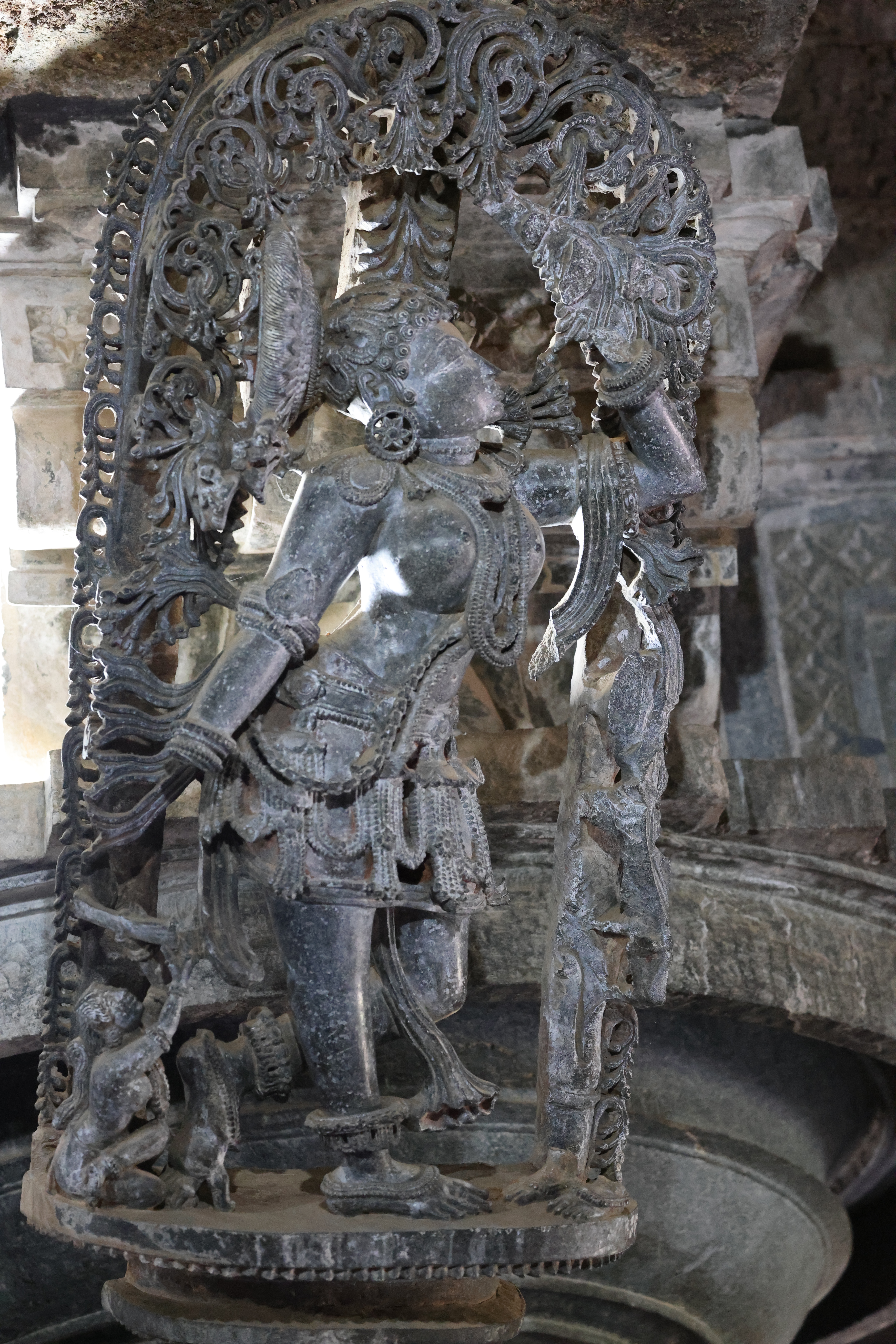
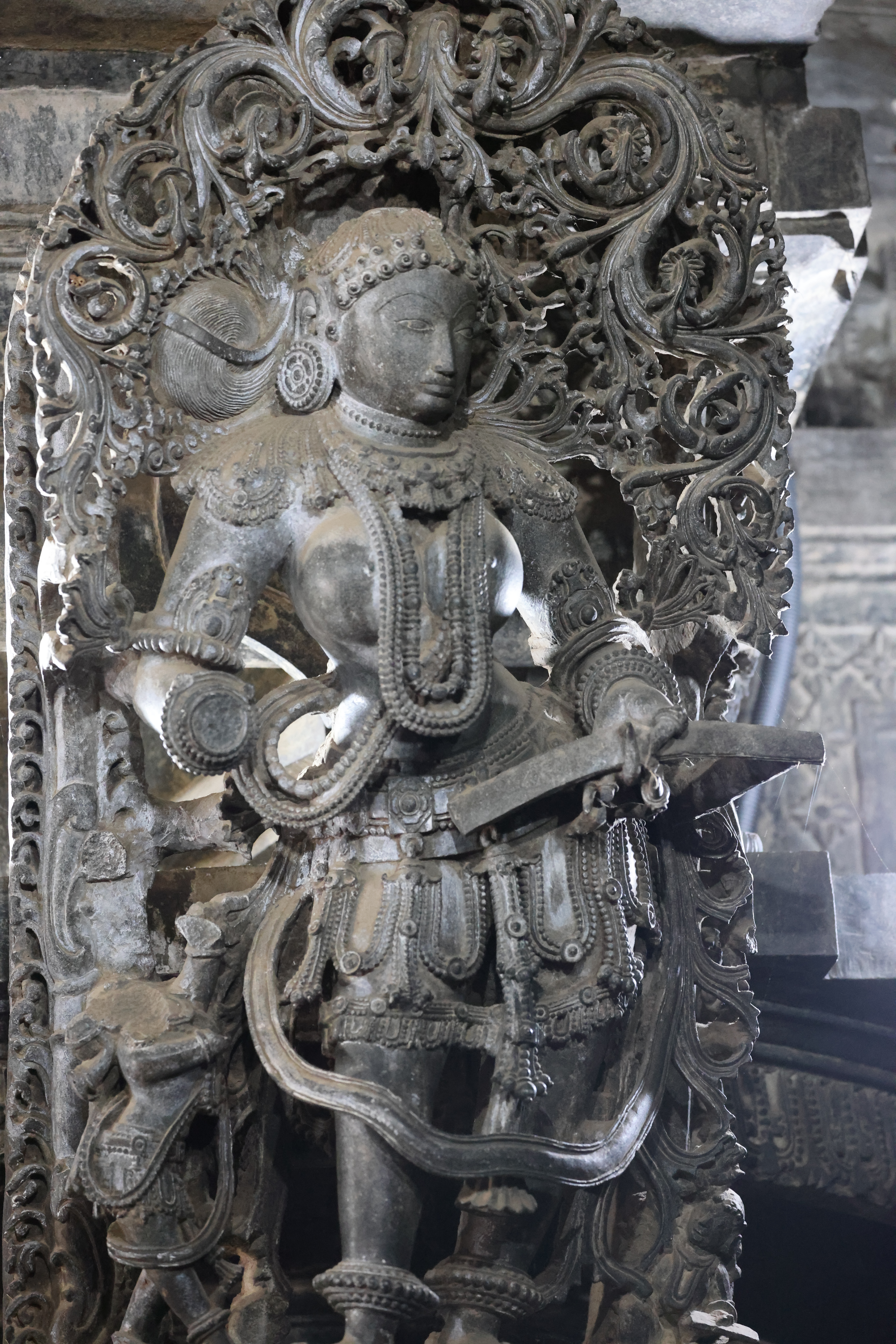
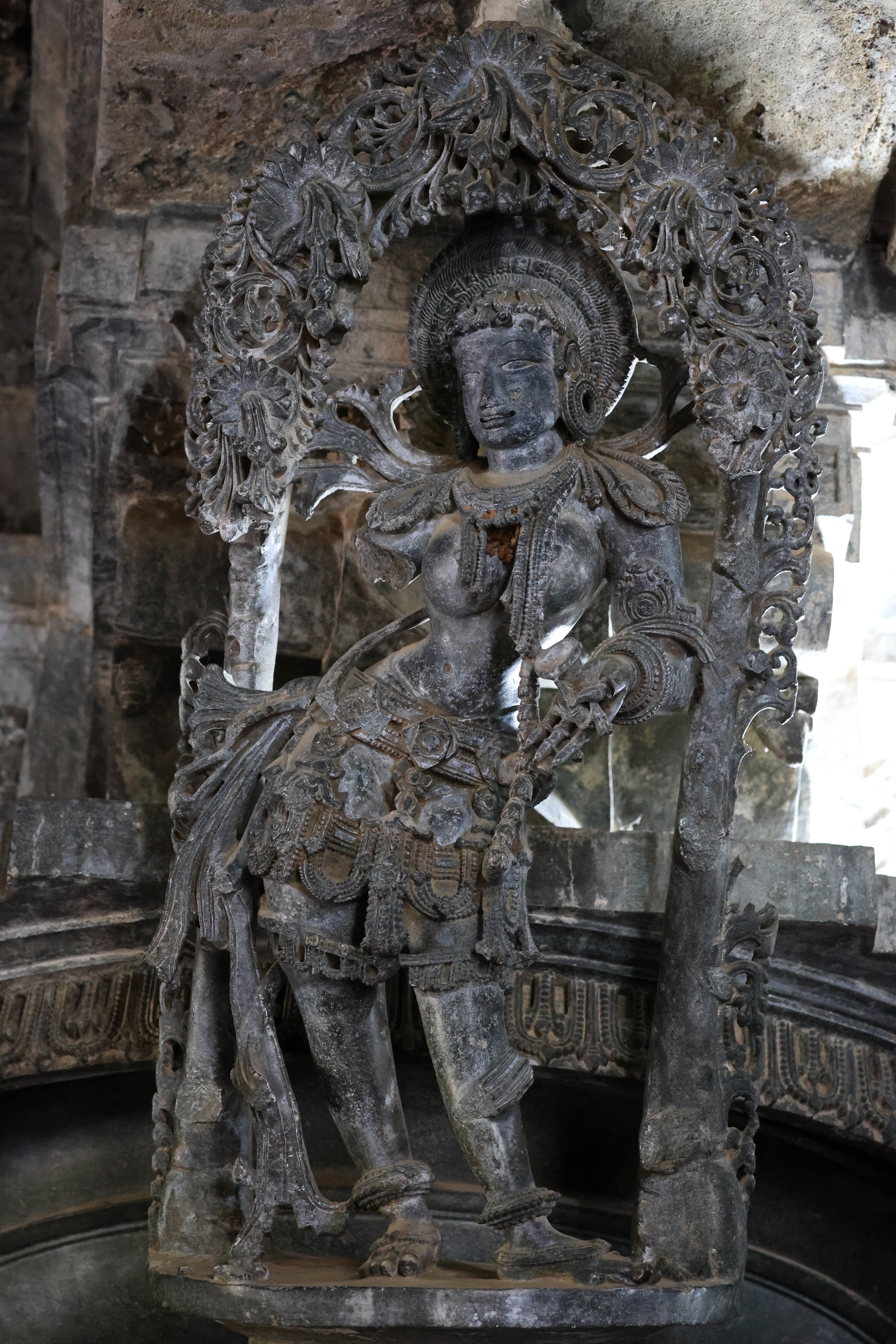
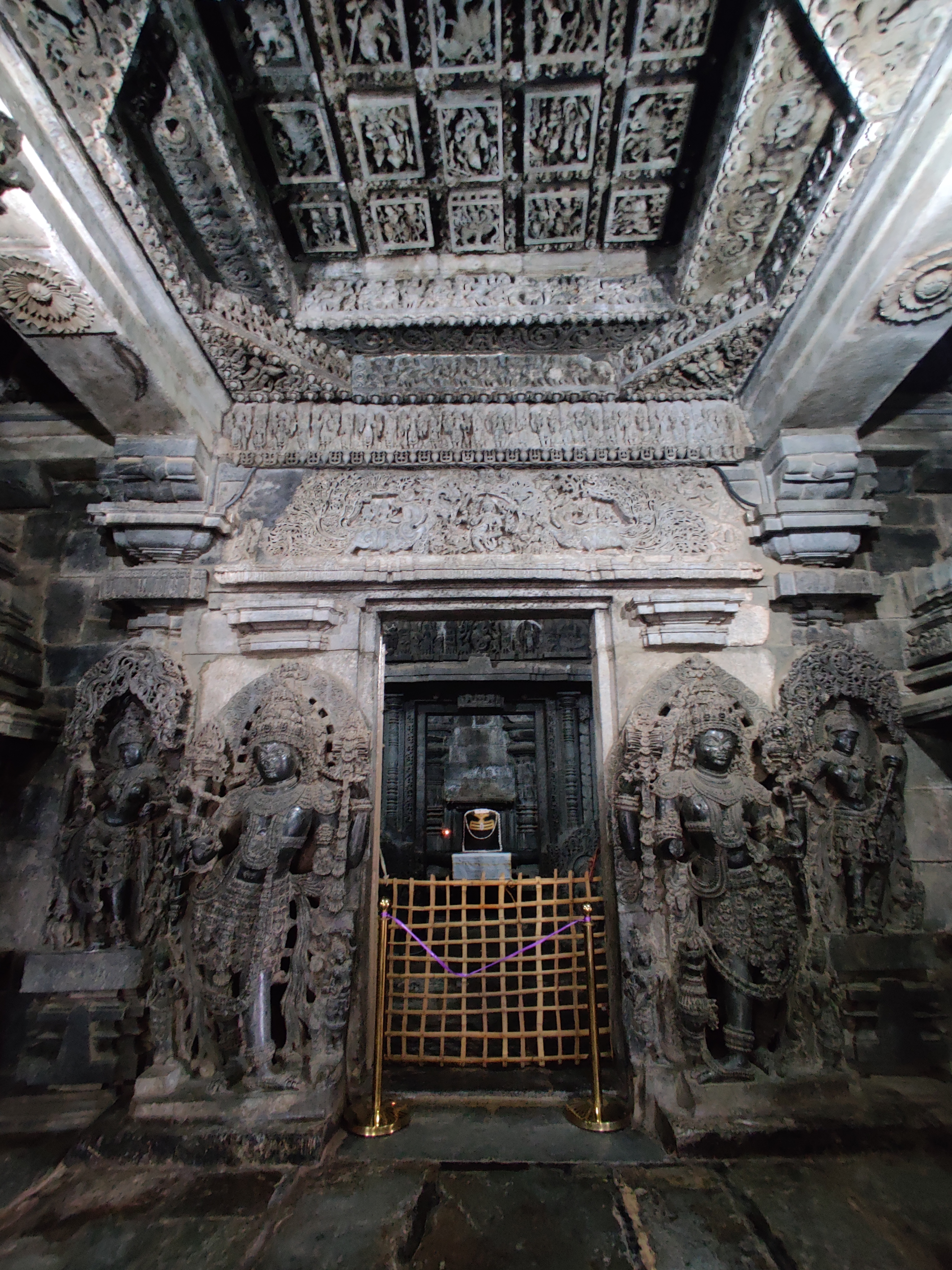
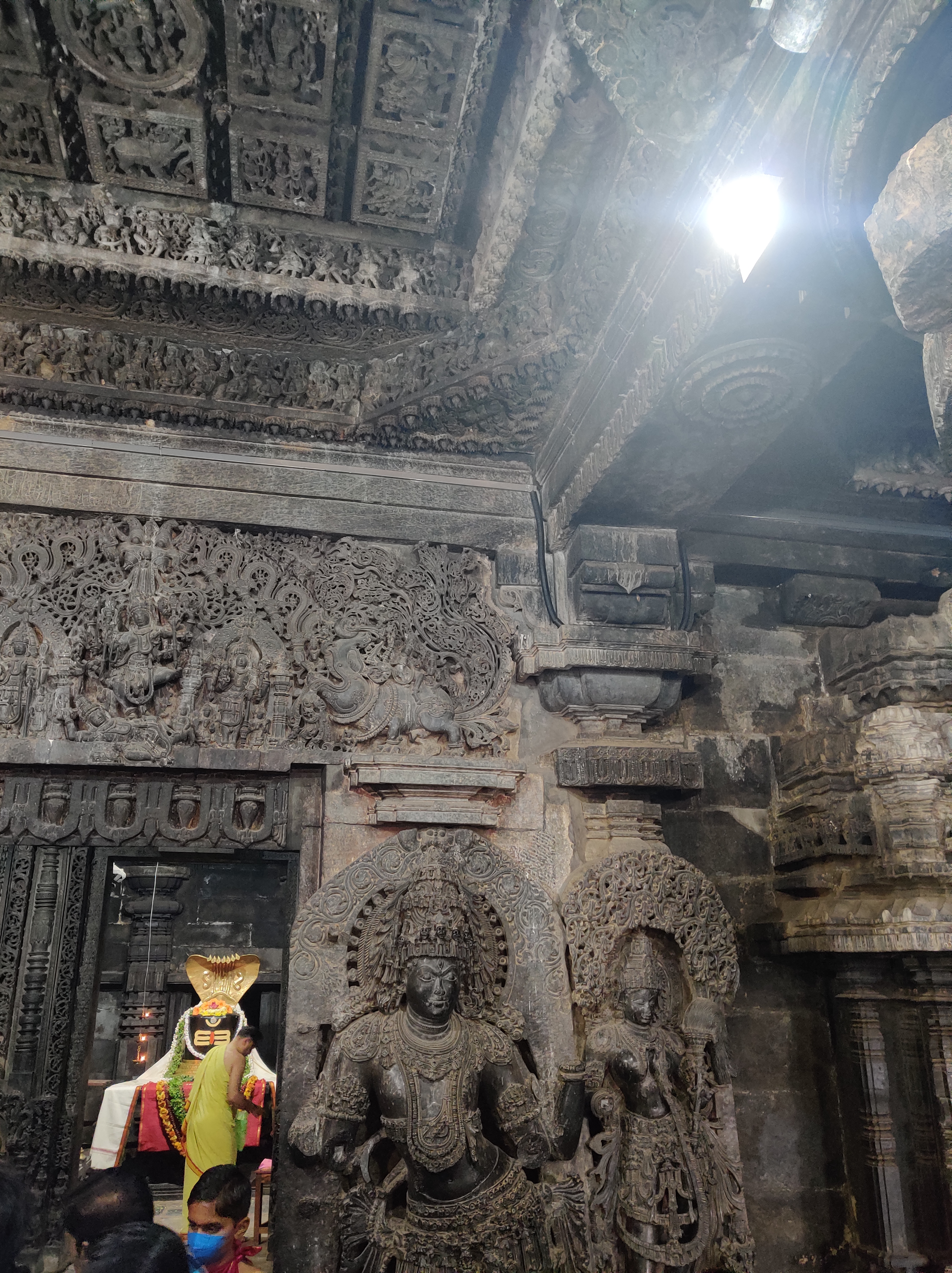
The temple comprises two shrines with shivalingas—one dedicated to Vishnuvardhan Hoysaleswara (in honor of the king) and the other to Shantaleswara (named after Shantala Devi, the queen of King Vishnuvardhana).
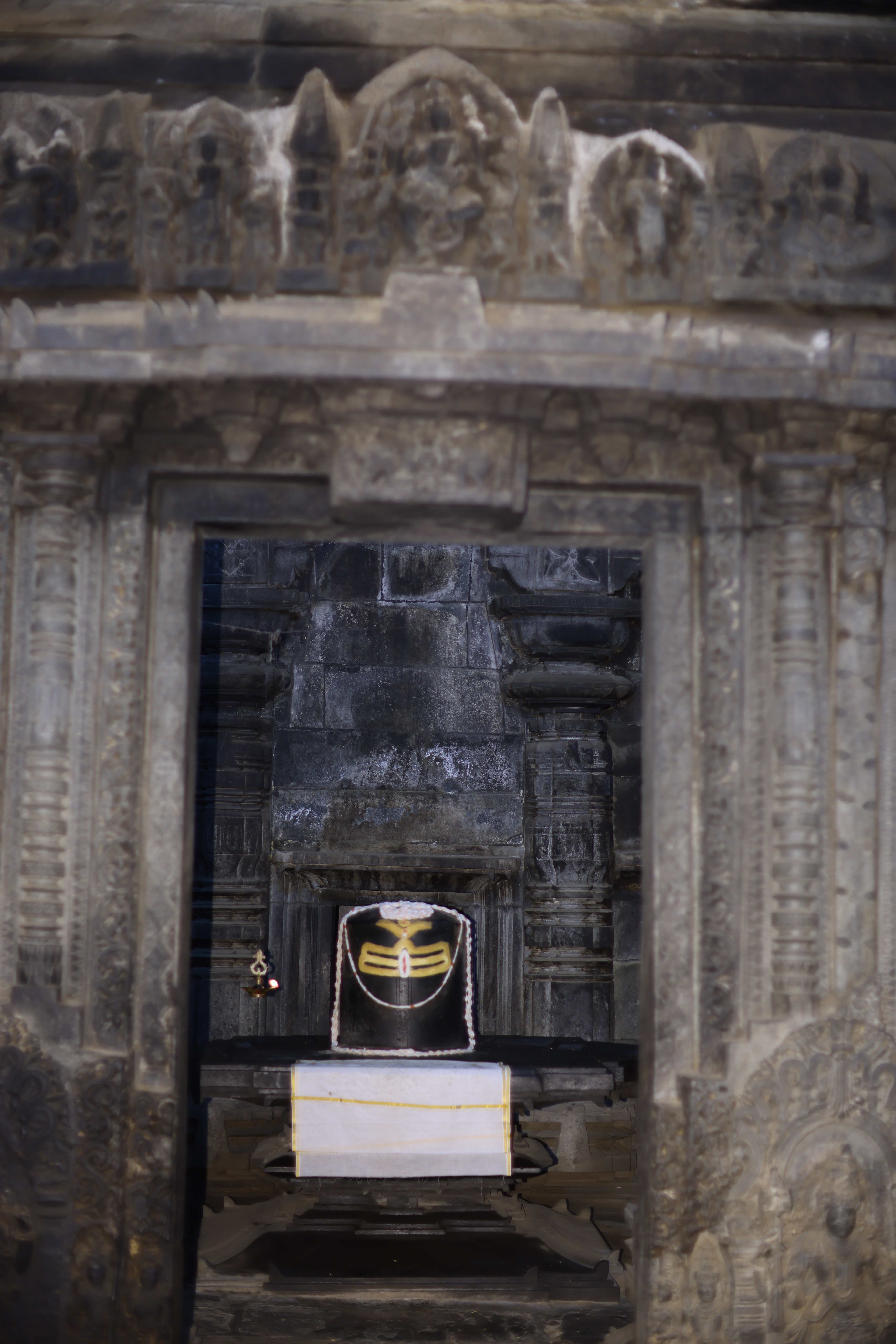
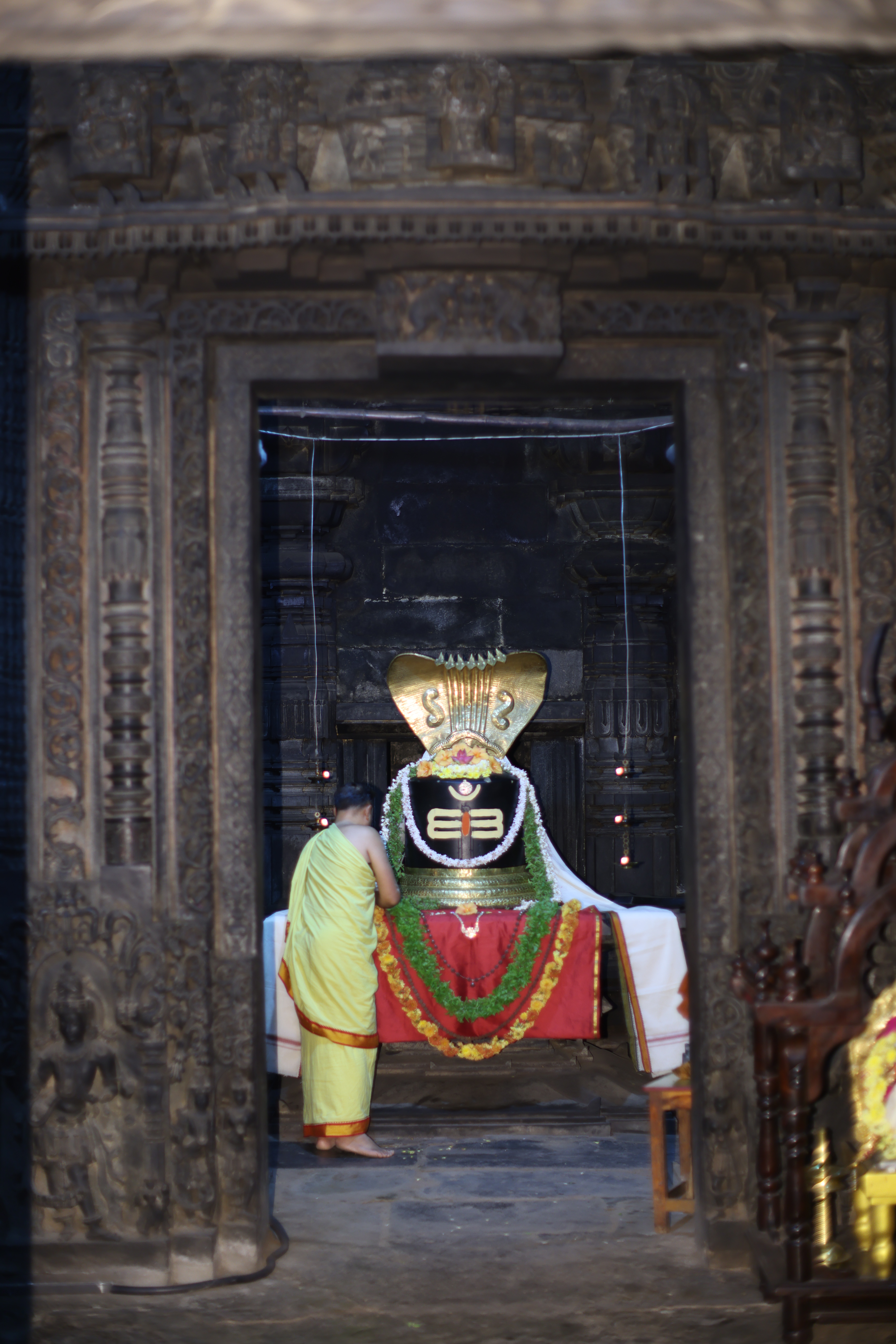
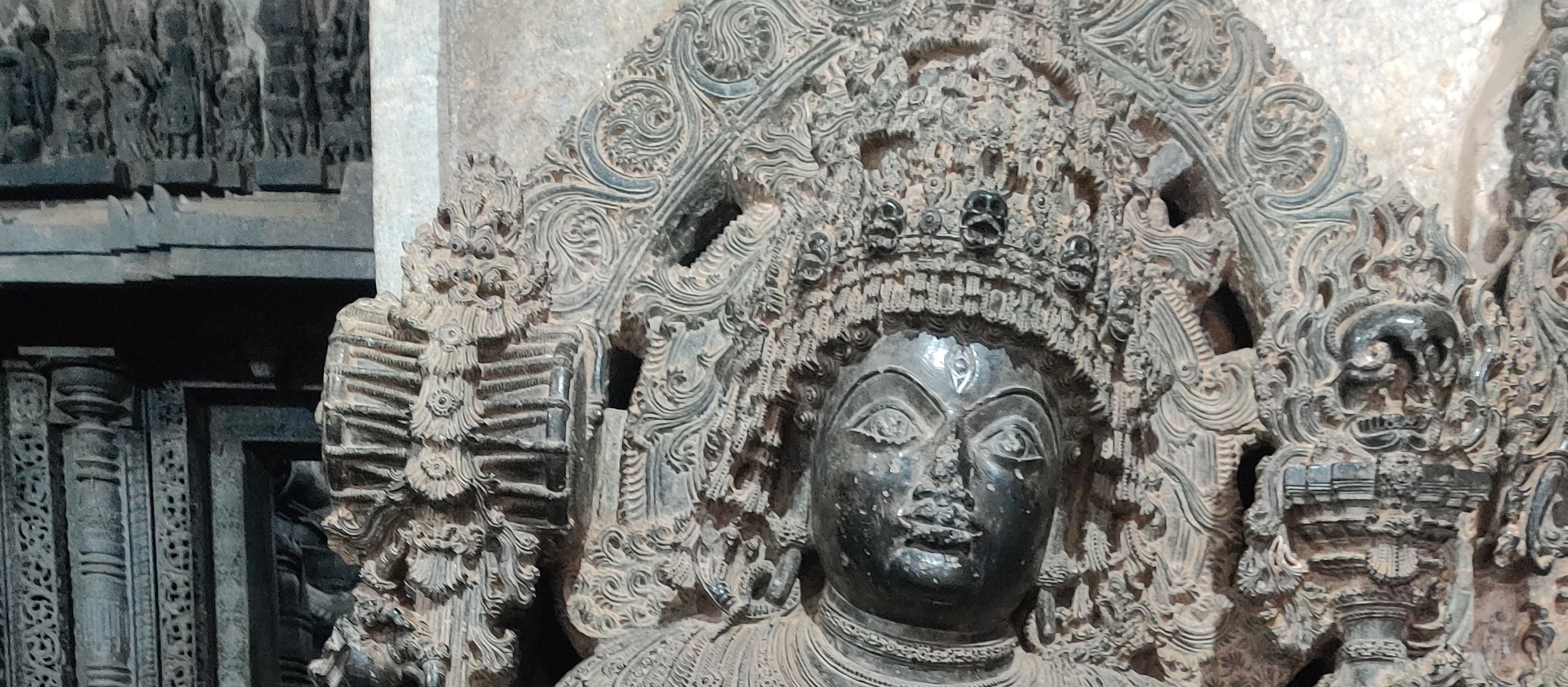
Both sanctums are preceded by sukanasi and lead into the navaranga. The sanctums are similar, featuring beautifully crafted doorways and lintels, each guarded by dvarapalakas on either side. The distinctive feature of these dvarapalakas is their crowns, adorned with an arrangement of hollow skulls diminishing in size from the center. Flanking these dvarapalakas are chuari-bearers on either side of the doorway.
Pro Tip:
Belur is approximately 3.5 hours (150 km) away from Mysore, while Halebeedu is 143 km from Mysore. The distance between the two towns is around 17 km, which takes about 30 minutes to travel. During my five-day stay in Mysore for the Dussehra celebrations, I chose to combine Belur and Halebeedu into a day trip and rented a car.
Except for the inner sanctum or shrine, there are no restrictions on photography. Ensure you have a flash (for DSLRs) or night mode settings (for your phone) when capturing the temple interiors. It’s incredibly exquisite but equally crowded. If using a wide lens, make sure it’s not overly conspicuous. For instance, my dad’s Canon wide lens has a distinct white body, which caught the attention of temple security personnel.
The Hoysala series:
- Poetry of Stones – Hoysala temple I: Somnathapur
- Poetry of Stones – Hoysala temple II: Belur
- Poetry of Stones – Hoysala temple III: Halebidu
- Poetry of Stones – Hoysala temple IV: Smaller shrines of Belur
References:
Along with the oral narration from the guide at the temple, the specific stuctural references has been taken from the following books and sites –
- Architectural Wonder The Hoysalesvara Temple Halebid: The Legacy of Hoysala Art & Architecture by Sainath Reddappa
- Ancient India: Art and Archaeology
Related (and not-so related) Posts:


[…] Poetry of Stones – Hoysala temple III: Halebeedu […]
LikeLike
[…] Poetry of Stones – Hoysala temple III: Halebidu […]
LikeLike
[…] Poetry of Stones – Hoysala temple III: Halebidu […]
LikeLike
[…] eighty large images of Gods and Goddesses. Unlike the walls of Kesava temple at Somnathapura or Hoysaleshwar temple at Halibeedu, these are more spaced out. And considering the obvious grandeur of these specimens, I think it was […]
LikeLike