
Legend has it that in ancient times, two brothers named Tala and Kadu decided to cut down a sacred tree worshipped by elephants. As they began cutting, the tree started bleeding, and a mysterious voice instructed them to heal it using its leaves. After the tree was restored, the blood transformed into milk, which the brothers drank, leading them to attain moksha. Thus, the town came to be known as Talakadu. However, beyond this origin tale, the remote town was once called Gangavadi, serving as the home to the Gangas from the second half of the 4th century to 1004 AD. Following the region’s political dynamics, power shifted to the Cholas under Raja Raja I (985-1014 AD), and later to the Hoysalas during Vishnuvardhan’s reign. The intricate power struggles surrounding a remote town unveil a captivating narrative, often cited by locals as the reason behind the town’s complete submersion under layers of sand.
After the fall of the Hoysalas, Talakad came under the Vijayanagara empire’s rule. During Venkata I’s reign, his nephew Tirumala Raja, viceroy of Srirangapatna, fell ill with an incurable disease and retreated to Talakad to pray, leaving behind his wife Rangamma as the ruler incharge. This prompted Raja Wodeyar I’s expansionist ambitions, leading him to seize Srirangapatna. For some reason, other than the annexation of Srirangapatna, the king of Mysore was very interested in the priceless nose-ring of Rangamma. To prevent such a dishonour, Rangamma decided to sacrifice herself with her nose-ring at Cauvery near Malingi. But before jumping into the river, she uttered a three-fold curse – “Talakadu Maralagi, Malangi Maduvagi, Mysooru Arasarige Makkalagadirali.” It translates to – “Let Talakadu become sand, let Malangi become a whirlpool, let the Mysore Rajas fail to beget heirs.” Strange, but somehow true to the curse, the city of Talakad was soon buried in sand, burying nearly 30 temples. Subsequently, Srirangapatna and Mysore passed to Hyder Ali and Tipu Sultan from the Wodeyar dynasty, with no direct heirs left to carry on the dynasty’s lineage.
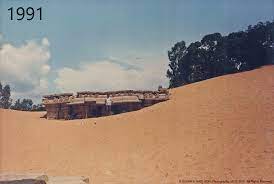
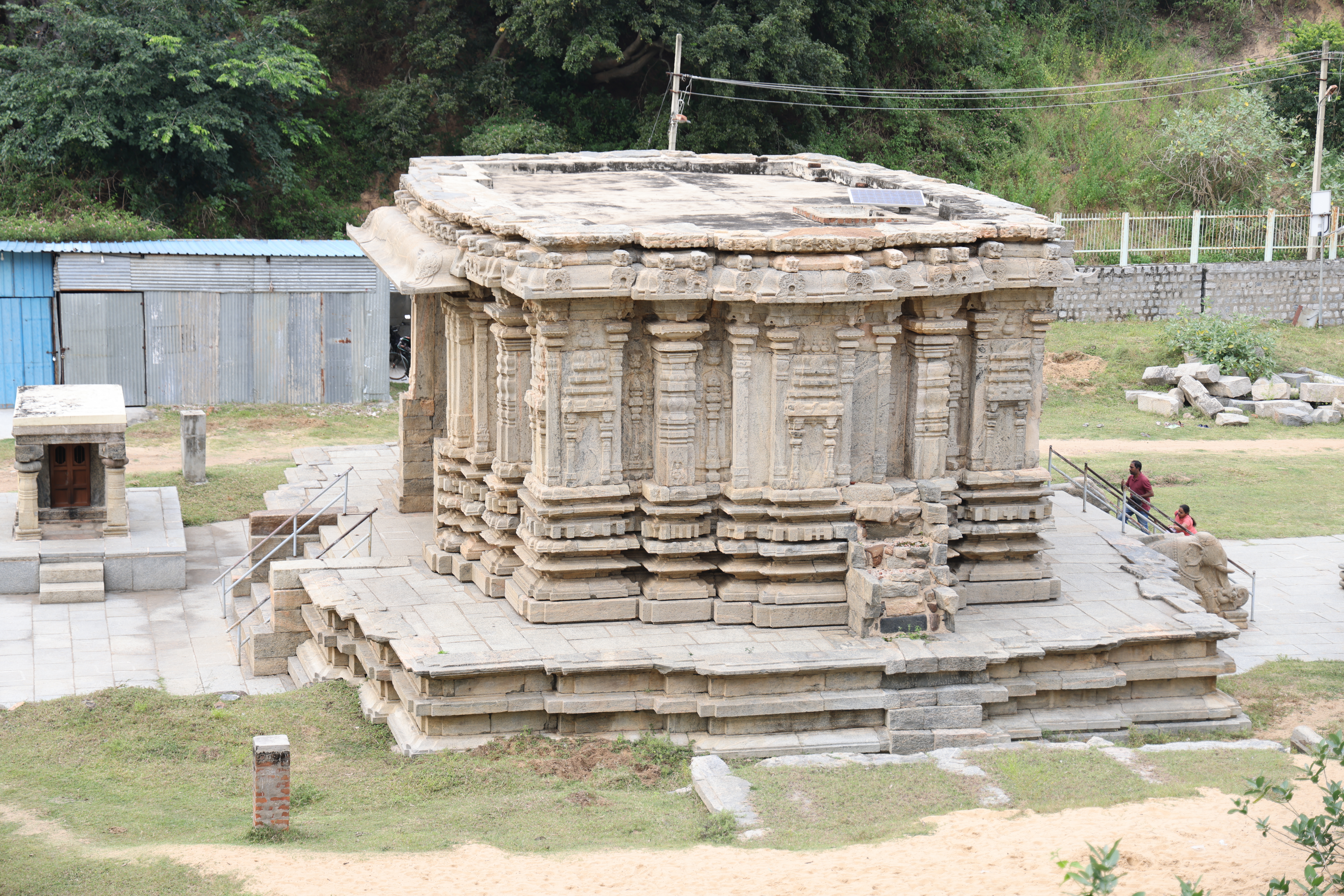
Legends have a remarkable way of leaving a lasting impression, don’t they? But let’s get real—the sand dunes are a unique natural phenomenon. It’s widely believed that the temples were buried under layers of riverine sand dunes during an ecological disaster that struck the region in the 17th century. Geomorphic changes, such as shifts in river courses and the formation of sediment mounds, suggest uplift-related earth movements likely caused by recurring earthquakes. But even with all the scientific explanations, the allure of the curse and its three-fold effect remains captivating.
Throughout history, various dynasties have left their mark on the town. While most rulers of the Ganga dynasty were Jains, the Cholas and Hoysalas were followers of Shaivism and Vaishnavism, respectively. Except for the Vaideshwar temple built by Raja Raja I, all other temples remained buried under the sand dunes. The Central Archaeological Department has excavated several temples, including Pataleswara, Maraleswara, Anandeswara, Arkeswara, Gauri Shankar, Kirti Narayana, and Chowdeswari, from the sand mounds that still form a significant part of the town’s landscape and folklore. According to excavation findings, these temples, mostly in a dilapidated state, were likely constructed between the 6th and 17th centuries AD. Along with Vaideshwar, Pataleswara, Maraleswara, Arkeswara, and Mallikarjuna temples, they are believed to constitute the Panchalingas, representing the five faces of Shiva.
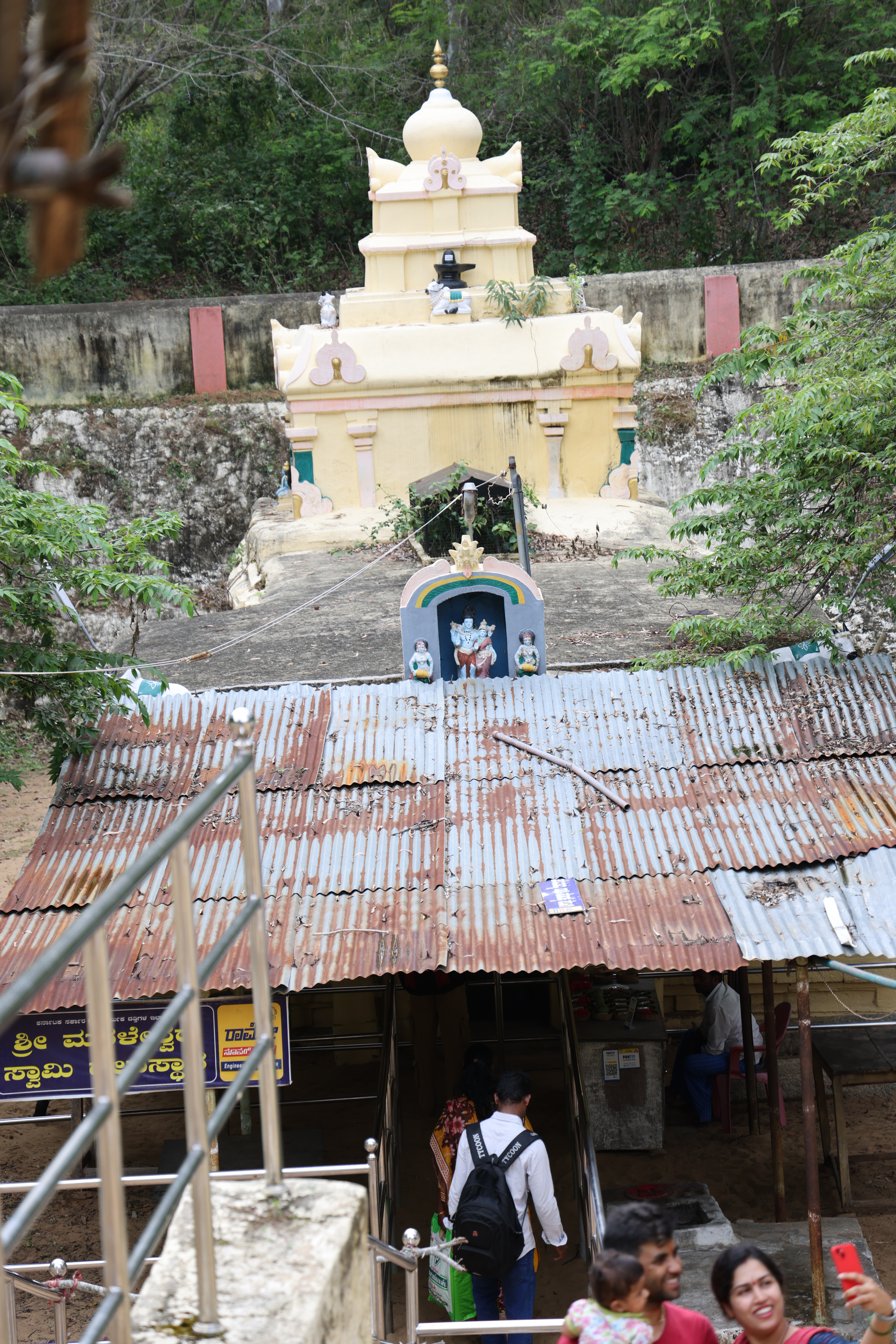
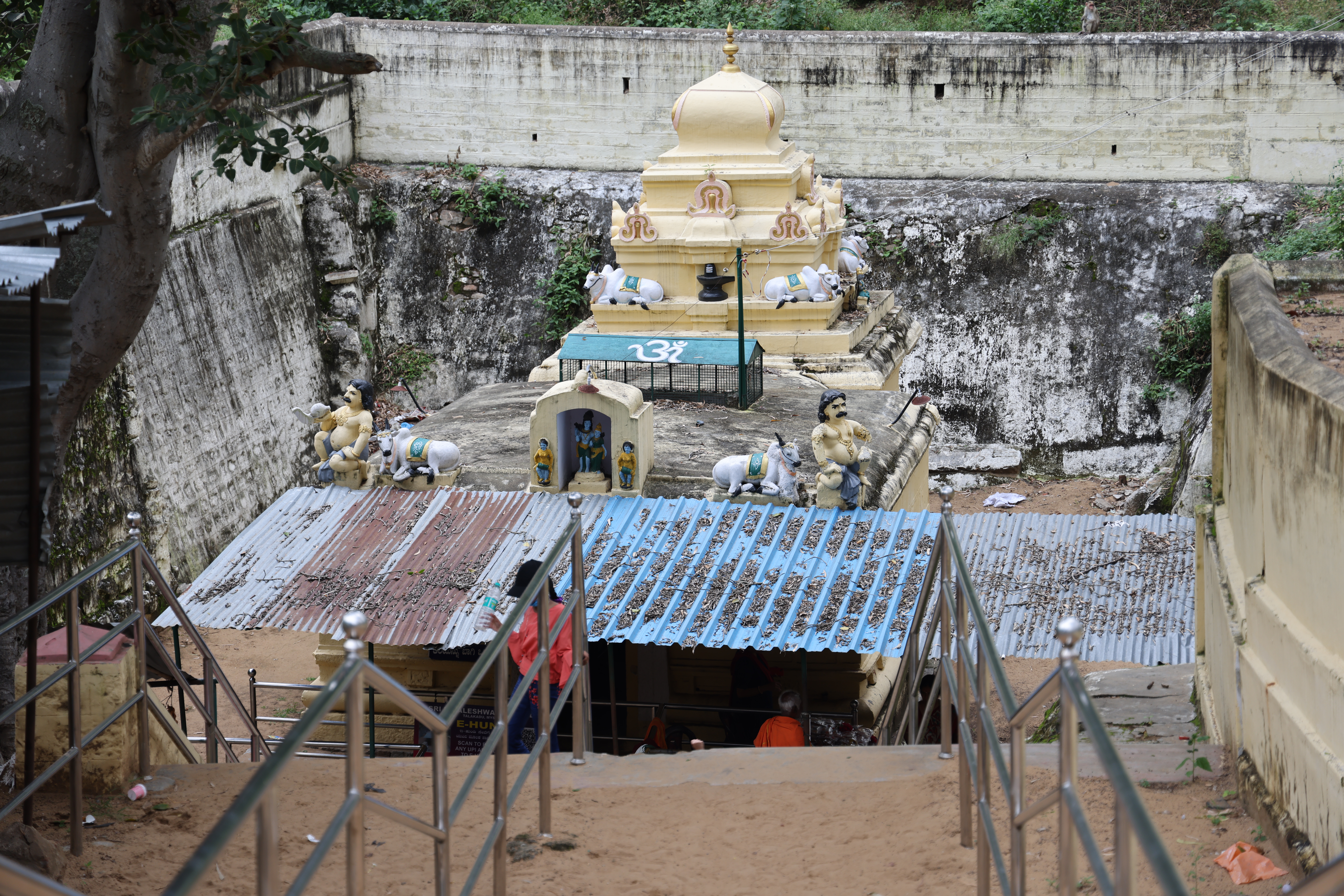
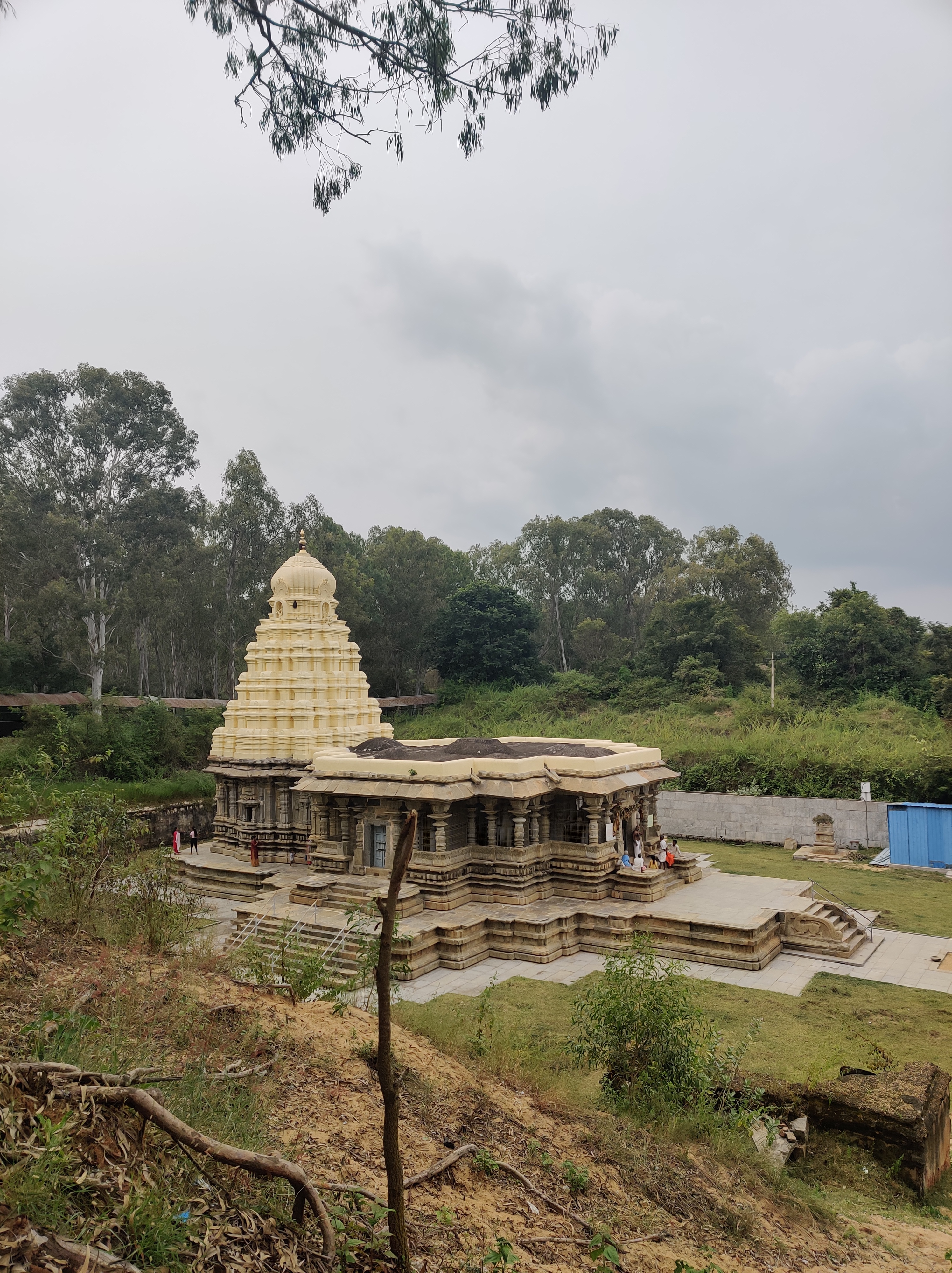
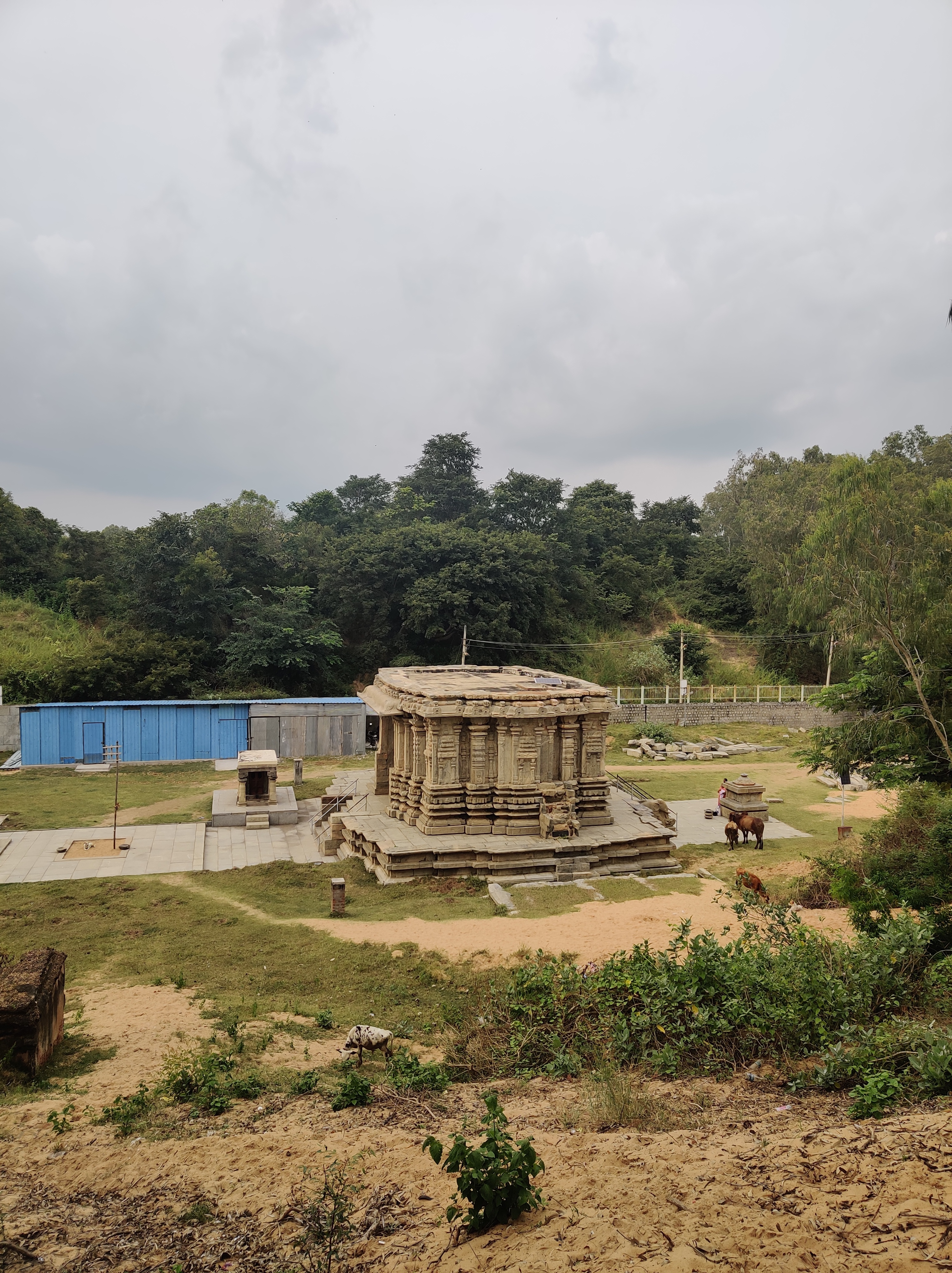
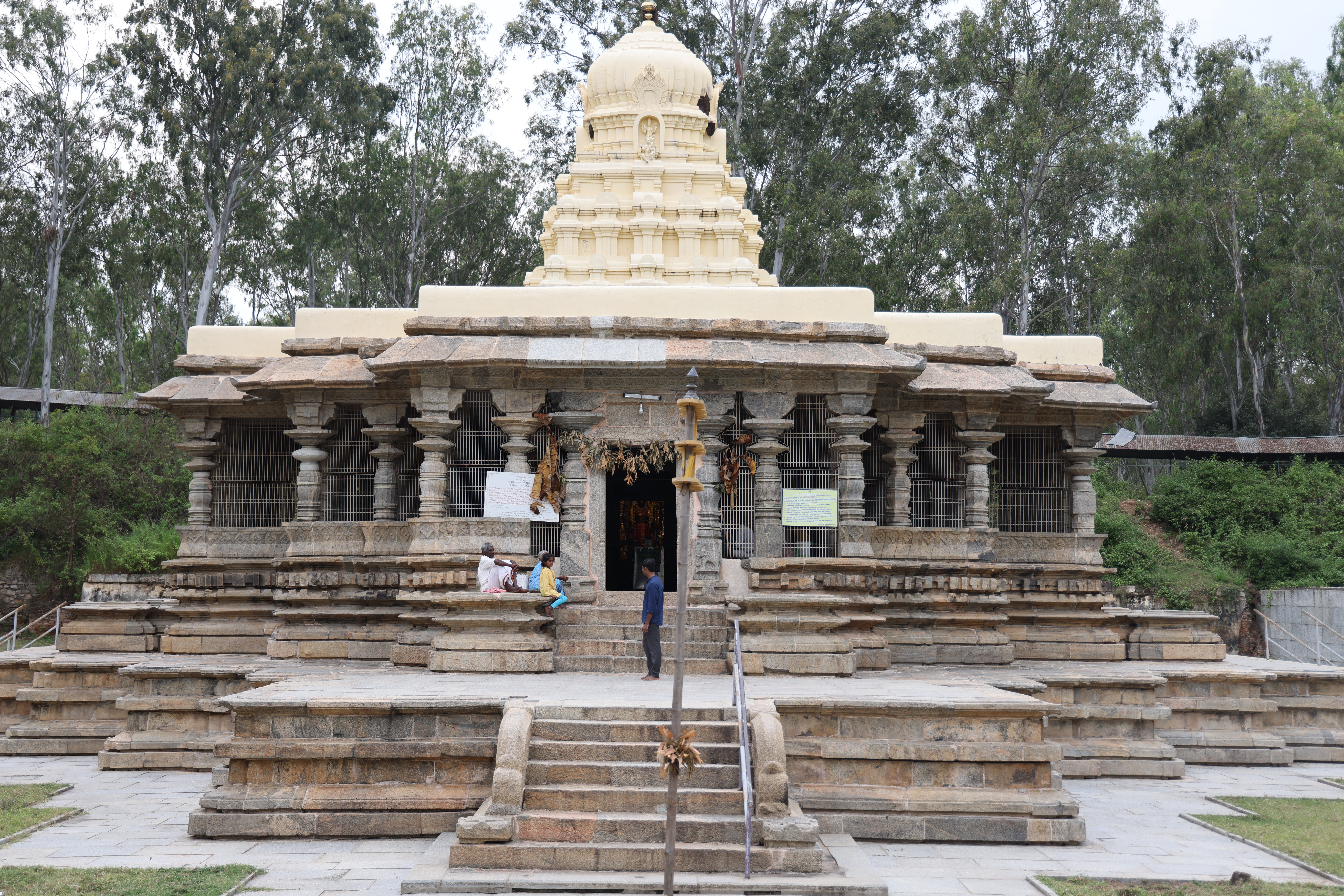
Despite the dusty landscape, we hired a tour guide who shared some intriguing anecdotes beyond the excavation tales. The Vaideshwar Temple stands out as the largest and most well-preserved among the shrines here, showcasing a blend of Ganga-Chola-Hoysala architectural styles. According to a popular story recounted by the priest, the temple’s idol represents Lord Shiva in a form wounded by two hunters named Tala and Kada, after whom Talakadu is named, who inadvertently aimed at the deity. It’s believed that Shiva healed himself using sandalwood paste, earning him the name Vaidyanatha, with “Vaidya” meaning doctor in Sanskrit. Hence, the idol is always adorned with a patch of sandalwood paste. Additionally, the faces of the 10-foot-tall Dwarapalakas flanking the temple entrance depict the navarasa forms Rudra (anger) and Shantha (peace), while the area around their bellies resembles a bull’s face, possibly symbolizing the story of the two hunters, Tala and Kadu.
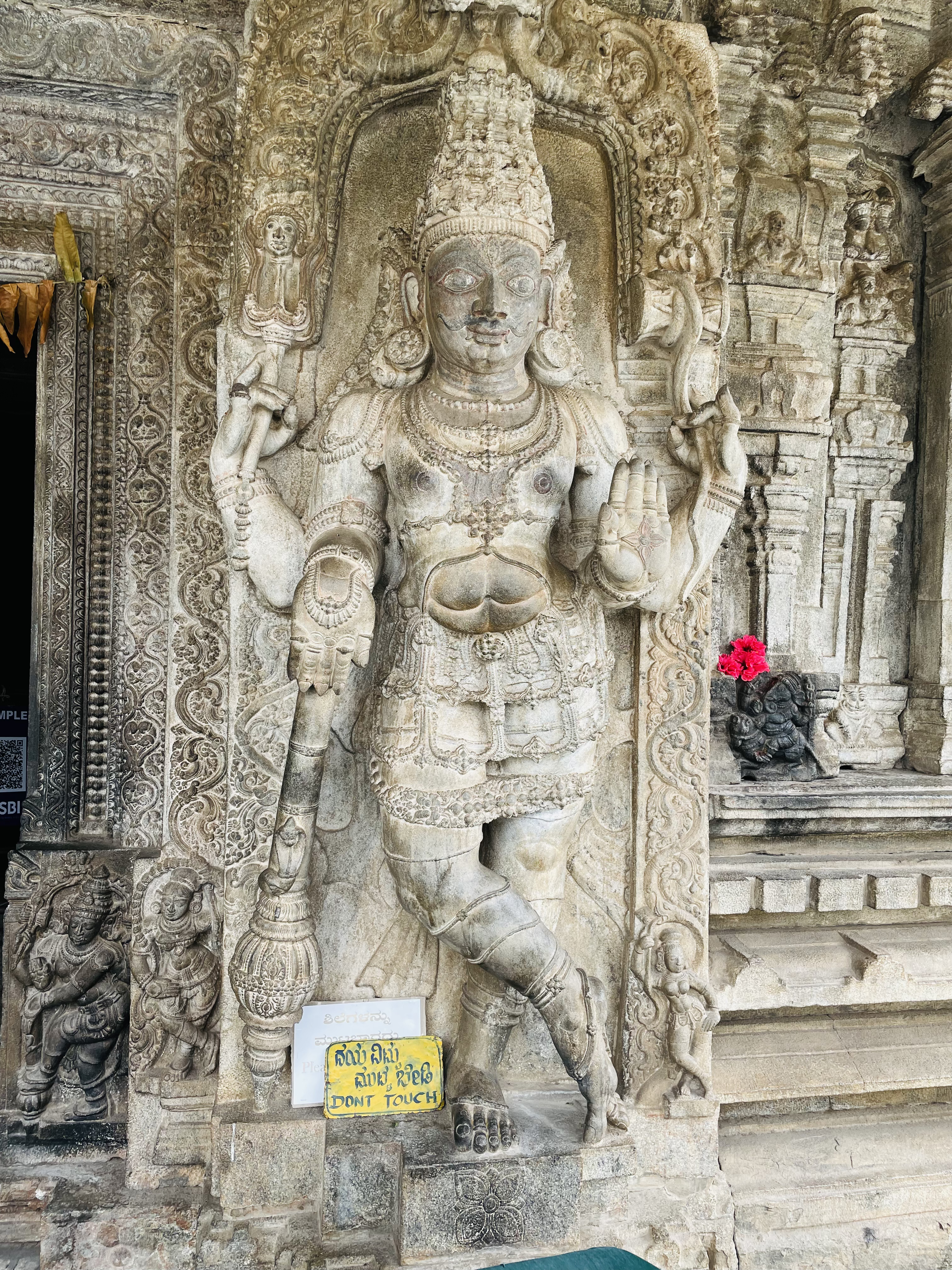
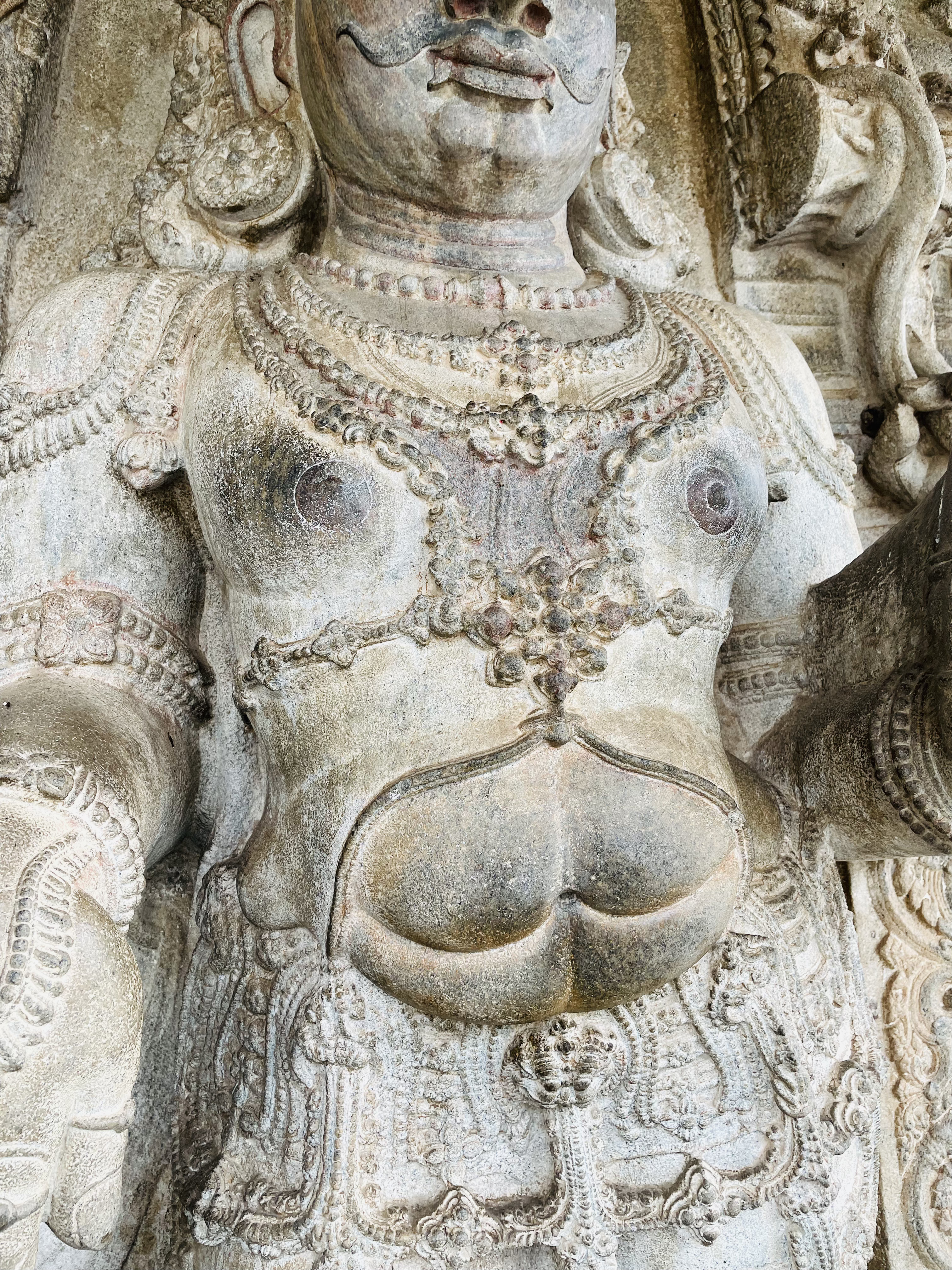
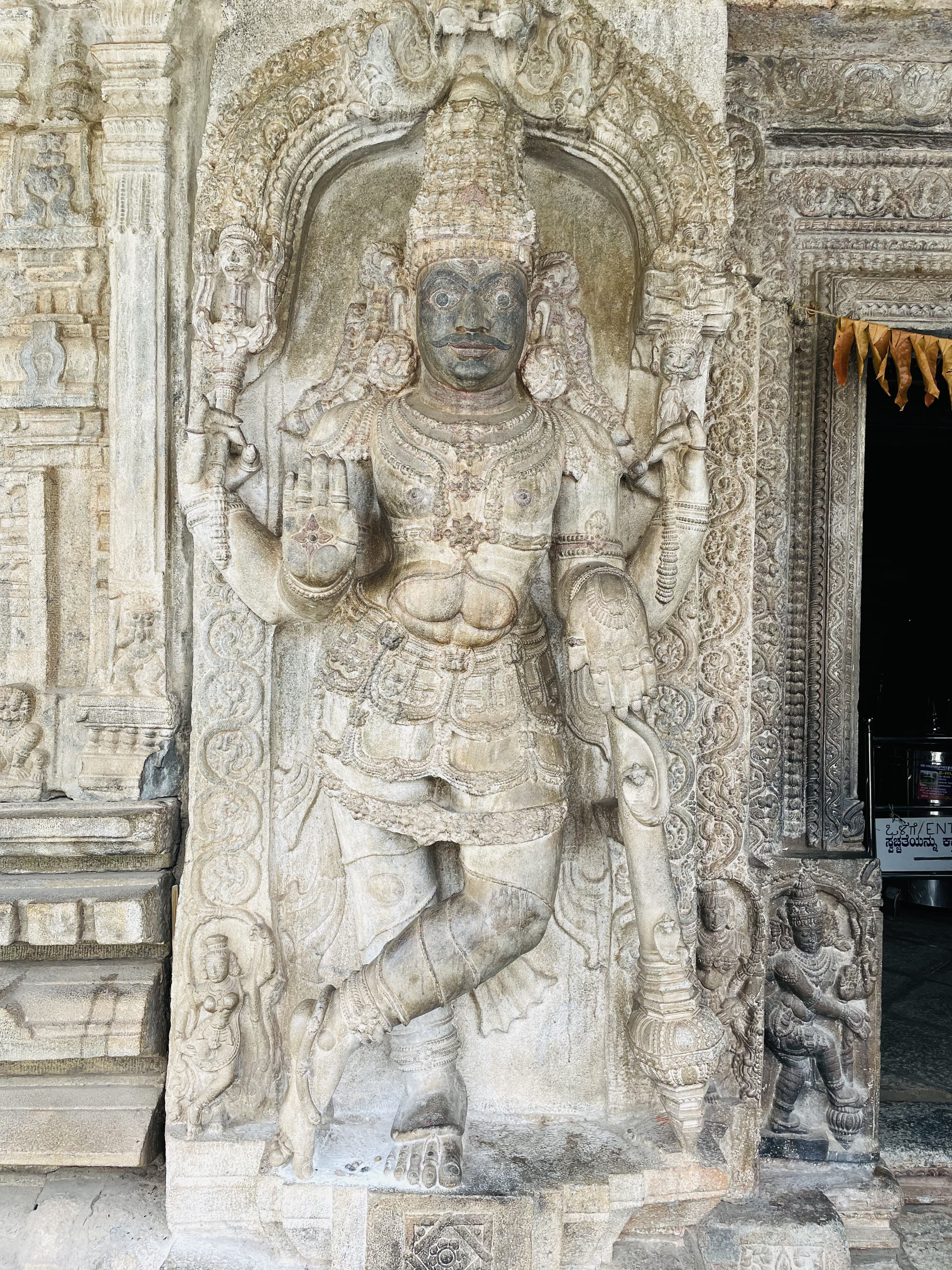
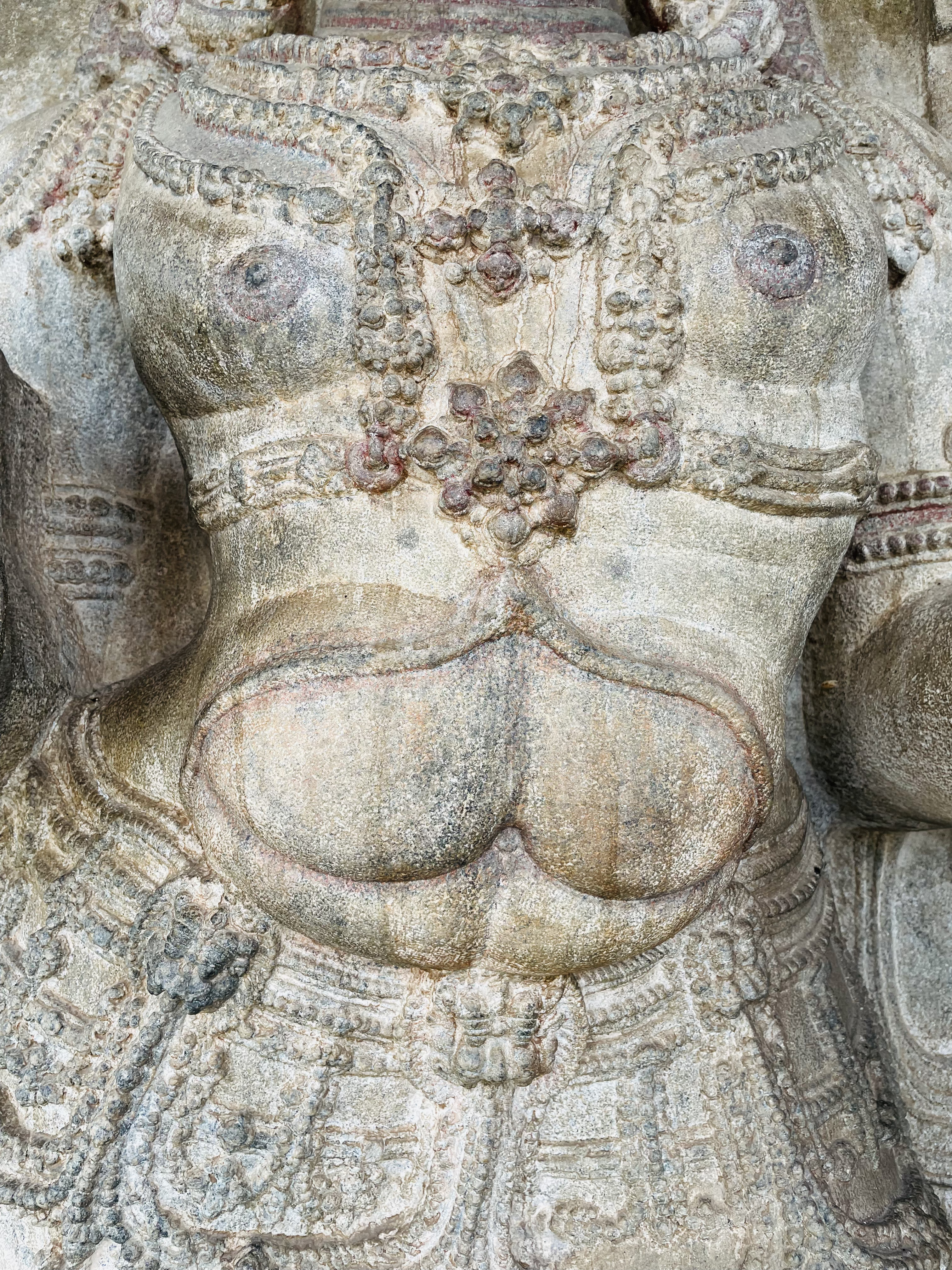
In contrast to the Hoysala temples we’ve explored, this temple appears notably more restrained and less elaborate. While the navranga features ordinary ceiling panels, except for the central one depicting Shiva leela, the temple boasts several unique bas reliefs throughout its surroundings. It’s essential to approach each temple with patience and avoid the temptation to constantly compare them with others.
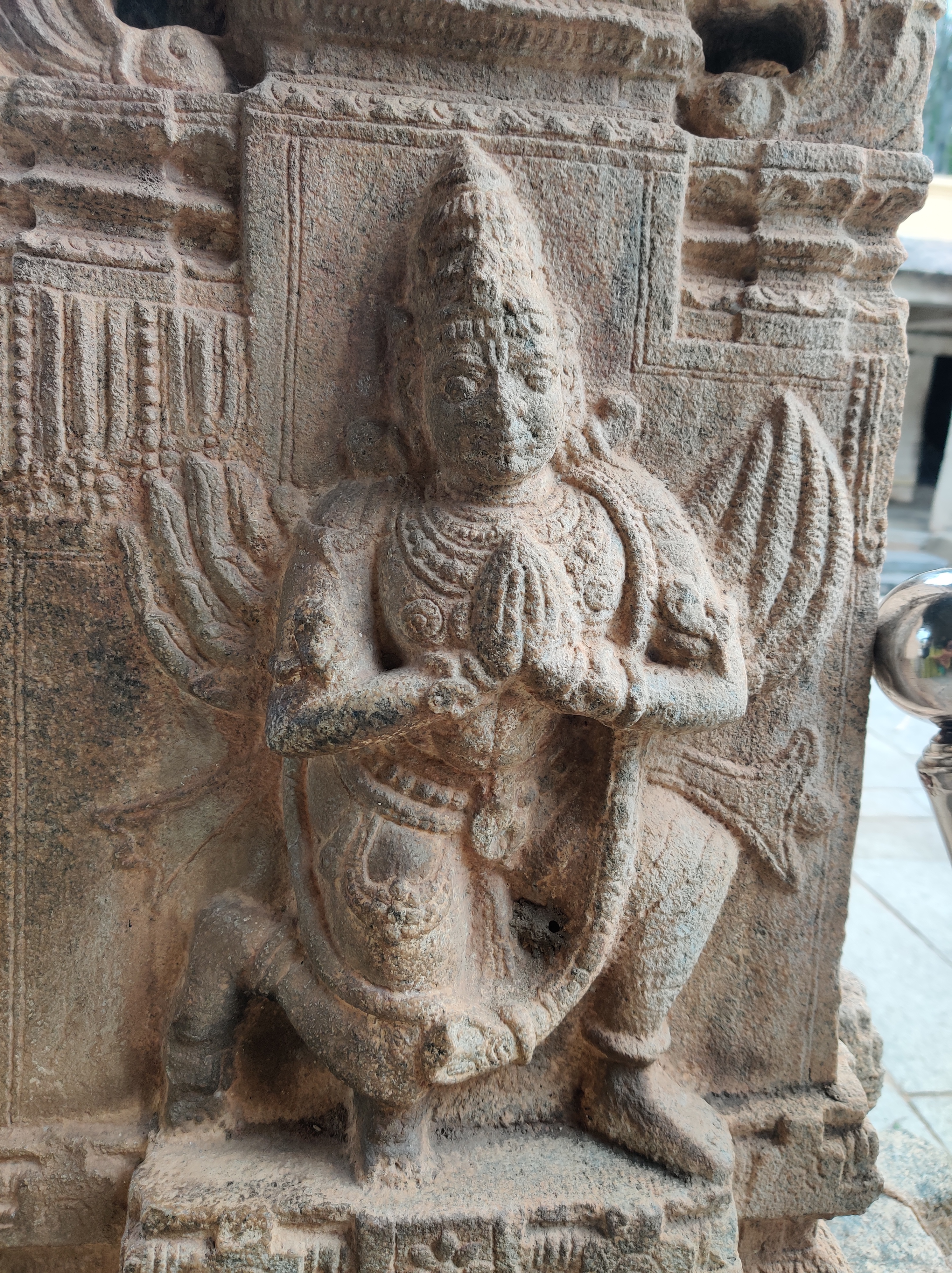
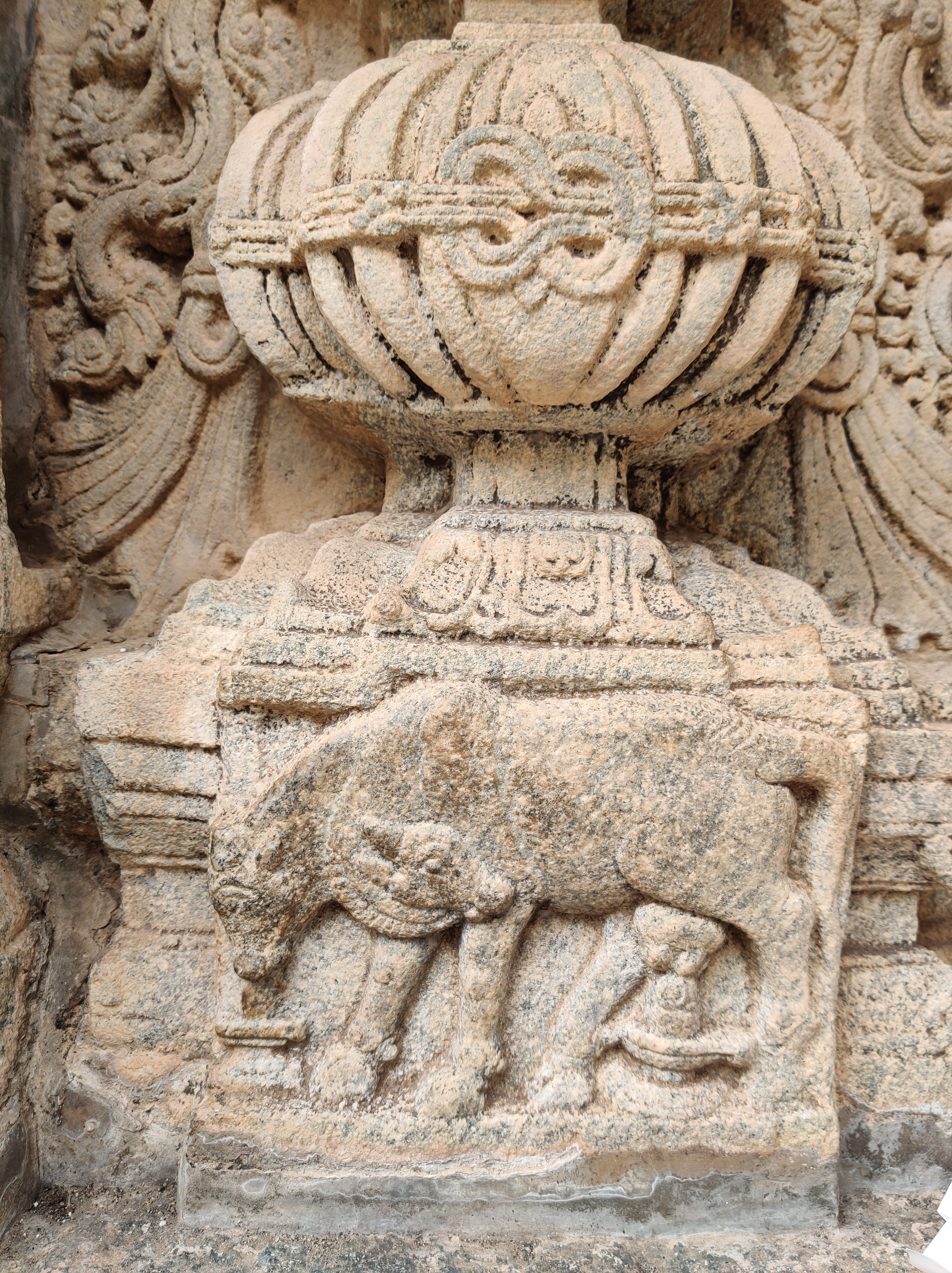
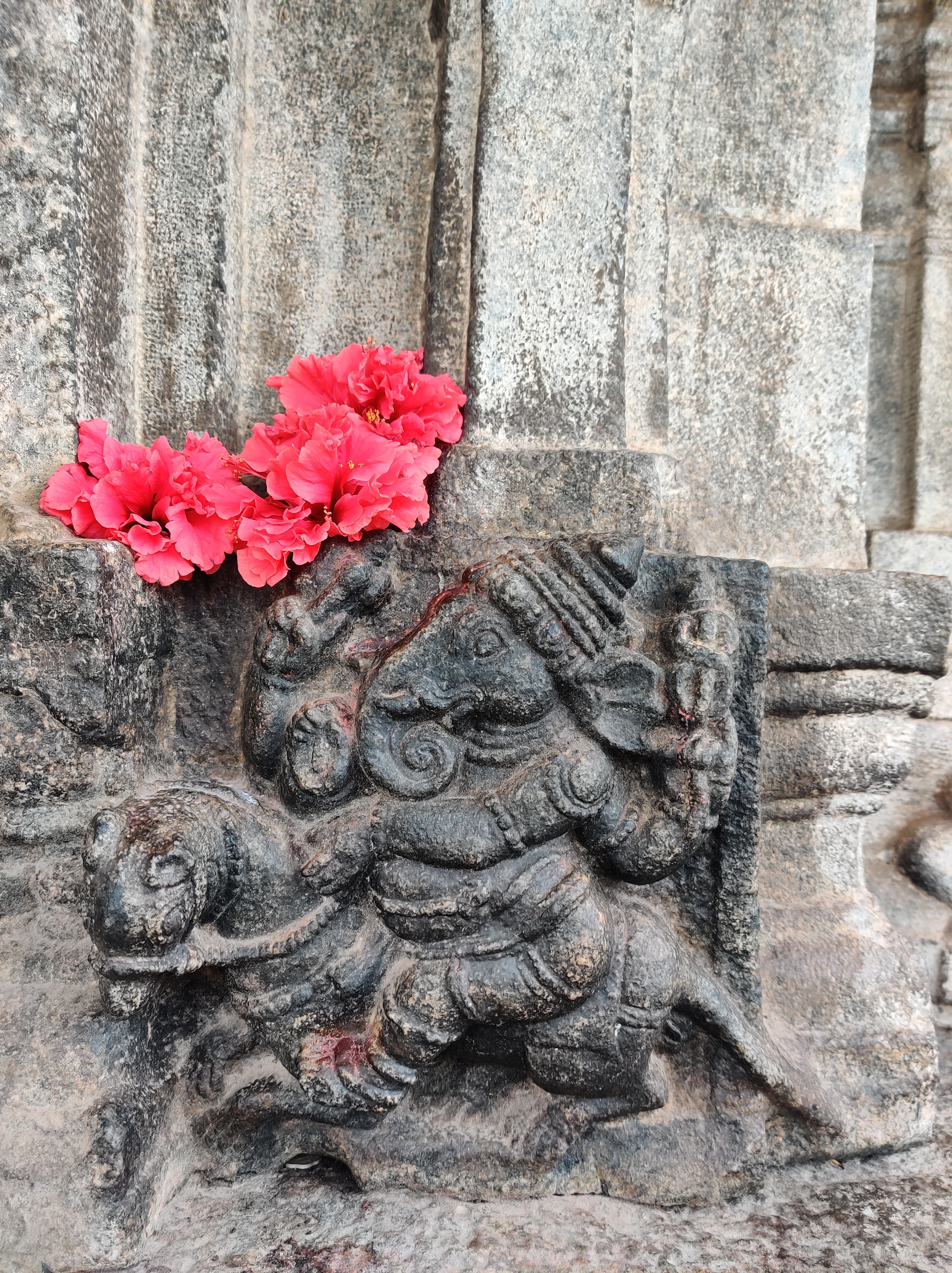
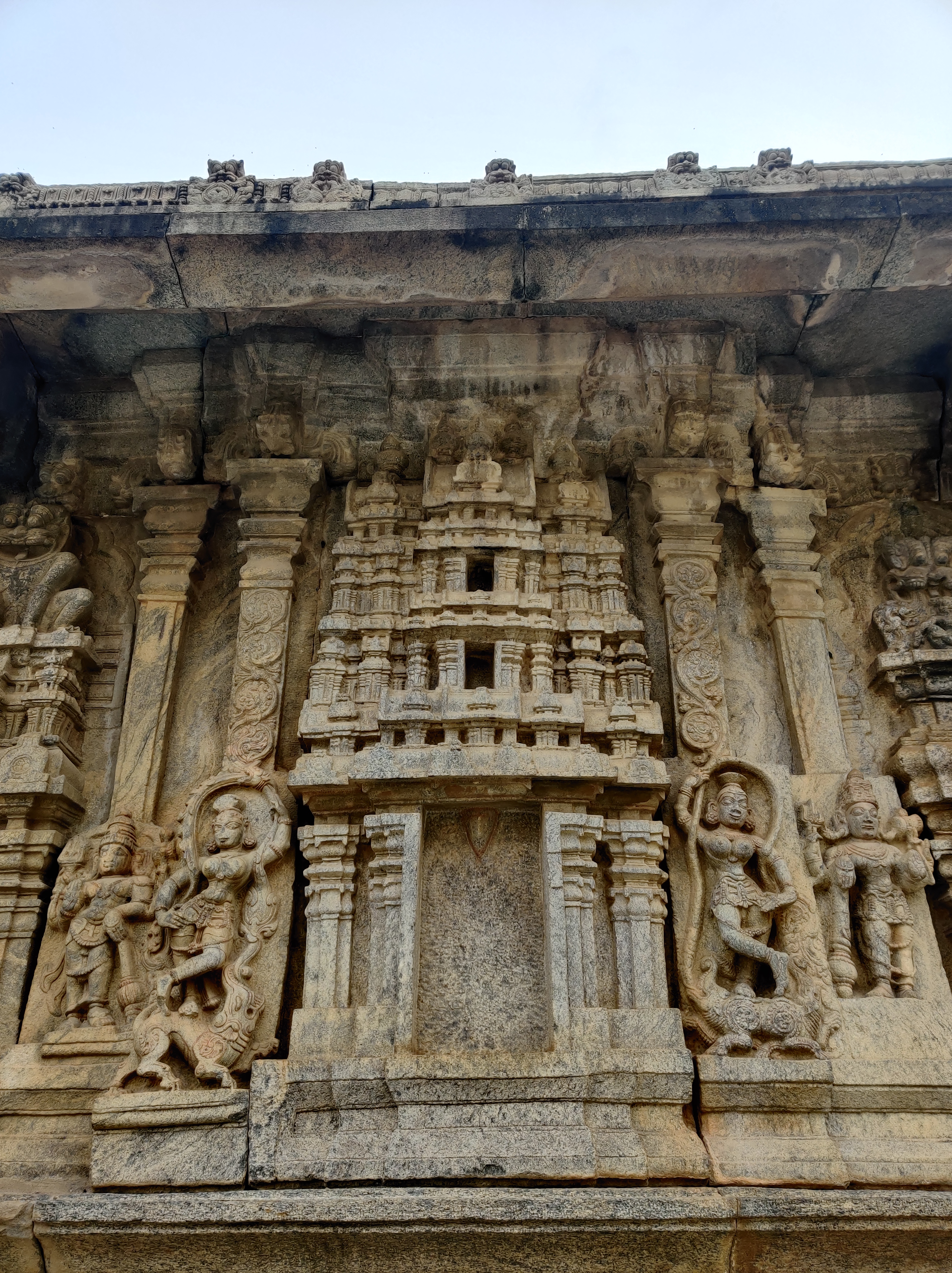
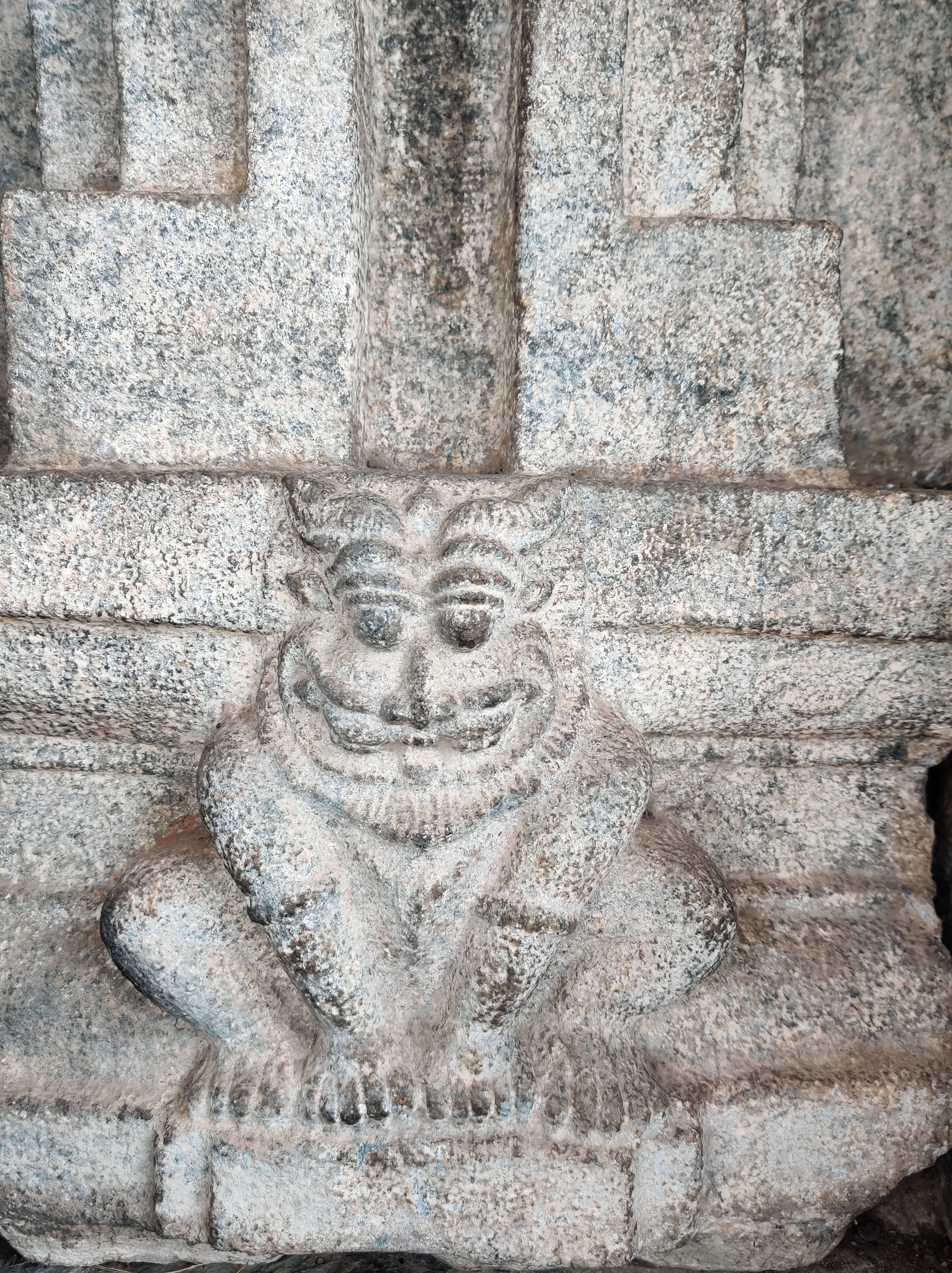
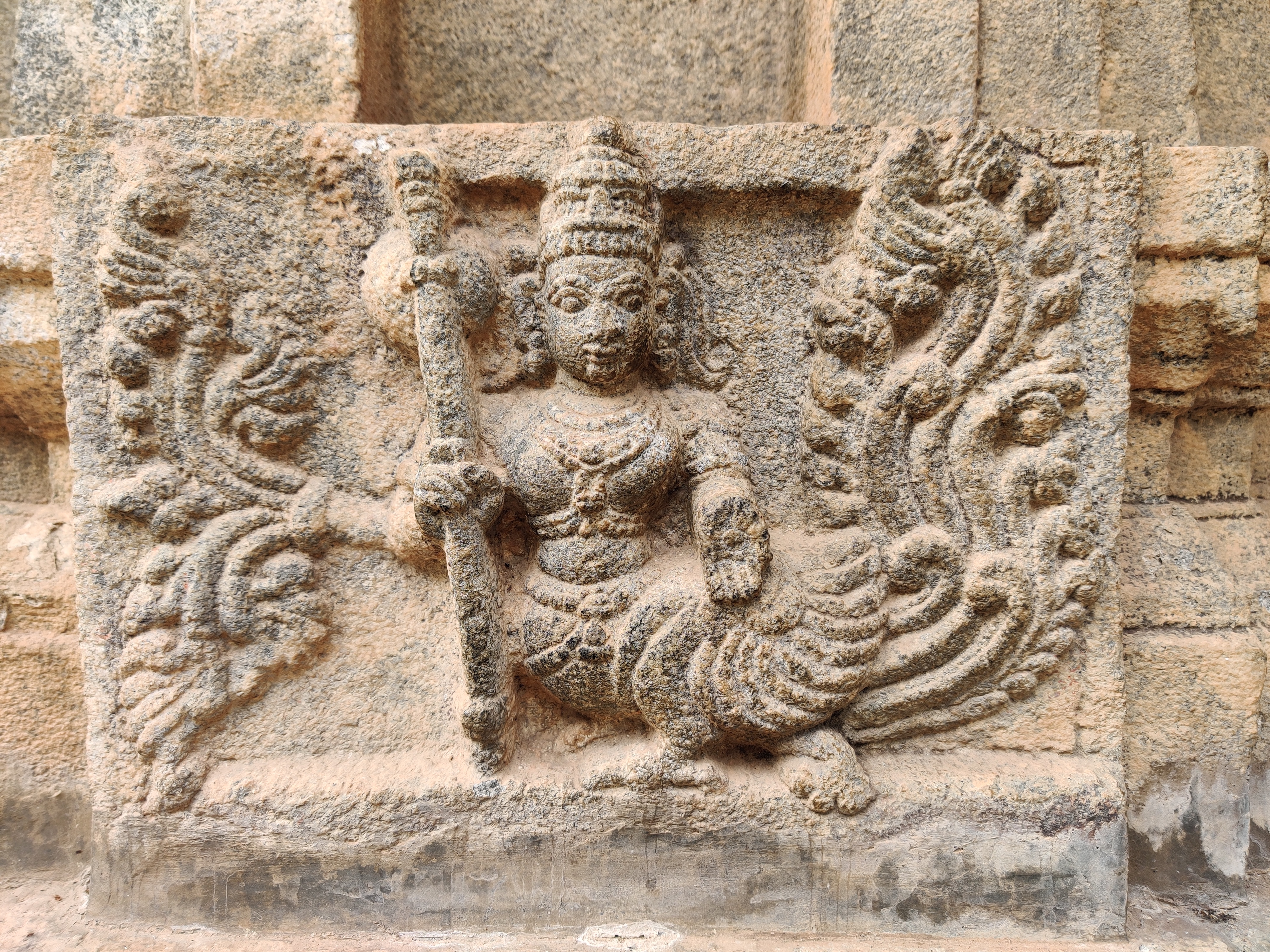
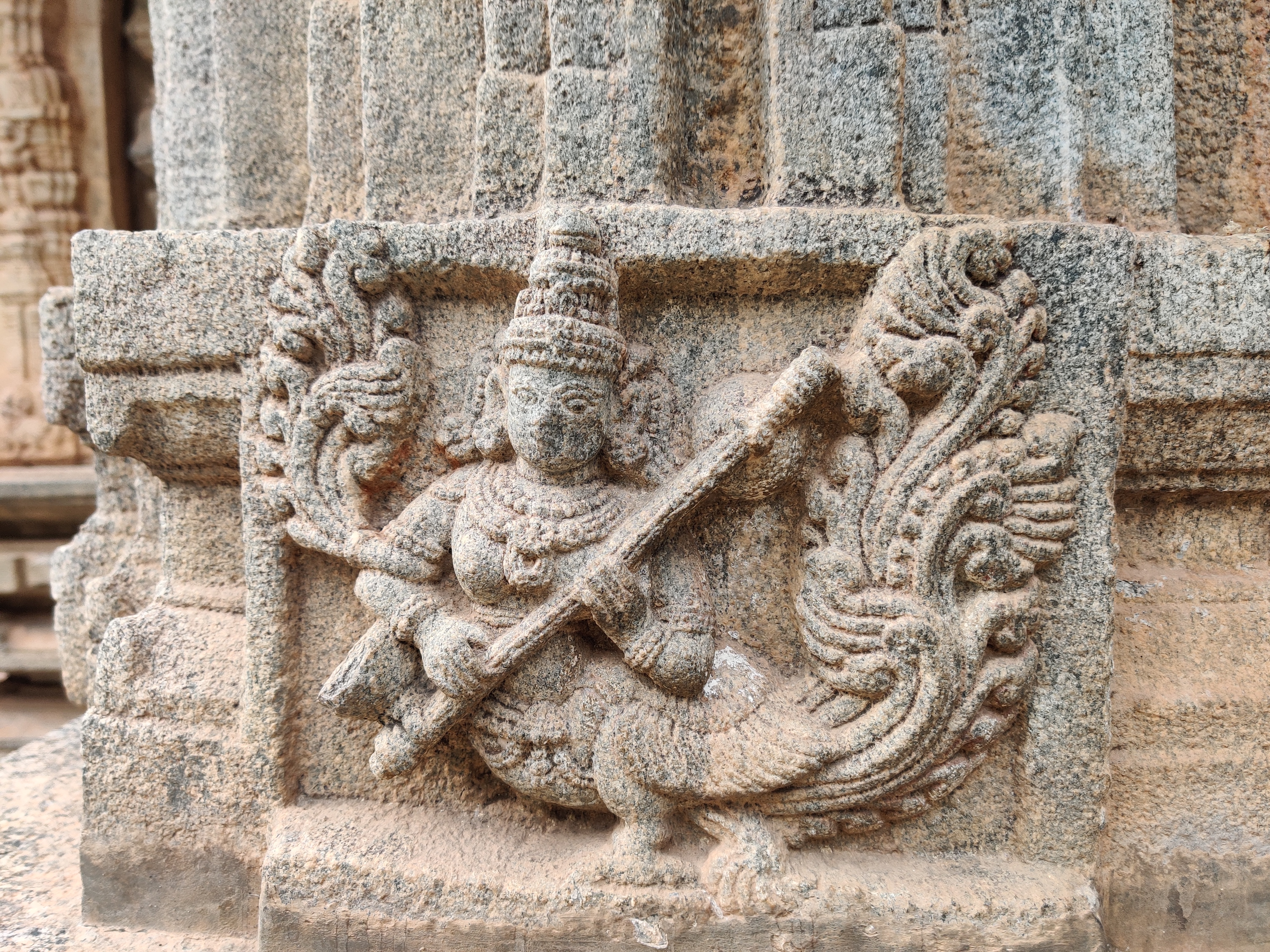
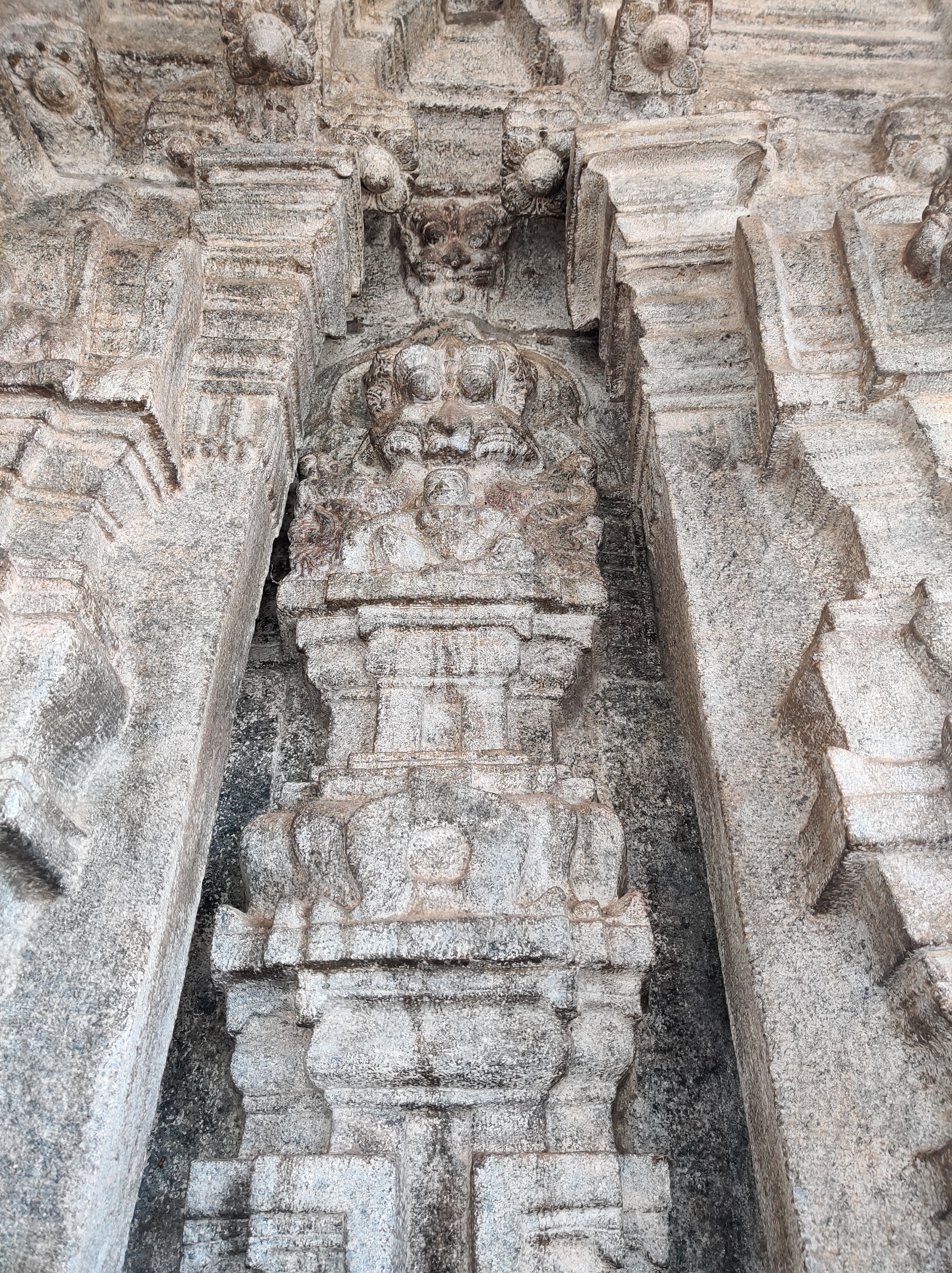
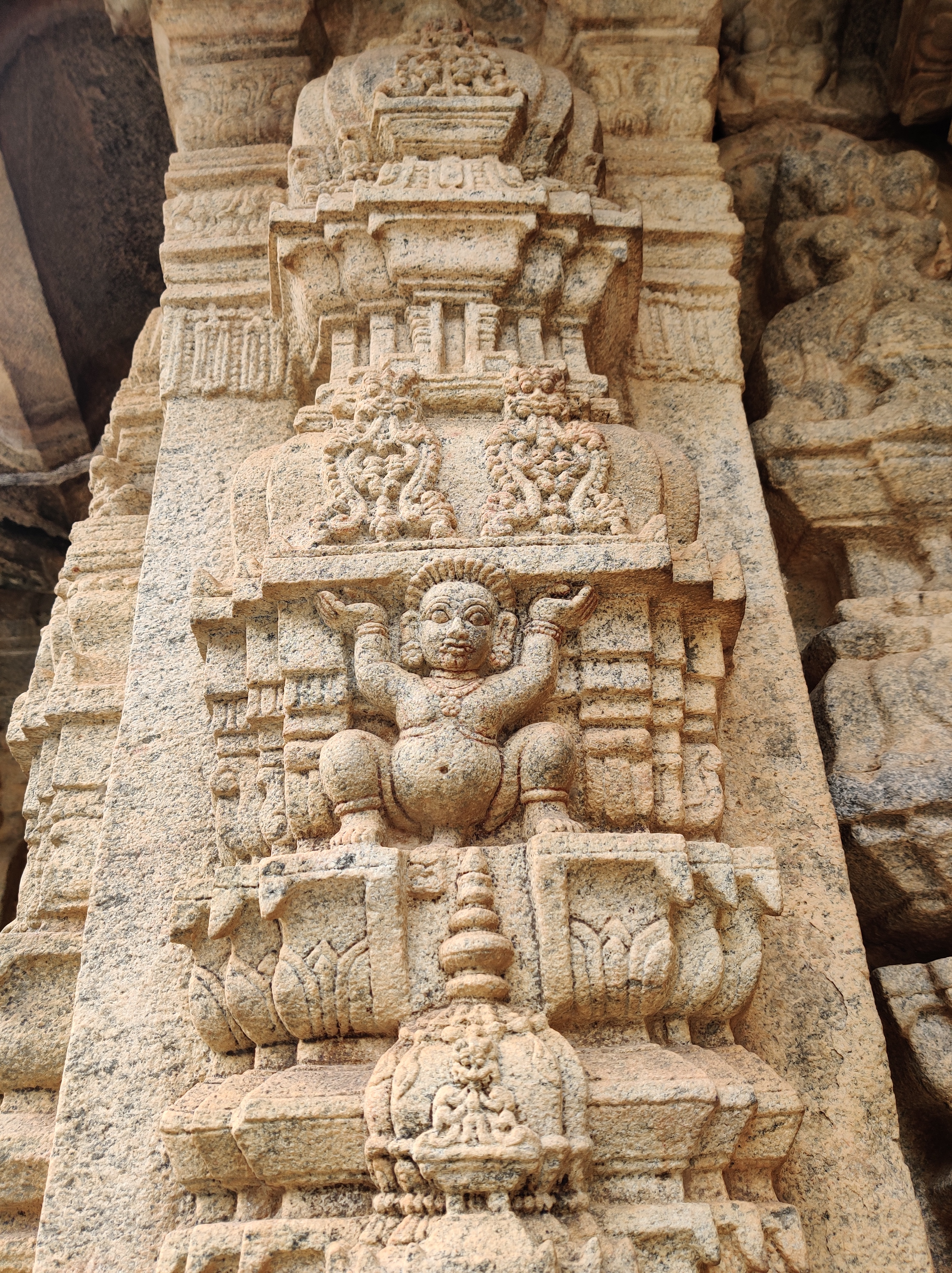
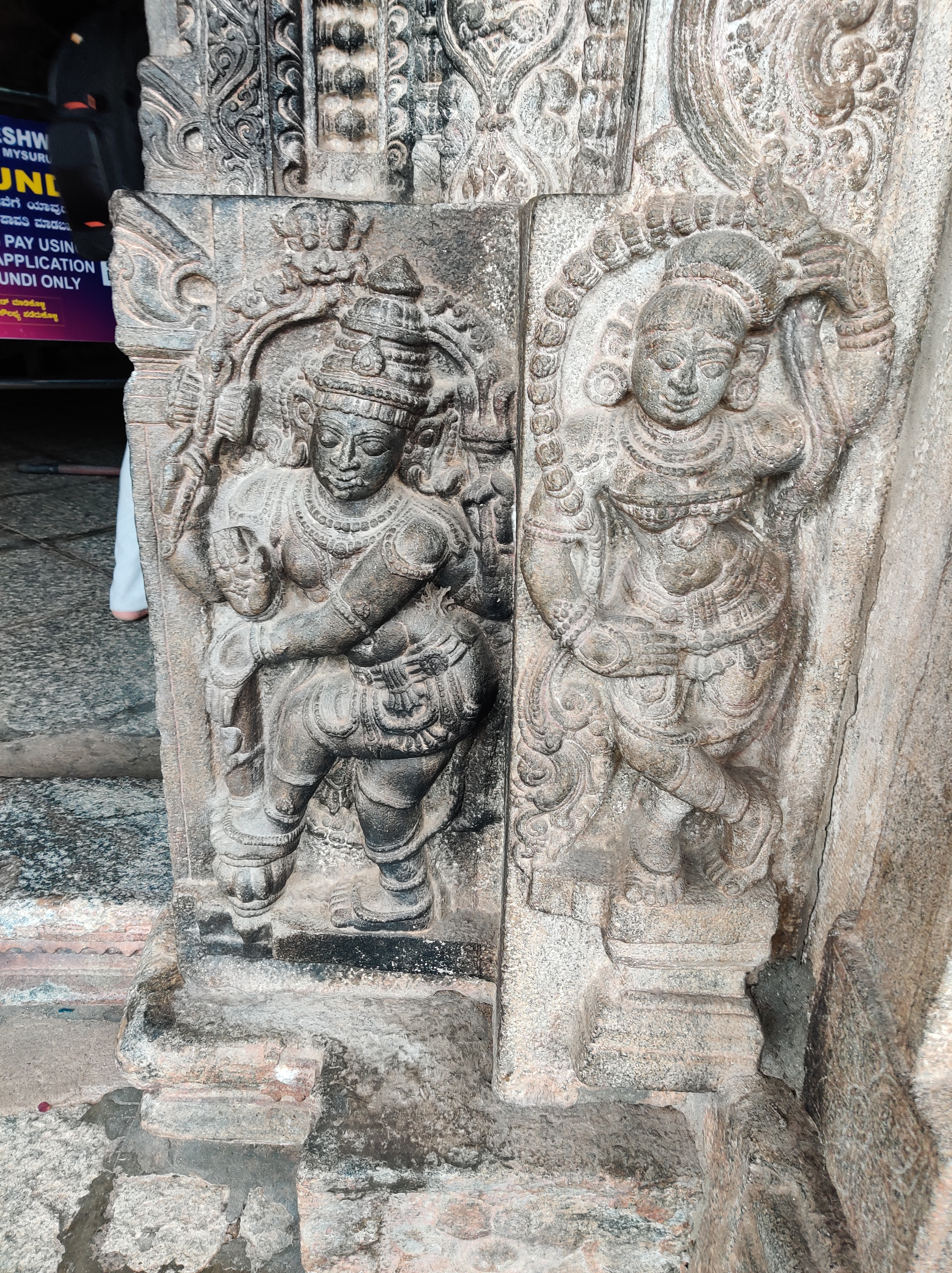
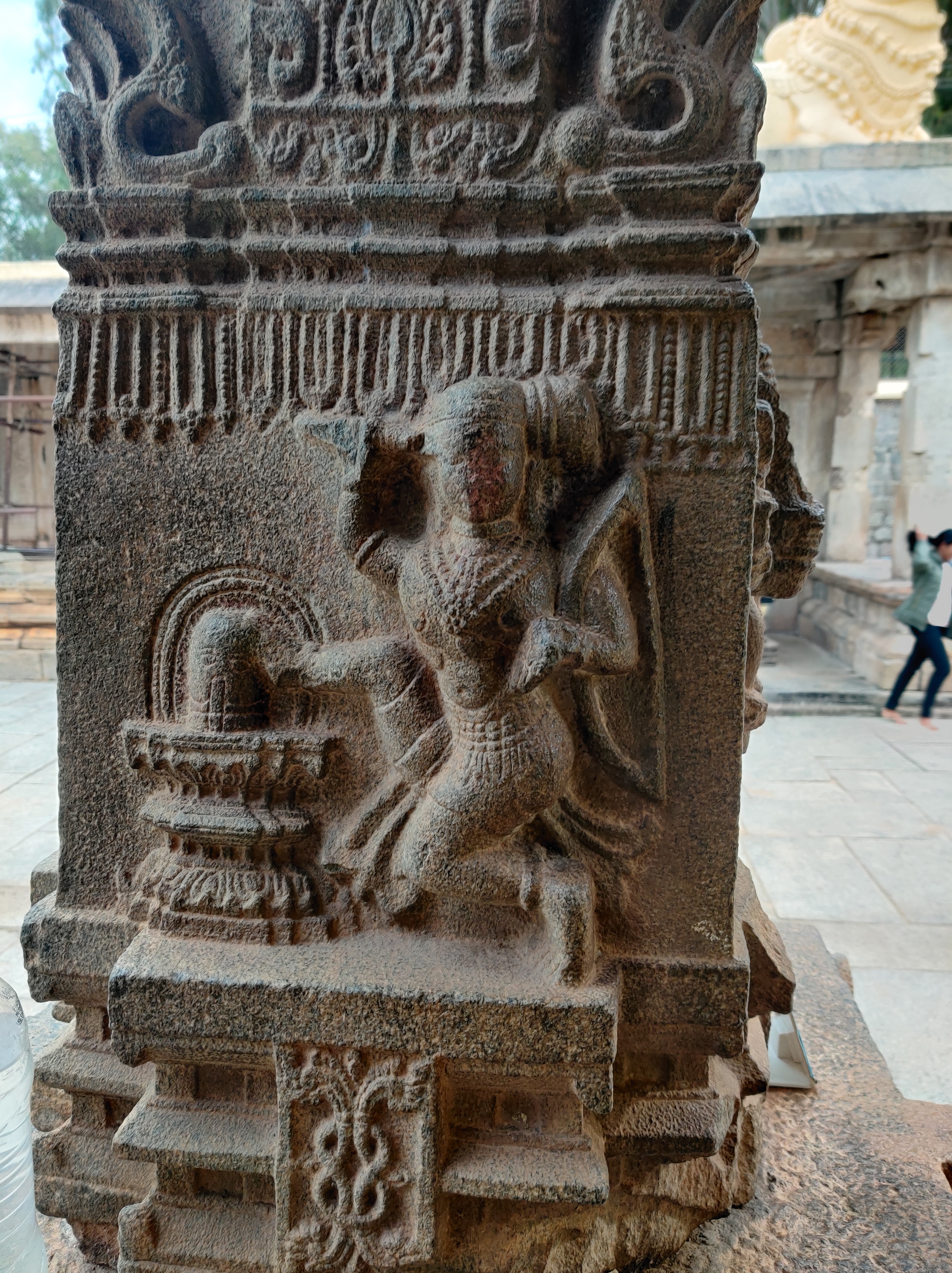
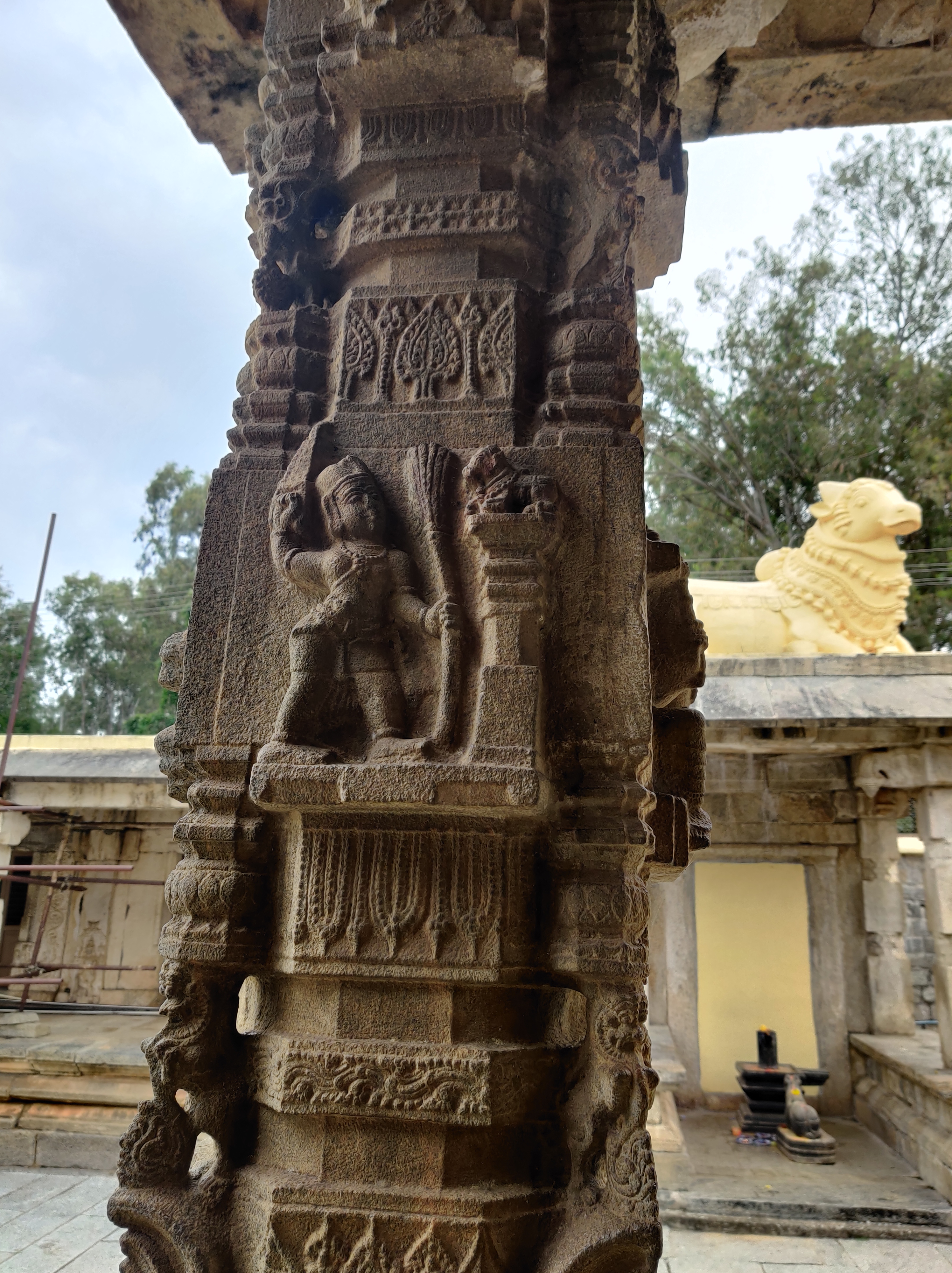
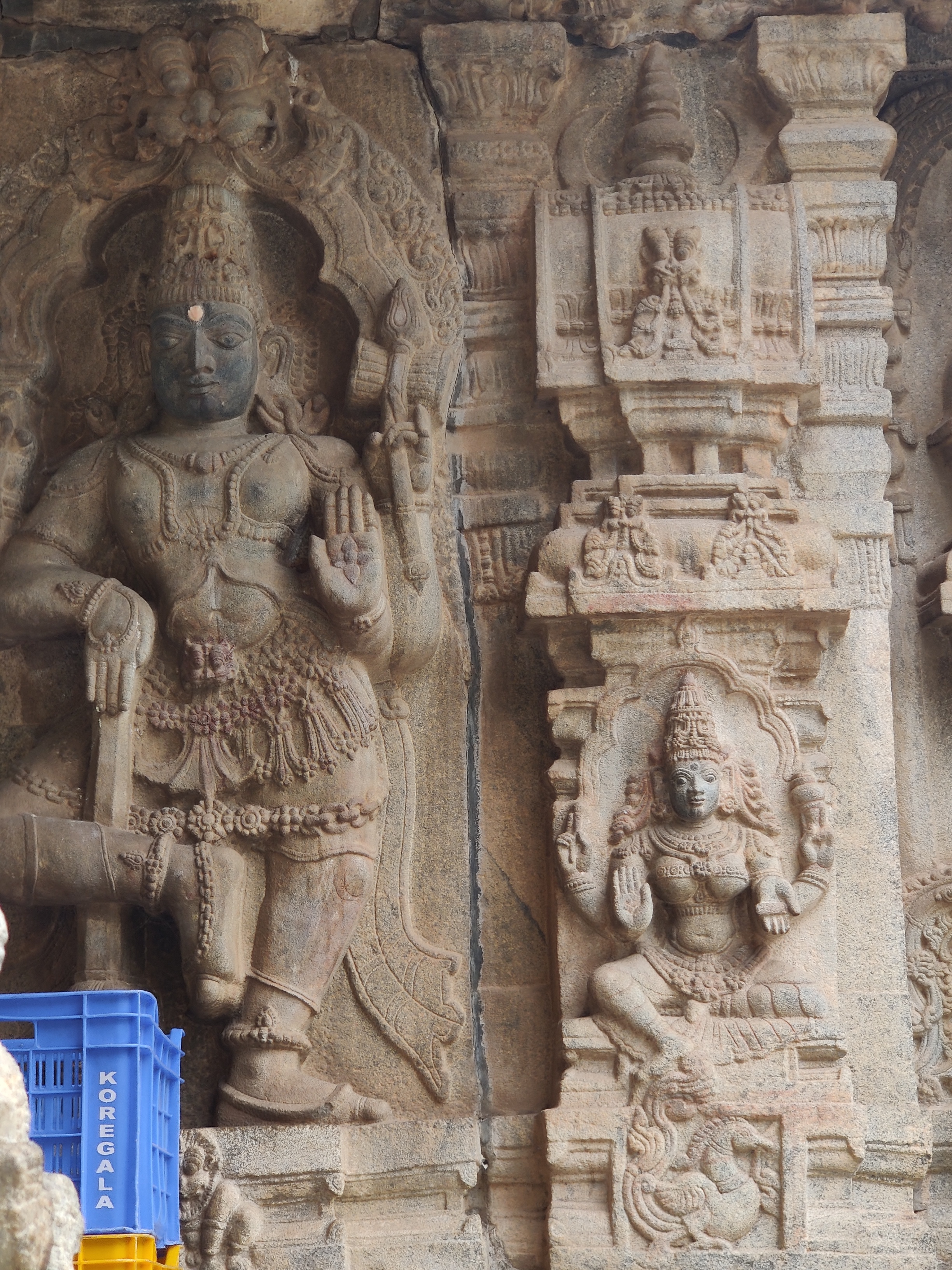

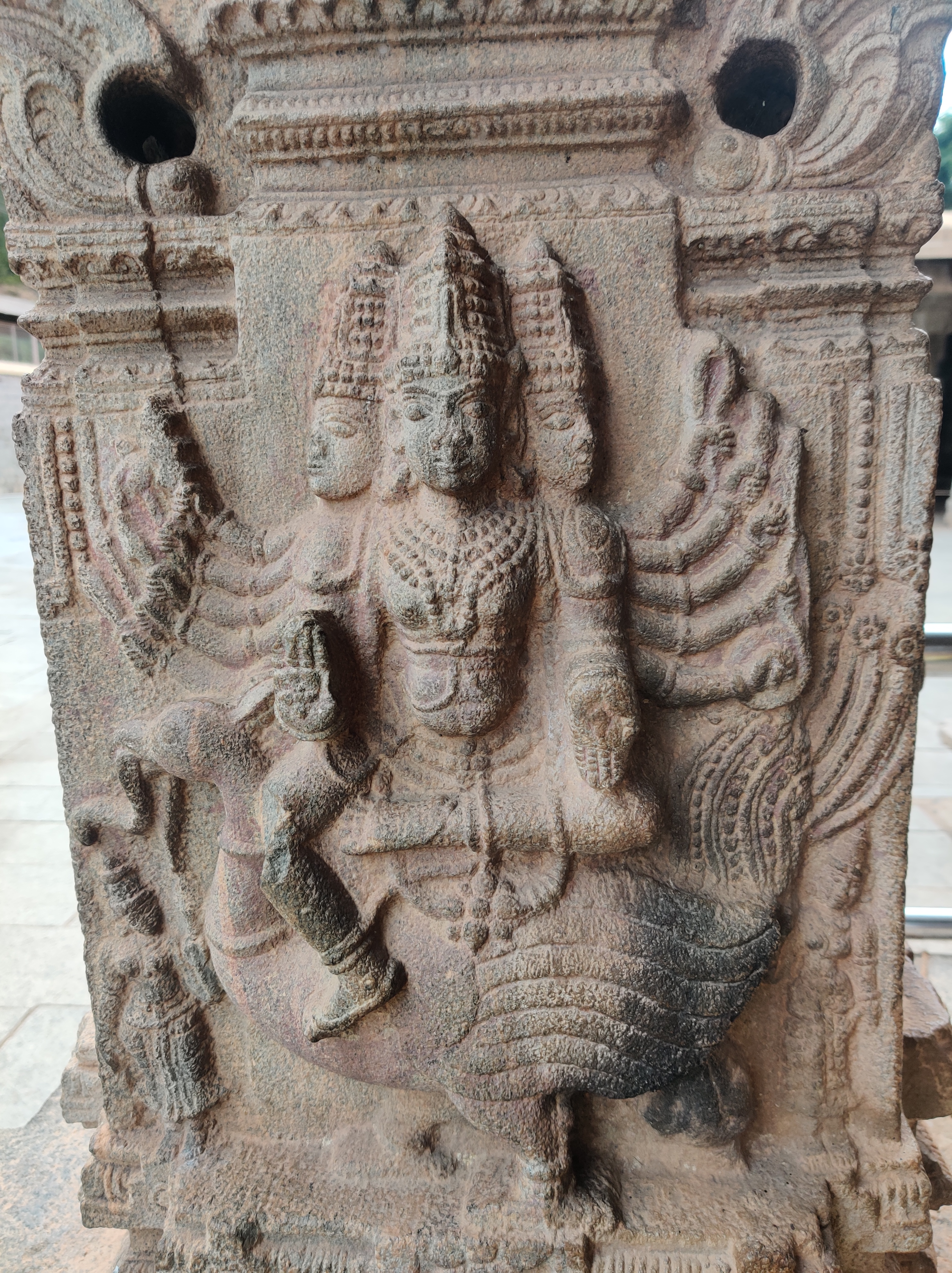
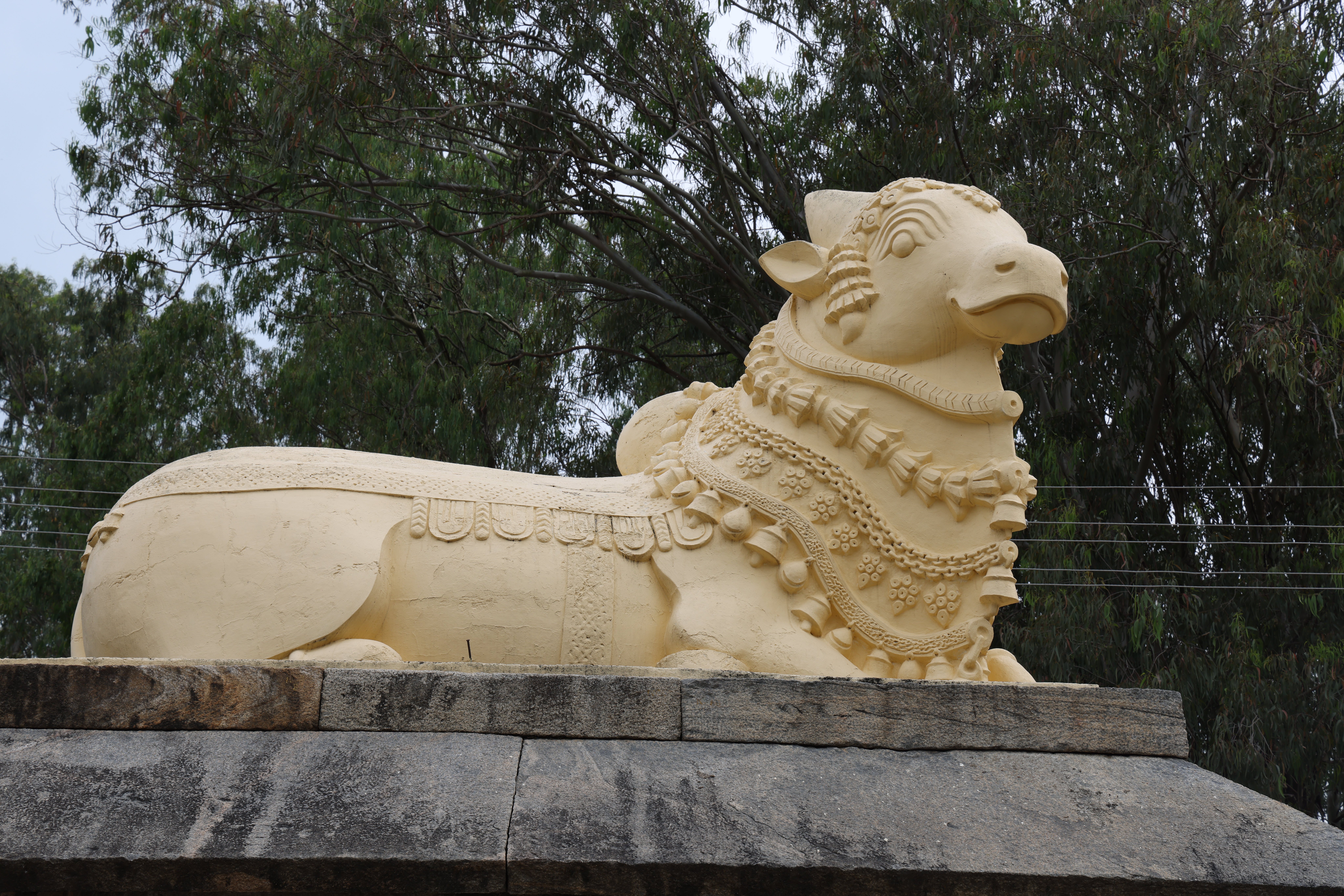
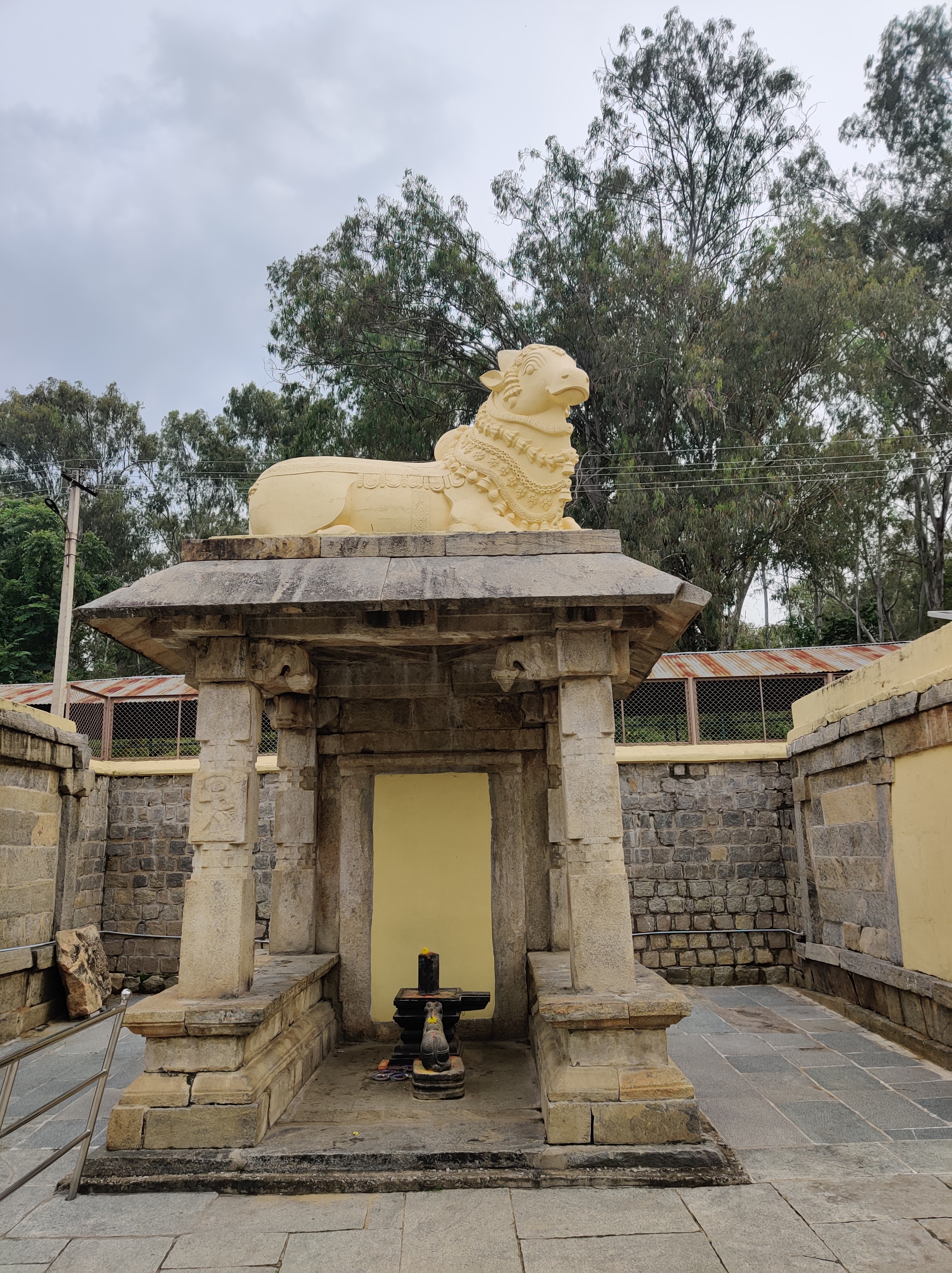
As it’s an active temple, photography of the main shrine is prohibited. However, you can observe the attractively positioned linga alongside its consort Manomaniamba. Notably, the statue of Nandi, a common feature in Shiva temples, is situated on a trapezoid structure diagonally opposite the main shrine.
Among the other four Panchalingas, Pataleswara and Maraleswara temples lie surrounded by sand dunes. The Kirti Narayana temple, positioned 20 feet below, forms a sizable complex. Interestingly, the grand entrance of the temple reminded me of Hampi’s famous rock chariot, perhaps hinting at a connection to the Vijayanagara dynasty?! However, complex histories often get lost in translation! Honestly, by the time we reached this temple, especially after trekking through sand mounds, my patience for further exploration had waned. Nevertheless, it’s said that the shrine houses an 8-foot-tall statue of Kirti Narayana, depicting Vishnu in a unique representation.
Pro Tip:
Somnathapur is at a distance of 1 hrs (35 km) away from Mysore. From Somnathapur, Talakadu is 25 kms away (40 mins). I had made Mysore as my base for 5 days owing to the Dussera celebrations, hence I decided to combine Talkadu with Somnathapur and Srirangapatnam as a day trip and rented a car.
Further readings:
Well, Poetry of Stones is going to be another active series of mine, where large temple related to pertinent dynasties (and of course my interest of making it part of the series) will be featured in detail. While the quest goes on, here are the remaining members of the series:
The Hoysala series:
- Poetry of Stones – Hoysala temple I: Somnathapur
- Poetry of Stones – Hoysala temple II: Belur
- Poetry of Stones – Hoysala temple III: Halebidu
- Poetry of Stones – Hoysala temple IV: Smaller shrines of Belur
The Vijayanagara series:
Related (and not-so related) Posts:
 The Lost Coordinates
[…] anecdote to Pondicherry’s identity is that of a courtesan. When King Krihnadevaraya of the Vijayanagar Empire was passing by Pondicherry, he chanced upon a beautiful structure lit with oil lamps and […]
LikeLike