
Legend has it that while hunting in the Sahaya mountains, Sala heard the cries of a saint shouting “Poy Sala”—meaning “Strike, Sala”—as a tiger approached during his religious rites at the temple of Goddess Vasantika in Angadi (now known as Sosevuru). Responding to the call, Sala killed the tiger, an act that was memorialized and later evolved into the name “Poysala,” which eventually became “Hoysala.” This event inspired the creation of the Hoysala emblem. Sala is recognized as the first historical figure or progenitor of the Hoysala family. For over three centuries, the Hoysalas, of Yadava descent, ruled a significant portion of southern Karnataka.
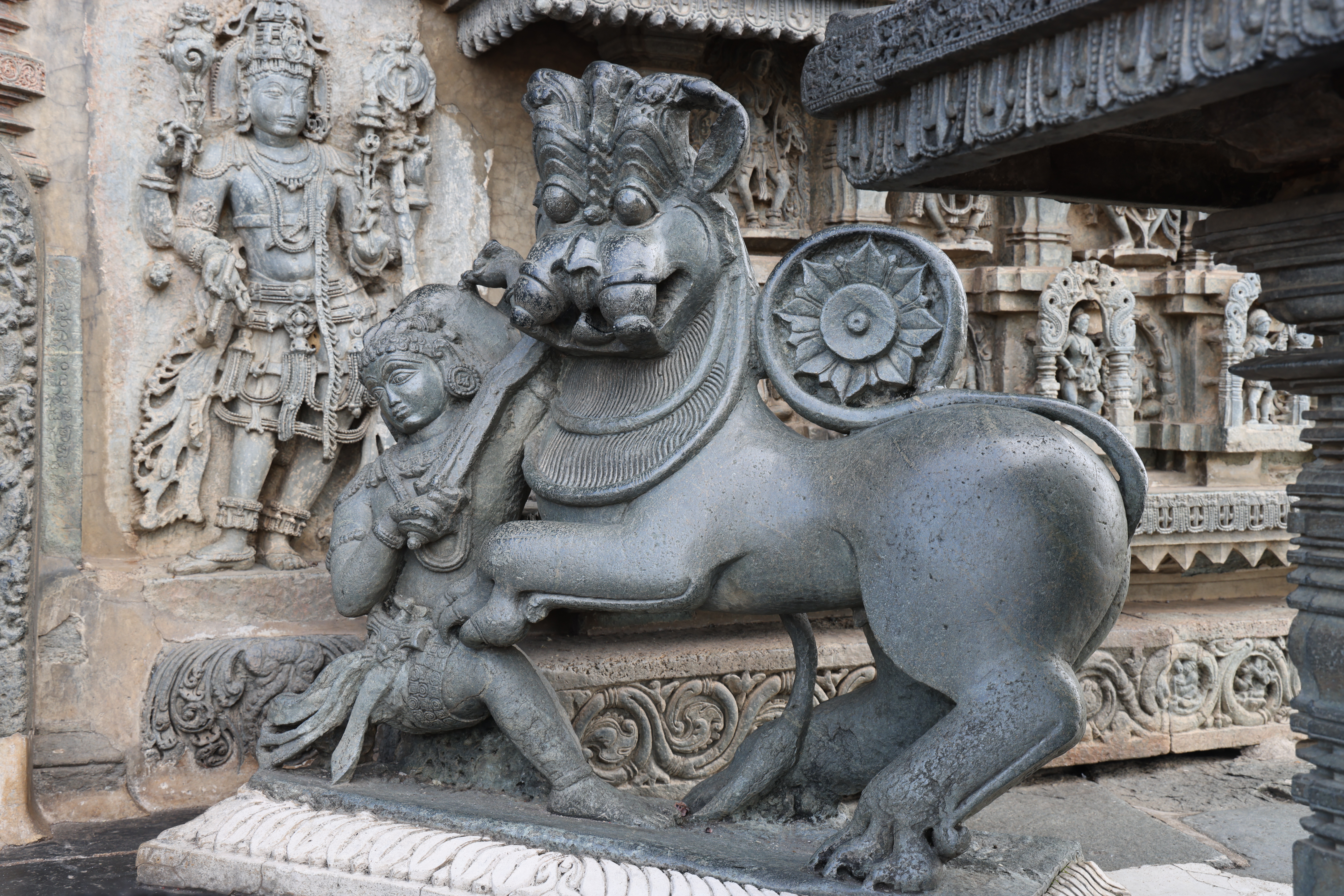
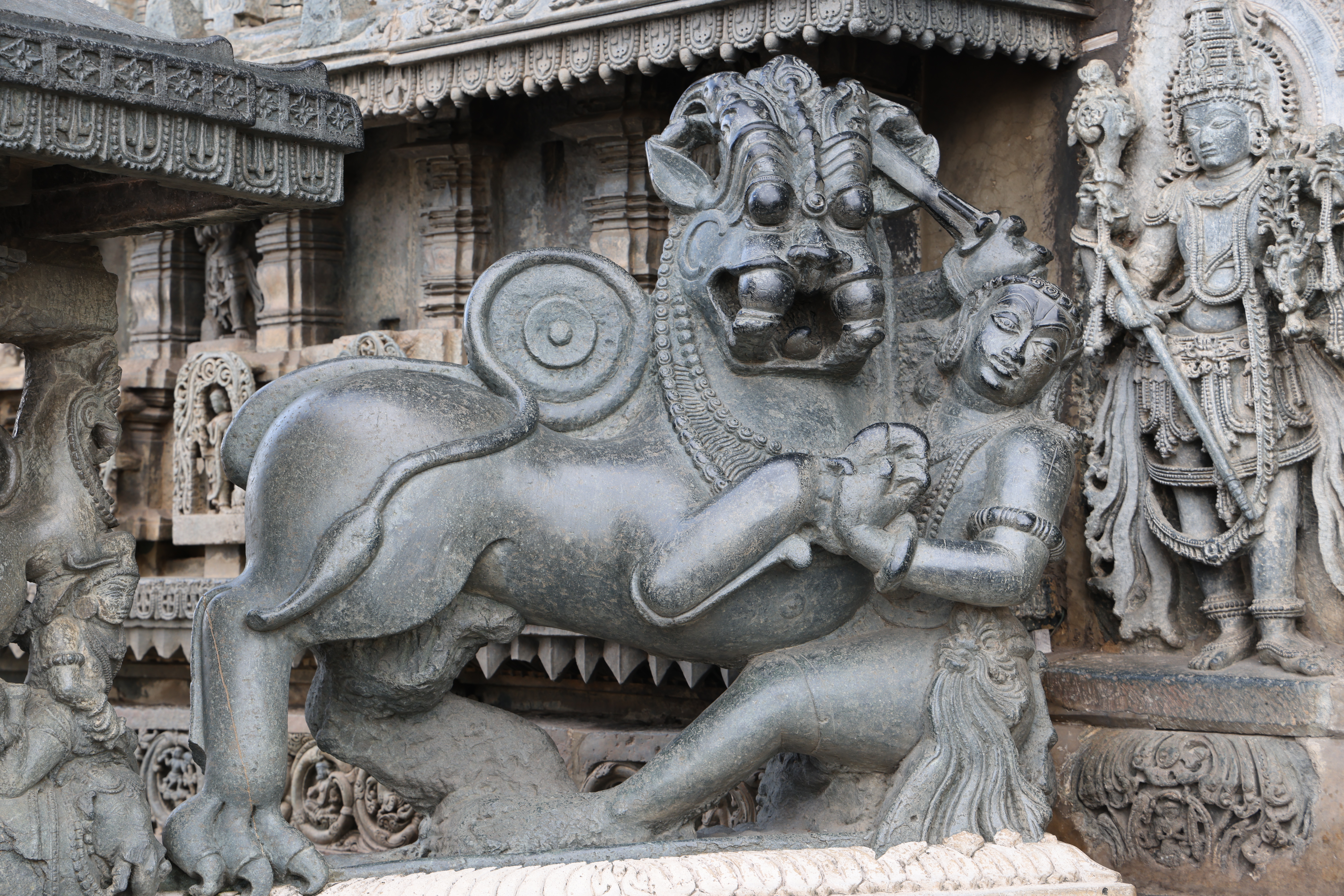
During the 12th century, under the reign of Vishnuvardhan, the Hoysala dynasty flourished politically, militarily, and culturally. This period saw the rise of Vaishnavism under the guidance of Ramanujacharya, the transformation of traditional art, and the ascendance of the dynasty, all coming together in a harmonious and remarkable era.
Architectural Charcateristics:
The Nolamba (late 8th–11th century) and Western Ganga (350 CE–1000 CE) dynasties, predecessors of the Hoysalas in Southern Karnataka, constructed Hindu and Jain temples inspired by Tamil heritage. In contrast, the Hoysala rulers were influenced by Western Chalukyan architecture, employing their craftsmen as well. Hoysala temples are richly adorned with figure sculptures, facilitated by the use of soapstone, which allows fine detailing, clarity, and durability. The Hoysala style blends southern Dravida and northern Nagara elements, known as the Vesara style.
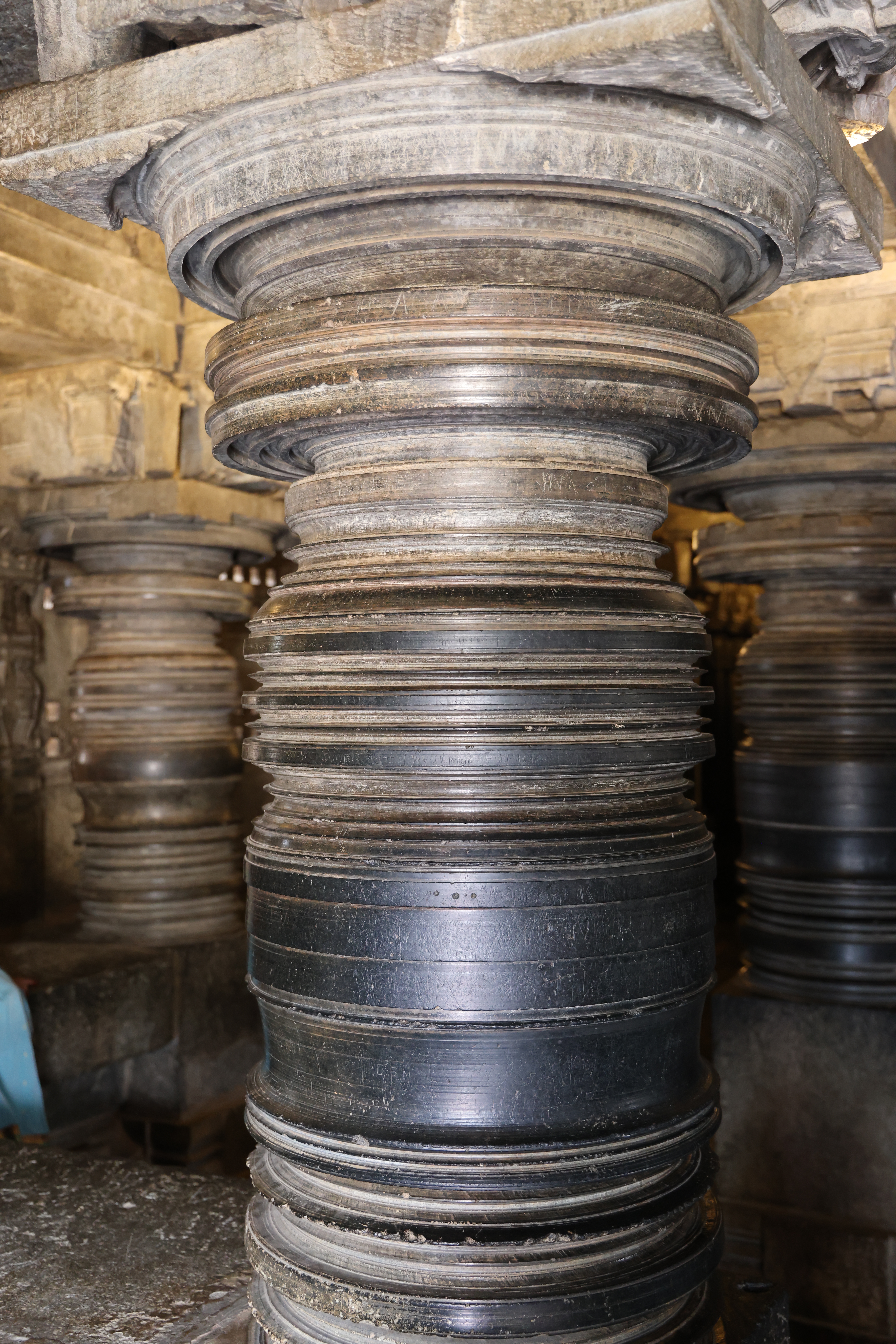
Hoysala temples typically feature a plain entrance porch supported by lathe-turned pillars, often carved with fluting and decorative motifs. They are built on a raised platform called “jagati,” which serves as a circumambulatory path due to the inner sanctum’s lack of such a feature. The jagati and the temple walls often follow a star-shaped and zig-zag pattern, respectively, a Hoysala innovation. After circumambulating the jagati, one enters the prayer hall, or mantapa, which features an ornate overhead lintel called a makaratorana. The vimana, or cella, houses the shrine of the presiding deity. Depending on the number of shrines, the temples are classified as ekakuta (one), dvikuta (two), trikuta (three), chatushkuta (four), and panchakuta (five), with most being ekakuta, dvikuta, or trikuta.
This post begins a multi-part series dedicated to this unique symphony of human ingenuity.
The Kesava Temple, Somnathapur

Somanathapur, once known as Gangavadi under the Ganga dynasty of Talakad, came under the rule of the Cholas of Adigaiman in the 11th century. It later became part of the Hoysala dynasty under Vishnuvardhana in 1116 AD. Following the fall of the Hoysalas, the region was taken over by the Vijayanagara Empire and finally the Wodeyars of Mysore. In 1311, Malik Kafur, a general under Delhi Sultanate ruler Alauddin Khilji, plundered the temple during his southern expedition, leaving it badly damaged. Due to the damaged idols in the sanctum, this is no longer an active temple.
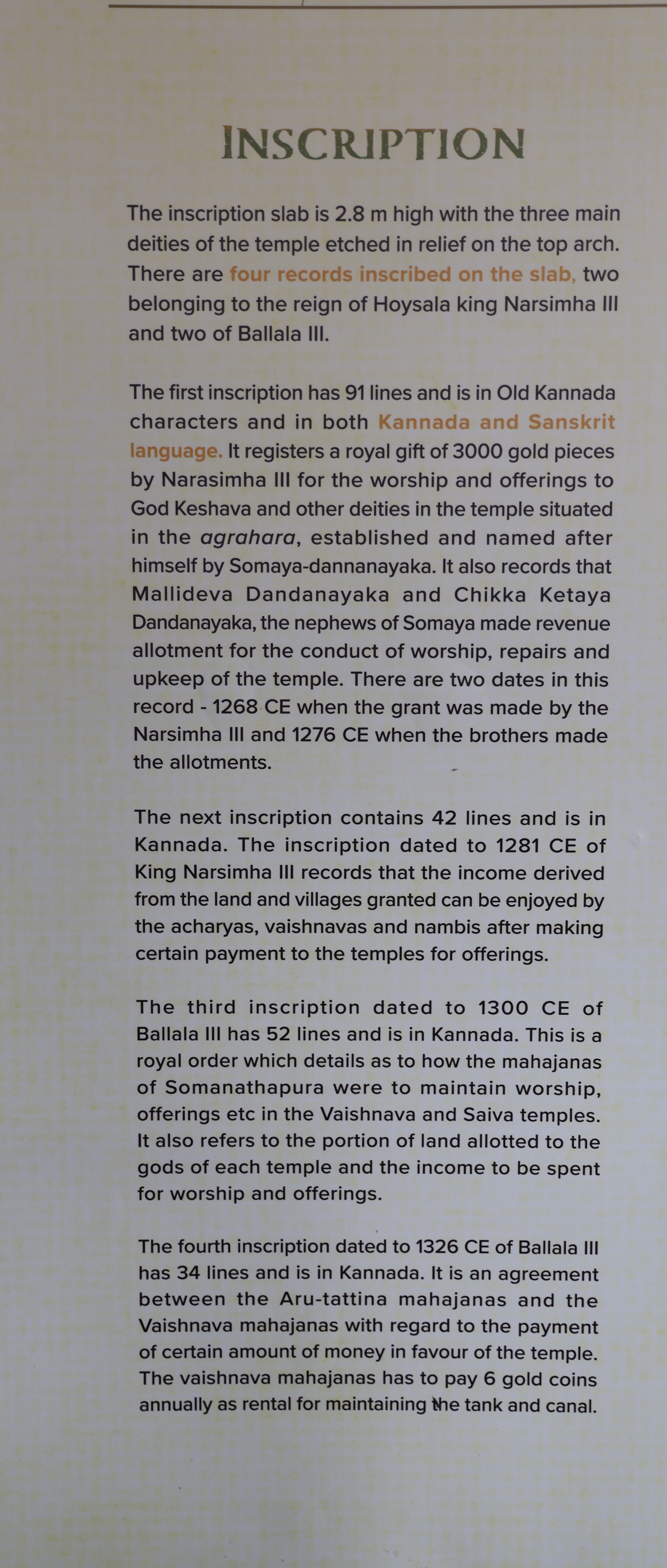
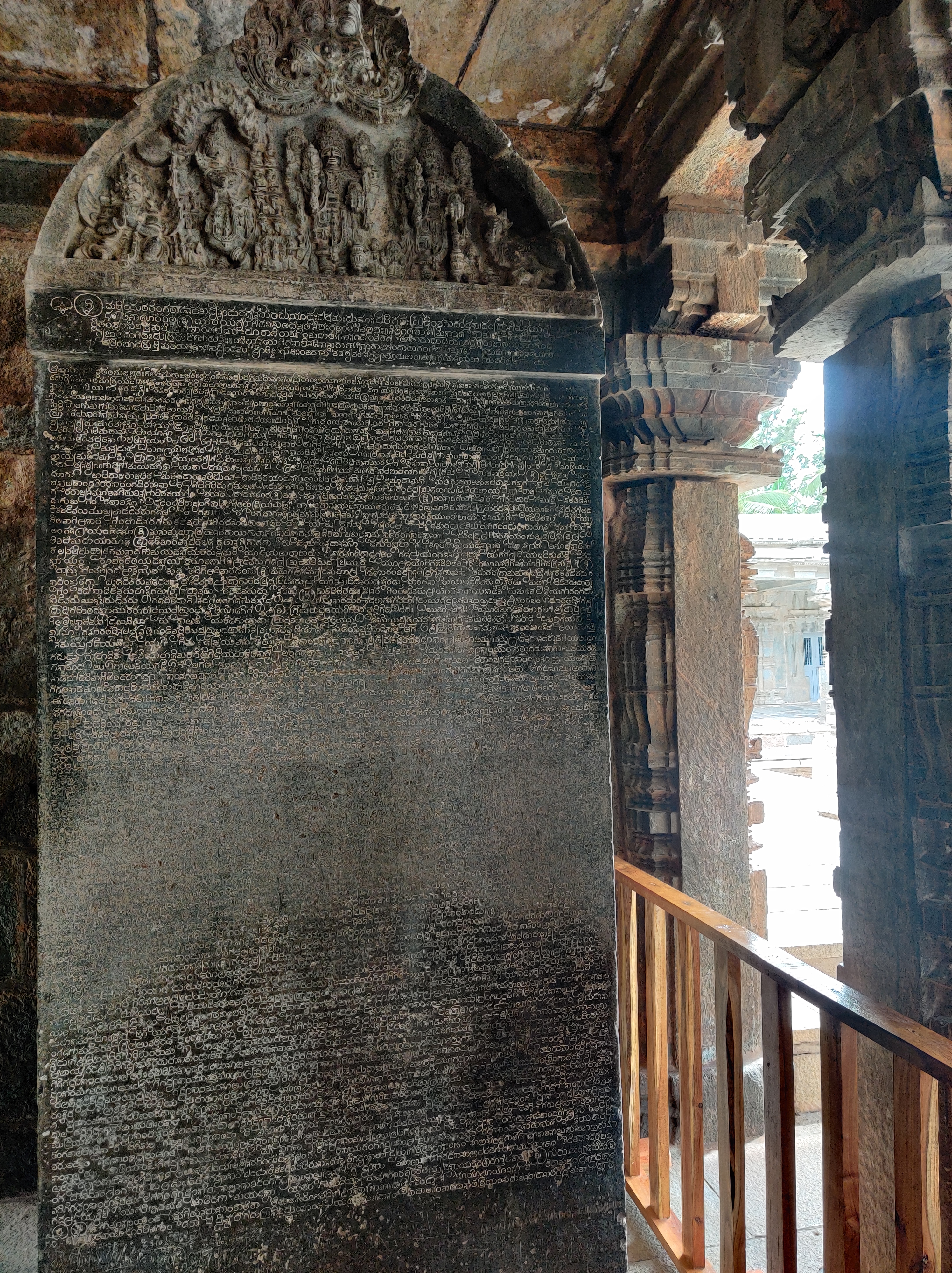
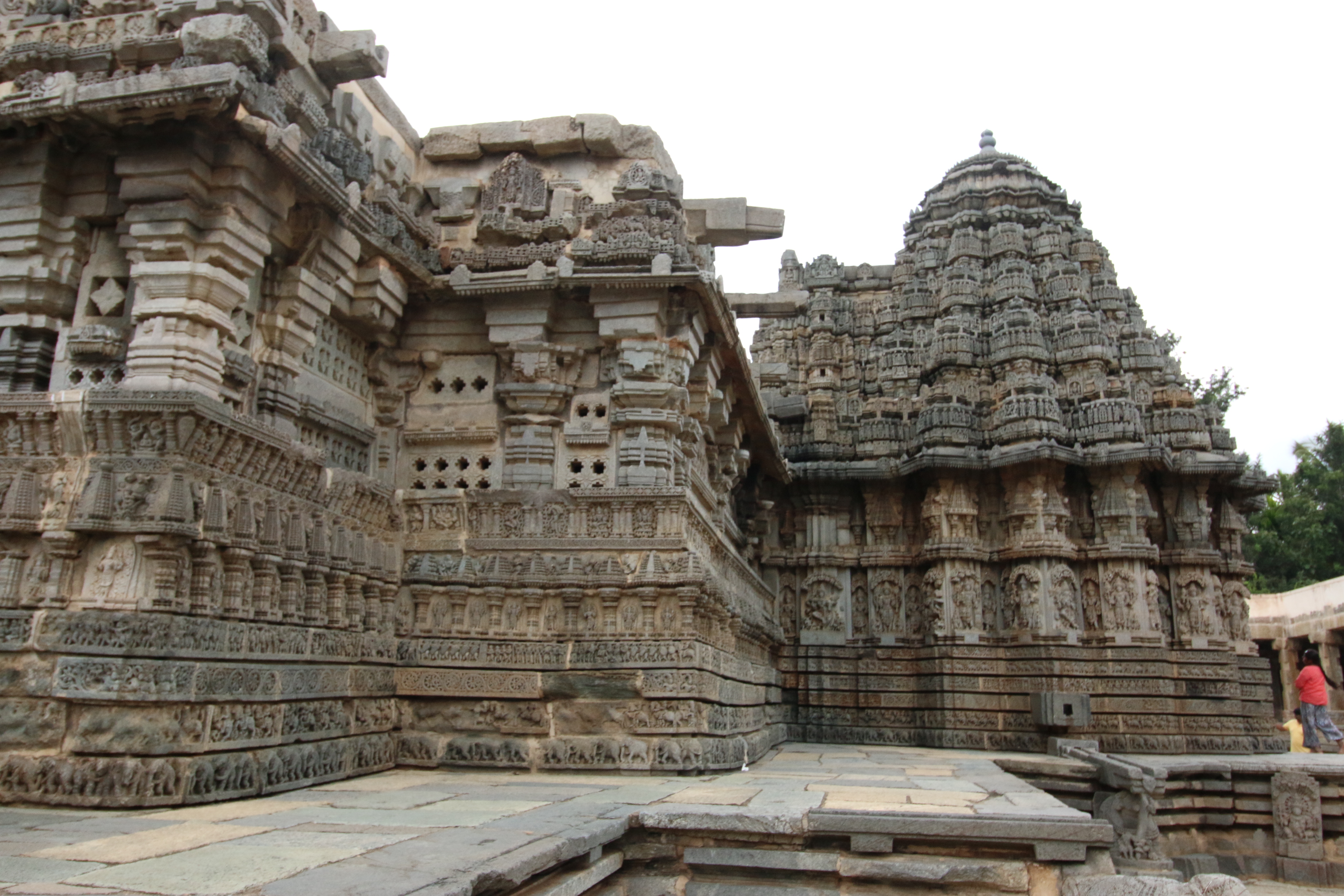
An inscription found in this temple states that Somanatha, a celebrated general of Hoysala king Narasimha III (A.D. 1254-1291), established the village as an agrahara (a rent-free settlement for Brahmins) and named it after himself. He commissioned this temple in A.D. 1268, dedicating it to Lord Prasanna Chennakesava, a form of Lord Vishnu. Though smaller and less famous than other Hoysala temples, it is a tribute to intricate sculpture and the star-shaped floor plan typical of Hoysala architecture. Measuring approximately 215 ft by 177 ft, the main temple is surrounded by a pillared cloister. There are fifty-six empty cells in the cloister mandapa, which once housed sixty-four subshrines with various forms of Lord Vishnu.
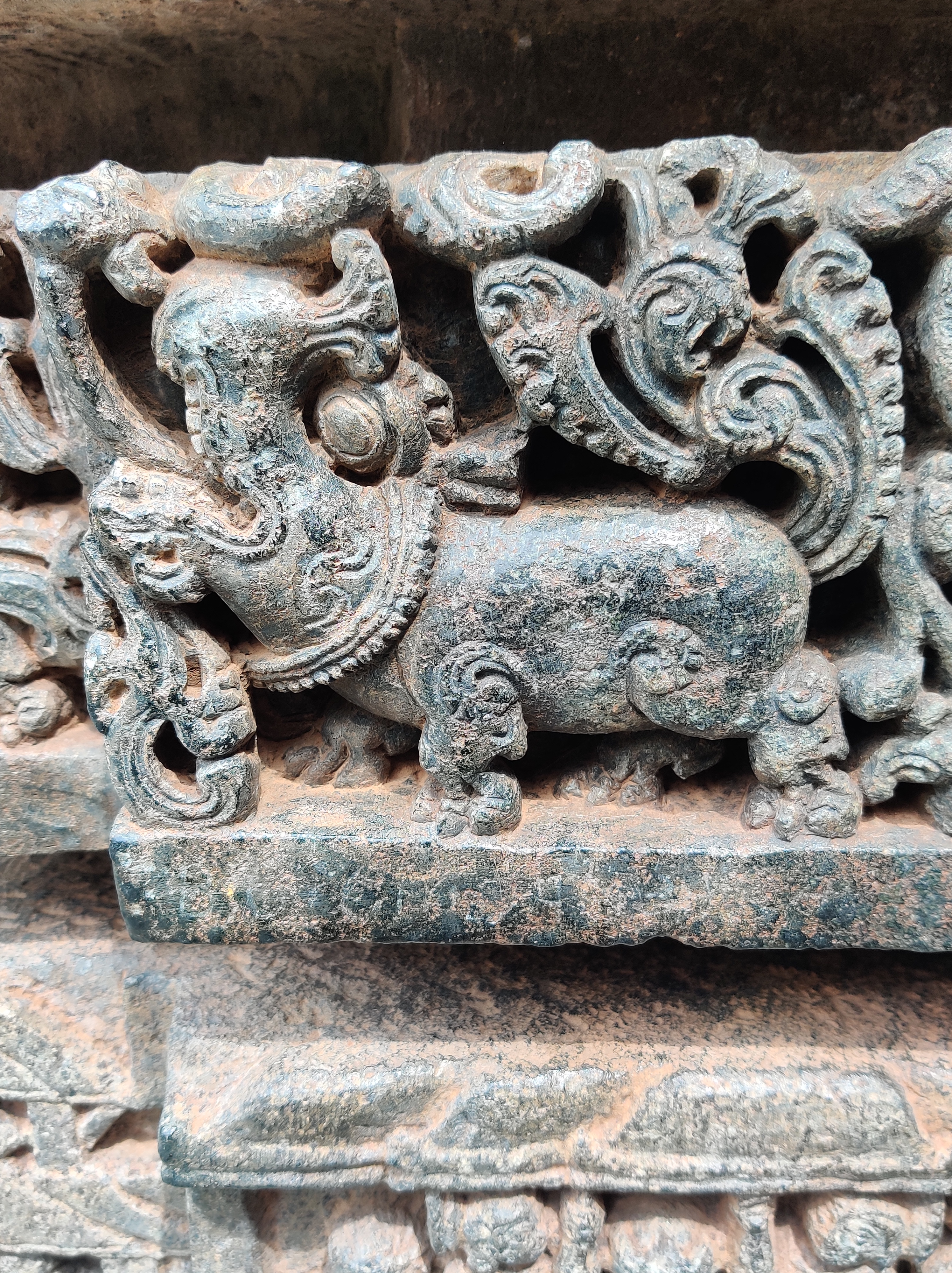
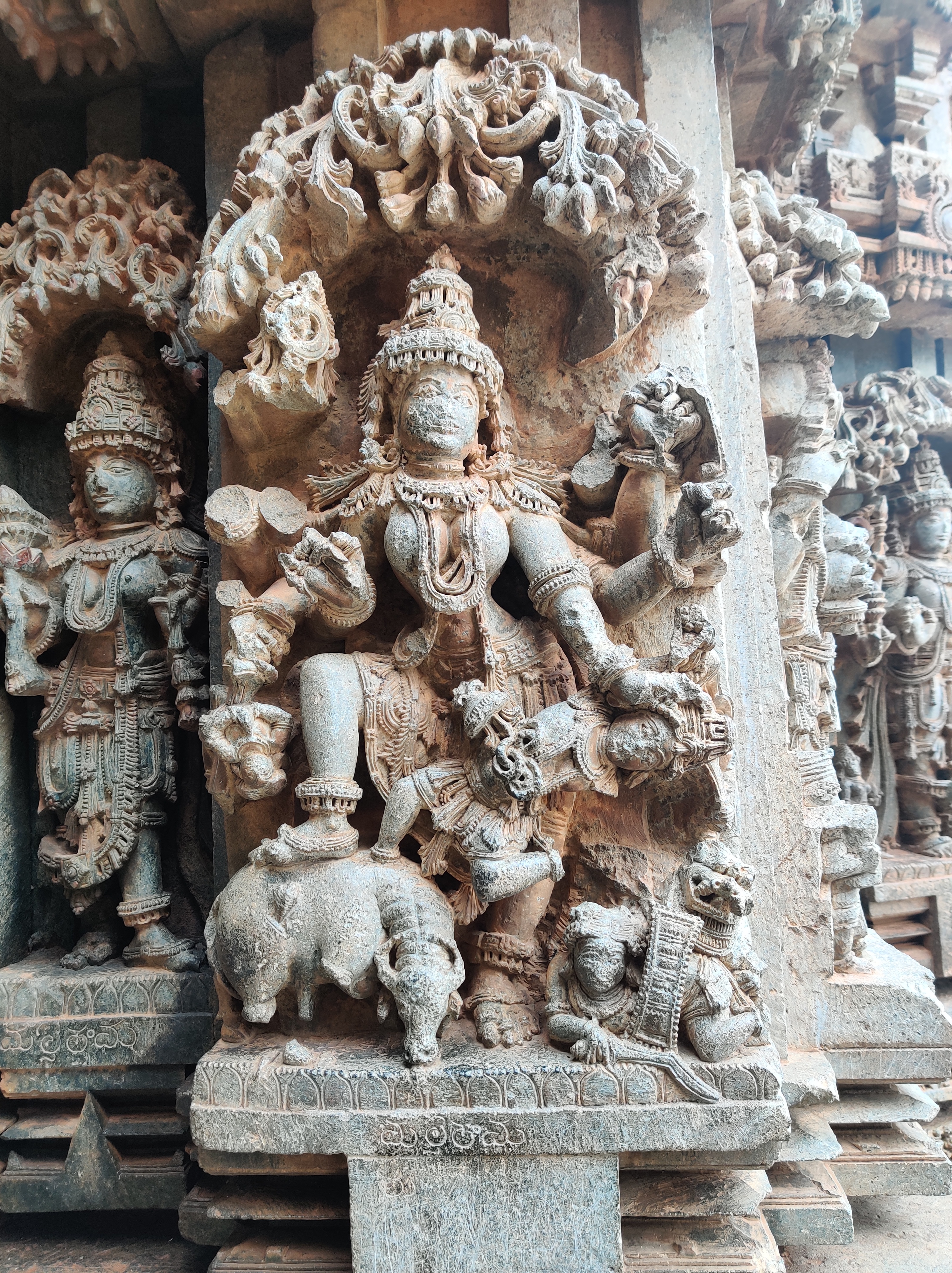
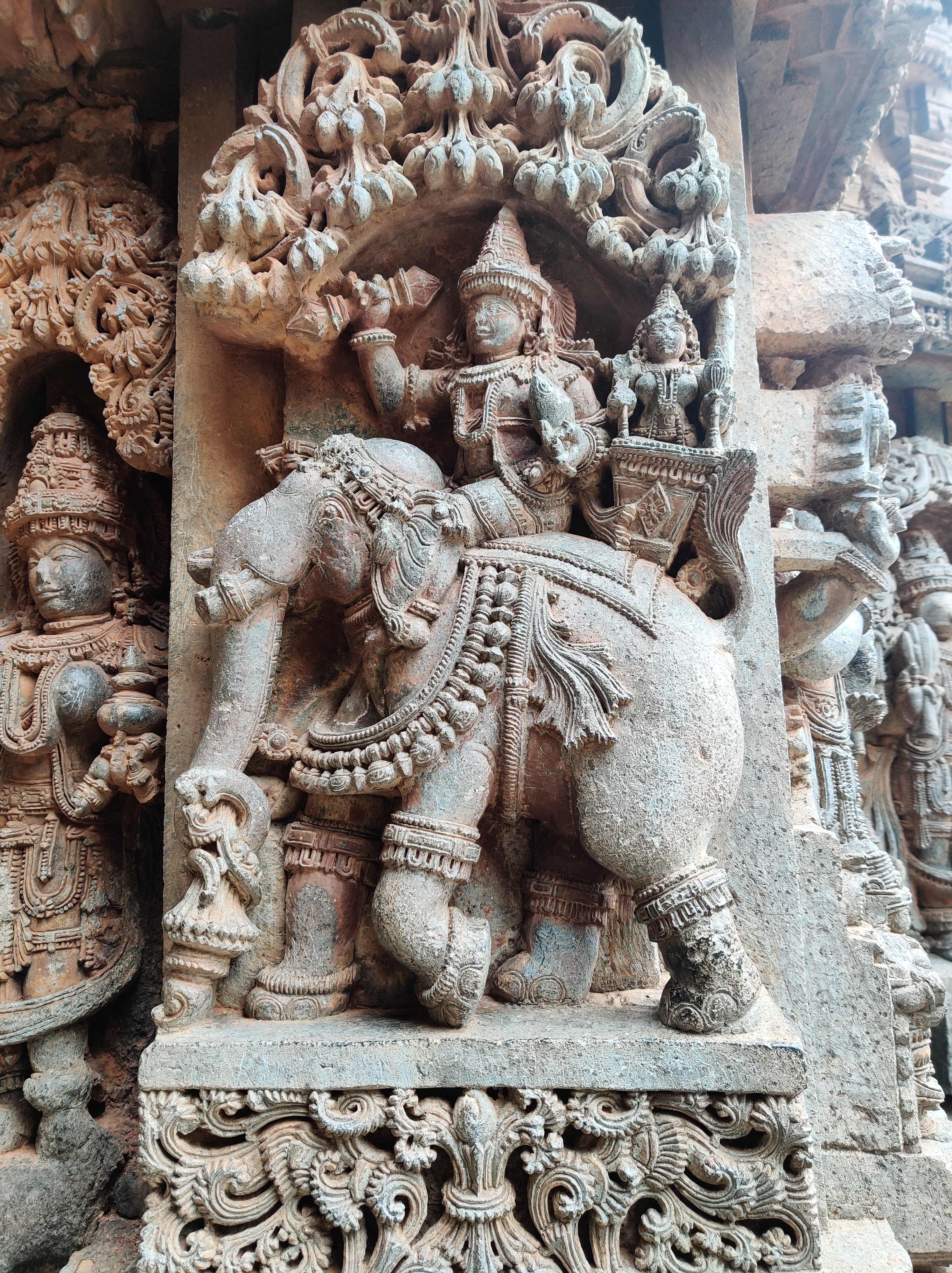
The outer walls feature pillars with sculptural reliefs of gods, goddesses, and other deities, totaling 194 large images (114 female and 80 male). Some sculptures have inscriptions in Halegannada (old Kannada script) at their base, believed to be the signatures of Ruvari Mallithamma, the era’s most prolific sculptor. The exquisite workmanship, without a particular order or storyline, allows visitors to appreciate each piece individually without feeling overwhelmed.
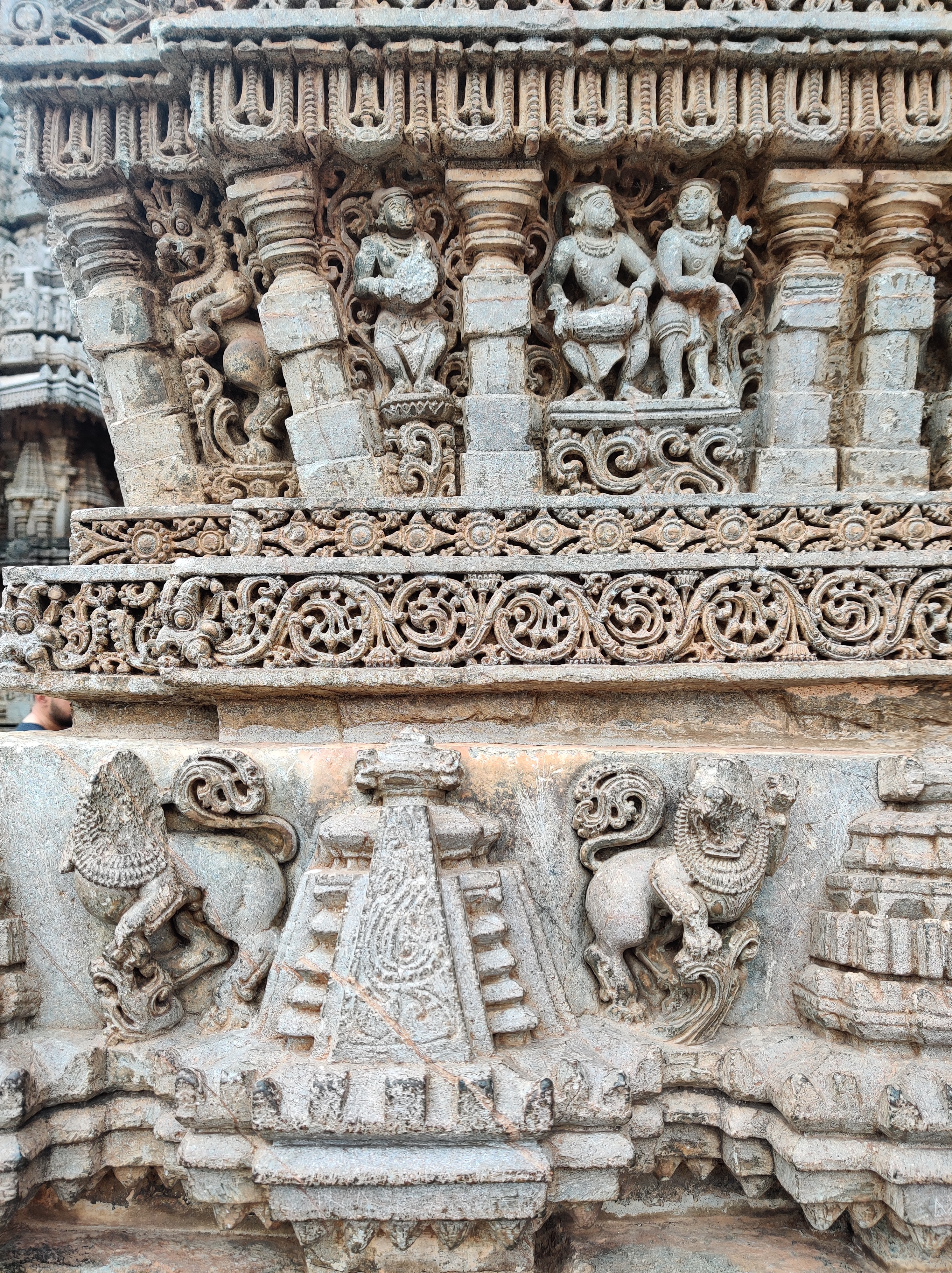
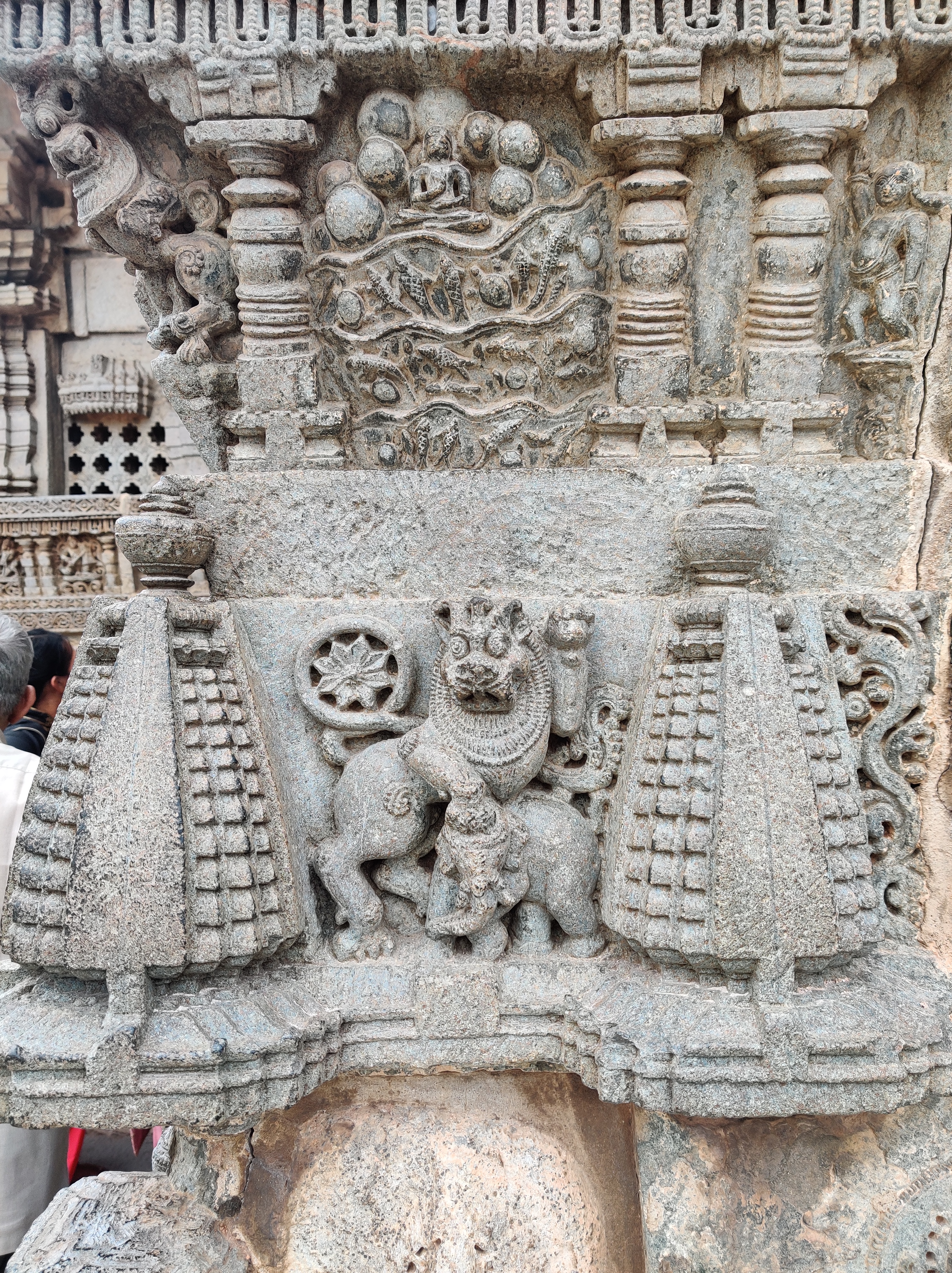
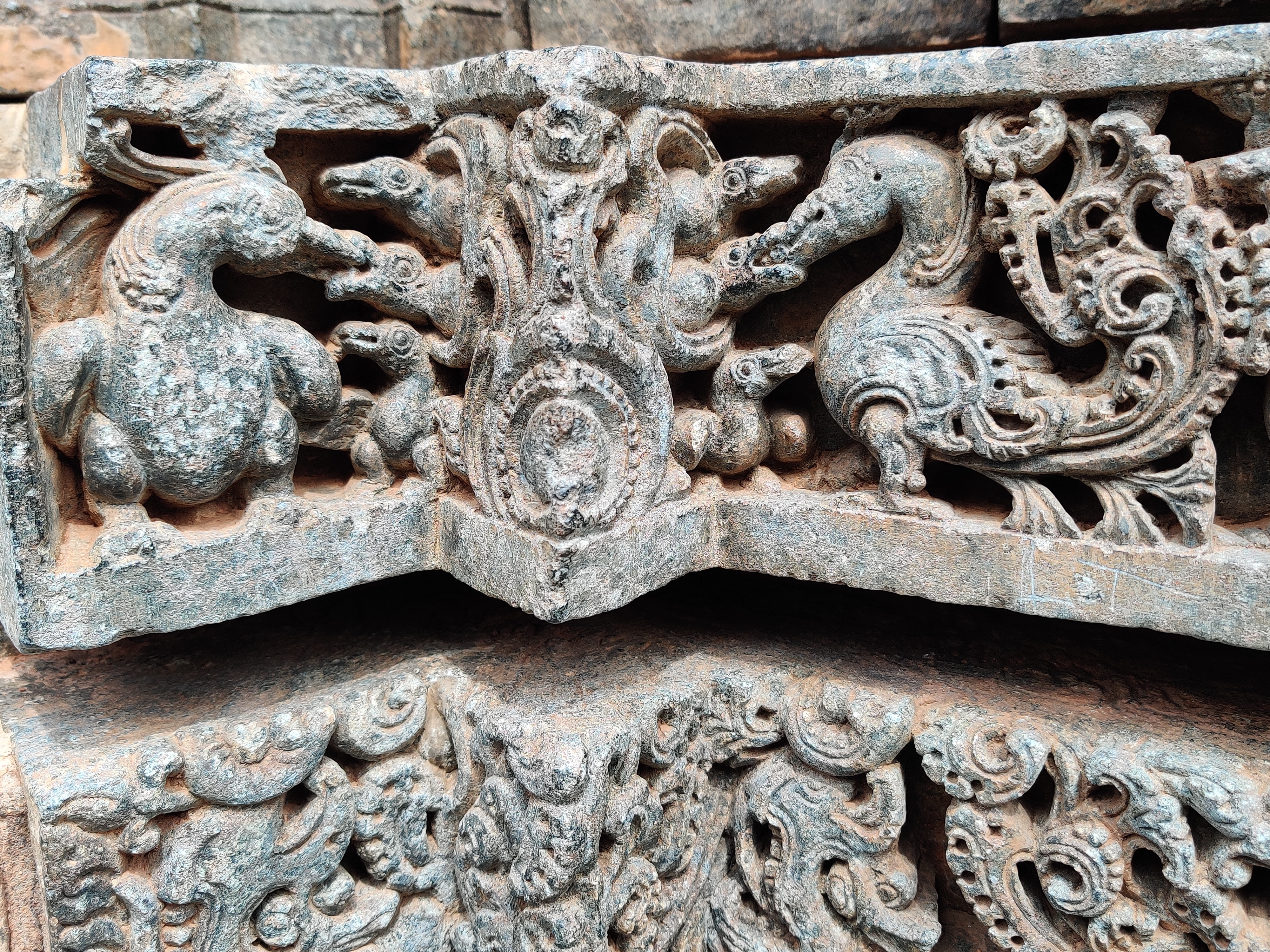
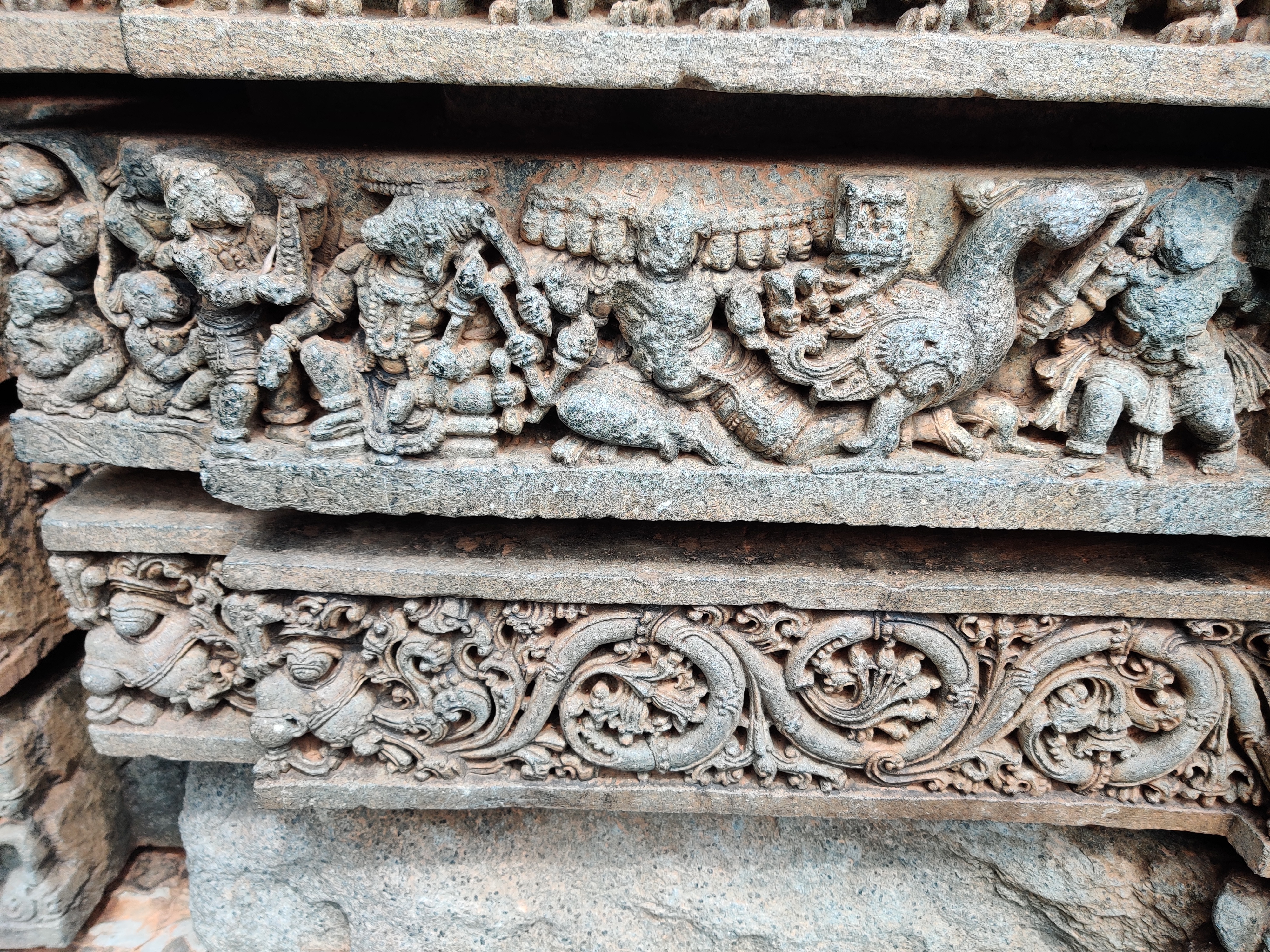
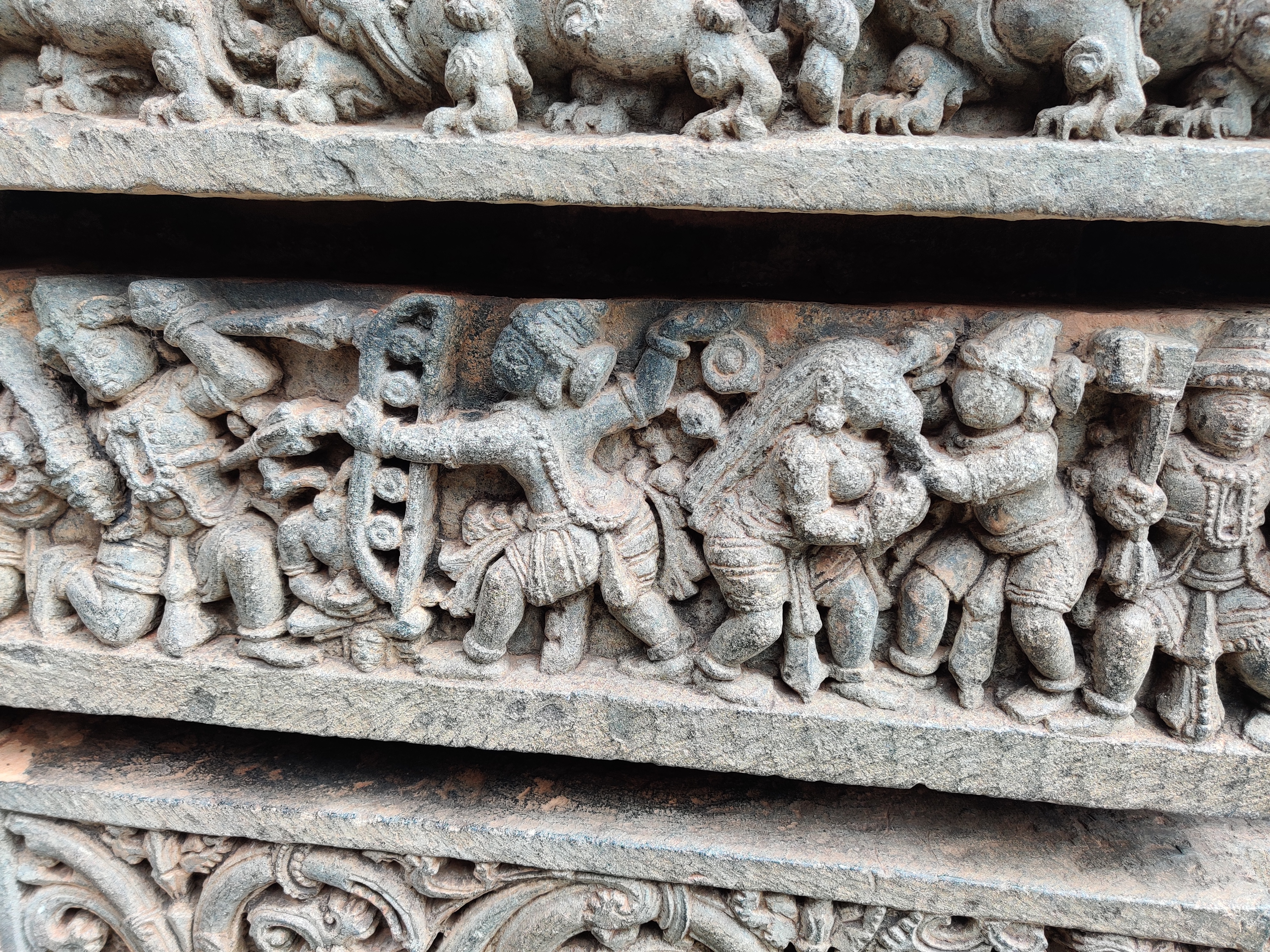
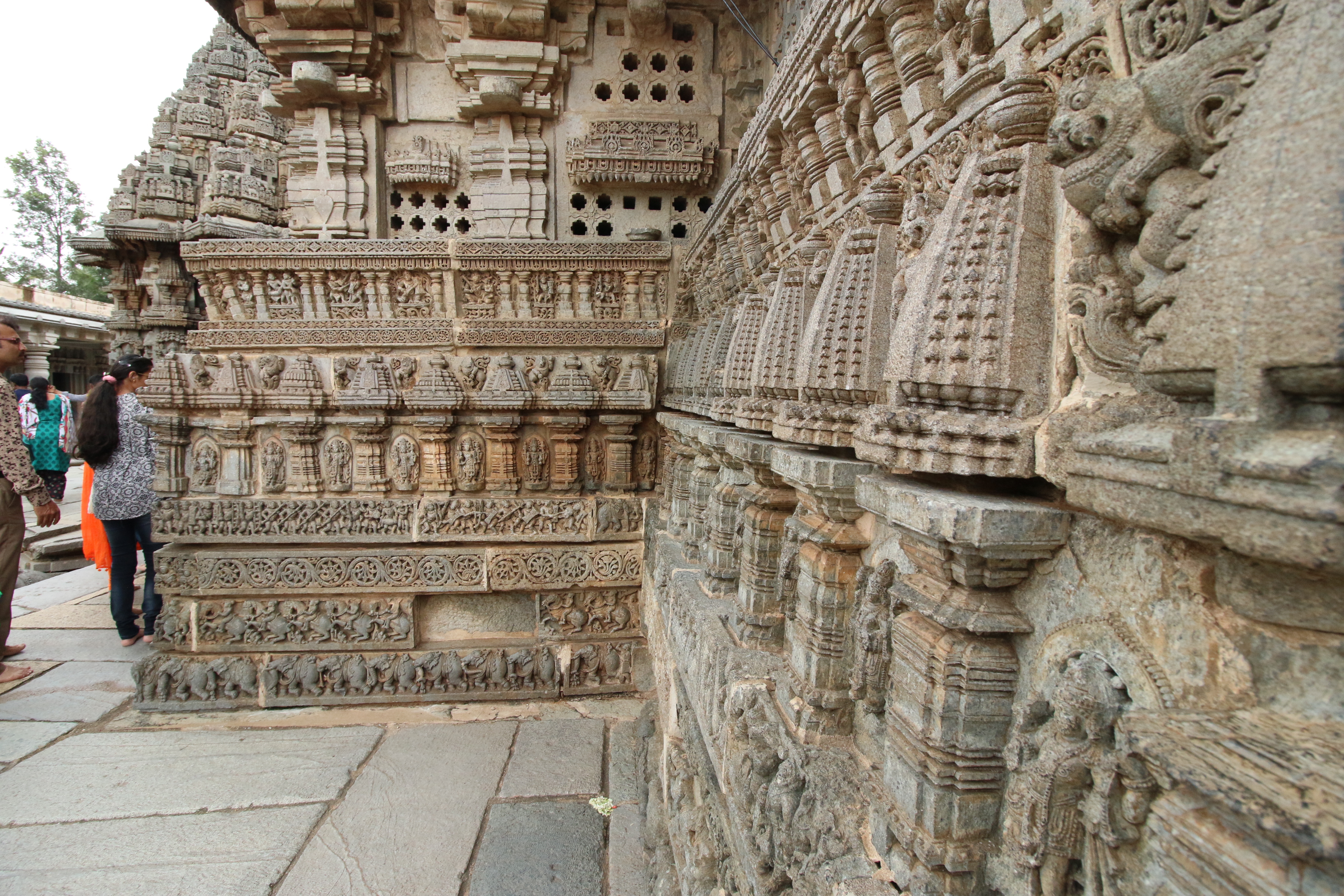
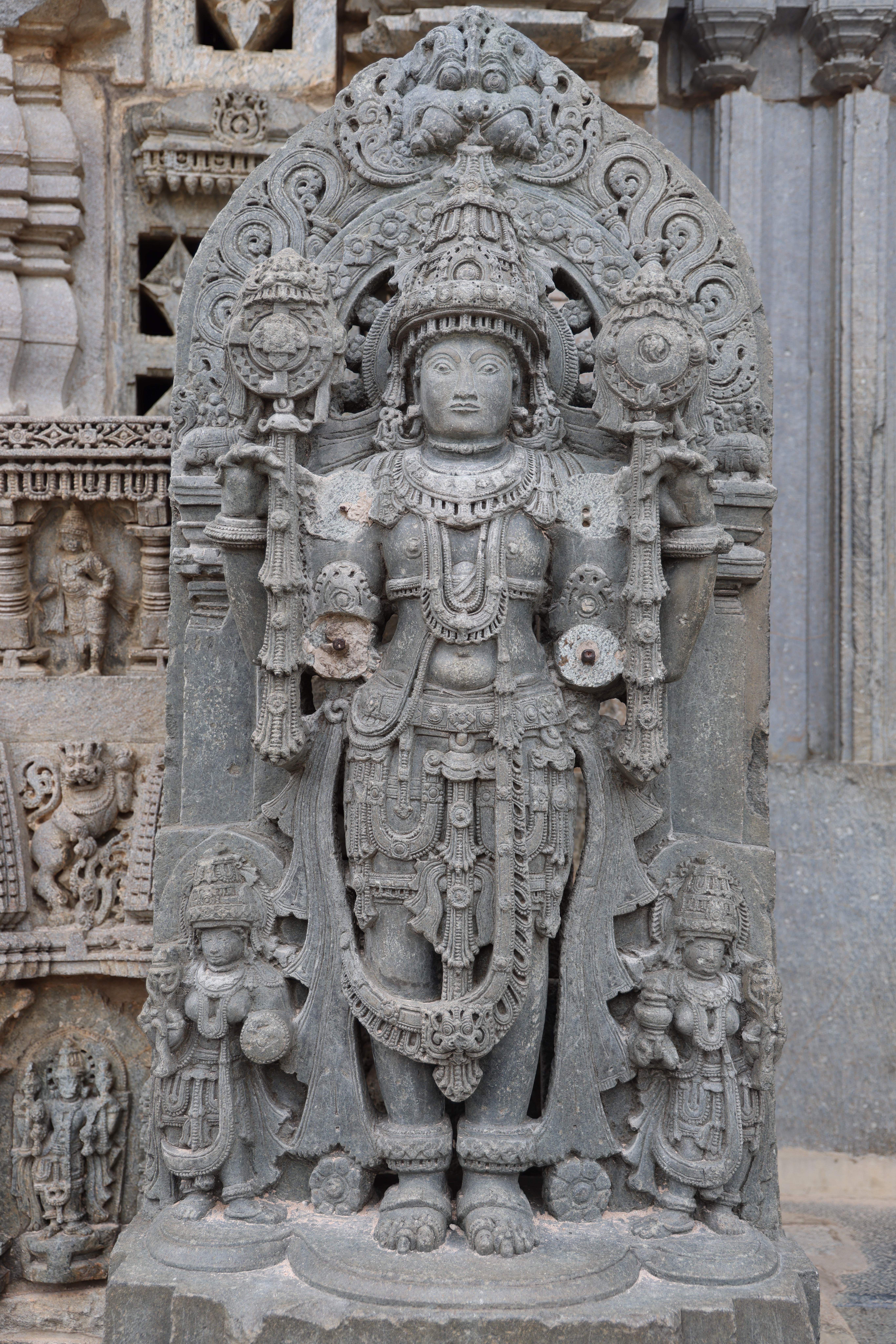
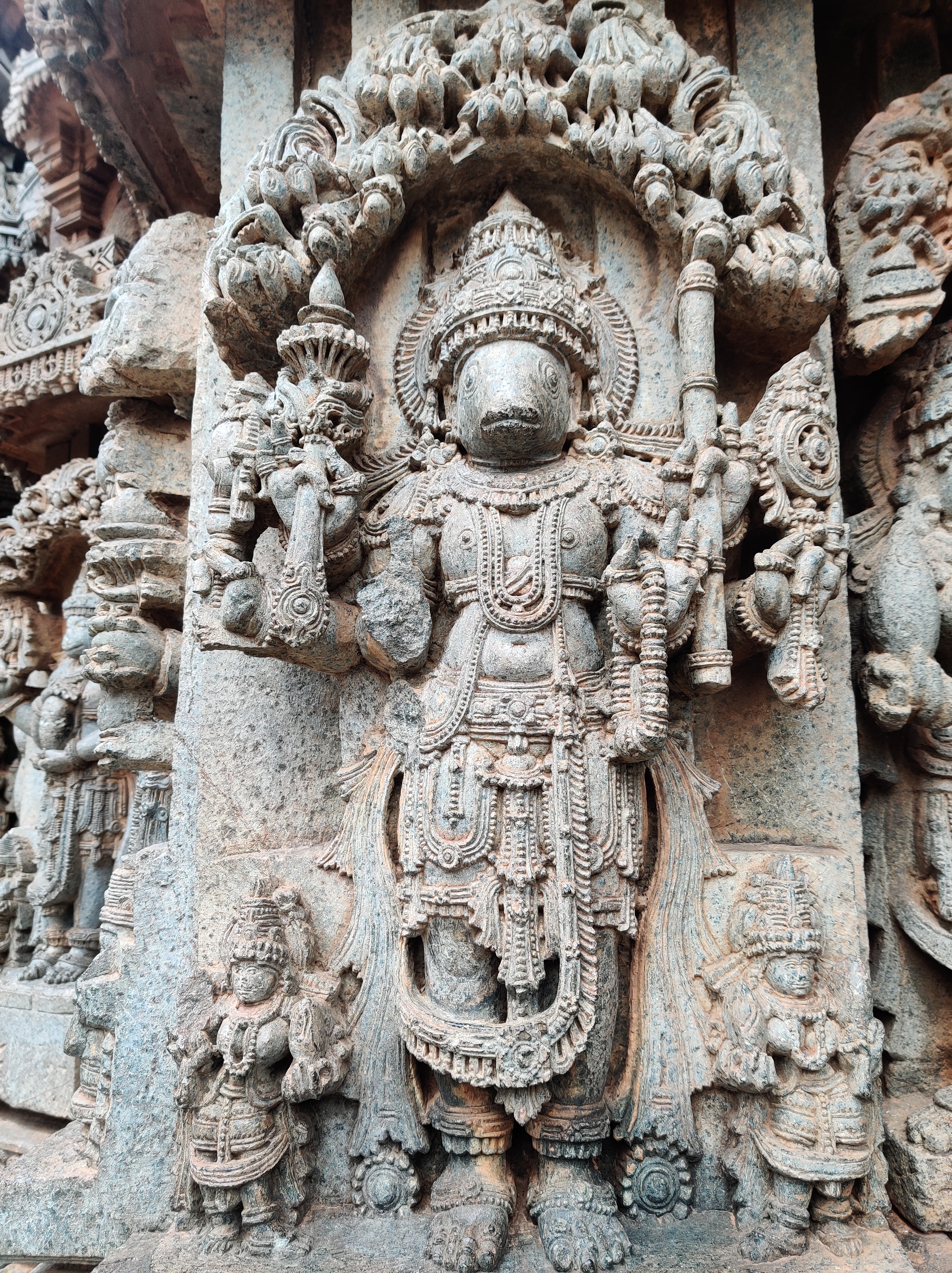
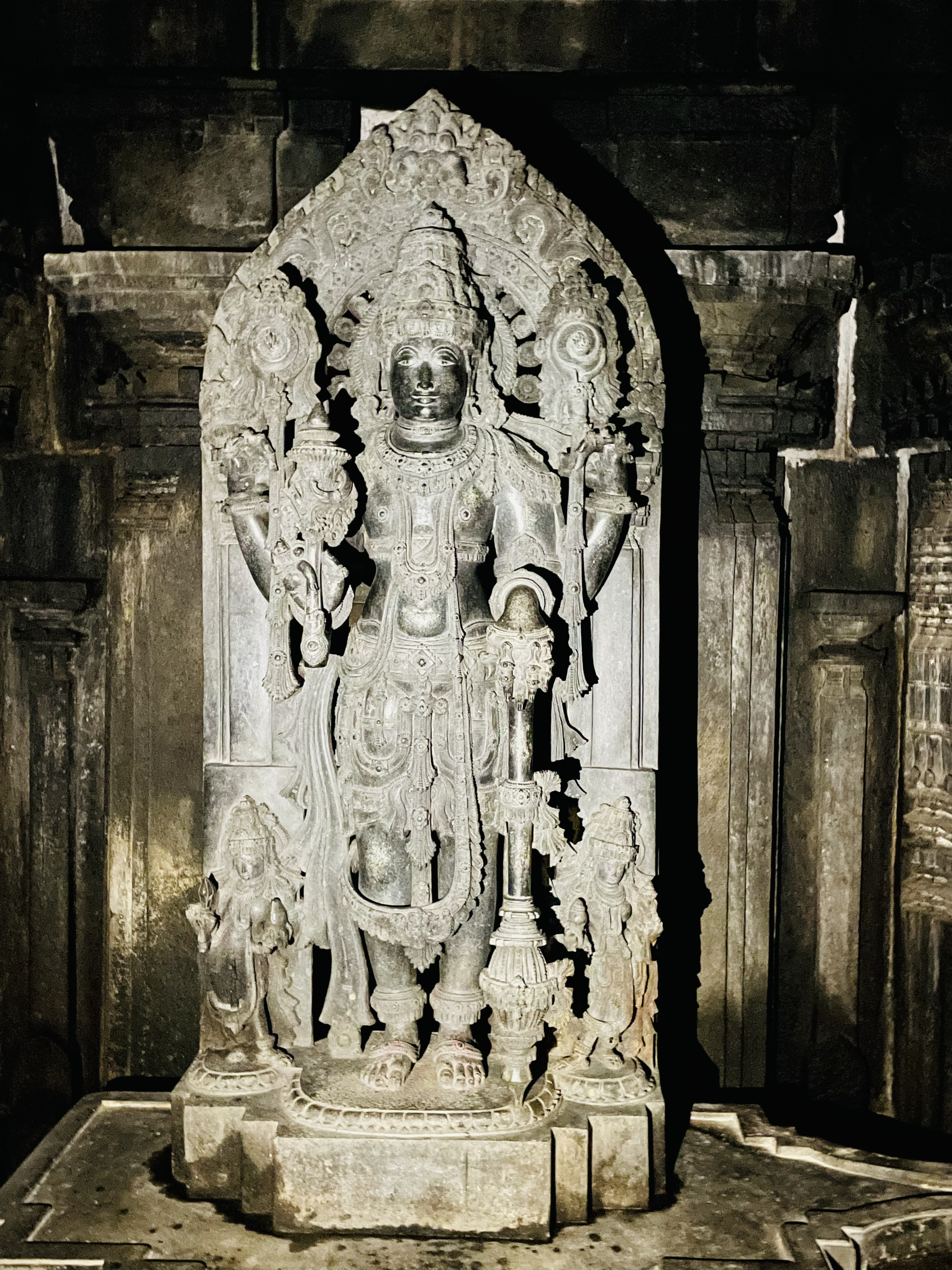
As a Vishnu temple, the majority of the depictions are of various forms of Vishnu and his incarnations. The standard iconography shows Vishnu with four arms, each holding one of the four objects: Shanka (the conch shell Panchajanya, creating the five elements), Chakra (the disc Sudharshan with serrated edges), Mace (Kaumodaki), and Padma (the sacred lotus). The arrangement of these objects varies, sometimes indicating a specific form of Vishnu. I have tried to identify and list a few famous incarnations of Vishnu and some popular forms as mentioned by the temple guide.
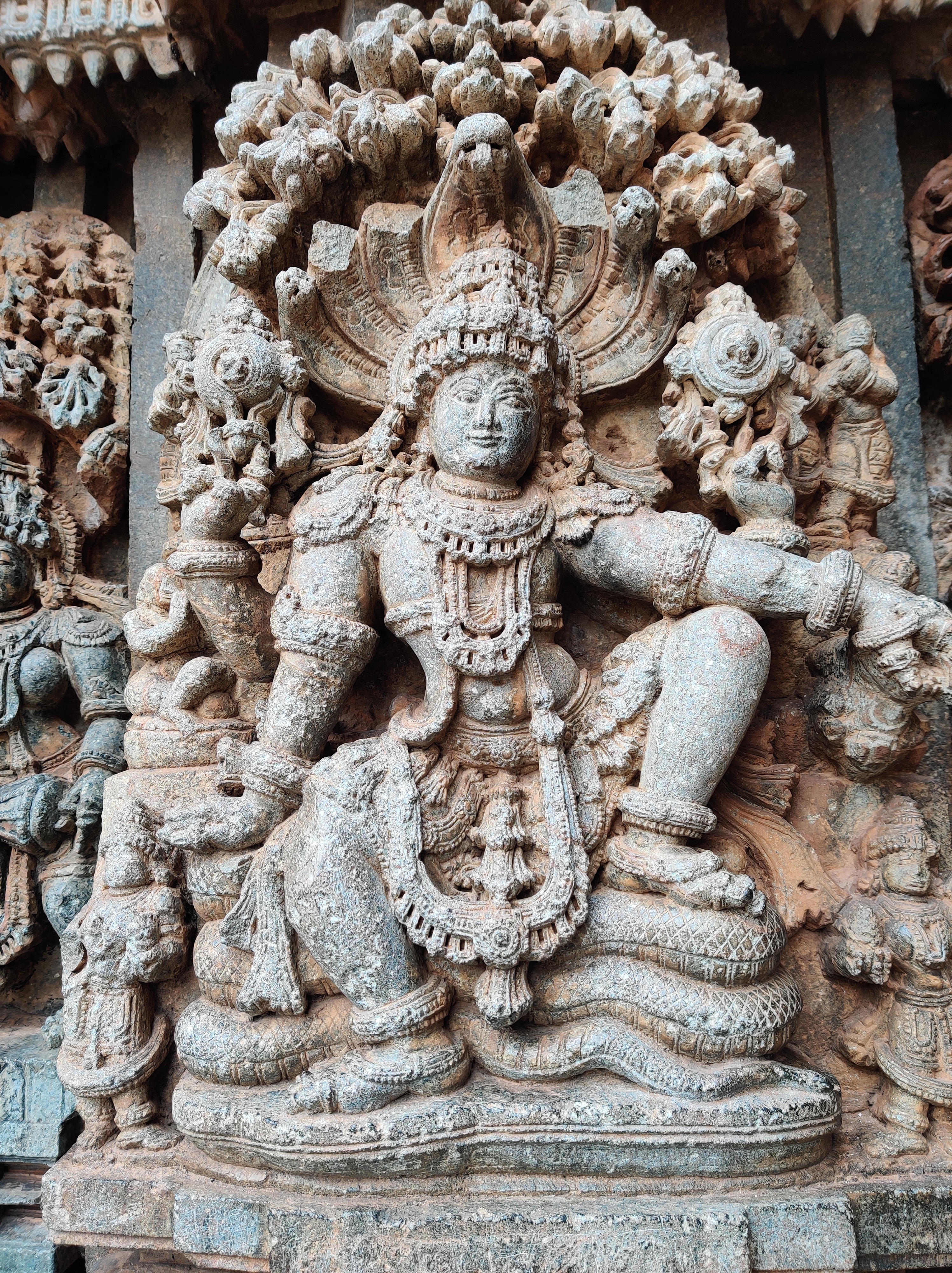
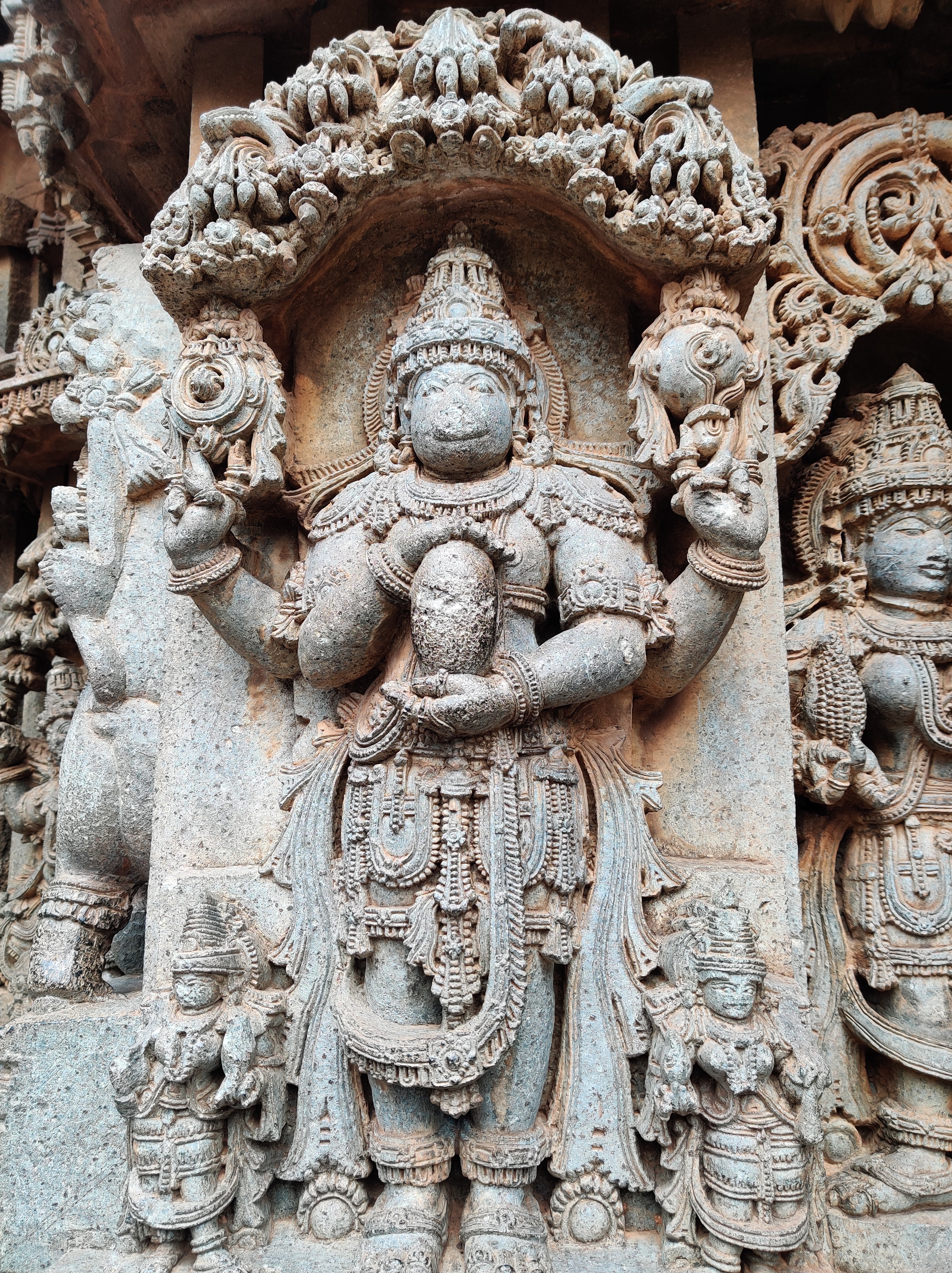
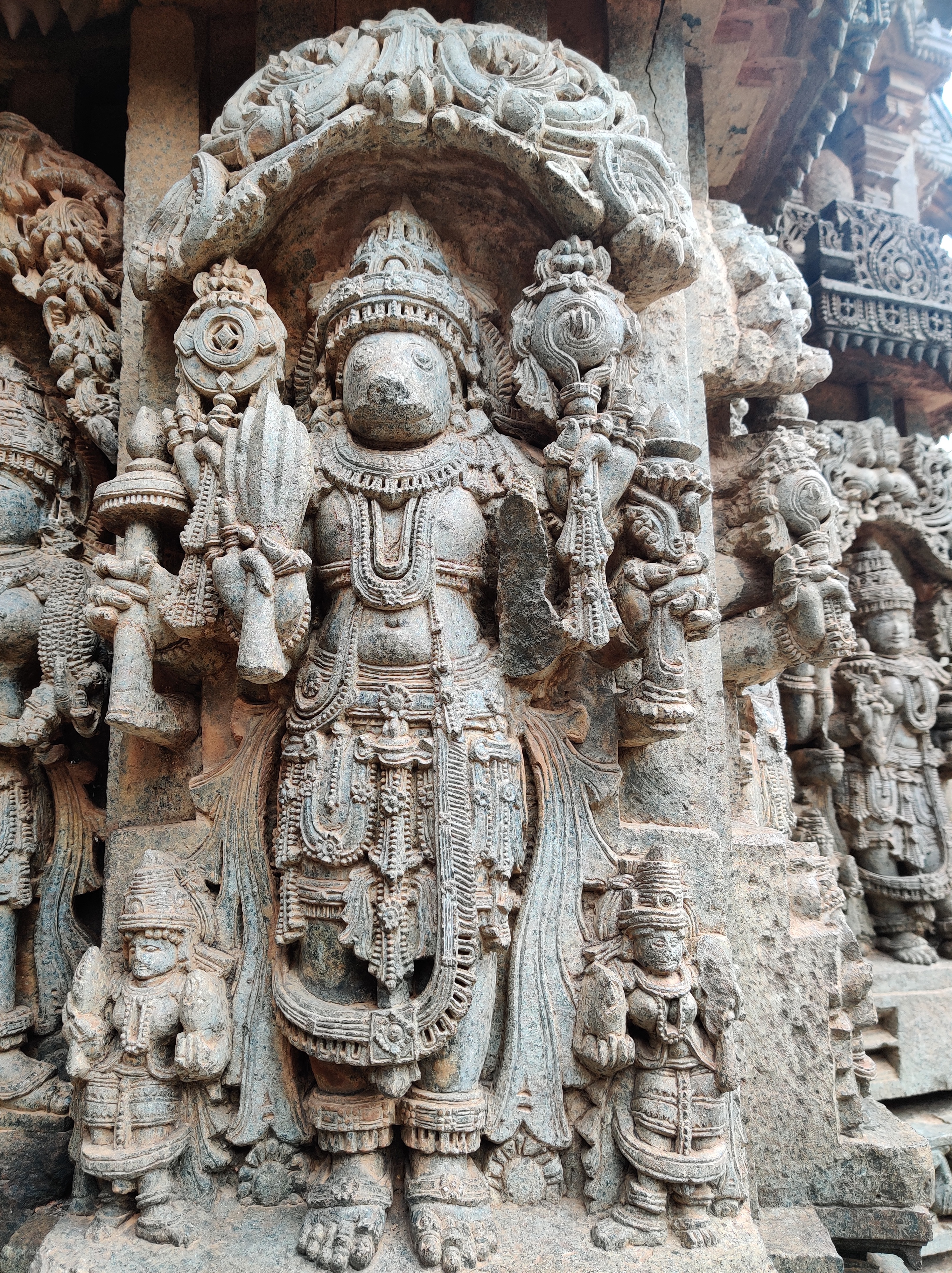
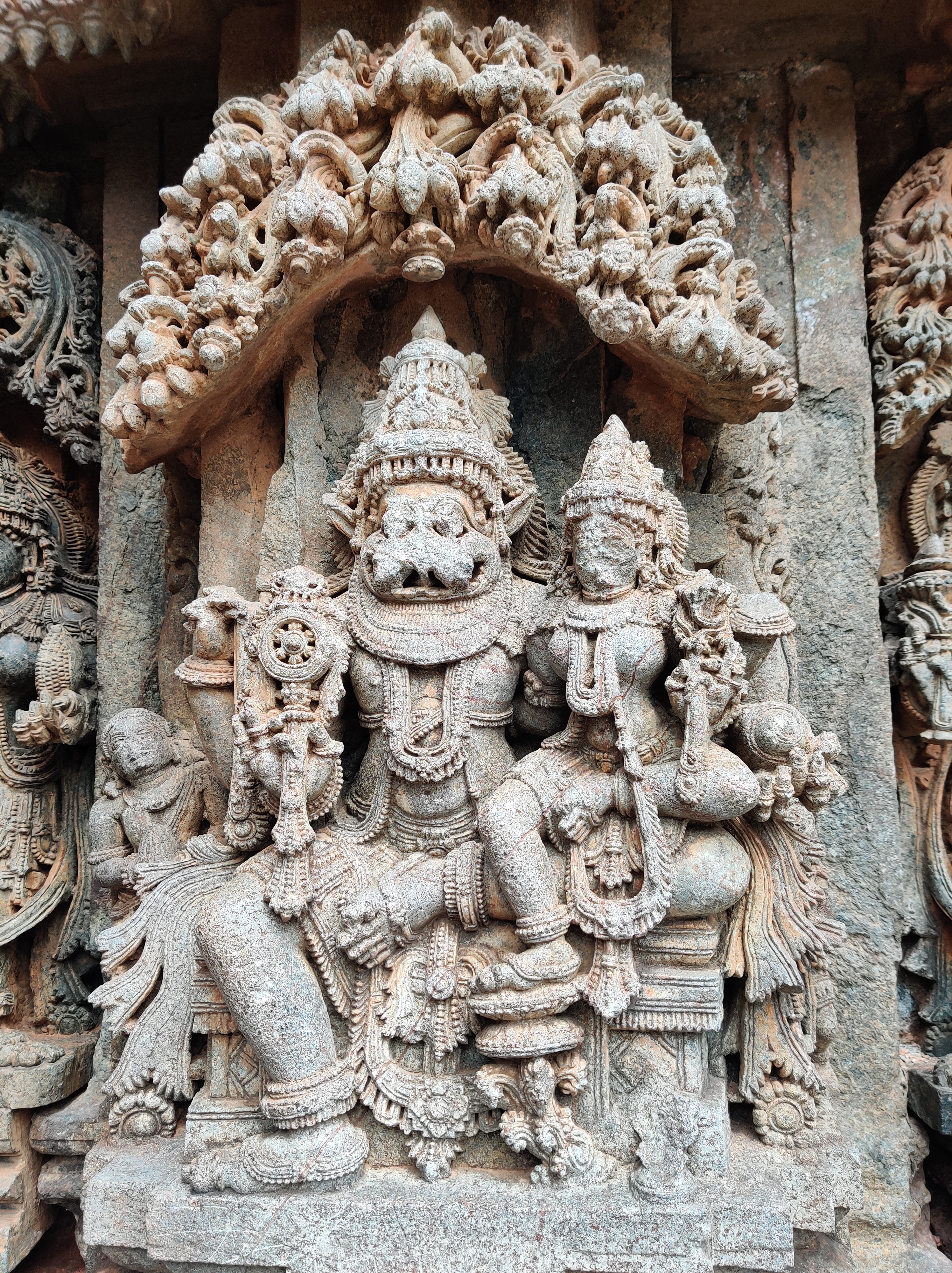
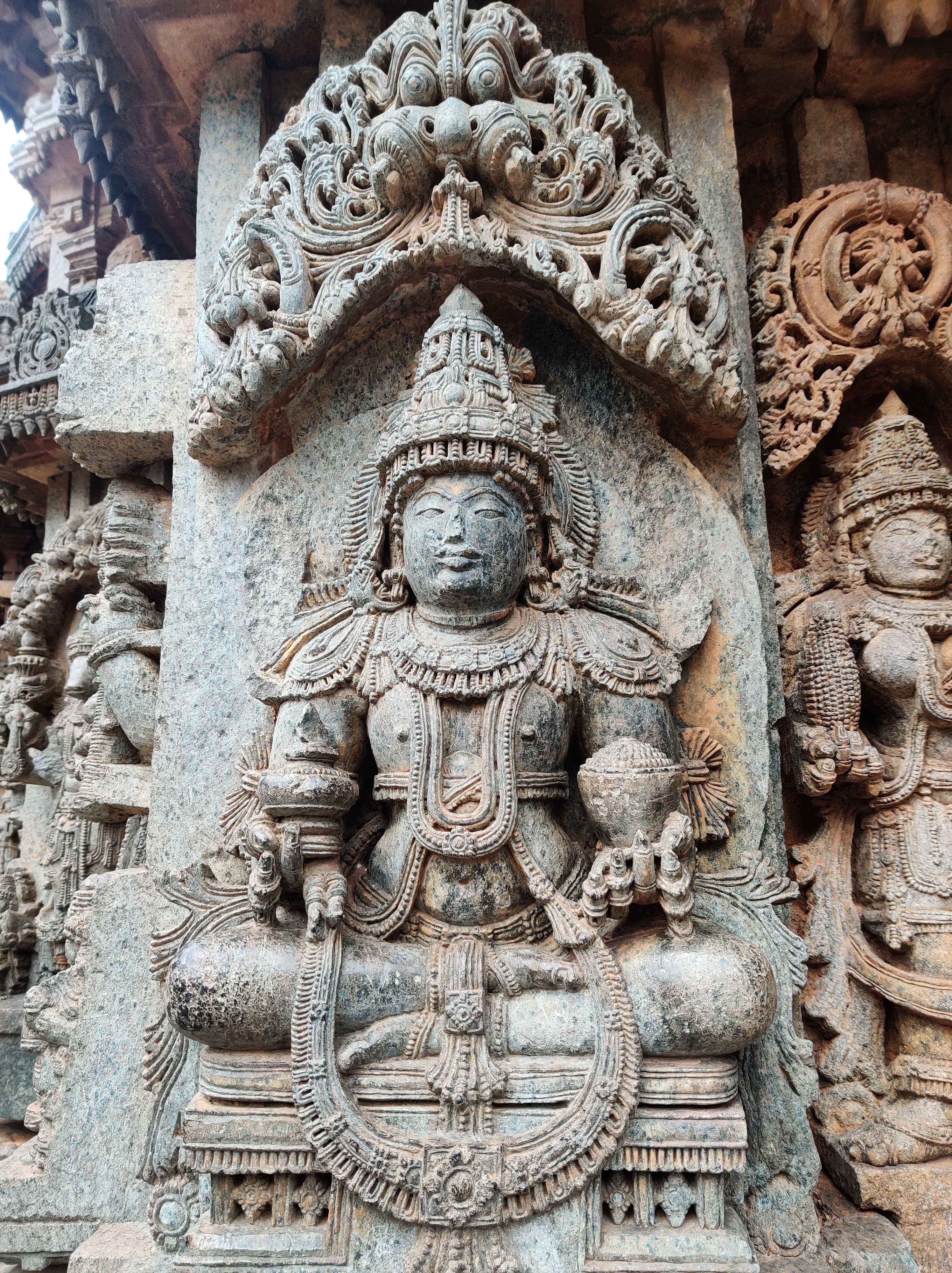
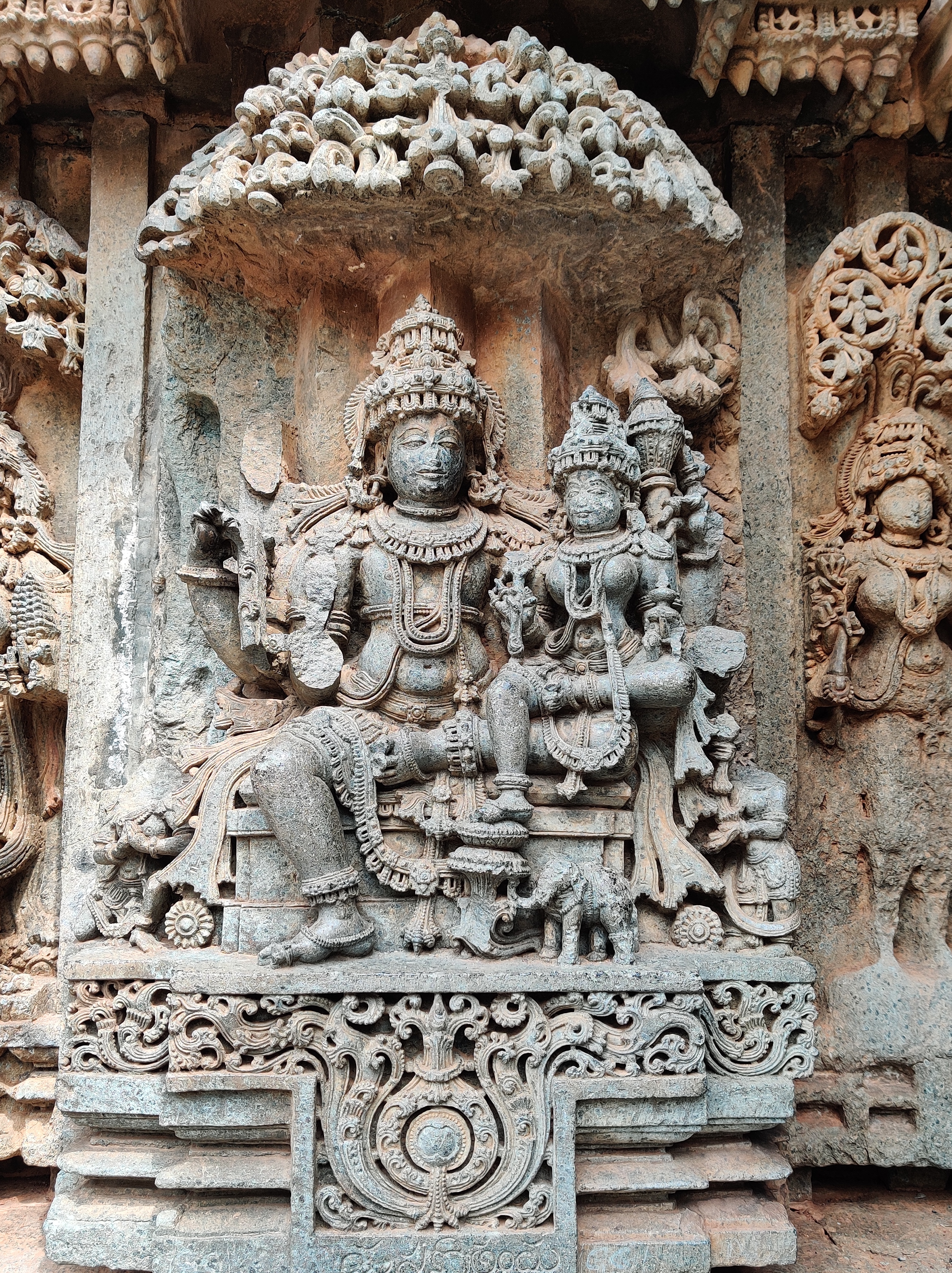

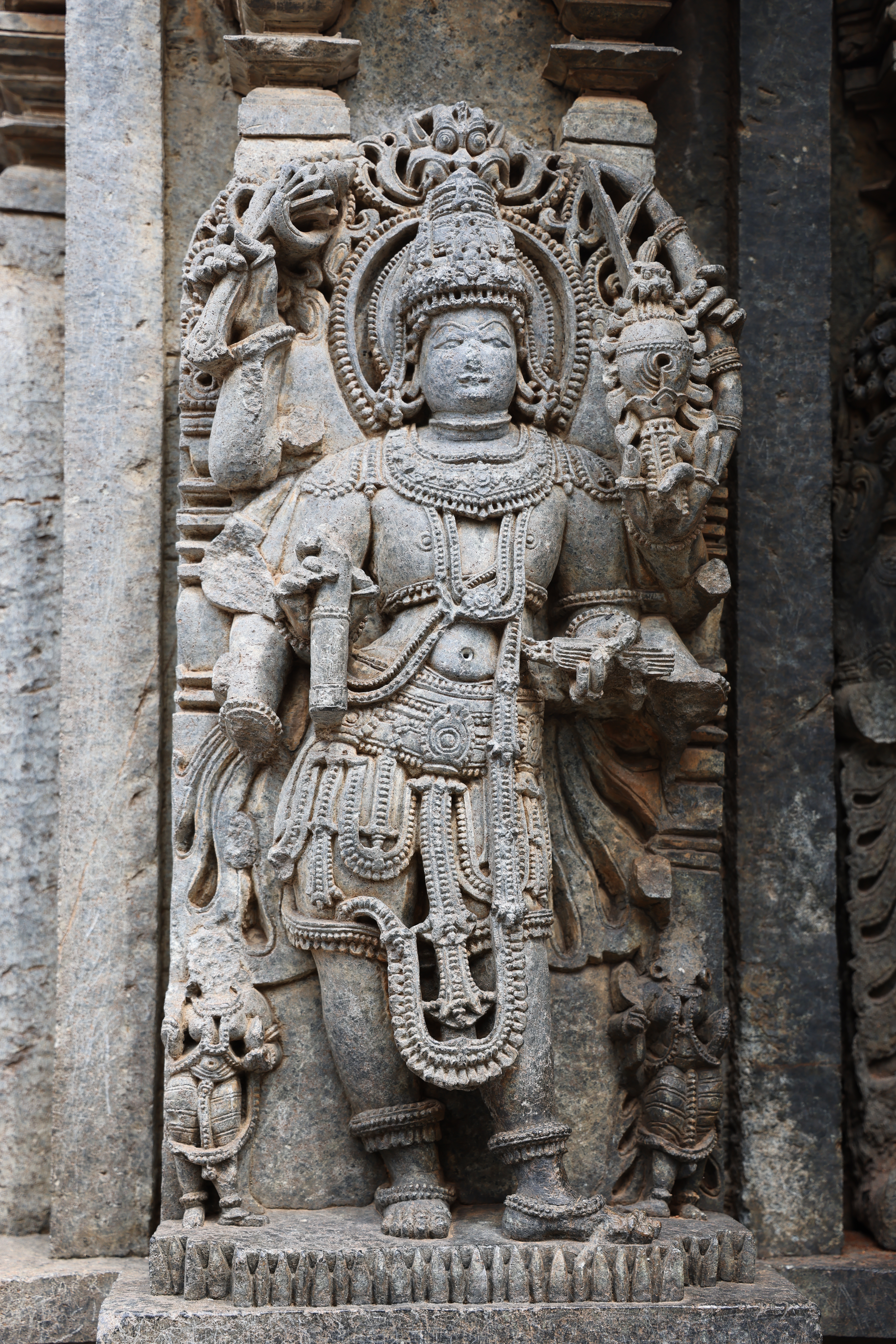

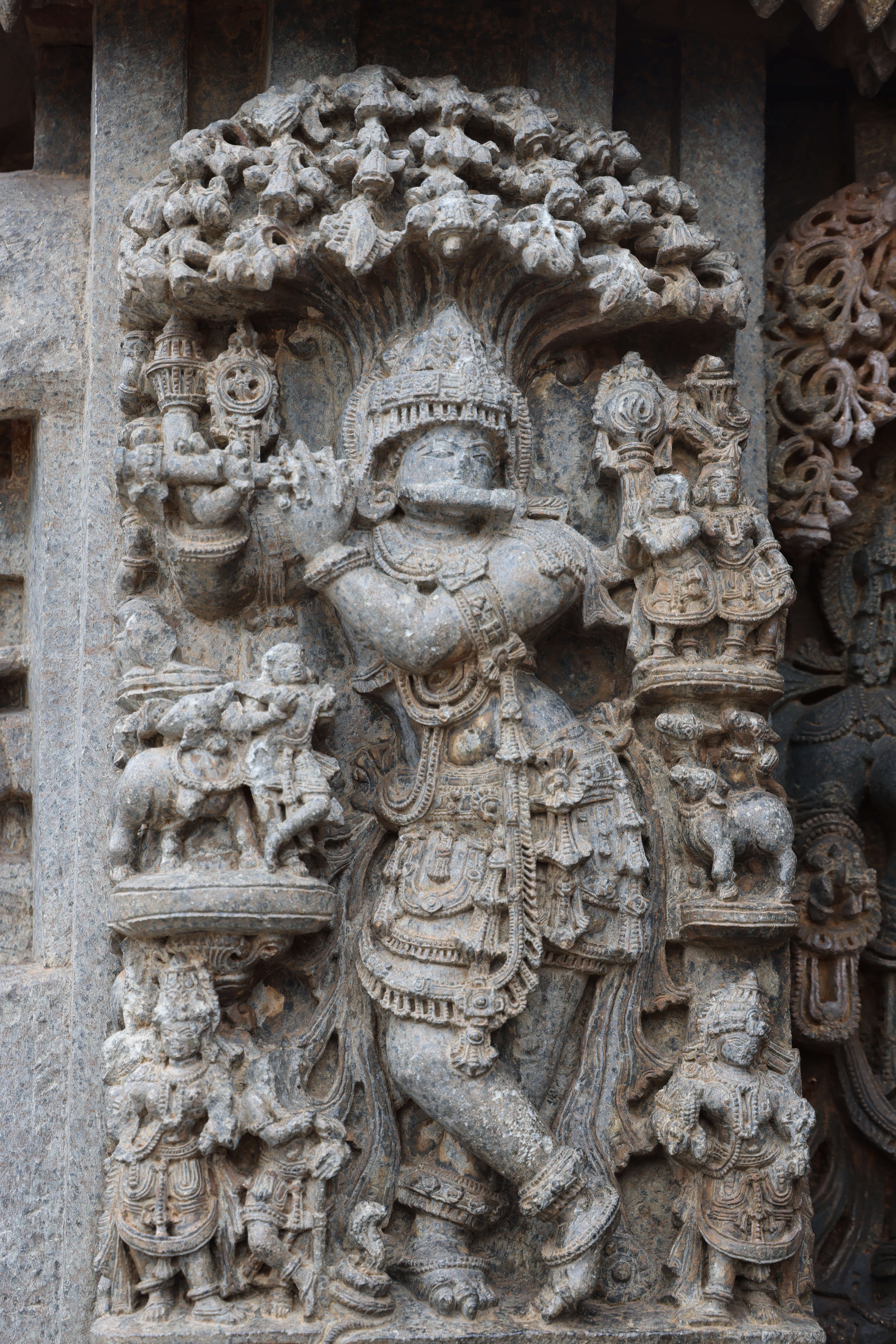
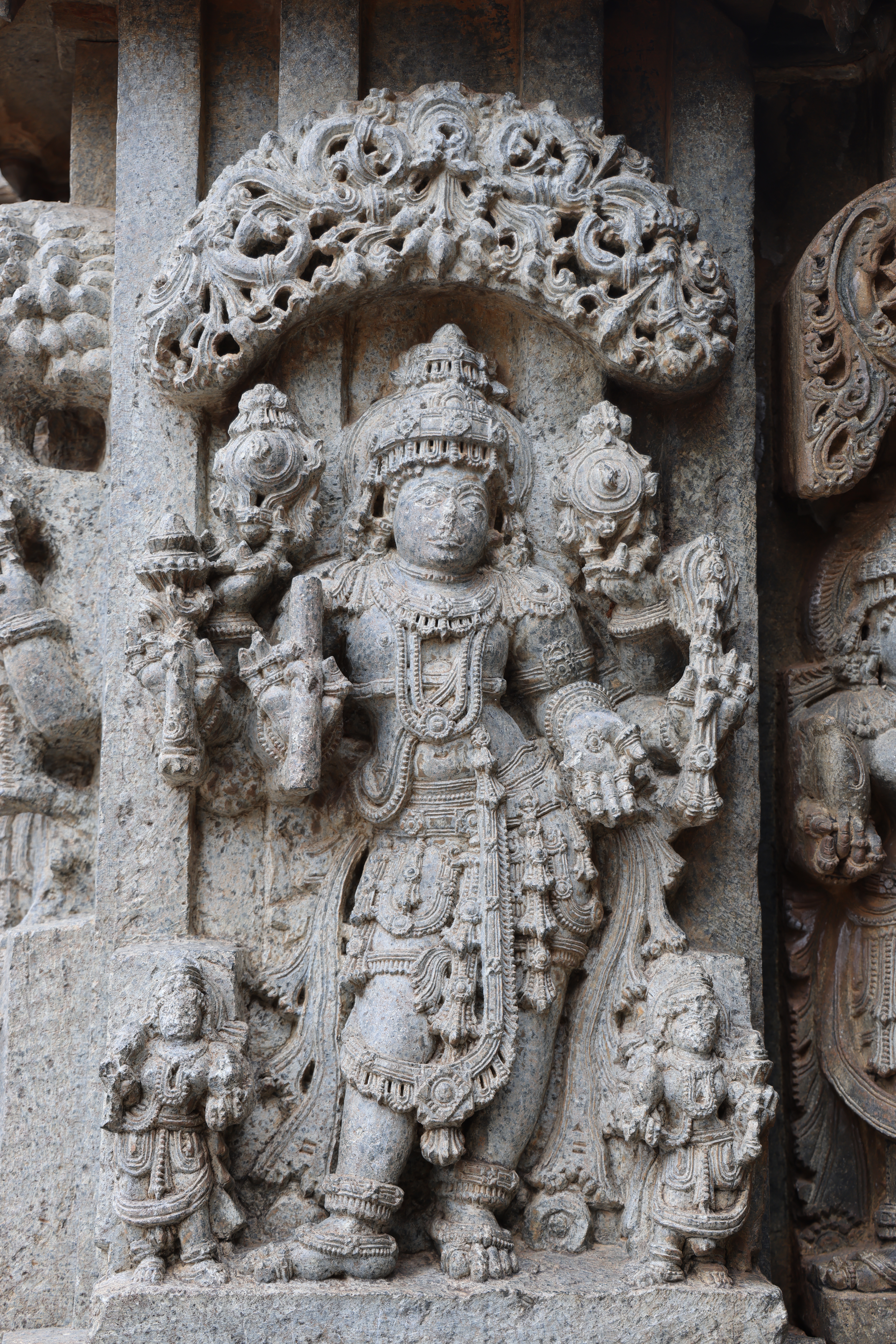
Beyond the exquisite Vishnu depictions, there are other gods, goddesses and deities that can be found on the temple walls.
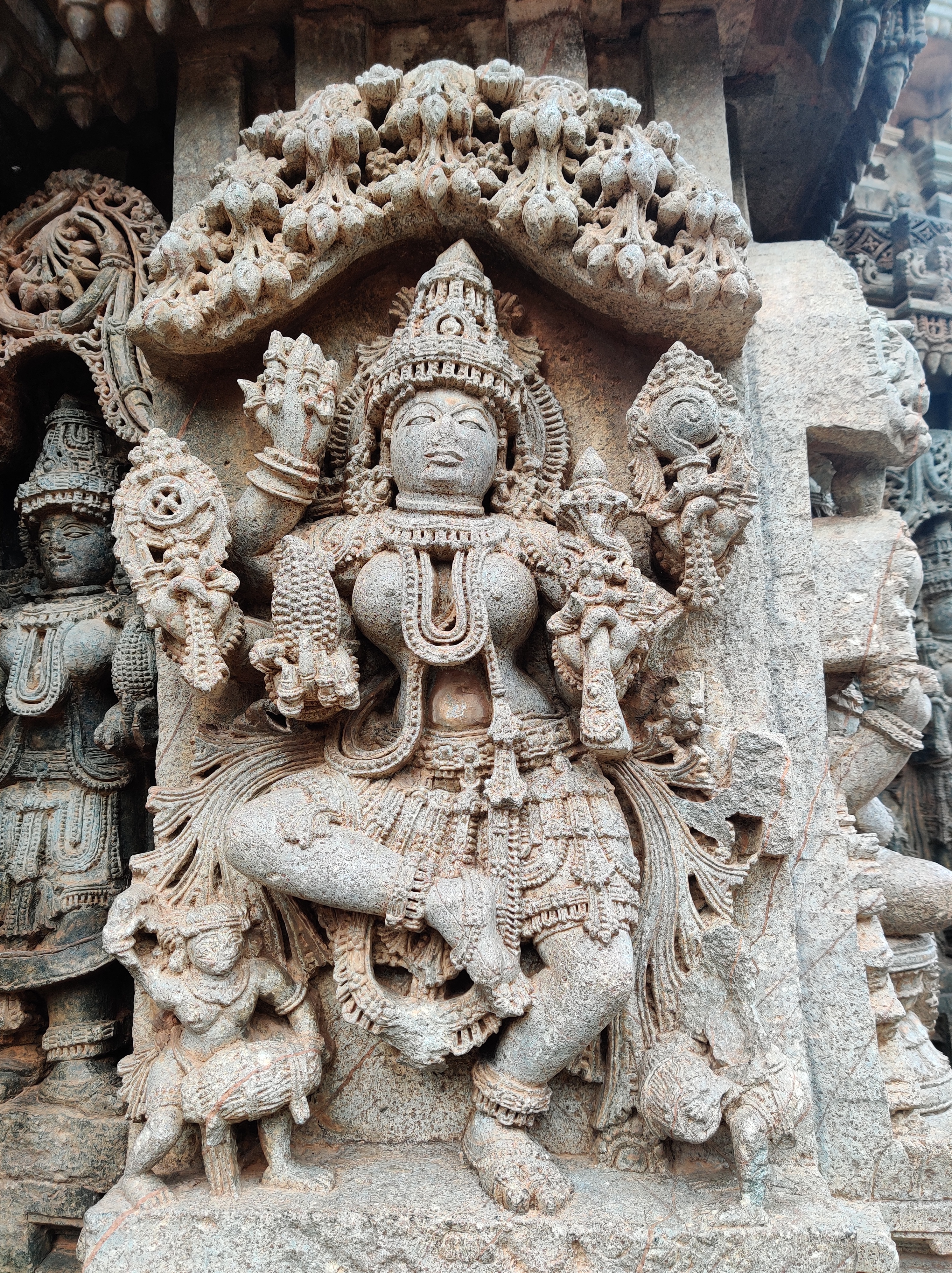
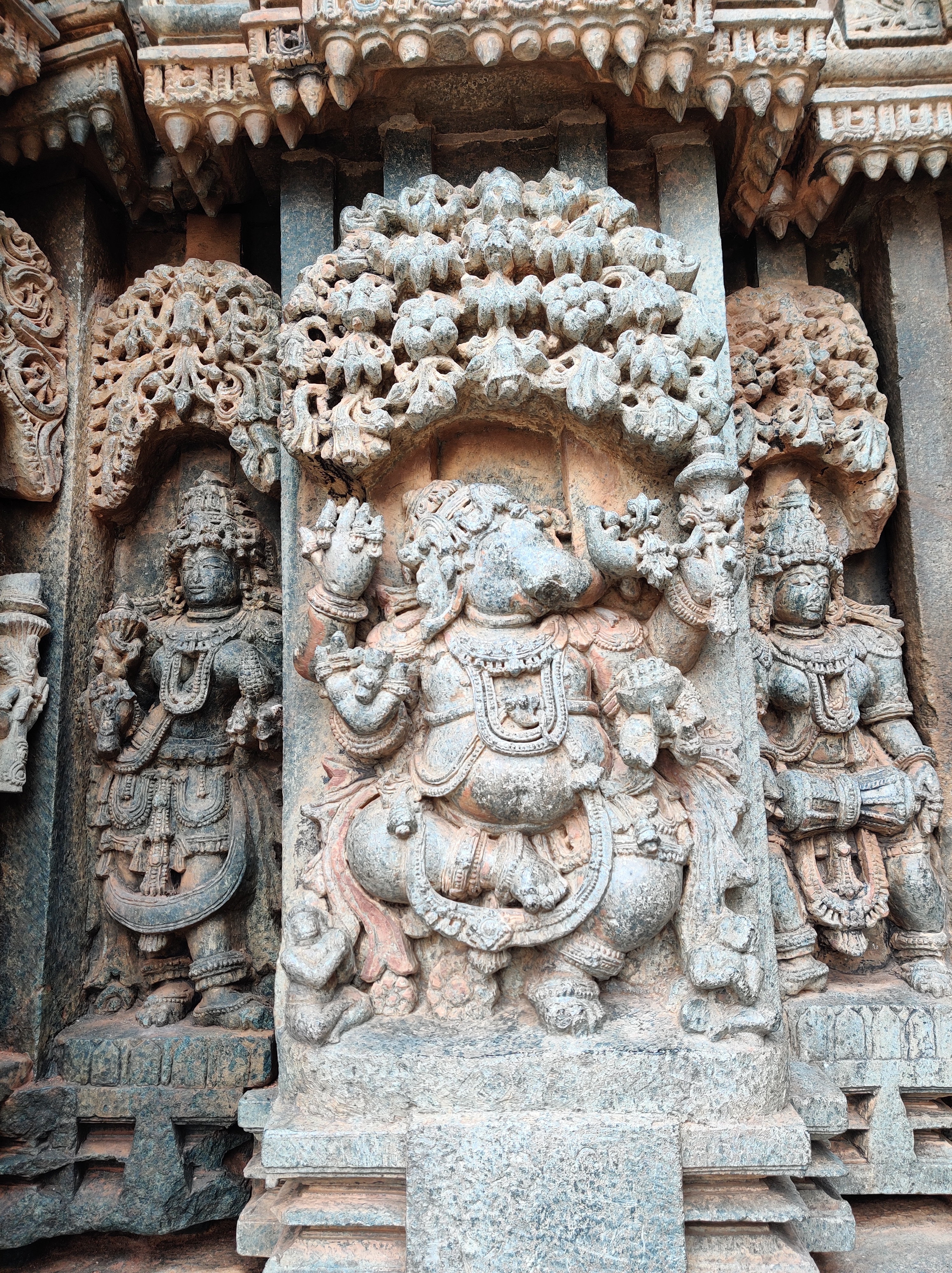
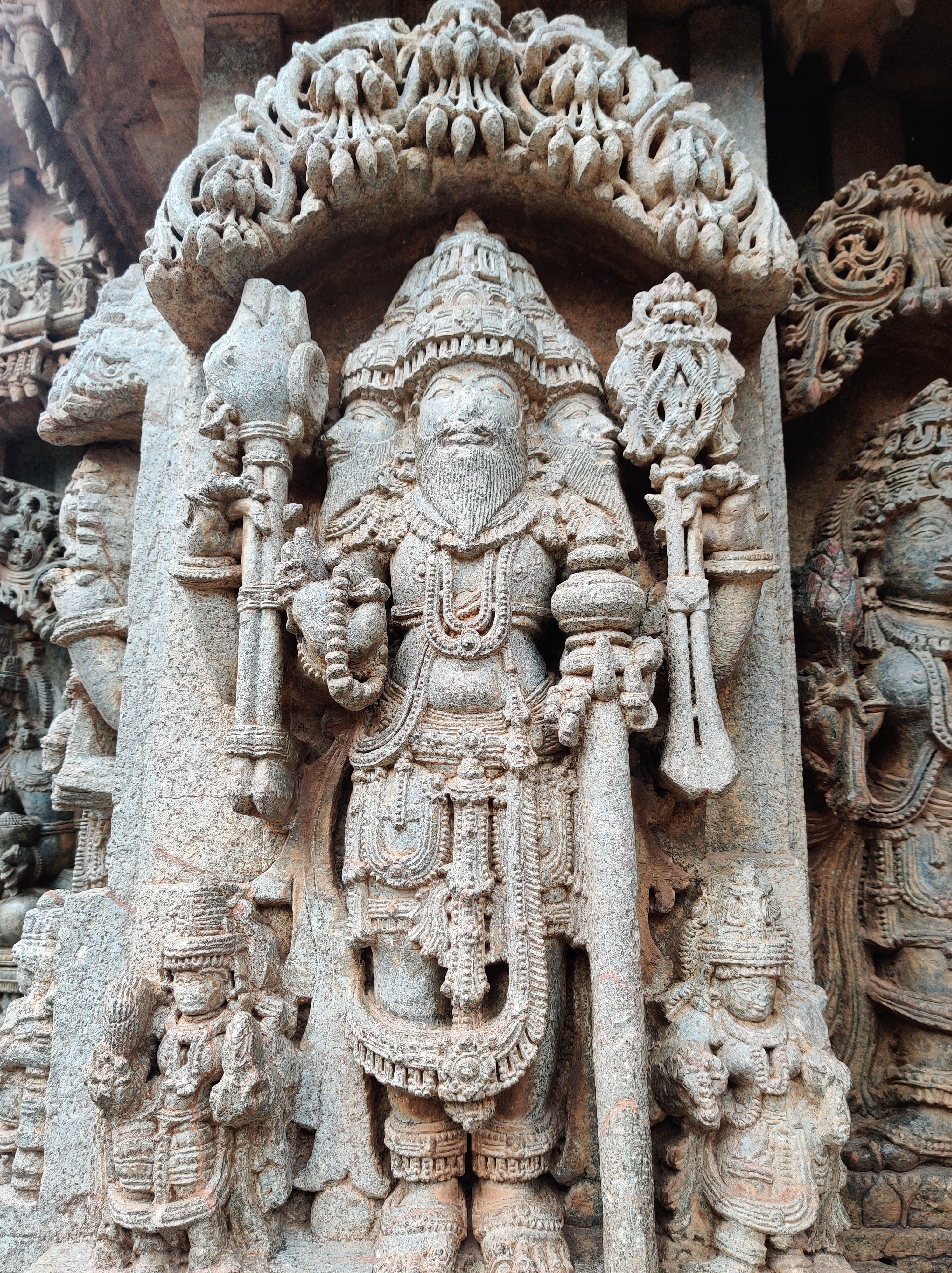
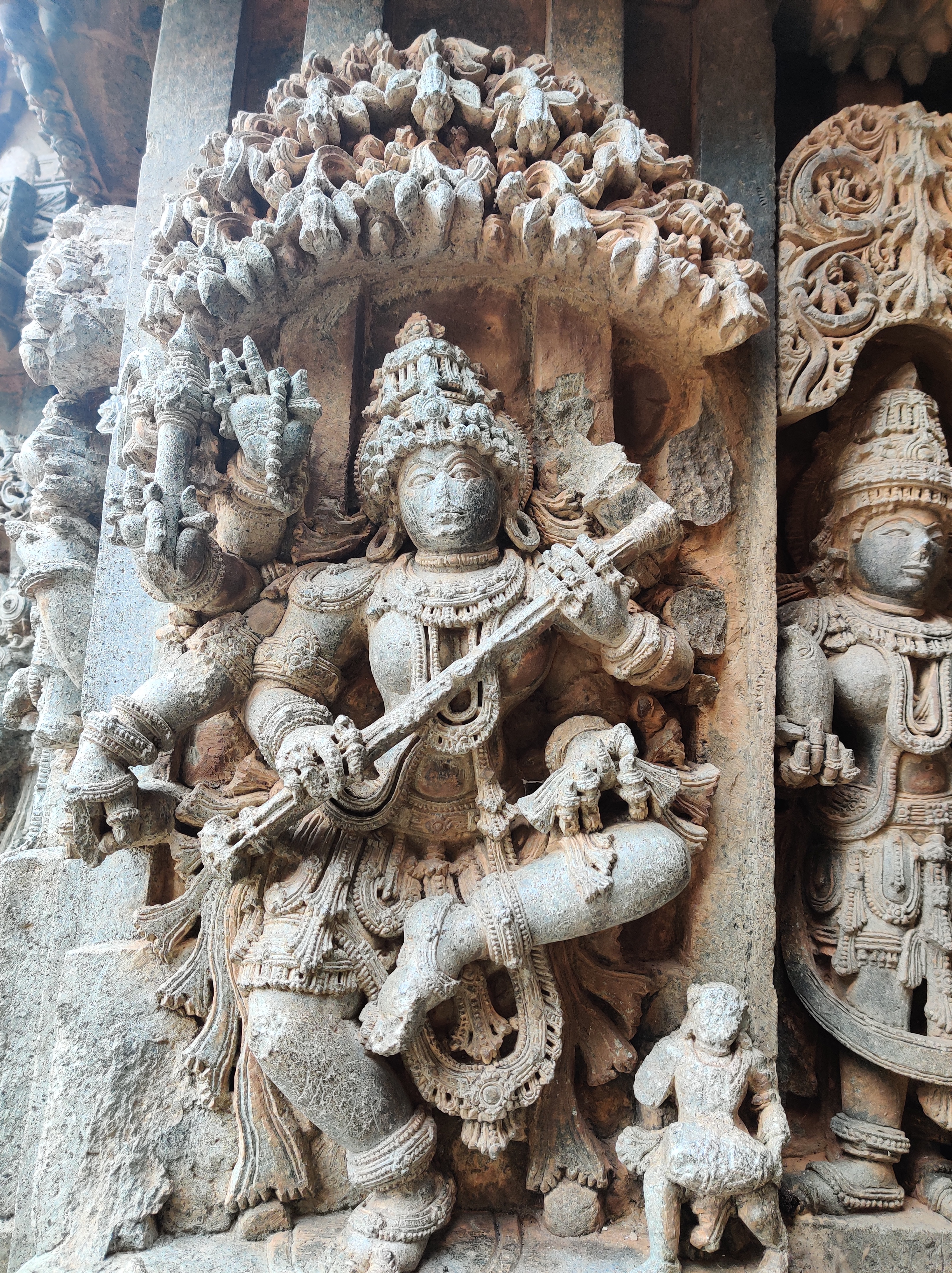
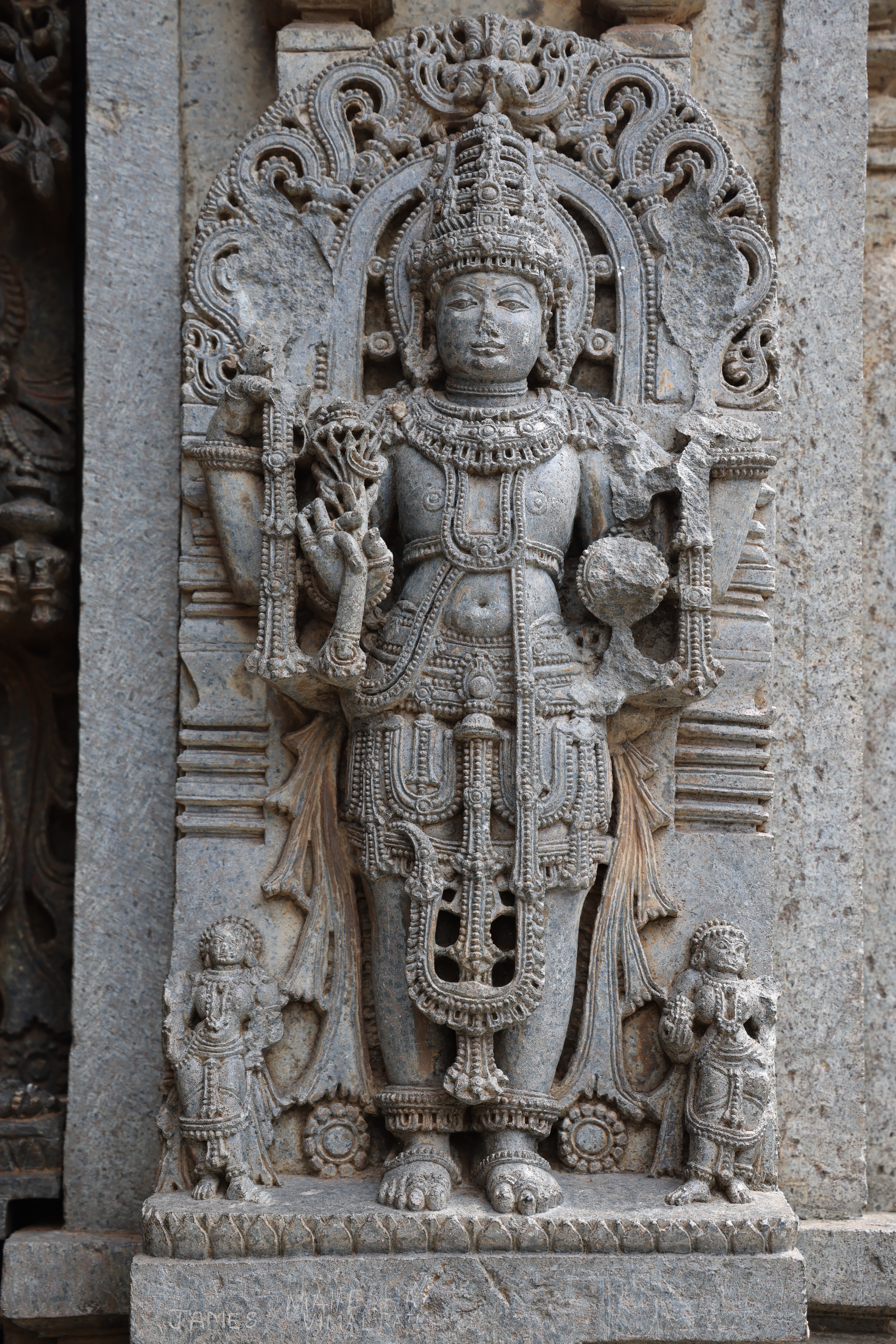
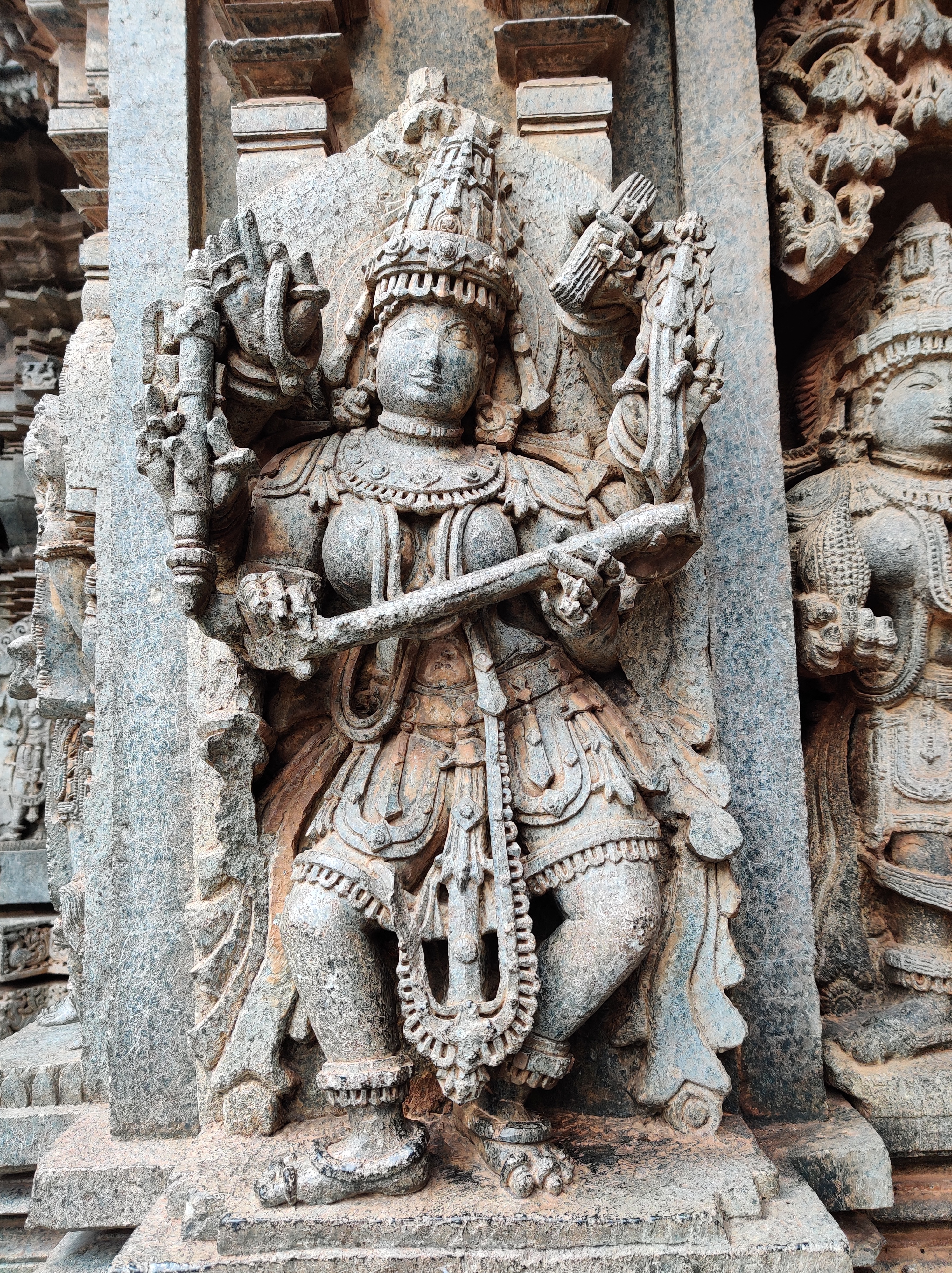
The temple of Somnathapura is renowned as the finest example of a trikutachala shrine, featuring three sanctums. The main sanctum faces east, while the other two face north and south.
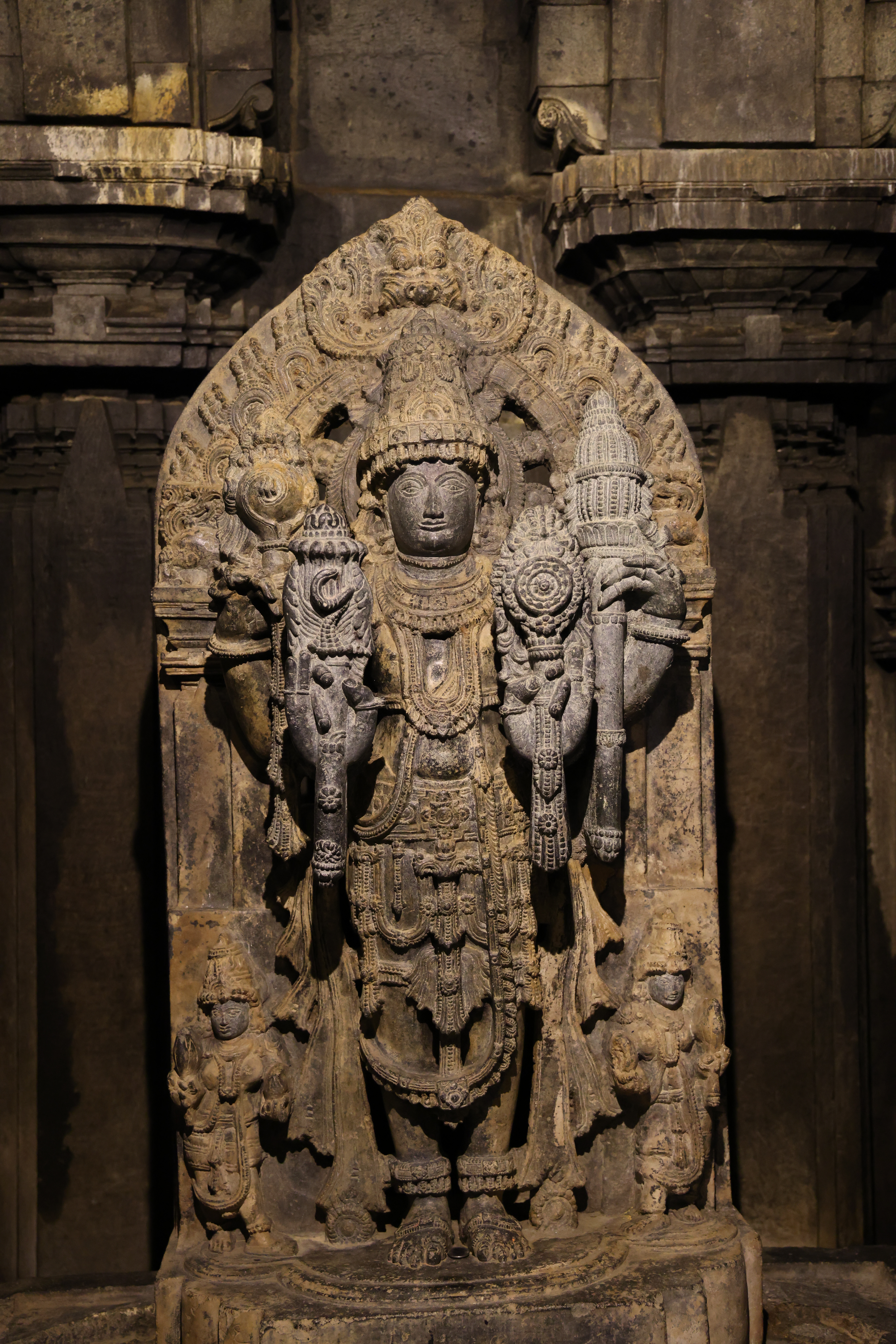
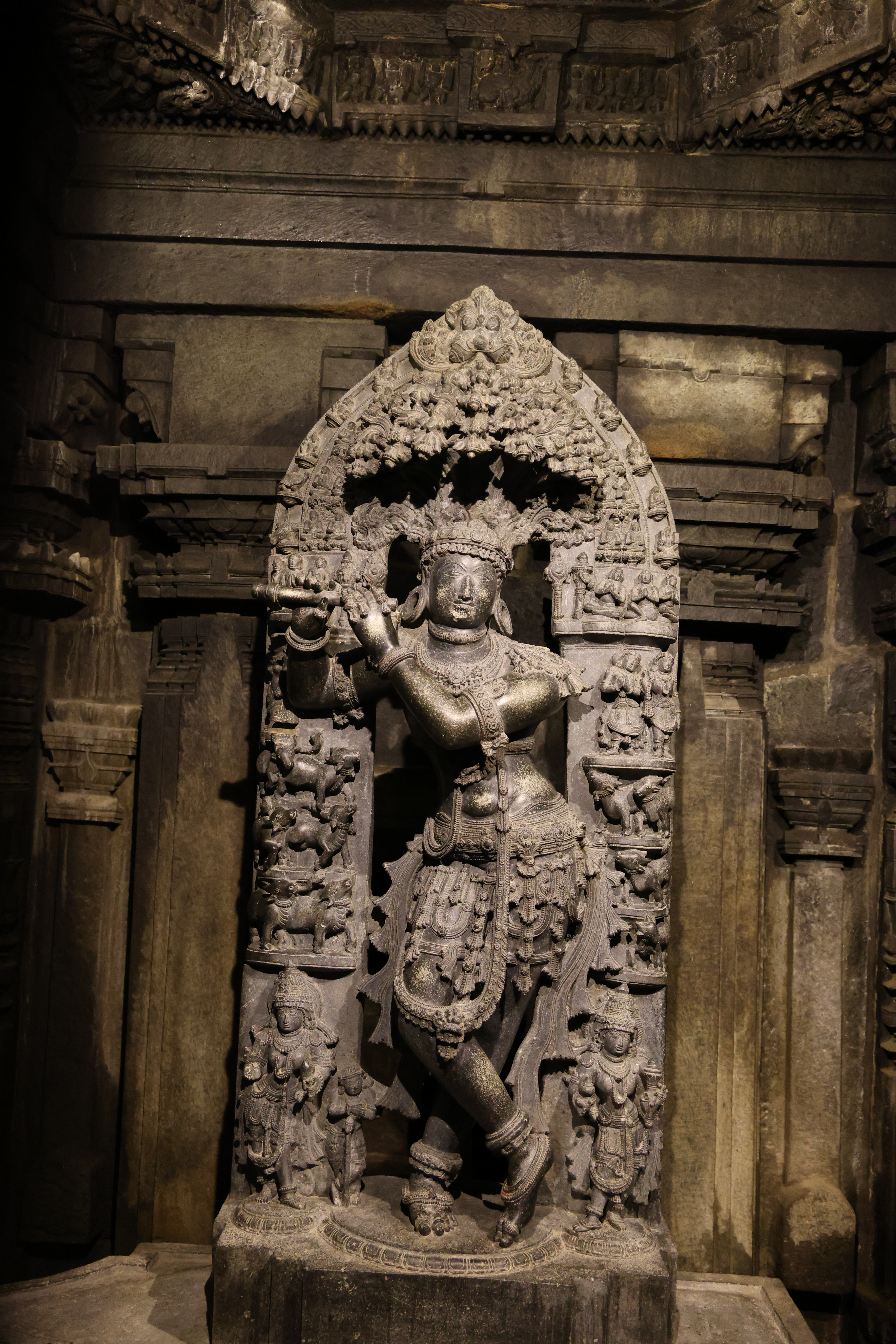
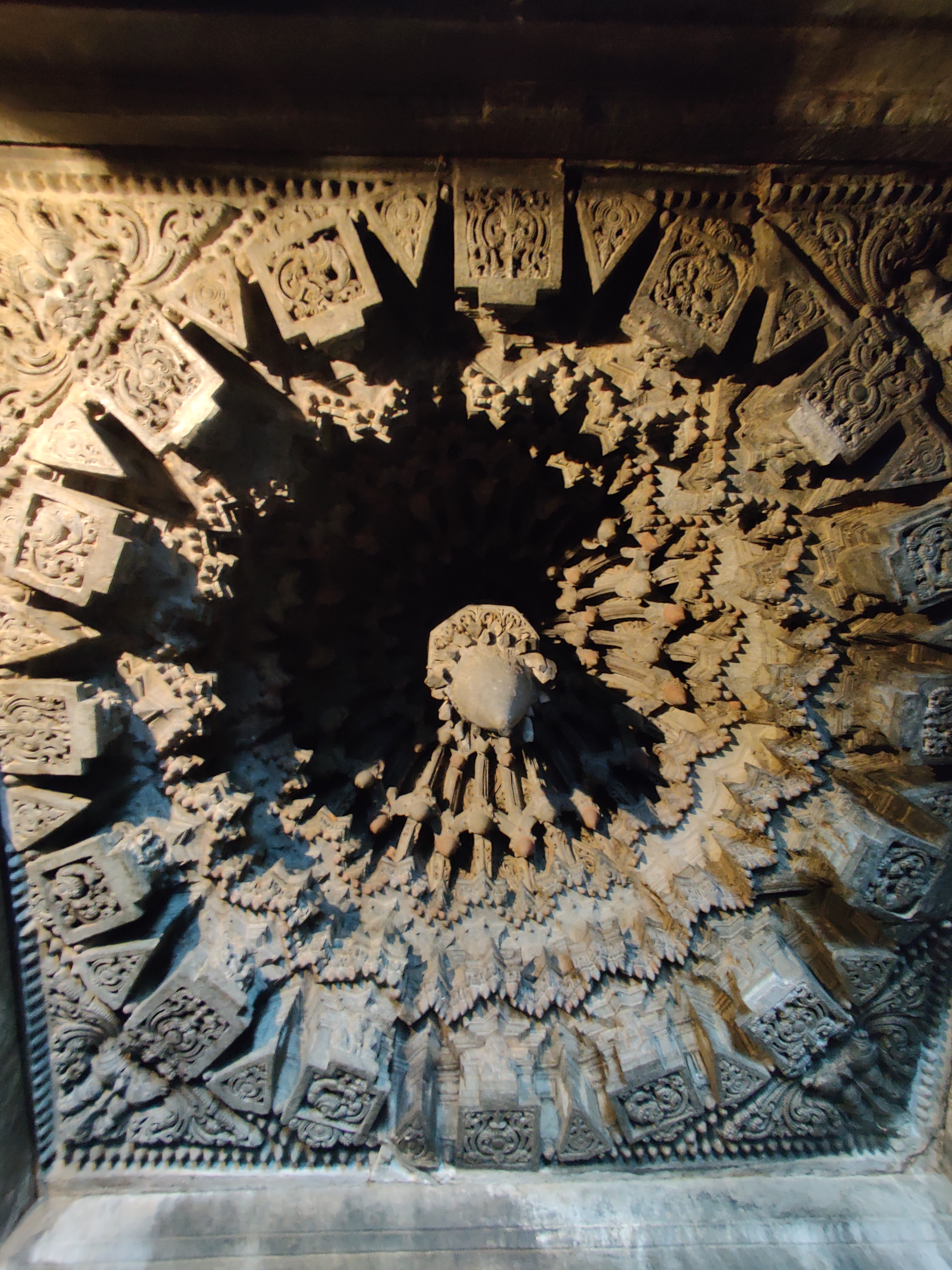
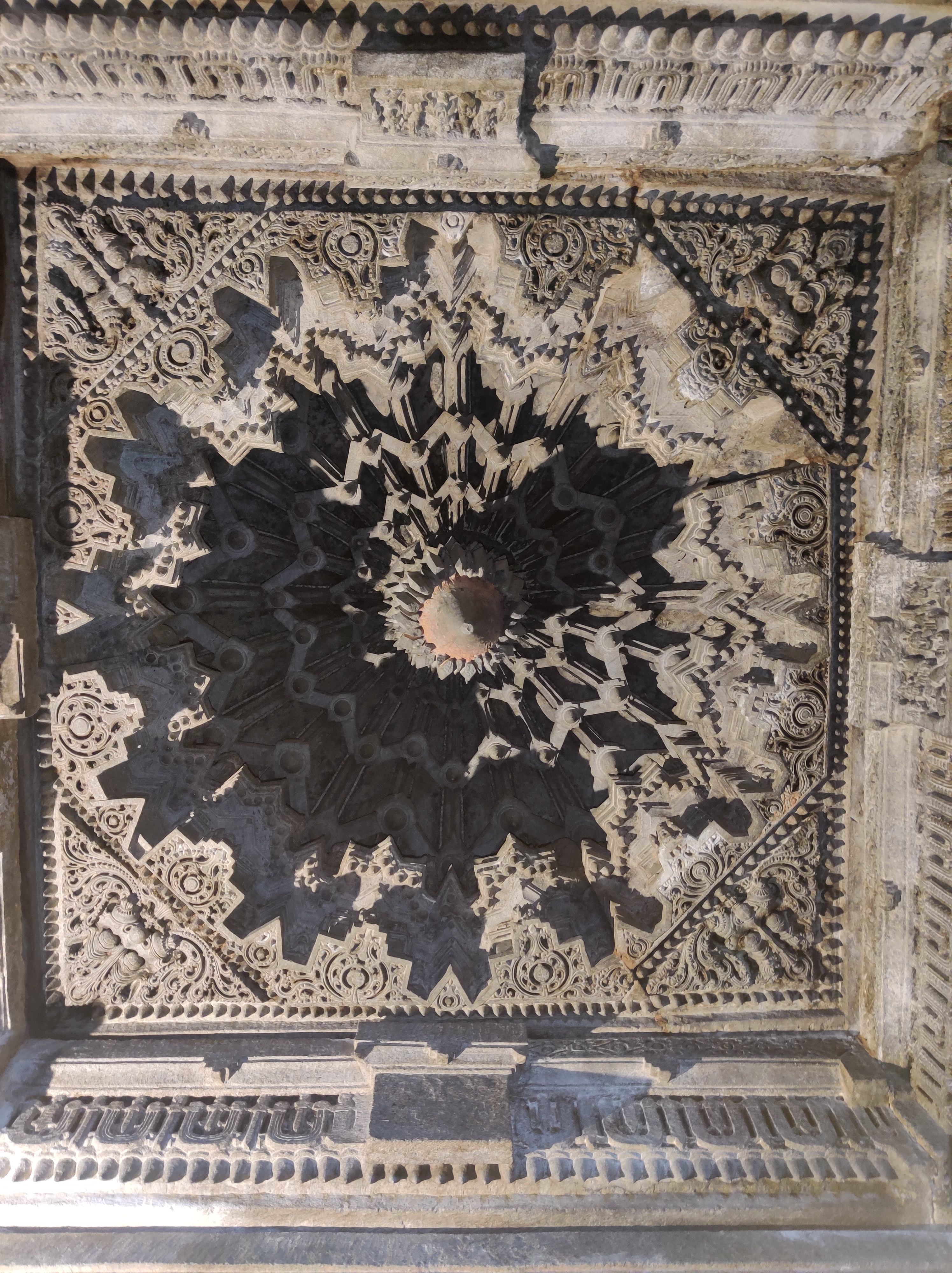
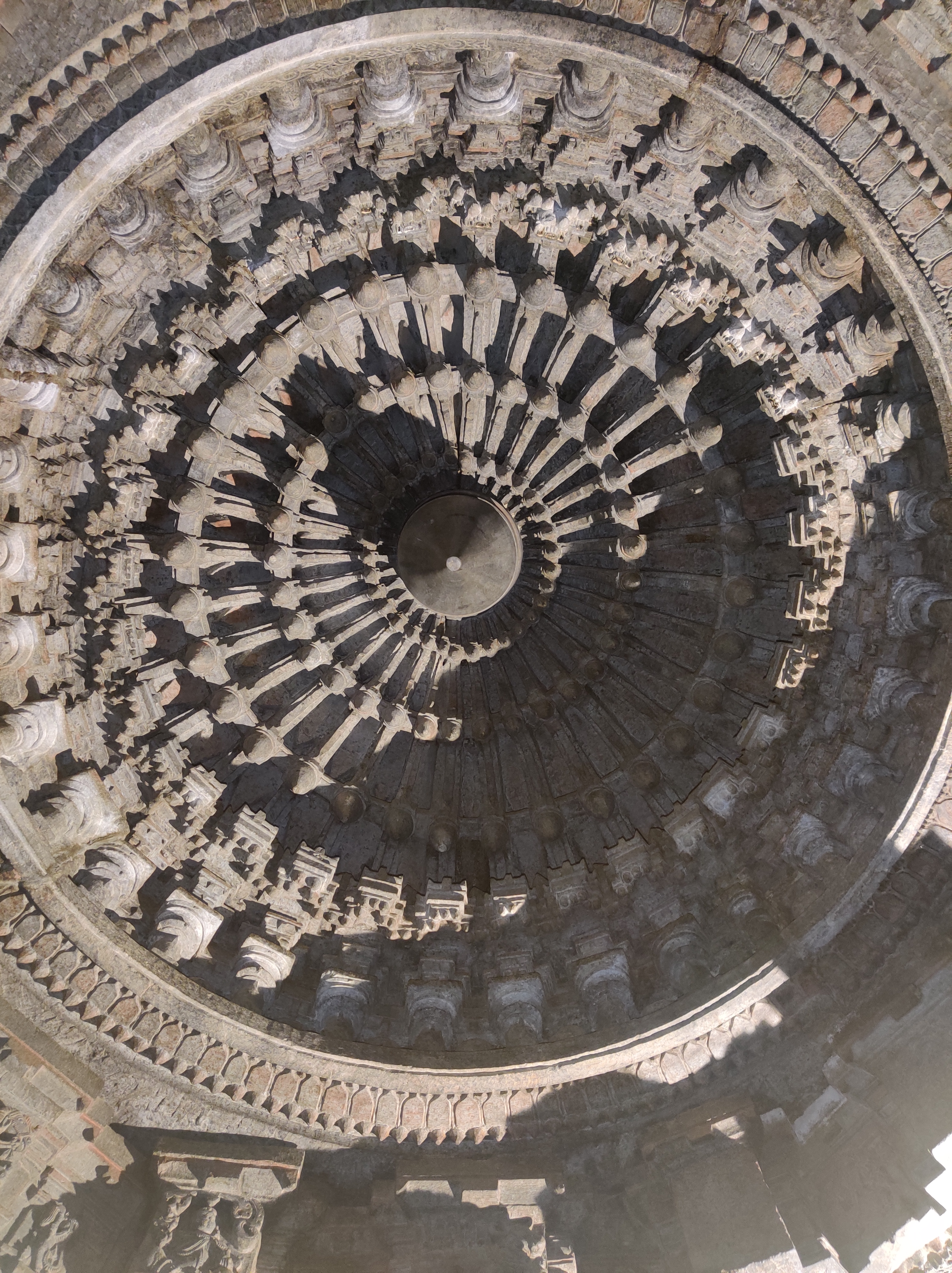
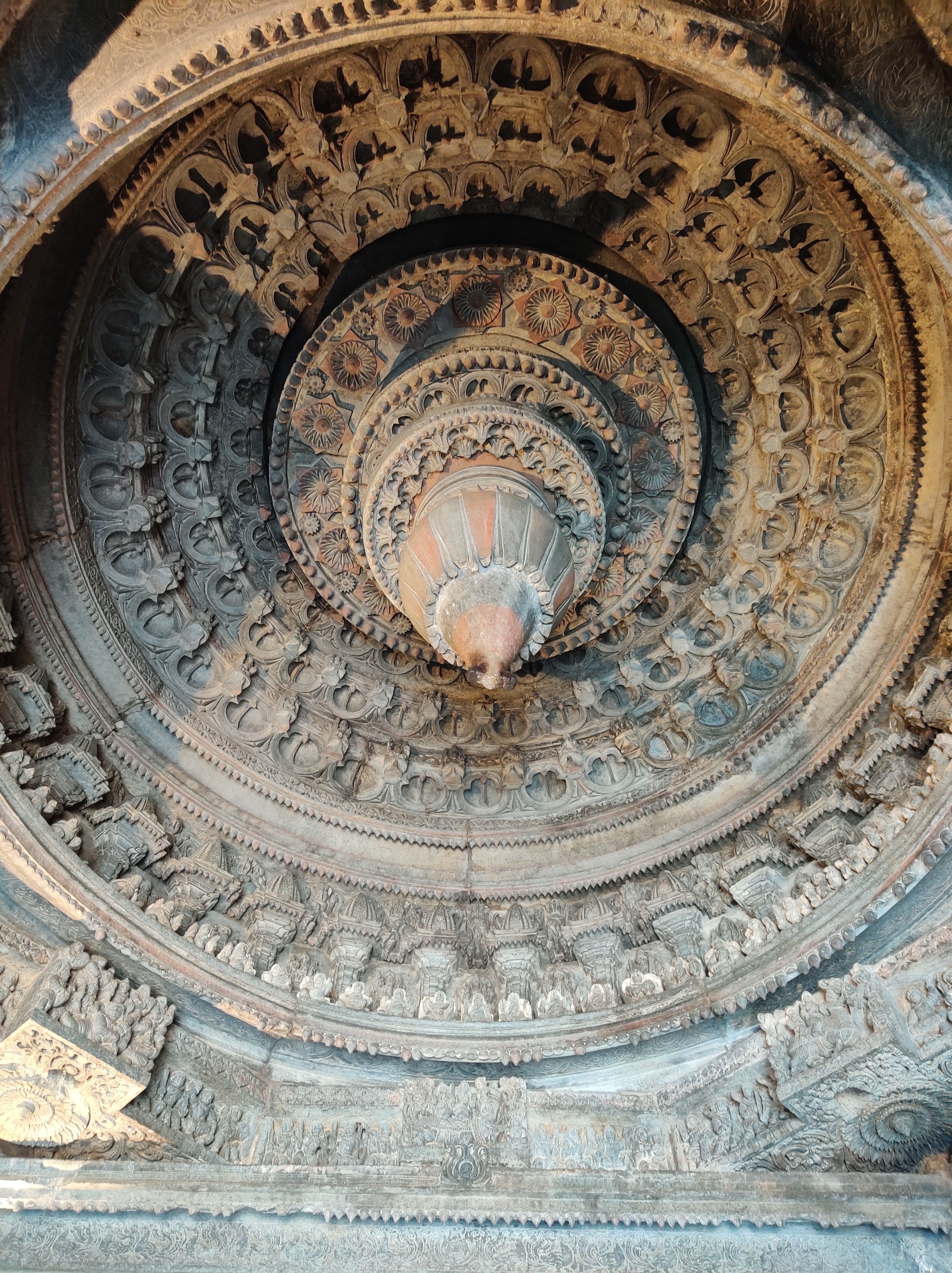
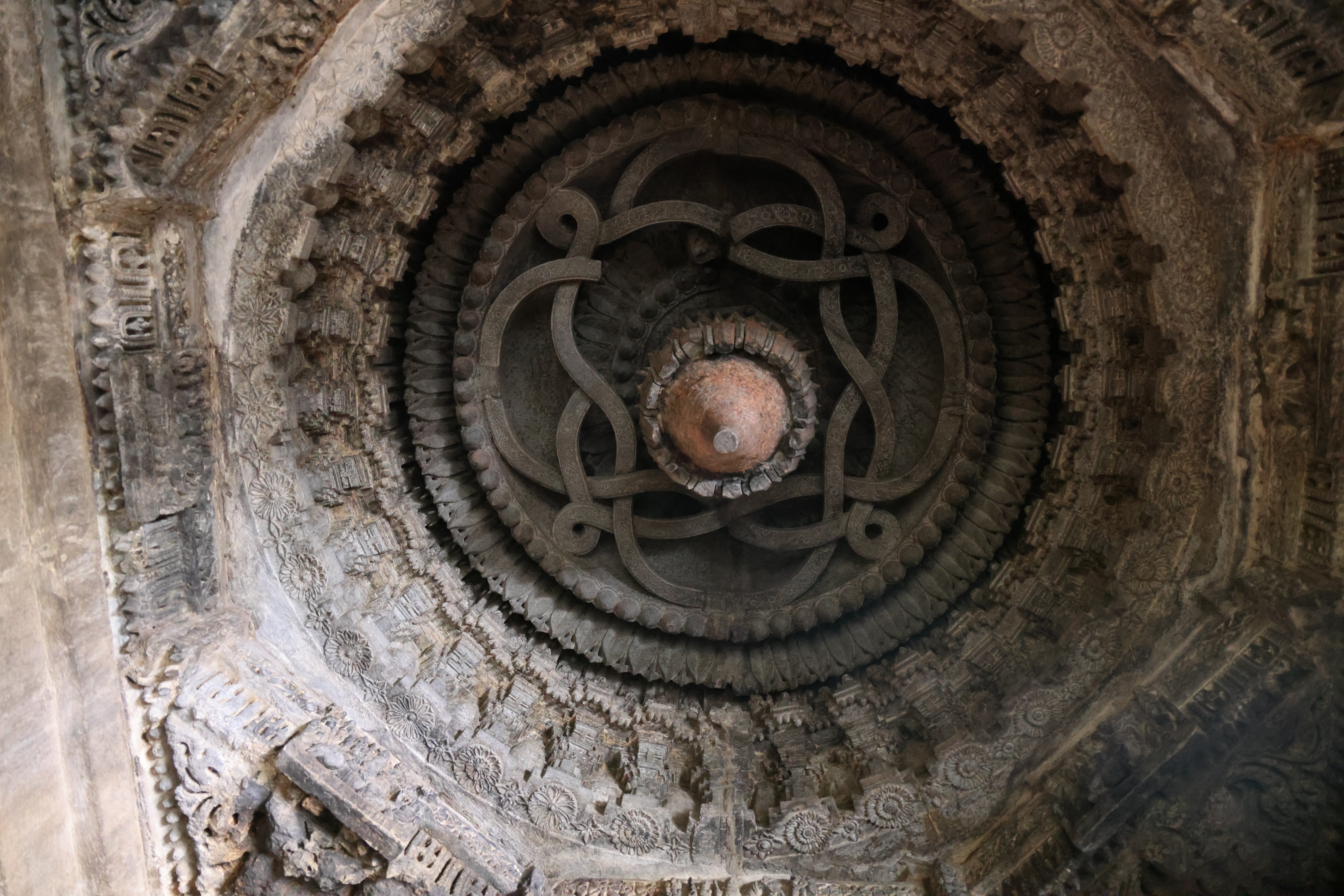
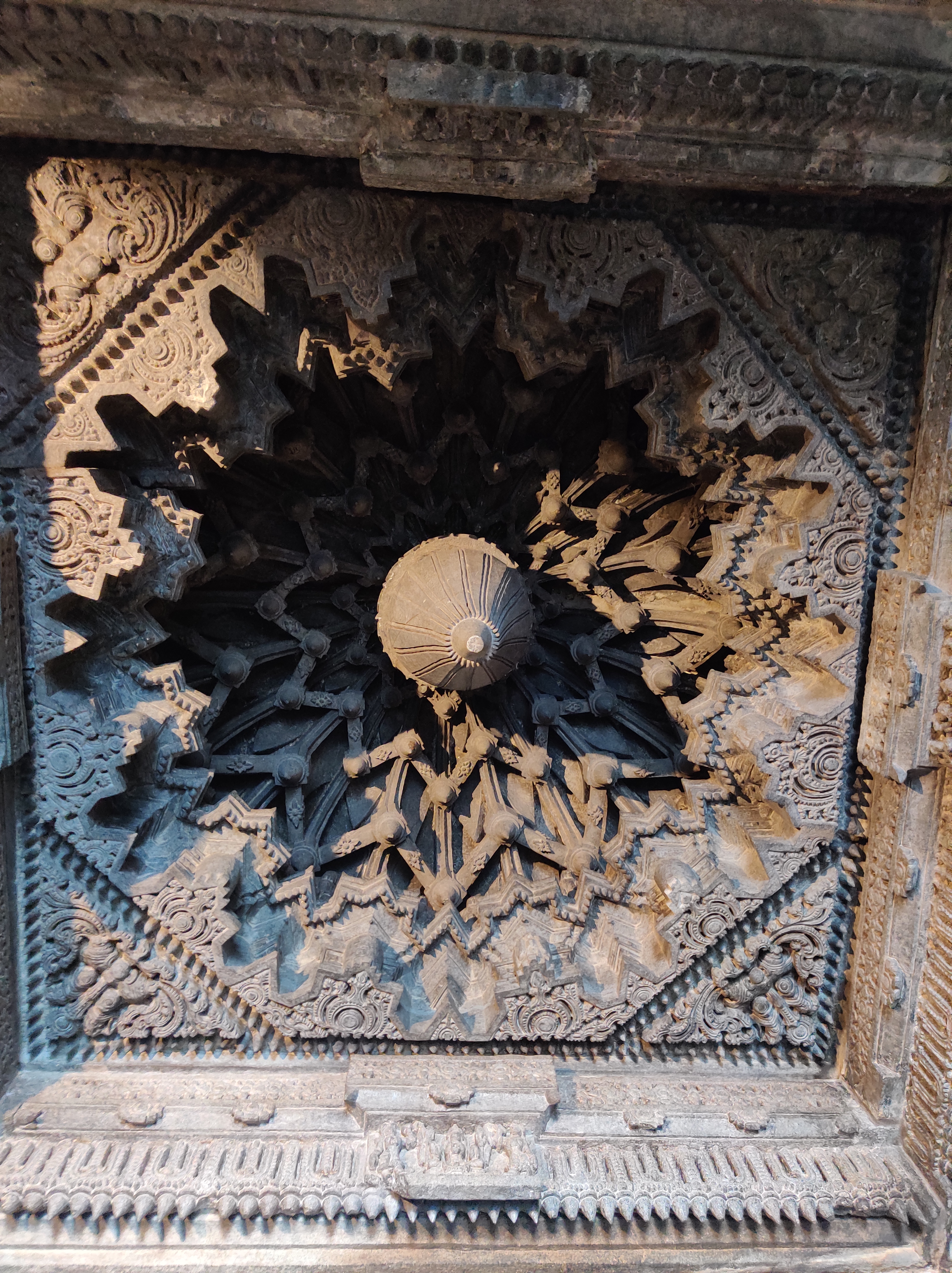
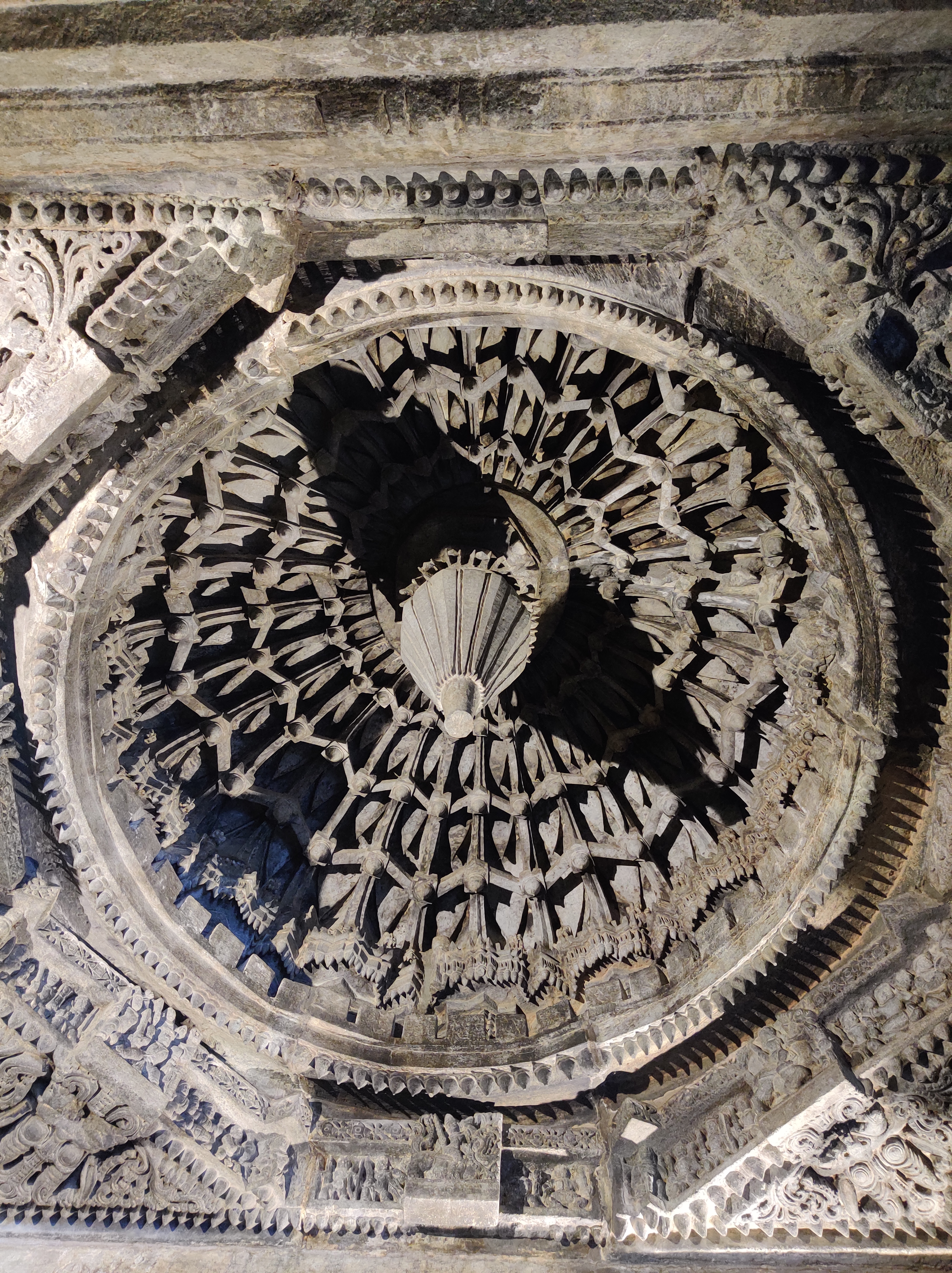
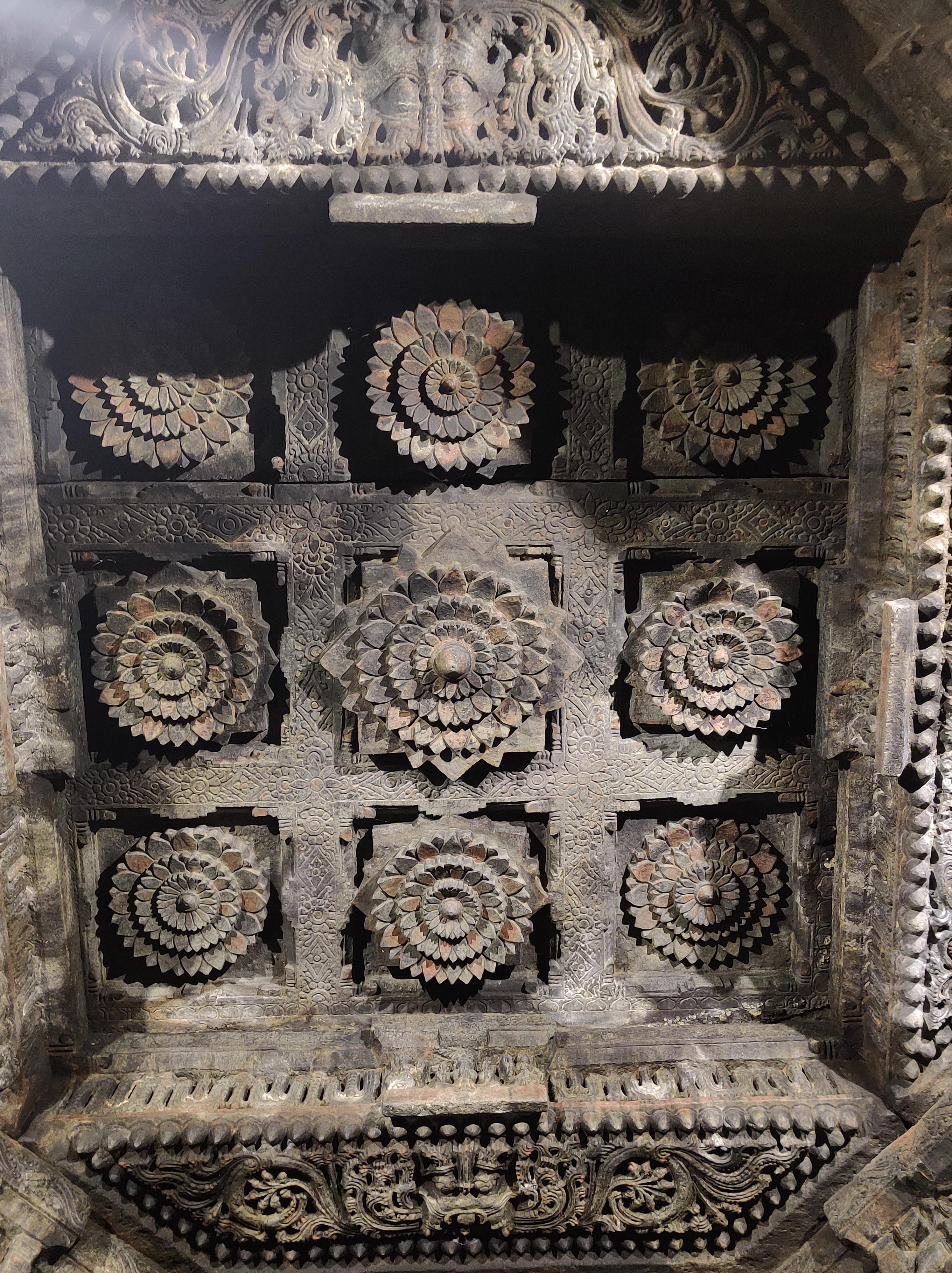
ll three sanctums share a common navaranga, or central hall, supported by four pillars on a raised platform. The ceiling of the navaranga is adorned with 16 finely-carved rectangular panels, creating a nine-sector layout, with the porch (mukhamantapa) adding seven more sections. Each panel resembles a stage of a blooming lotus bud.
Pro Tip:
Somnathapur is about an hour (35 km) from Mysore. During my 5-day stay in Mysore for the Dussera celebrations, I decided to take a day trip to Somnathapur and Srirangapatnam by renting a car.
Unlike other Hoysala temples, the temple at Somnathapur is not active, allowing unrestricted photography both inside and outside. It is also less popular among local tourists compared to other Hoysala temples.
The Hoysala series:
- Poetry of Stones – Hoysala temple I: Somnathapur
- Poetry of Stones – Hoysala temple II: Belur
- Poetry of Stones – Hoysala temple III: Halebidu
- Poetry of Stones – Hoysala temple IV: Smaller shrines of Belur
References:
Majority of the structural references in this post has been the oral recitations of a tour guide from the temple captured as Voice notes. If anyone is interested in using the images, please hit me up and attribute.
Related (and not-so related) Posts:
 The Lost Coordinates
[…] exterior walls also bear eighty large images of Gods and Goddesses. Unlike the walls of Kesava temple at Somnathapura or Hoysaleshwar temple at Halibeedu, these are more spaced out. And considering the obvious […]
LikeLike
[…] style. Further details on architectural characteristics of Hoysala temples can be checked out here. This post is the second part of the series dedicated to this unique symphony of human […]
LikeLike
[…] style. Further details on architectural characteristics of Hoysala temples can be checked out here. This post is the third part of the series dedicated to this unique symphony of human ingenuity. […]
LikeLike
[…] style. Further details on architectural characteristics of Hoysala temples can be checked out here. This post is the fourth part of the series dedicated to this unique symphony of human ingenuity. […]
LikeLike
[…] Somnathapur is at a distance of 1 hrs (35 km) away from Mysore. From Somnathapur, Talakadu is 25 kms away (40 mins). I had made Mysore as my base for 5 days owing to the Dussera celebrations, hence I decided to combine Talkadu with Somnathapur and Srirangapatnam as a day trip and rented a car. […]
LikeLike